
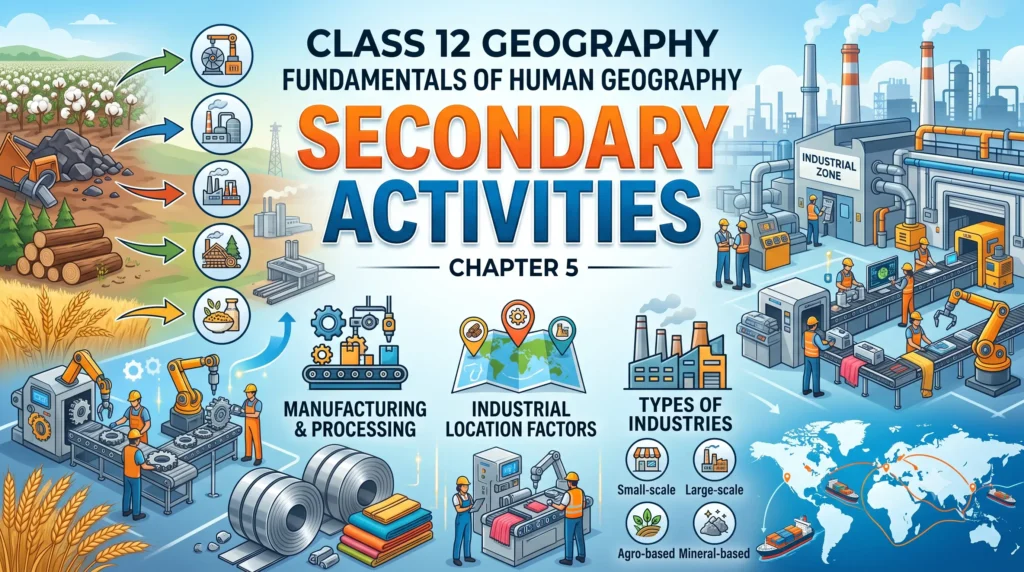
Class 12 Geography (Fundamentals of Human Geography) — Chapter 5: Secondary Activities
1. Introduction: Meaning and Value Addition in Secondary Activities
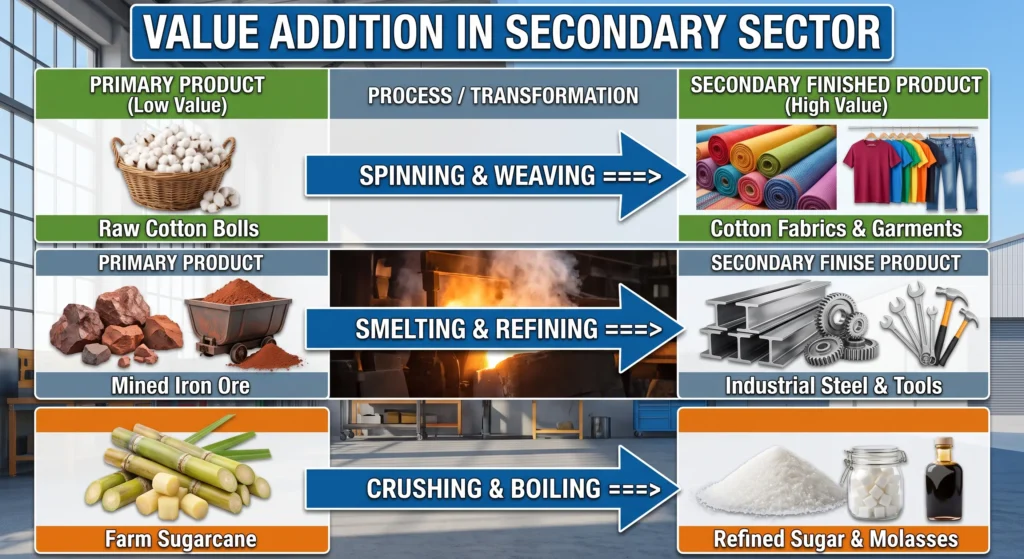
- Secondary Activities (Core Definition): “Secondary activities add value to natural resources by transforming raw materials into valuable products.”
- Concept of Value Addition: Raw materials को directly use करना हमेशा convenient या valuable नहीं होता। Secondary sector उन्हें process और transform करके usable बनाता है:
- Cotton Boll: Cotton boll की उपयोगिता सीमित होती है, परंतु जब उसे yarn में बदला जाता है, तो value बढ़ जाती है और clothes बनाए जा सकते हैं।
- Iron Ore: Mine से निकला कच्चा लोहा सीधे काम नहीं आ सकता, लेकिन Steel बनने के बाद मशीनें और औजार तैयार किए जाते हैं।
- Scope of Secondary Activities: यह sector मुख्य रूप से Manufacturing, Processing और Construction (Infrastructure) industries से जुड़ा हुआ है।
2. Manufacturing & Characteristics of Modern Large-Scale Manufacturing
- Literal vs. Modern Meaning:
- Literal sense में manufacturing का अर्थ है ‘to make by hand’।
- Modern geography में इसका अर्थ है ‘goods made by machines’—कच्चे माल को mechanized processes द्वारा finished products में convert करना।
- Characteristics of Modern Large-Scale Manufacturing:
- Specialisation of Skills / Methods of Production:
- Craft Method: थोड़े pieces ‘made-to-order’ बनाए जाते हैं, इसलिए production cost अधिक होती है।
- Mass Production: Standardised parts की भारी मात्रा में उत्पादन होता है, जहाँ प्रत्येक worker repetitive रूप से केवल एक ही task perform करता है।
- Mechanisation & Automation:
- Mechanisation: Tasks को पूरा करने के लिए gadgets और machines का use करना।
- Automation: Mechanisation की advanced stage, जिसमें production process के दौरान human thinking की आवश्यकता नहीं होती; feedback और closed-loop computer control systems से automatic factories operate होती हैं।
- Technological Innovation: Research and Development (R&D) के द्वारा quality control, waste elimination, inefficiency removal और pollution abatement सुनिश्चित किया जाता है।
- Organisational Structure and Stratification: Complex machine technology, extreme division of labour, huge capital investment, massive bureaucratic administrative structure।
- Uneven Geographic Distribution: Modern manufacturing world के 10% से भी कम land area पर concentrated है। कृषि की तुलना में factories अत्यधिक compact land पर हज़ारों लोगों को employment देती हैं (उदा. American corn belt के 2.5 sq km क्षेत्र में जहाँ 4 बड़े farms केवल 10–20 workers लगाते हैं, वहीं उतने ही क्षेत्र में integrated factories हज़ारों workers को employ कर सकती हैं)।
- Specialisation of Skills / Methods of Production:
3. Factors Influencing Industrial Location
Industries अपने profits को maximize करने के लिए उन स्थानों को चुनती हैं जहाँ production costs minimum हों:
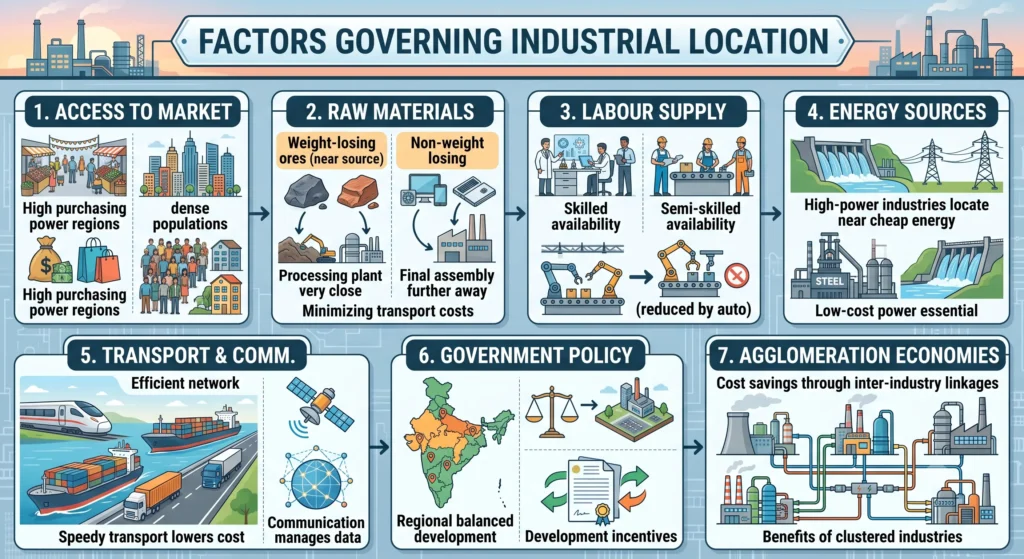
- 1. Access to Market: Market का अर्थ केवल जनसंख्या नहीं, बल्कि लोगों की Purchasing Power (खरीदने की क्षमता) और demand है। Europe, North America, Japan और Australia बड़े global markets हैं। Aircraft और arms manufacturing का बाज़ार global होता है।
- 2. Access to Raw Material: Heavy, bulky और weight-losing materials (जैसे iron ore, sugarcane) का उपयोग करने वाले उद्योग raw material source के निकट स्थापित होते हैं। Perishability (शीघ्र खराब होने वाला माल) भी agro-processing और dairy industries को farm sources के निकट स्थापित करने के लिए बाध्य करती है।
- 3. Access to Energy: Aluminum smelting जैसे electro-chemical उद्योग अत्यधिक बिजली की खपत के कारण cheap power sources के निकट स्थापित होते हैं।
- 4. Access to Agglomeration Economies: जब कई उद्योग एक leader-industry के पास स्थापित होकर एक-दूसरे की services और linkages से savings प्राप्त करते हैं, तो उसे Agglomeration Economies कहते हैं।
4. Footloose Industries
- Core Definition: “Footloose industries can be located in a wide variety of places. They are not dependent on any specific raw material, weight losing or otherwise.”
- Key Characteristics (CBSE 3-Mark Points):
- No Raw Material Weight Bias: ये किसी विशिष्ट भार-ह्रासी (weight-losing) कच्चे माल पर निर्भर नहीं होतीं।
- Component Parts: ये largely उन component parts पर निर्भर करती हैं जो कहीं से भी प्राप्त किए जा सकते हैं।
- Small Scale & Clean Output: ये कम मात्रा में उत्पादन करती हैं और छोटा labour force employ करती हैं।
- Eco-Friendly: ये सामान्यतः non-polluting industries होती हैं।
- Road Accessibility: इनके location का सबसे निर्णायक कारक road transport network की accessibility है।
5. Classification of Manufacturing Industries
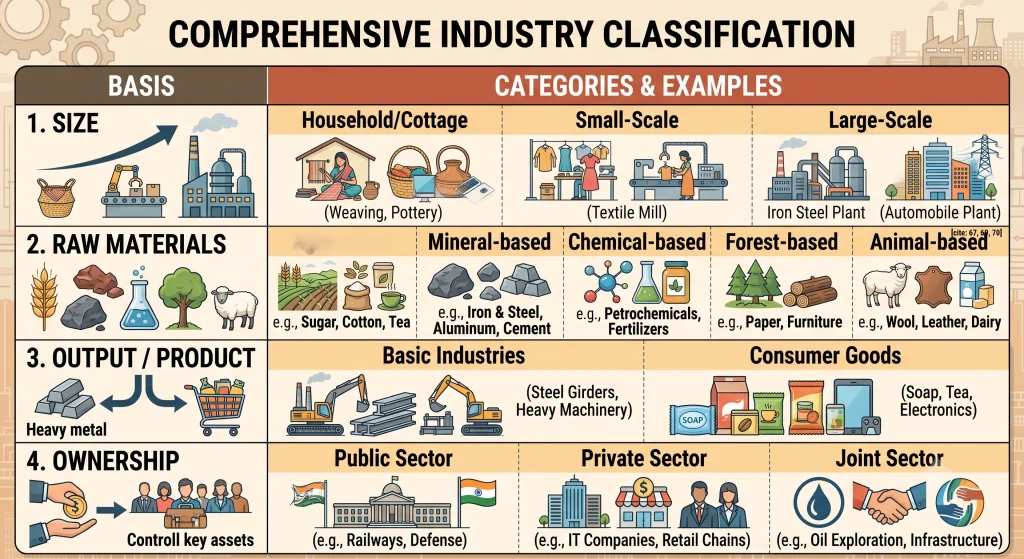
(A) Classification Based on Size
Capital invested, workers की संख्या और production volume के आधार पर तीन श्रेणियाँ हैं:
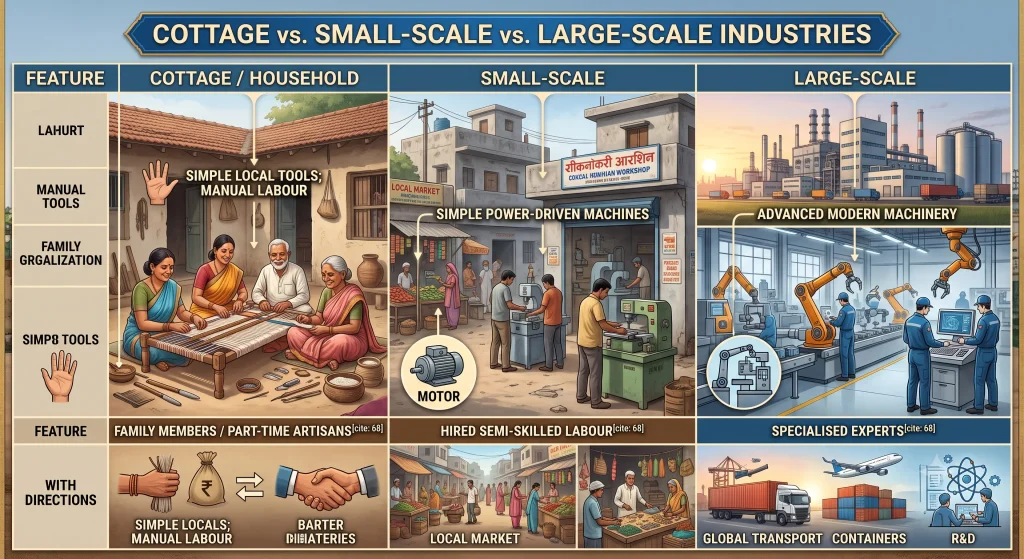
- Cottage / Household: सबसे छोटी manufacturing unit; local raw material से दैनिक उपयोग की वस्तुएँ (mats, pottery, bamboo crafts, rope) बनाई जाती हैं[cite: 68]। Capital और transportation का महत्व नगण्य होता है[cite: 68]।
- Small-Scale Manufacturing: Workshop home के बाहर होती है; simple power-driven machines और semi-skilled labour का प्रयोग होता है[cite: 68]। India, China, Indonesia जैसे देशों ने local purchasing power बढ़ाने और massive employment generate करने के लिए labour-intensive small scale manufacturing develop की है[cite: 68]।
- Large-Scale Manufacturing: विशाल पूँजी, assembly-line mass production, विशाल ऊर्जा खपत और specialized labour[cite: 68]। पिछले 200 वर्षों में UK, NE USA और Western Europe से शुरू होकर अब worldwide फैल चुकी है[cite: 68]।
(B) Classification Based on Inputs / Raw Materials
- Agro-Based: Field और farm के raw material को finished goods में बदलना (Food processing, sugar, pickles, tea, coffee, rubber, textiles)।
- Agri-Business (Agro-Factories): औद्योगिक पैमाने पर mechanized corporate commercial farming, जिसे प्रायः गैर-कृषि व्यवसायियों द्वारा वित्तपोषित किया जाता है (उदा. Tea plantation conglomerates)।
- Mineral-Based:
- Metallic:
- Ferrous: जिसमें iron content हो (Iron and Steel industry)।
- Non-Ferrous: जिसमें iron न हो (Aluminum, Copper, Jewelry)।
- Non-Metallic: Cement और Pottery industries।
- Metallic:
- Chemical-Based: Natural minerals और fossil fuels का उपयोग (Petroleum in petrochemicals, salts, sulfur, potash, synthetic fiber, plastics)।
- Forest-Based: Timber (furniture), bamboo व grass (paper), lac और turpentine।
- Animal-Based: Leather (चमड़ा), wool (ऊन) और हाथीदांत (ivory)।
(C) Classification Based on Output / Product
- Basic Industries: वे उद्योग जिनके products अन्य industries के लिए कच्चे माल (raw material) के रूप में प्रयुक्त होते हैं (उदा. Iron and Steel Industry—यह textile industry के लिए मशीनें बनाती है)।
- Consumer Goods (Non-Basic) Industries: वे उद्योग जो सीधे उपभोक्ताओं द्वारा उपभोग की जाने वाली वस्तुओं का निर्माण करते हैं (उदा. Bread, biscuits, tea, soaps, paper, televisions)।
(D) Classification Based on Ownership
- Public Sector: Government द्वारा owned और managed (उदा. भारत में PSUs, समाजवादी देशों में राज्य-नियंत्रित उद्योग)।
- Private Sector: व्यक्तिगत निवेशकों या निजी कंपनियों द्वारा संचालित (पूंजीवादी देशों में प्रमुख)।
- Joint Sector: Joint stock companies या सरकार (Public) और निजी (Private) क्षेत्र द्वारा संयुक्त रूप से प्रबंधित।
6. High-Technology Industry & Technopolies
- High Technology (High-Tech) Concept: Manufacturing की latest generation जिसमें गहन Research and Development (R&D) के माध्यम से highly advanced scientific और engineering products तैयार किए जाते हैं।
- Workforce Shift (White-Collar vs. Blue-Collar): High-tech units में अत्यधिक कुशल professional White-Collar workers की संख्या वास्तविक production करने वाले manual Blue-Collar workers से कहीं अधिक होती है।
- Technological Pillars: Robotics, Computer-Aided Design (CAD) and manufacturing, electronic automated smelting, specialized pharmaceuticals।
- Industrial Landscape: बड़े-बड़े धुएँ वाले कारखानों और गोदामों के स्थान पर आधुनिक, सुनियोजित, कम ऊँचाई वाली office-plant-lab buildings और planned business parks दिखाई देते हैं।
- Technopolies (CBSE Definition): “High-tech industries which are regionally concentrated, self-sustained and highly specialised are called technopolies.”
- Global Examples: San Francisco के निकट Silicon Valley और Seattle के निकट Silicon Forest।
7. High-Yield Board Exam Pointers
- Exact Definition (1 Mark): Footloose Industries—ऐसी industries जो किसी विशिष्ट भार-ह्रासी कच्चे माल पर निर्भर नहीं होतीं और component parts पर आधारित होती हैं।
- Worker Colour Coding Distinction:
- Red-Collar: Primary outdoor activity workers।
- Blue-Collar: Traditional factory production workers।
- White-Collar: High-tech research, engineering, and managerial specialists।
- Frequent 3-Marker: “Why is the iron and steel industry called a basic industry?” (क्योंकि इसके products अन्य सभी उद्योगों के लिए machinery और tools का आधार बनते हैं)।
- Repeated 5-Marker: “Explain the factors that determine the location of modern large-scale manufacturing industries.” (Market purchasing power, raw material weight-loss, energy proximity, transport cost, agglomeration economies)।