
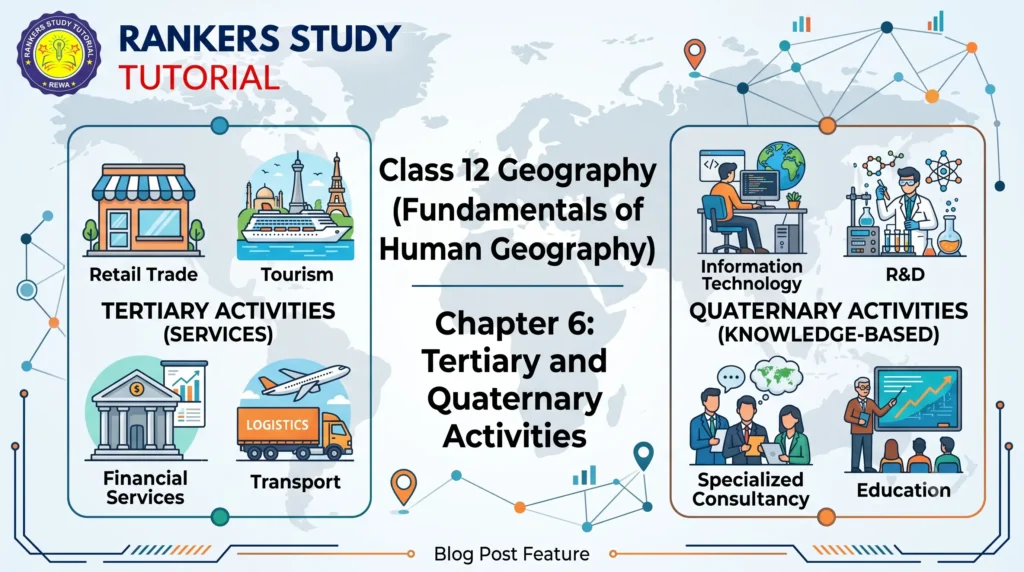
Class 12 Geography (Fundamentals of Human Geography) — Chapter 6: Tertiary and Quaternary Activities
1. Introduction to Tertiary Activities & Nature of Services
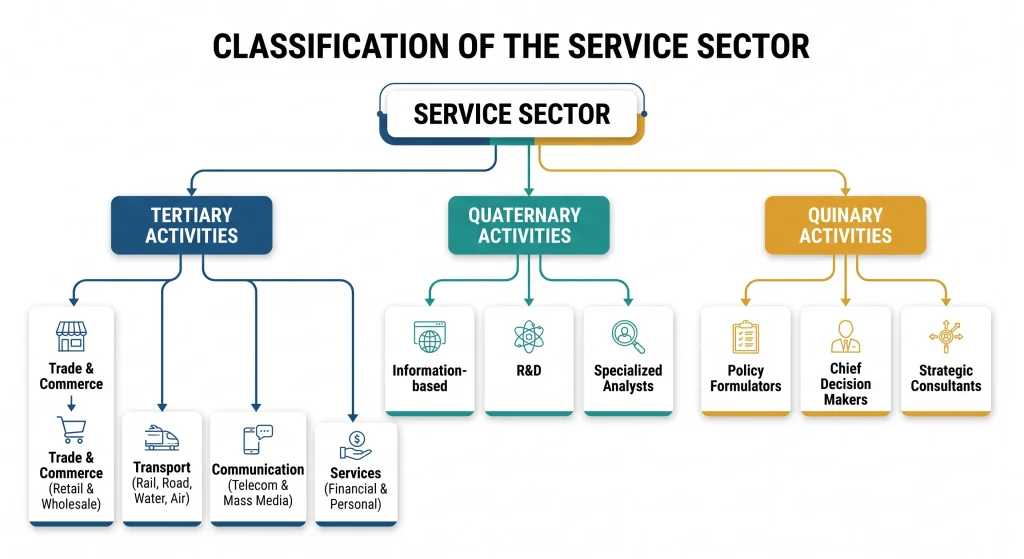
- Tertiary Activities (Core Definition): “Tertiary activities are related to the service sector. Manpower is an important component of the service sector as most of the tertiary activities are performed by skilled labour, professionally trained experts and consultants.”
- Production vs. Exchange:
- Production: इसमें services का ‘provision’ शामिल होता है जो consume की जाती हैं। Output का measurement अप्रत्यक्ष रूप से wages और salaries के रूप में किया जाता है।
- Exchange: इसमें distance को overcome करने के लिए trade, transport और communication facilities शामिल होती हैं।
- Tangible Goods vs. Commercial Services: Tertiary activities tangible goods (मूर्त भौतिक वस्तुओं) का प्रत्यक्ष उत्पादन नहीं करतीं और न ही raw materials की processing में सीधे शामिल होती हैं। यह क्षेत्र मुख्य रूप से commercial output of services प्रदान करता है (उदा. Plumber, electrician, technician, barber, shopkeeper, teacher, doctor, lawyer)।
- Key Distinction from Secondary Sector: Secondary activities machinery, production techniques और factory processes पर निर्भर करती हैं, जबकि tertiary activities पूरी तरह specialised skills, experience और knowledge of workers पर आधारित होती हैं।
- Economic Evolution: आर्थिक विकास के शुरुआती दौर में अधिकांश आबादी primary sector में काम करती है। एक developed economy में अधिकांश workers को tertiary activities में रोजगार मिलता है और secondary sector में मध्यम अनुपात रहता है।
2. Trade and Commerce: Rural vs. Urban Marketing Centres
- Trade (Core Definition): “Trade is essentially buying and selling of items produced elsewhere. All the services in retail and wholesale trading or commerce are specifically intended for profit.” जहाँ ये व्यापारिक कार्य होते हैं, उन्हें Trading Centres कहा जाता है।
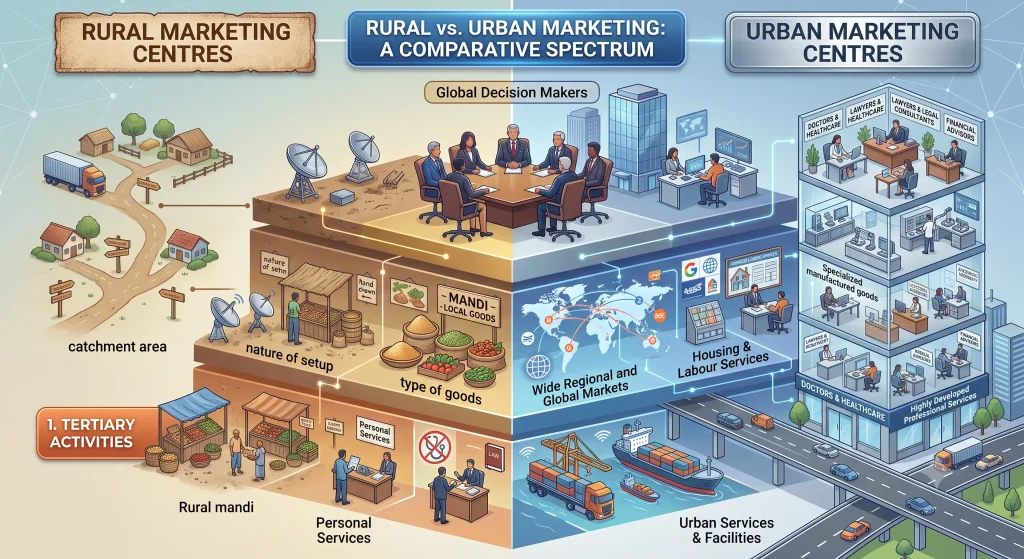
- Periodic Markets in Rural Areas: जहाँ regular markets नहीं होते, वहाँ specific dates और temporal intervals (weekly या bi-weekly) पर periodic markets लगते हैं[cite: 75]। Shopkeepers विभिन्न दिनों में अलग-अलग स्थानों पर दुकानें लगाते हैं, जिससे बड़ा ग्रामीण क्षेत्र cover हो जाता है[cite: 75]।
Retail Trading vs. Wholesale Trading
- Retail Trading: यह वह business activity है जो सीधे consumers को goods की बिक्री से जुड़ी होती है[cite: 75]।
- Fixed Establishments: अधिकांश retail fixed stores में होता है[cite: 75]।
- Non-Store Retail: Street peddling, handcarts, trucks, door-to-door, mail-order, telephone, automatic vending machines और internet[cite: 75]।
- Large-Scale Store Formats:
- Consumer Cooperatives: Retailing में पहला बड़ा innovation।
- Departmental Stores: इसमें विभिन्न sections के लिए departmental heads को purchasing और sales की जिम्मेदारी सौंपी जाती है।
- Chain Stores: अत्यधिक किफायती दरों पर bulk merchandise खरीदती हैं, अपने specifications पर manufacture करवाती हैं और skilled specialists नियुक्त करती हैं।
- Wholesale Trading: Intermediate merchants और supply houses के माध्यम से bulk business होता है। Wholesalers अक्सर retailers को credit (उधार) देते हैं, जिससे retailer बड़े पैमाने पर wholesaler की पूँजी पर कार्य करता है।
3. Transport and Communication Services
- Transport Industry: व्यक्तियों, कच्चे माल और manufactured goods को भौतिक रूप से एक स्थान से दूसरे स्थान ले जाने वाली संगठित सेवा। Transportation उत्पादन और वितरण के प्रत्येक चरण पर माल की मूल्य वृद्धि (value addition) करती है।
- Measurement of Transport Distance:
- Km distance: Route length की वास्तविक दूरी।
- Time distance: किसी मार्ग पर यात्रा करने में लगने वाला समय।
- Cost distance: किसी मार्ग पर यात्रा करने का कुल खर्च।
- Isochrone Lines (CBSE Keyword): “Isochrone lines are drawn on a map to join places equal in terms of the time taken to reach them.”
- Network and Accessibility:
- Node: दो या दो से अधिक मार्गों का meeting point, point of origin, destination या मार्ग पर स्थित कोई बड़ा कस्बा।
- Link: दो nodes को आपस में जोड़ने वाली सड़क या मार्ग। एक विकसित transport network में कई links होते हैं।
- Communication Services: शब्दों, संदेशों, विचारों और तथ्यों का प्रेषण।
- Satellite communication और mobile telephony ने communications को परिवहन माध्यमों से पूर्णतः independent बना दिया है।
- Mass Media: Radio, television और print media (newspapers, magazines) विशाल वैश्विक दर्शकों तक सूचना पहुँचाते हैं।
4. Personal, Professional & Regulated Services
- Low-Order vs. High-Order Services: Grocery shops, laundries जैसी low-order services आम और व्यापक होती हैं; जबकि physicians, accountants और consultants जैसी high-order services highly specialised होती हैं।
- Physical vs. Mental Labour: Gardener, launderer और barber शारीरिक श्रम (physical labour) करते हैं; जबकि teacher, lawyer, physician और musician मानसिक श्रम (mental labour) करते हैं।
- Regulated Services: Highways, bridges, fire fighting, customer-care और education का संचालन व पर्यवेक्षण सरकारों या विशेष corporations द्वारा किया जाता है।
- Personal Services & Informal Sector:
- ग्रामीण क्षेत्रों से शहरों की ओर migrate करने वाले अकुशल कामगार घरेलू सेवाओं (cooks, housekeepers, gardeners) में unorganised रूप से कार्यरत होते हैं।
- Case Study (Mumbai Dabbawalas): मुंबई में लगभग 1,75,000 customers को tiffin delivery service प्रदान करने वाला विश्वप्रसिद्ध और कुशल नेटवर्क।
5. Tourism: Global Tertiary Powerhouse
- Tourism (Core Definition): “Tourism is travel undertaken for purposes of recreation rather than business. It has become the world’s single largest tertiary activity in total registered jobs (250 million) and total revenue (40 per cent of the total GDP).”
- Tourist Attractions (Factors Influencing Tourism):
- Climate: ठंडे देशों के पर्यटक beach holidays के लिए गर्म व धूप वाले मौसम की तलाश करते हैं (उदा. Southern Europe और Mediterranean lands)। शीतकालीन खेलों के लिए mountain regions में बर्फबारी आवश्यक होती है।
- Landscape: पर्वत, झीलें, खूबसूरत समुद्र तट और मानव द्वारा अपरिवर्तित प्राकृतिक दृश्य।
- History and Art: प्राचीन ऐतिहासिक नगर, महल, किले, चर्च और पुरातात्विक स्थल।
- Culture and Economy: स्थानीय रीति-रिवाज और सस्ती सेवाएँ। भारत में Home-stay व्यवसाय (उदा. Goa, Madikere और Coorg in Karnataka) अत्यंत लोकप्रिय हुआ है।
Medical Tourism & Clinical Outsourcing
- Medical Tourism (Definition): “When medical treatment is combined with international tourism activity, it lends itself to what is commonly known as medical tourism.”
- India’s Emergence: भारत विश्व में medical tourism का प्रमुख केंद्र बनकर उभरा है; महानगरों के world-class hospitals विदेशी मरीजों को उच्च गुणवत्ता का सस्ता इलाज उपलब्ध कराते हैं (Thailand, Singapore और Malaysia अन्य उदाहरण हैं)।
- Medical Outsourcing: Radiology images की reading, Magnetic Resonance Images (MRIs) और ultrasound tests की data interpretation भारत, स्विट्जरलैंड और ऑस्ट्रेलिया के अस्पतालों द्वारा outsource की जाती है।
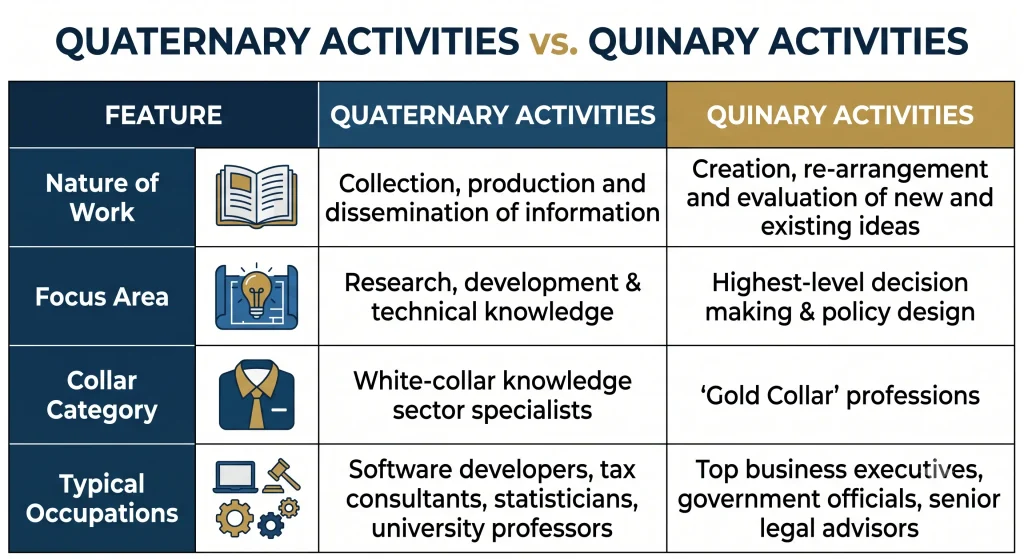
6. Quaternary vs. Quinary Activities
Outsourcing, BPO and KPO
- Outsourcing: दक्षता (efficiency) बढ़ाने और लागत (costs) कम करने के लिए किसी बाहरी एजेंसी को कार्य सौंपना। जब कार्य विदेश भेजा जाता है, तो उसे off-shoring कहते हैं।
- Comparative Advantage: India, Philippines और China जैसे देशों में cheap overhead costs और IT-skilled, English-fluent workforce की उपलब्धता के कारण कार्य outsource किया जाता है।
- BPO vs. KPO (High-Yield Distinction):
- Business Process Outsourcing (BPO): Routine customer support, call centres, और IT data processing।
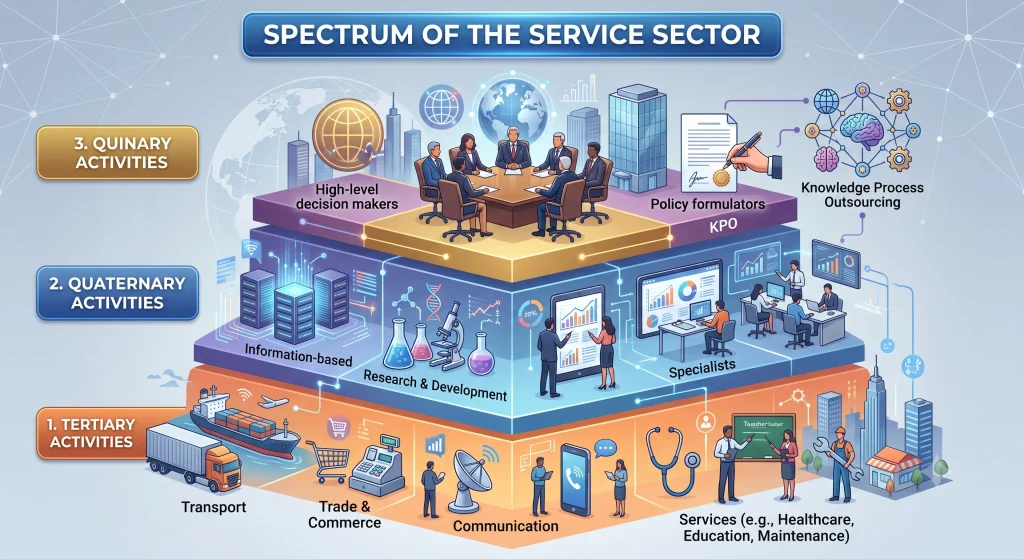
- Knowledge Process Outsourcing (KPO): Information-driven knowledge outsourcing जिसमें highly skilled specialists शामिल होते हैं (उदा. R&D activities, e-learning, business research, intellectual property research, legal और banking sectors)[cite: 79]।
- Home-shoring: Outsourcing के विकल्प के रूप में घर से कार्य (remote work) कराने का नया मॉडल[cite: 79]।
7. The Digital Divide
- Digital Divide (Core Definition): Information and Communication Technology (ICT) के विकास और उपयोग से उत्पन्न अवसरों का विश्व में असमान वितरण Digital Divide कहलाता है।
- International Level: विकसित देश तेजी से digital connectivity अपनाकर आगे बढ़ गए हैं, जबकि विकासशील देश पीछे छूट गए हैं।
- Intra-National Level (Within Countries): भारत या रूस जैसे विशाल देशों के भीतर भी metropolitan centres में उत्कृष्ट broadband/digital access है, जबकि दूरदराज के ग्रामीण क्षेत्र डिजिटल रूप से कटे हुए हैं।
8. High-Yield Board Exam Pointers
- Exact Definition: Isochrone Lines — वे रेखाएं जो मानचित्र पर समान यात्रा समय वाले स्थानों को जोड़ती हैं।
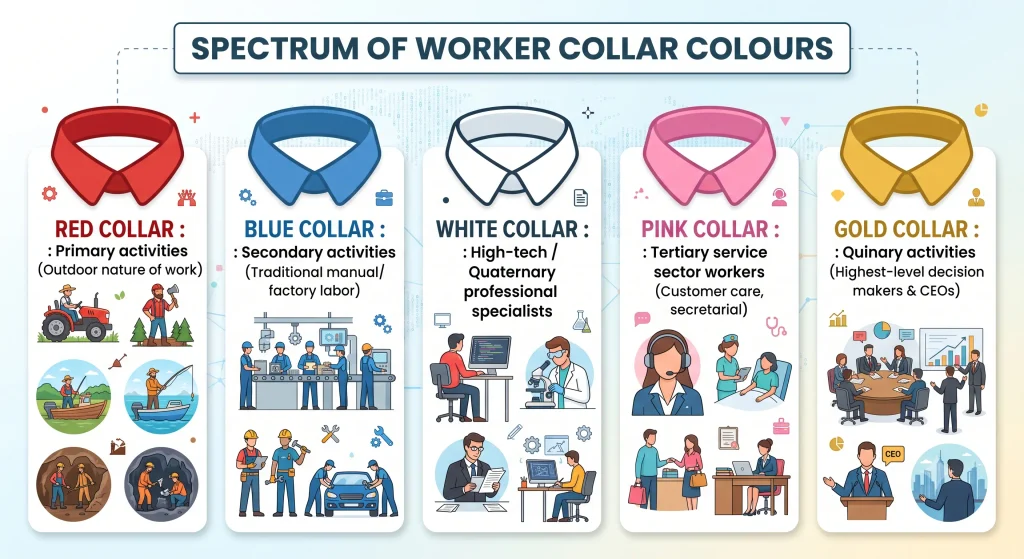
- Crucial 3-Marker Distinction: Quaternary Activities vs. Quinary Activities (Information processing vs. Policy making/Executive decisions)[cite: 79]।
- Repeated 5-Marker: “Explain the factors responsible for the growth of the tourism industry in the world.” (Climate, Landscape, History/Art, Culture/Economy, Home-stay models).
- Key MCQs & One-Liners:
- Single largest tertiary activity: Tourism (250 million jobs, 40% of GDP).
- Gold Collar workers: Quinary sector decision makers.
- KPO vs BPO: KPO requires highly skilled intellectual labor and is knowledge-driven.
- Transport Network Elements: Nodes (junction points) and Links (connecting routes).