
Class 12 Geography (Fundamentals of Human Geography) — Chapter 7: Transport and Communication
1. Introduction: Transport and Transport Network
- Transport (Core Definition): “Transport is a service or facility for the carriage of persons and goods from one place to the other using humans, animals and different kinds of vehicles.”
- Economic Linkage: Natural resources, economic activities और markets कभी भी एक ही स्थान पर नहीं पाए जाते। Transport और communication producing centres और consuming centres के बीच direct link establish करते हैं।
- Complementary Nature: विभिन्न modes of transport एक-दूसरे के पूरक (complementary) होते हैं:
- Ocean freighters international cargo handle करते हैं।
- Road transport short distances के लिए सस्ता और door-to-door delivery देने वाला साधन है।
- Railways देश के भीतर long distances पर भारी और bulky cargo ढोने के लिए best suited हैं।
- Airways high-value, light और perishable goods के rapid movement के लिए आदर्श हैं।
- Transport Network (Core Definition): “Several places (nodes) joined together by a series of routes (links) to form a pattern.”
- Node: मार्गों का meeting point, point of origin, destination या route पर स्थित कोई city/town।
- Link: दो nodes को आपस में जोड़ने वाला route।
- Pack Animals & Elementary Transport:
- Western Countries: Horses को draught animal के रूप में use किया जाता है।
- North America, North Europe & Siberia: Dogs और Reindeer का use snow पर sledge खींचने के लिए होता है।
- Mountainous Regions: Mules (खच्चर) दुर्गम पहाड़ी रास्तों पर preferred हैं।
- Deserts: Camels का use caravan transport के लिए होता है।
- India: Bullocks (बैल) carts खींचने के लिए ग्रामीण क्षेत्रों में use किए जाते हैं।
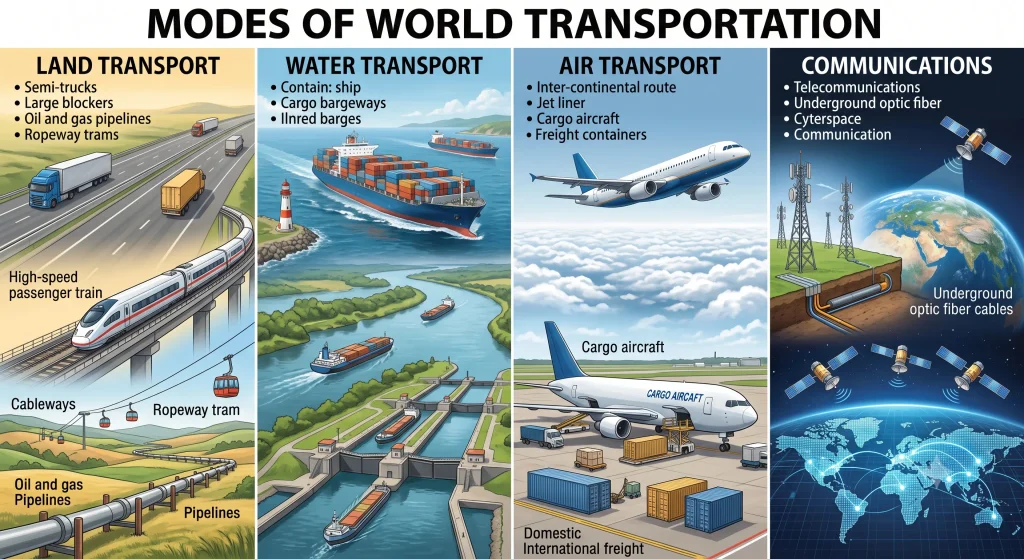
2. Land Transport: Roads and Highways
- Road Transport Advantages & Limitations:
- Short distances पर railways की तुलना में अत्यधिक economical है और door-to-door service provide करता है।
- Unmetalled (कच्ची) Roads: बरसात के मौसम में unmotorable हो जाती हैं। बाढ़ के समय railway tracks (high embankment के कारण) अधिक effective सिद्ध होते हैं।
- Global Road Network Facts:
- World की total motorable road length लगभग 15 million km है, जिसमें अकेले North America का हिस्सा 33% है।
- North America में highest road density और vehicles का highest registration पाया जाता है।
- Traffic Flows & Congestion: जब traffic volume सड़क नेटवर्क की क्षमता से अधिक हो जाता है, तो chronic congestion पैदा होता है। दिन के विशेष समयों (rush hours) में traffic में peaks (उच्च बिंदु) और troughs (निम्न बिंदु) देखे जाते हैं।
- Highways (Core Concept):
- ये दूरस्थ स्थानों को जोड़ने वाली metalled roads होती हैं, जिनकी चौड़ाई लगभग 80 मीटर तक होती है।
- इनमें separate traffic lanes, bridges, flyovers और dual carriageways होते हैं ताकि traffic unobstructed गति से चल सके।
- Major Trans-Continental Highways:
- Trans-Canadian Highway: Vancouver (British Columbia – West Coast) को St. John’s City (Newfoundland – East Coast) से जोड़ता है।
- Alaskan Highway: Edmonton (Canada) को Anchorage (Alaska) से जोड़ता है।
- Pan-American Highway: South America, Central America और USA-Canada को आपस में link करता है।
- Trans-Continental Stuart Highway: Australia में Darwin (North Coast) को Melbourne (South Coast) से via Alice Springs जोड़ता है।
- Golden Quadrilateral (Super Expressway – India): चार प्रमुख महानगरों—New Delhi, Mumbai, Chennai और Kolkata को आपस में connect करता है।
- Border Roads: International boundaries के किनारे बनाई गई सड़कें जो remote border villages को मुख्य शहरों से जोड़ती हैं और national defence में vital role निभाती हैं।
3. Land Transport: Railways & Gauges
- Historical Evolution: 1825 में Stockton और Darlington (Northern England) के बीच पहली public railway line शुरू हुई थी। इसके बाद railways 19th century का fastest और most popular transport बन गया जिसने continental interiors को mining और manufacturing के लिए खोल दिया।
- Railway Gauges:
- Broad Gauge: > 1.5 m
- Standard Gauge: 1.44 m (UK में widely used)
- Metre Gauge: 1.0 m
- Narrow / Smaller Gauges: < 1.0 m
- Global Railway Network Density:
- World में लगभग 13 लाख km railway network खुला है।
- Belgium: World में railways की highest density रखता है (1 km of railway for every 6.5 sq km area)।
- North America: World के total rail network का लगभग 40% अकेले यहीं है, जहाँ इसका मुख्य उपयोग bulky freight (ores, grains, timber) के लिए होता है।
- Europe: Passengers transport freight की तुलना में अधिक important है; London और Paris underground railways और Channel Tunnel (Euro Tunnel) से जुड़े हैं।
- South America: Rail network मुख्य रूप से Argentina के Pampas और Brazil के coffee-growing regions में concentrated है (40% of continent’s total length)।
- Trans-Andean Railway: South America का एकमात्र trans-continental route जो Buenos Aires (Argentina) को Valparaiso (Chile) से Andes Mountains के Uspallata Pass (3,900 m) के माध्यम से जोड़ता है।
- Qinghai-Tibet Railway (Engineering Marvel): Xining से Lhasa तक 1,956 km लंबी line, जिसका highest point 5,072 m पर है और लगभग 550 km track permanently frozen earth (permafrost) पर बिछा हुआ है।
4. Major Trans-Continental Railways of the World
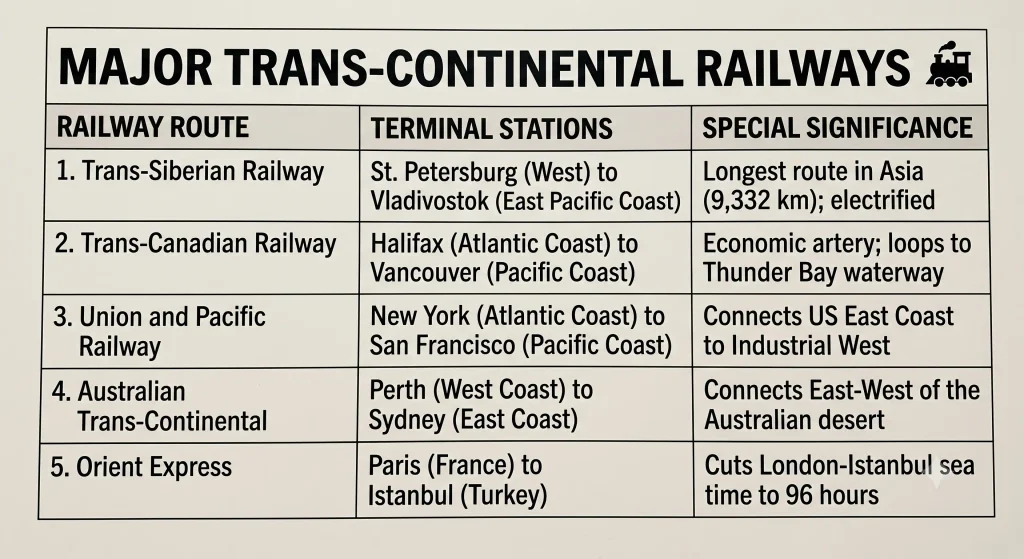
- 1. Trans-Siberian Railway (Russia):
- St. Petersburg से Vladivostok तक 9,332 km लंबा double-tracked और electrified मार्ग।
- Ural Mountains, Ob और Yenisei नदियों से होकर गुजरता है; Chita कृषि केंद्र है और Irkutsk fur centre है।
- Connecting links: Odessa (Ukraine), Baku, Tashkent, Ulan Bator और Beijing[cite: 87]।
- 2. Trans-Canadian Railway (Canada):
- 7,050 km long line जो Halifax से Vancouver तक जाती है[cite: 87]।
- 1886 में British Columbia को Canadian Federation में शामिल करने के लिए निर्मित[cite: 87]।
- यह Quebec-Montreal Industrial Region को Prairie Wheat Belt और उत्तरी Coniferous Forest से जोड़ती है; Winnipeg से Lake Superior (Thunder Bay) तक loop line waterway से link करती है[cite: 87]।
- 3. The Australian Trans-Continental Railway:
- Southern Australia में Perth से Sydney तक Kalgoorlie, Broken Hill और Port Augusta से होकर गुजरती है।
- 4. The Orient Express (Europe):
- Paris से Istanbul तक Strasbourg, Munich, Vienna, Budapest और Belgrade होकर जाती है[cite: 88]।
- लंदन से इस्तांबुल तक समुद्र मार्ग का 10 दिन का सफर घटाकर केवल 96 घंटे कर दिया[cite: 88]। मुख्य निर्यात: Cheese, bacon, oats, wine, fruits और machinery[cite: 88]।
5. Water Transport: Major Oceanic Routes & Shipping Canals
- Water Transport Advantages: Water transport में roads या rails की तरह track construction की आवश्यकता नहीं होती; water friction land friction से बहुत कम होता है, इसलिए यह bulky goods के long-distance movement के लिए cheapest mode है।
- Major Oceanic Routes:
- Northern Atlantic Sea Route (The “Big Trunk Route”):
- North-Eastern USA को North-Western Europe से जोड़ता है।
- विश्व के कुल विदेशी व्यापार का एक-चौथाई (25%) अकेले इसी route पर चलता है; यह दुनिया का सबसे व्यस्ततम (busiest) समुद्री मार्ग है।
- Mediterranean-Indian Ocean Sea Route:
- Heart of the Old World से होकर गुजरता है और किसी भी अन्य समुद्री मार्ग से अधिक देशों और आबादी को सेवा प्रदान करता है (Port Said, Aden, Mumbai, Colombo, Singapore)।
- Cape of Good Hope Sea Route:
- Western Europe को West Africa, South Africa, South-East Asia और Australia-New Zealand से जोड़ता है।
- North Pacific Sea Route:
- North America के west coast बंदरगाहों को Asian बंदरगाहों से जोड़ता है; सभी मार्ग Honolulu पर converge होते हैं। Great Circle route Vancouver और Yokohama के बीच दूरी आधी (2,480 km) कर देता है।
- Northern Atlantic Sea Route (The “Big Trunk Route”):
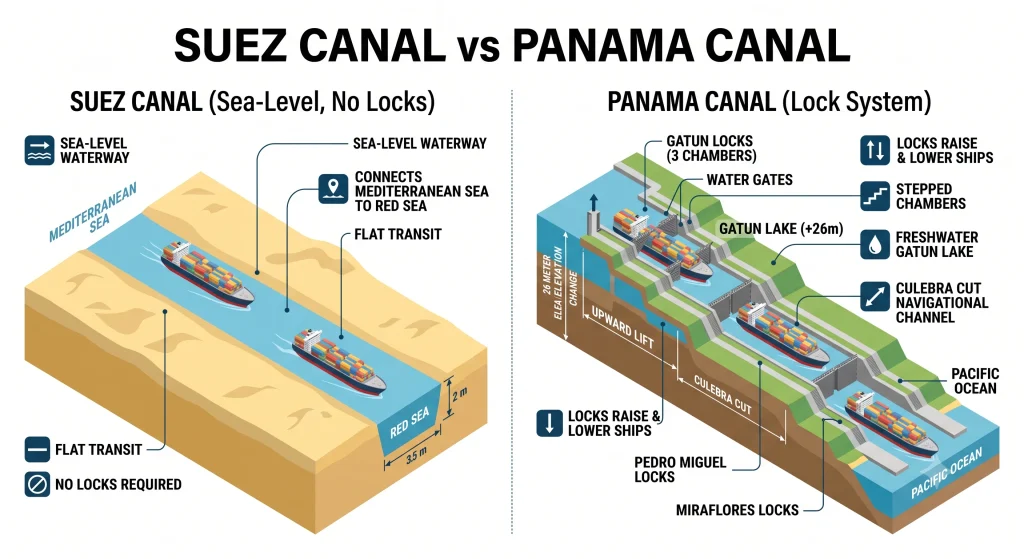
6. Inland Waterways
नदियाँ, नहरें और झीलें inland trade के लिए प्राचीन काल से उपयोग में हैं[cite: 92]। Navigability चौड़ाई, गहराई, जल-प्रवाह की निरंतरता और dredging तकनीक पर निर्भर करती है।
- The Rhine Waterway (Europe):
- Germany और Netherlands से होकर बहती है; Rotterdam (mouth) से Basel (Switzerland) तक 700 km navigable है।
- Ruhr नदी Rhine से east में मिलती है जो संपन्न कोयला क्षेत्र से बहती है (Ruhr Industrial Basin)।
- यह world का most heavily used inland waterway है, जहाँ प्रतिवर्ष 20,000 ocean ships और 2,00,000 inland vessels cargo exchange करते हैं।
- The Danube Waterway: Black Forest से निकलकर पूर्वी यूरोप से बहती है; Taurna Severin तक नौगम्य है; मुख्य निर्यात: Wheat, maize, timber और machinery।
- The Volga Waterway (Russia): 11,200 km navigable waterway जो Caspian Sea में गिरती है; Volga-Moscow Canal इसे मॉस्को से और Volga-Don Canal इसे Black Sea से जोड़ती है।
- Great Lakes – St. Lawrence Seaway (North America):
- North America की Great Lakes (Superior, Huron, Erie, Ontario) Soo Canal और Welland Canal द्वारा आपस में जुड़ी हैं।
- Duluth और Buffalo प्रमुख बंदरगाह हैं; ocean-going ships St. Lawrence estuary से Montreal तक अंदर तक पहुँच जाते हैं।
- The Mississippi Waterway (USA): Mississippi-Ohio नदी तंत्र US के भीतरी भागों को दक्षिण में Gulf of Mexico से जोड़ता है; बड़े स्टीमर Minneapolis तक पहुँच सकते हैं।
7. Air Transport & Pipelines
Air Transport
- Fastest & Costliest: लंबी दूरी की यात्री यात्रा और high-value, perishable goods के लिए primary choice।
- Strategic Role: दुर्गम पर्वतीय क्षेत्रों, घने जंगलों या बर्फीले टुंड्रा (उदा. Northern Canada के Eskimos तक सामान पहुँचाना) में connectivity का एकमात्र साधन।
- Global Threshold: आधुनिक विमानन के कारण आज विश्व का कोई भी स्थान 35 घंटे से अधिक दूर नहीं है।
- Distribution: USA अकेला विश्व के 60% airways को account करता है। Southern Hemisphere में 10°–35° अक्षांशों के बीच जनसंख्या की कमी, कम भूभाग और सीमित आर्थिक विकास के कारण air services सीमित हैं।
Pipelines
- Continuous Uninterrupted Flow: Liquids (petroleum, water, milk) और gases (LPG, natural gas) के परिवहन के लिए। द्रवीकृत कोयले (slurry) का परिवहन भी संभव है। New Zealand में फार्मों से फैक्टरियों तक दूध (milk) भी पाइपलाइन से भेजा जाता है।
- “Big Inch” Pipeline (USA): विश्व प्रसिद्ध pipeline जो Gulf of Mexico के तेल कुओं से petroleum को North-Eastern States तक ले जाती है। USA में कुल माल ढुलाई (ton-km) का लगभग 17% पाइपलाइनों द्वारा होता है।
8. Communications: Satellites & Cyberspace
- Evolution: Telegraph और telephone ने modern communication की नींव रखी; AT&T ने अमेरिका के शहरीकरण में केंद्रीय भूमिका निभाई। तांबे के तारों की जगह Optic Fibre Cables (OFC) के आने से rapid, secure और virtually error-free data transmission संभव हुआ।
- Satellite Communication:
- 1970s में USA और पूर्व USSR द्वारा अंतरिक्ष अनुसंधान के बाद उभरा।
- Distance Invariant Cost: उपग्रह संचार ने दूरी और लागत का संबंध समाप्त कर दिया—500 km दूर संदेश भेजने में भी वही लागत और समय लगता है जो 5,000 km दूर भेजने में लगता है।
- India’s Strides: Aryabhata (1975), Bhaskara-I (1979), Rohini (1980), और APPLE (1981); INSAT series ने देश में मौसम विज्ञान, टीवी और रेडियो प्रसारण को क्रांतिकारी बना दिया।
- Cyberspace (Internet):
- Definition: “Cyberspace is the world of electronic computerised space. It is encompassed by the Internet such as the World Wide Web (www).”
- उपयोगकर्ताओं की संख्या 1995 में 50 million से बढ़कर 2023 में 5.4 billion तक पहुँच चुकी है।
- Global share में USA का हिस्सा 1995 के 66% से घटकर 2005 में 25% रह गया; अब बहुसंख्यक उपयोगकर्ता developing nations (India, China आदि) में हैं।
- इसने ‘Global Village’ की संकल्पना को भौतिक परिवहन की तुलना में अधिक तेजी से साकार किया है।
9. High-Yield Board Exam Pointers
- Exact Route Name (1 Mark): The “Big Trunk Route” = North Atlantic Sea Route.
- High-Yield 1-Marker Facts:
- Country with highest rail density: Belgium (1 km track per 6.5 sq km).
- World’s longest trans-continental railway: Trans-Siberian Railway (9,332 km).
- Big Inch transports: Petroleum (Gulf of Mexico to North-Eastern USA).
- Channel Tunnel connects: London with Paris.
- Trans-Continental Stuart Highway connects: Darwin to Melbourne.
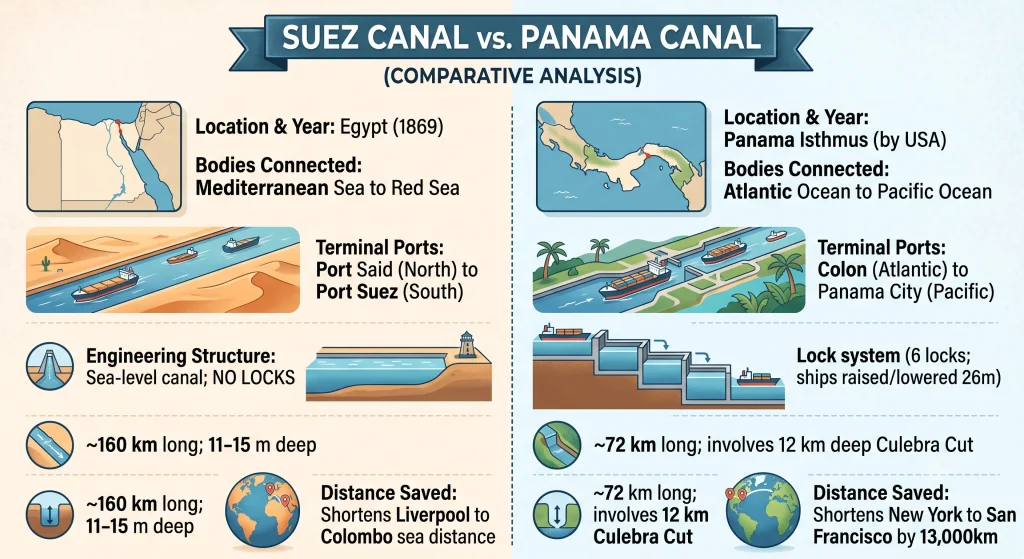
- Repeated 5-Marker: “Compare the Suez Canal and the Panama Canal in terms of location, engineering structure, and economic importance.” (Cover: Sea-level without locks vs. 6-lock system; Red Sea/Mediterranean vs. Atlantic/Pacific; distances saved).
- Crucial 3-Marker: “What are the advantages of water transport over land and air transport?” (No track construction costs; lower water friction; lowest energy cost per ton; best for heavy bulky cargo).