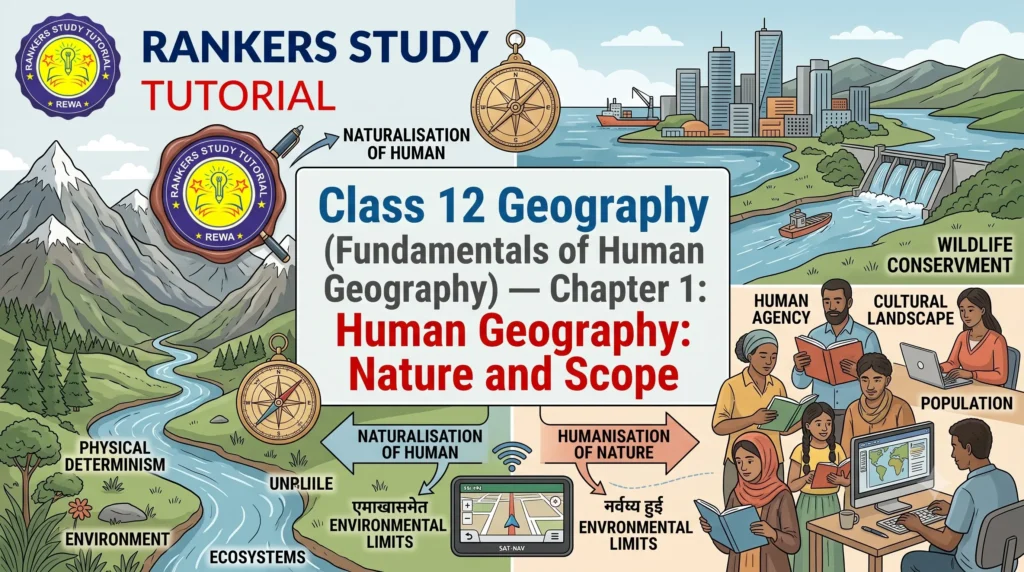
Class 12 Geography (Fundamentals of Human Geography) — Chapter 1: Human Geography: Nature and Scope
1. Introduction: Nature and Dualism in Geography
- Integrative Discipline: Geography एक ऐसा field of study है जो integrative, empirical और practical है। Earth surface के दो major components होते हैं: Physical environment (Nature) और Life forms including humans।
- Dualism and Dichotomy in Geography:
- Geography में लंबे समय तक debates चली हैं कि discipline को nomothetic (law making/theorising) होना चाहिए या idiographic (descriptive)।
- Study approach regional होनी चाहिए या systematic।
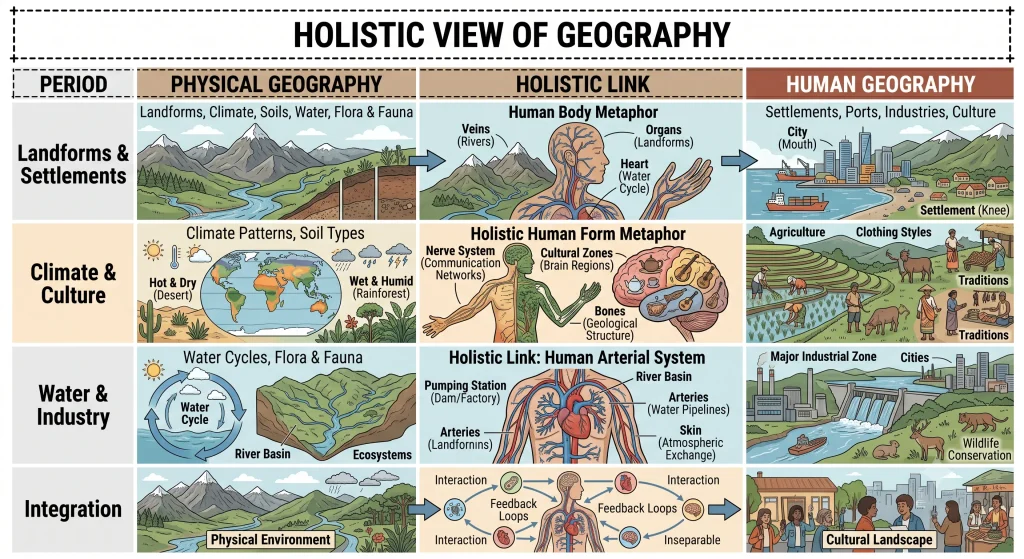
- NCERT के अनुसार nature और human के बीच का separation या dichotomy valid नहीं है, क्योंकि प्रकृति और मानव inseparable हैं और इन्हें holistically समझा जाना चाहिए।
- Human Anatomy Metaphors for Geographical Features: Physical और human दोनों phenomena को describe करने के लिए human anatomy के symbols use किए जाते हैं:
- ‘Face’ of the earth, ‘eye’ of the storm, ‘mouth’ of the river, ‘snout’ (nose) of the glacier, ‘neck’ of the isthmus, और ‘profile’ of the soil।
- Regions, towns और villages को ‘organisms’ कहा गया है; German geographers state या country को ‘living organism’ मानते हैं।
- Road, railways और waterways के networks को “arteries of circulation” कहा जाता है।
2. Core Definitions of Human Geography
- 1. Friedrich Ratzel:
- Core Definition: “Human geography is the synthetic study of relationship between human societies and earth’s surface.”
- Explanation: Ratzel की definition में सबसे ज्यादा emphasis Synthesis पर दिया गया है।
- 2. Ellen C. Semple:
- Core Definition: “Human geography is the study of the changing relationship between the unresting man and the unstable earth.”
- Explanation: Semple की definition का central keyword Dynamism है, जो man और earth के continuously changing relations को दिखाता है।
- 3. Paul Vidal de la Blache:
- Core Definition: “Conception resulting from a more synthetic knowledge of the physical laws governing our earth and of the relations between the living beings which inhabit it.”
- Explanation: यह definition earth और human beings के बीच mutual relationships का नया synthetic concept provide करती है।
3. Naturalisation of Humans vs. Humanisation of Nature
Human beings nature के साथ interact करने के लिए Technology का सहारा लेते हैं। Technology का स्तर society के cultural development को reflect करता है।
- Natural laws की understanding विकसित होने के बाद ही technology का निर्माण होता है:
- Heat और friction के concept को समझकर fire की खोज हुई।
- DNA और genetics के secrets समझकर diseases पर control पाना संभव हुआ।
- Aerodynamics के laws का use करके faster aeroplanes design किए गए।
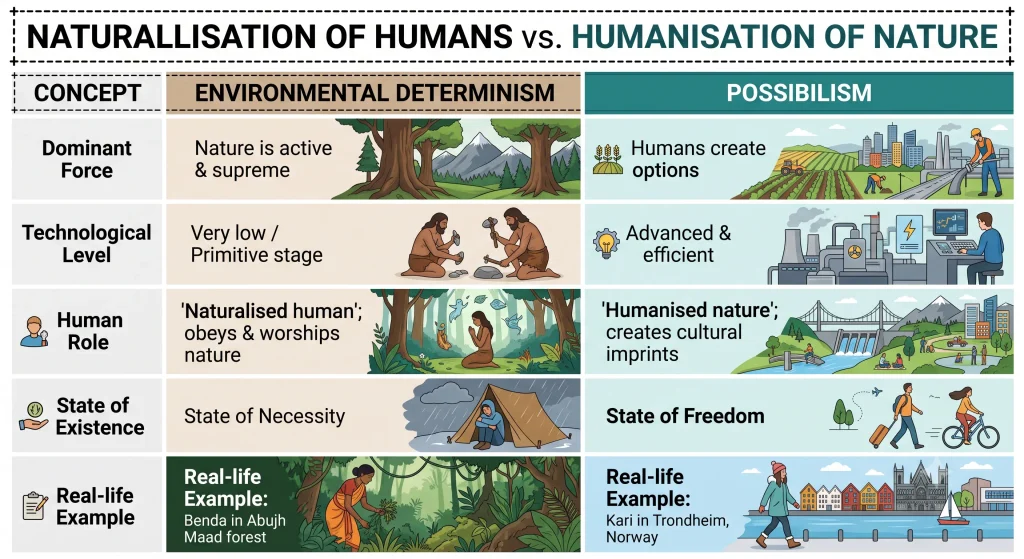
(i) Environmental Determinism (Naturalisation of Humans)
- Explanation: Human interaction की early stages में technology का level extremely low था और society primitive थी, जहाँ मनुष्य nature के dictates के अनुसार खुद को adapt करता था।
- Naturalised Human: मनुष्य nature की शक्ति से डरता था, उसकी पूजा करता था और पूर्णतः प्रकृति पर आश्रित था। ऐसी societies के लिए physical environment “Mother Nature” का रूप था।
- Case Study: Benda (Central India – Abujh Maad):
- Benda घने जंगलों में रहता है और penda (shifting cultivation) करता है।
- वह stream से पानी पीते समय forest spirit Loi-Lugi का धन्यवाद करता है और tribal fair (madhai) में barter करने के लिए forest herbs इकट्ठा करता है। यह प्रकृति के साथ absolute harmony और direct dependency का perfect उदाहरण है।
(ii) Possibilism (Humanisation of Nature)
- Explanation: समय बीतने के साथ humans ने nature के laws को समझा, efficient technology develop की और state of necessity से state of freedom की ओर बढ़े।
- Cultural Landscape: Nature केवल opportunities प्रदान करता है और human beings अपने efforts से उस पर cultural imprints छोड़ते हैं। Highlands पर health resorts, fields, ports, ocean routes और space में satellites इसके direct प्रमाण हैं।
- Case Study: Kari (Trondheim, Norway):
- Kari severe sub-zero winter temperatures और continuous darkness में heated car चलाकर commute करती है।
- उसका university office एक huge glass dome के अंदर controlled 23°C temperature पर function करता है। Harsh winter climate के बावजूद वह ताजे tropical fruits खाती है और computer/satellite connectivity से global work संभालती है।
4. Neodeterminism (Stop and Go Determinism)
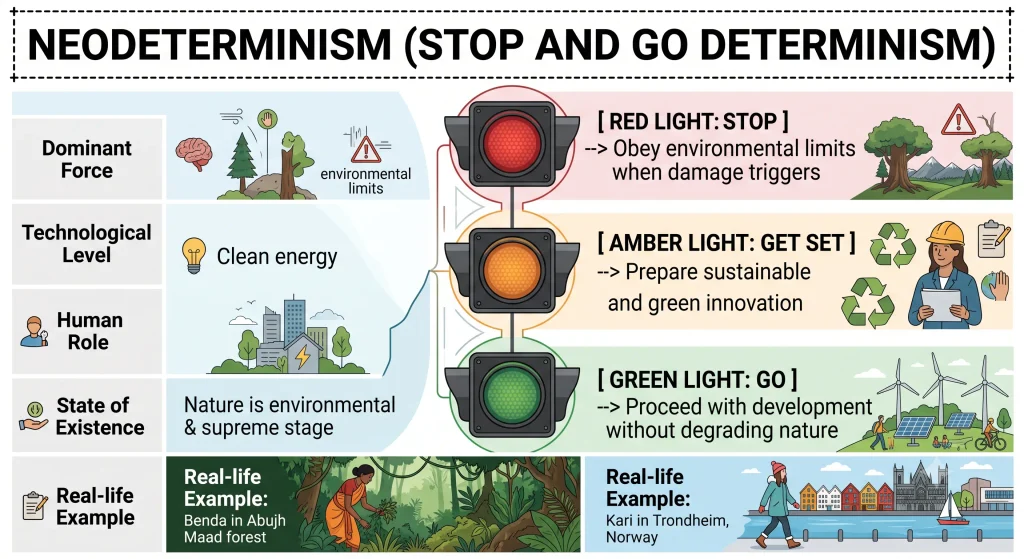
- Propounded By: Australian geographer Griffith Taylor।
- Madhyam Marg (Middle Path): यह concept Environmental Determinism और Possibilism के बीच का balanced approach है।
- Traffic Light Analogy:
- Red light का अर्थ है ‘Stop’।
- Amber light का अर्थ है ‘Get set’।
- Green light का अर्थ है ‘Go’।
- Explanation:
- न तो absolute necessity की स्थिति है और न ही absolute freedom की।
- Humans प्रकृति पर विजय तभी प्राप्त कर सकते हैं जब वे nature के नियमों को obey करें।
- Development केवल वहीं तक sustainable है जहाँ तक पर्यावरण को क्षति न पहुँचे।
- Accidents of Free Run: बिना सोचे-समझे nature का overexploitation करने के कारण greenhouse effect, ozone layer depletion, global warming, receding glaciers और land degradation जैसी severe problems उत्पन्न हो चुकी हैं।
5. Evolution of Human Geography: Broad Stages and Approaches
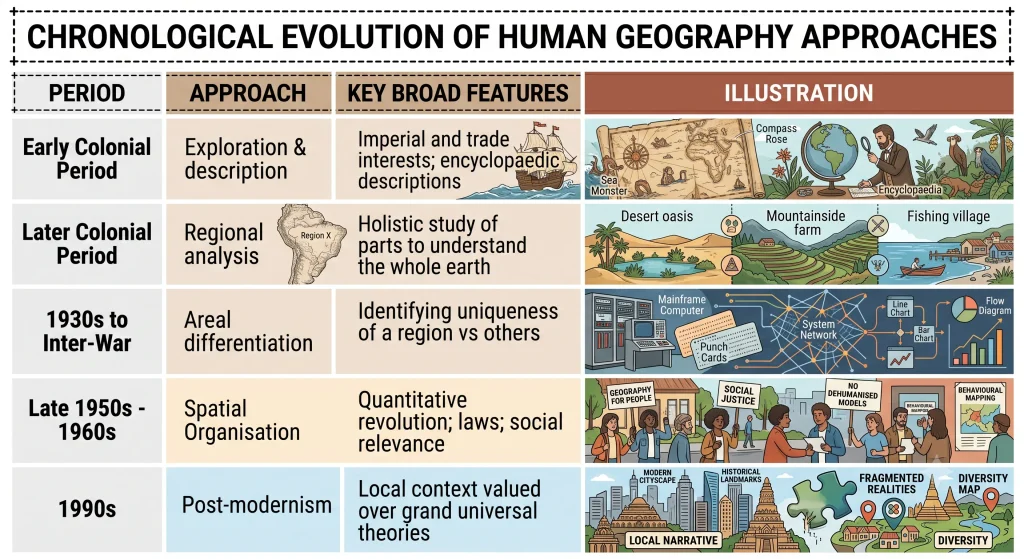
- Three Schools of Thought of the 1970s:
- Welfare or Humanistic School: समाज के social well-being (housing, health और education) पर focus करता है। इसके आधार पर Post Graduate level पर “Geography of Social Well-being” शुरू हुआ।
- Radical School: इसने poverty, deprivation और social inequality को explain करने के लिए Marxian theory का use किया, जिसमें समकालीन समस्याओं को capitalism से जोड़ा गया।
- Behavioural School: इसने व्यक्ति के lived experience, space perception और ethnic, racial व religious categories के perception पर बल दिया।
6. Fields, Sub-fields and Sister Disciplines
Human Geography का स्वरूप highly inter-disciplinary है और यह social sciences के साथ close interface बनाता है:
- Social Geography: इसके sub-fields में Behavioural Geography (Psychology), Geography of Social Well-being (Welfare Economics), Geography of Leisure (Sociology), Cultural Geography (Anthropology), Gender Geography (Women’s Studies), Historical Geography (History), और Medical Geography (Epidemiology) शामिल हैं।
- Urban Geography: Urban Studies and Planning के साथ interface रखता है।
- Political Geography: Electoral Geography (Psephology) और Military Geography (Military Science) से जुड़ा है।
- Population Geography: Demography के साथ interact करता है।
- Settlement Geography: Urban और Rural Planning से related है।
- Economic Geography: Geography of Resources (Resource Economics), Agriculture (Agricultural Sciences), Industries (Industrial Economics), Marketing (Commerce/Business Studies), Tourism (Tourism Management), और International Trade से जुड़ा हुआ है।
7. High-Yield Board Exam Pointers
- Exact Scholar Focus: Ratzel $\rightarrow$ Synthesis; Ellen Semple $\rightarrow$ Dynamism; Griffith Taylor $\rightarrow$ Neodeterminism / Stop and Go Determinism।
- Dichotomy Question (3 Marks): Physical environment और human world inseparable हैं; geographical study में organic metaphors (‘mouth’ of river, ‘profile’ of soil, state as ‘organism’) इस holistic relation को प्रमाणित करते हैं।
- Repeated 5-Marker: “Compare Environmental Determinism and Possibilism with case examples.” (Benda in Abujh Maad forest vs. Kari in Trondheim)।
- Crucial 1-Marker Terms:
- Psephology: Electoral Geography से जुड़ा study discipline।
- Areal Differentiation: किसी specific region की uniqueness को identify करना।
- Spatial Organisation: Late 1950s से 1960s का Quantitative Revolution, जिसमें statistical tools और physics laws का use हुआ।