
Class 12 Geography Chapter 4 – Primary Activities Revision Notes
1. Introduction to Economic & Primary Activities
- Economic Activities (Core Definition): “Human activities which generate income are known as economic activities.” ये broadly four categories में divided होती हैं: Primary, Secondary, Tertiary, and Quaternary activities।
- Primary Activities (Definition): “Primary activities are directly dependent on environment as these refer to utilisation of earth’s resources such as land, water, vegetation, building materials and minerals.”
- इसमें Hunting and gathering, pastoral activities, fishing, forestry, agriculture, mining और quarrying शामिल हैं।
- Red-Collar Workers (CBSE Keyword): Primary activities में काम करने वाले people को Red-collar workers कहा जाता है, क्योंकि उनका work strictly outdoor nature का होता है।
2. Hunting and Gathering
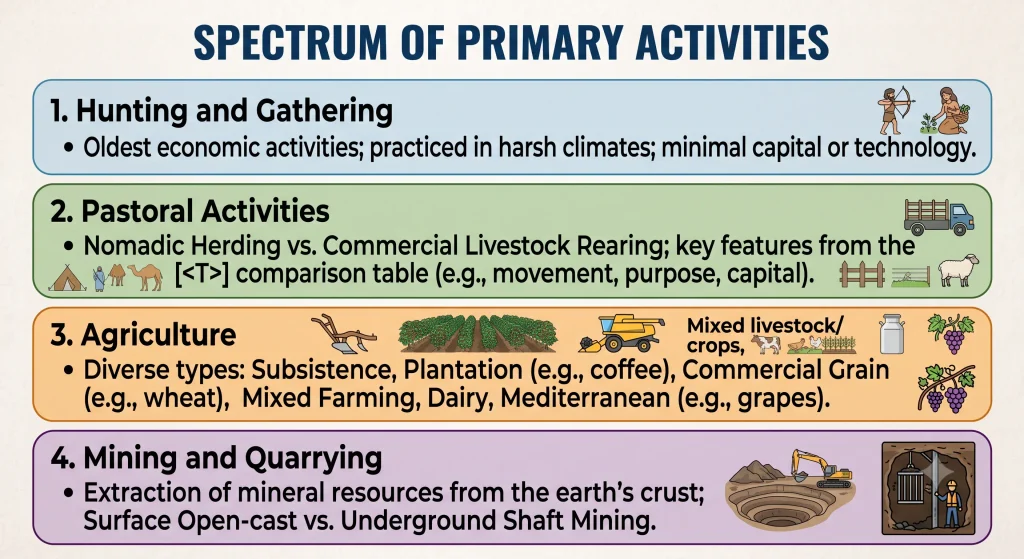
- Hunting (Primitive Subsistence): Earliest humans अपने immediate environment पर survive करते थे। Early hunters stones, twigs और arrows जैसे primitive tools use करते थे, इसलिए killed animals की संख्या सीमित होती थी। Modern era में poaching की वजह से कई species extinct या endangered हो गई हैं।
- Gathering (Characteristics):
- Harsh climatic conditions वाले regions में primitive societies द्वारा practice की जाती है।
- Low Capital & Low Technology: इसमें small amount of capital investment लगता है और level of technology बेहद low होता है।
- Yield: Yield per person बहुत low होती है और little or no surplus generate होता है (pure subsistence)।
- Major Geographical Zones of Gathering:
- High Latitude Zones: Northern Canada, Northern Eurasia, और Southern Chile।
- Low Latitude Zones: Amazon Basin, Tropical Africa, Northern fringe of Australia, और Southeast Asia के interior parts।
- Commercial Gathering (Modern Trend):
- कुछ regions में gathering market-oriented और commercial बन गई है। Gatherers leaves, barks और medicinal plants collect करके simple processing के बाद market में बेचते हैं।
- Tree Bark: Quinine, tannin extract, और cork बनाने के लिए use होती है।
- Leaves & Nuts: Beverages, drugs, cosmetics, fibers, thatch और edible oils के लिए use होते हैं।
- Tree Trunk & Sap: Rubber, balata, gums, resins और Chicle (chewing gum ka base, jo zapota tree ke milky juice se banta hai) yield करते हैं।
- Why Gathering has little chance at Global Level? (CBSE High-Yield Question):
- Gathering के products world market में compete नहीं कर पाते।
- Synthetic products (जो often better quality और cheaper price के होते हैं) ने tropical forest gatherers के natural products को replace कर दिया है।
3. Pastoralism: Nomadic Herding vs. Commercial Livestock Rearing
(i) Nomadic Herding (Pastoral Nomadism)
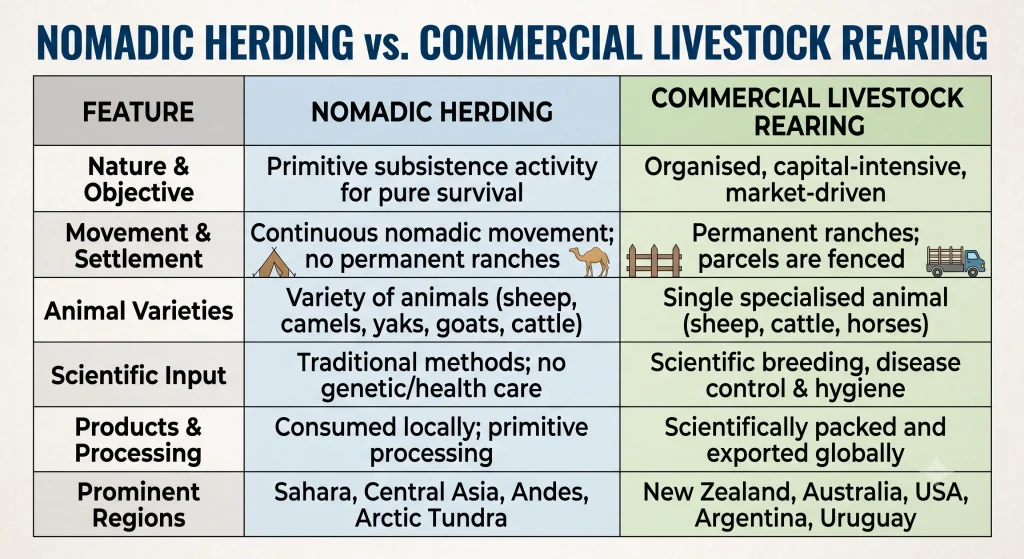
- Definition / Basis: Primitive subsistence activity जहाँ herders food, clothing, shelter, tools और transport के लिए animals पर निर्भर रहते हैं। Pasture और water की quality और quantity के अनुसार herders defined territory में migrate करते हैं।
- Regional Animals:
- Tropical Africa: Cattle सबसे important livestock हैं।
- Sahara & Asiatic Deserts: Sheep, goats और camel पाले जाते हैं।
- Mountainous Regions of Tibet & Andes: Yak और llamas पाले जाते हैं।
- Arctic and Sub-Arctic Areas: Reindeer सबसे महत्वपूर्ण animal है।
- Transhumance (CBSE Definition):
- “The process of migration from plain areas to pastures on mountains during summers and again from mountain pastures to plain areas during winters is known as transhumance.”
- Himalayan Communities: Gujjars, Bakarwals, Gaddis, और Bhotiyas गर्मियों में plains से mountains और सर्दियों में high altitude से plains की ओर migrate करते हैं। Tundra regions में herders summers में south to north और winters में north to south move करते हैं।
- Why Nomadic Herding is Declining?
- Imposition of strict political boundaries between countries।
- New settlement plans initiated by various governments।
(ii) Commercial Livestock Rearing
- Key Characteristics: Highly organised, capital-intensive activity जो mainly western cultures से associated है।
- Permanent Ranches: Animals permanent ranches पर graze करते हैं जो large parcels में divided और fenced होते हैं। Animals को pasture की carrying capacity के according rotate किया जाता है।
- Scientific Orientation: Specialised monoculture (one animal type per ranch) follow होता है। Animal breeding, genetic improvement, disease control और healthcare पर heavy focus रहता है। Meat, wool, hides को scientifically pack करके global markets में export किया जाता है।
- Key Regions: New Zealand, Australia, Argentina, Uruguay, और USA।
4. Systems of Agriculture
(A) Subsistence Agriculture
Farmers local needs के लिए farming करते हैं और nearly entire produce locally consume हो जाता है।
1. Primitive Subsistence Agriculture (Shifting Cultivation / Slash and Burn)
- Method: Tropical tribes vegetation को fire से clear करती हैं। Ashes soil की fertility बढ़ाती हैं। Small plots पर primitive tools (sticks, hoes) से खेती होती है।
- Problem: 3 से 5 years बाद soil fertility loose कर देती है, तो farmers new forest patch clear करने shift हो जाते हैं। Fertility decline होने से jhum cycle shorter होती जा रही है।
- Regional Terminology (High-Yield CBSE Match-the-Following):
- Jhuming: North-Eastern states of India।
- Milpa: Central America और Mexico।
- Ladang: Indonesia और Malaysia।
2. Intensive Subsistence Agriculture
Monsoon Asia के densely populated regions में practice की जाती है। Two subtypes:
- (i) Dominated by Wet Paddy Cultivation:
- Rice principal crop होती है। High population density की वजह से landholdings very small और fragmented होती हैं।
- Heavy use of family labour; machinery का use negligible होता है। Soil fertility maintain करने के लिए farmyard manure use होती है।
- Yield Equation: High yield per unit area, but low per labour productivity।
- (ii) Dominated by Crops other than Paddy:
- Relief, climate या low rainfall की वजह से rice grow करना possible नहीं होता।
- Crops: Wheat, soybean, barley, sorghum।
- Regions: Northern China, Manchuria, North Korea, North Japan; India में western Indo-Gangetic plains (Wheat) और dry parts of Western/Southern India (Millets)।
(B) Plantation Agriculture
- Origin & Nature: Europeans ने tropics में profit-oriented large-scale production systems के रूप में introduce किया था।
- Key Characteristics:
- Large estates (plantations) और heavy capital investment।
- Scientific methods of cultivation और managerial/technical support।
- Single-crop specialisation (Monoculture)।
- Cheap local labour और good transport network जो estates को factories और export ports से जोड़ता है।
- Colonial Contributions (Important Exam MCQs):
- British: Large tea gardens in India & Sri Lanka, rubber plantations in Malaysia, sugarcane & banana in West Indies।
- French: Coffee and cocoa plantations in West Africa।
- Spanish & Americans: Coconut and sugarcane plantations in the Philippines।
- Dutch: Sugarcane monopoly in Indonesia।
- Fazendas: Large coffee plantations in Brazil (कुछ आज भी Europeans manage करते हैं)।
(C) Extensive Commercial Grain Cultivation
- Location: Mid-latitudes के interior semi-arid lands (Continental interiors)।
- Crops: Wheat principal crop है; corn, barley, oats और rye भी grown होती हैं।
- Characteristics: Farm sizes extraordinarily large (thousands of hectares) होते हैं। Ploughing से लेकर harvesting तक सारे operations combine harvesters और tractors से highly mechanised होते हैं।
- Yield Equation: Low yield per acre, but high yield per person / labour (क्योंकि farms huge हैं और labour count minimal है)।
- Major Grasslands of the World (High-Yield Map Pointers):
- Eurasian Steppes
- Canadian and American Prairies
- Pampas of Argentina
- Velds of South Africa
- Australian Downs
- Canterbury Plains of New Zealand
(D) Mixed Farming
- Location: Highly developed regions: North-western Europe, Eastern North America, parts of Eurasia, and temperate latitudes of Southern continents।
- Key Features:
- Moderate farm sizes।
- Crops: Wheat, barley, oats, maize, root crops और fodder crops।
- Crop rotation और intercropping से soil fertility retain की जाती है।
- Equal Emphasis: Crop cultivation और Animal Husbandry दोनों को बराबर importance दी जाती है। Cattle, sheep, pigs और poultry crops के साथ additional regular income ensure करते हैं।
- High capital expenditure on farm machinery, silos, chemical fertilizers, और green manures।
(E) Dairy Farming
- Nature: Milch animals (दूध देने वाले पशु) का most advanced, efficient और scientific rearing system।
- Capital & Labour Requirements:
- Highly Capital-Intensive: Animal sheds, fodder storage facilities, feeding systems और automatic milking machines costly होते हैं। Cattle breeding, health care और veterinary facilities पर high investment होती है।
- Highly Labour-Intensive: Feeding, milching और animal care year-round continuous attention मांगते हैं; crop farming की तरह इसमें कोई off-season नहीं होता।
- Market Proximity: Fresh milk perishable होता है, इसलिए dairy farms urban और industrial centers के close locate होते हैं। Refrigeration, pasteurisation और fast transport ने dairy storage और trade radius बढ़ा दिया है।
- Three Major Belts:
- North Western Europe (Largest belt)।
- Canada।
- South Eastern Australia, New Zealand, and Tasmania।
(F) Mediterranean Agriculture & Viticulture
- Location: Mediterranean sea के दोनों तरफ coastal Europe, North Africa (Tunisia to Atlantic coast), Southern California, Central Chile, South-Western South Africa, और South/South-Western Australia।
- Speciality: Commercial production of citrus fruits (oranges, lemons, olives, figs)।
- Viticulture (Grape Cultivation):
- Mediterranean region की exclusive speciality है।
- High-grade grapes से world की best quality distinct-flavor wines बनाई जाती हैं। Inferior quality grapes को dry करके raisins (किशमिश) और currants बनाए जाते हैं।
- Seasonal Advantage: Fruits और vegetables winter season में supply किए जाते हैं जब European और North American markets में high demand होती है।
(G) Market Gardening, Horticulture & Specialized Farming
- Market Gardening and Horticulture: Urban high-income consumers के लिए vegetables, fruits और flowers जैसी high-value crops की small farms पर intensive cultivation।
- Capital and labour intensive: Greenhouses, HYV seeds, chemical fertilizers, irrigation, और artificial heating use होती है।
- Netherlands Specialisation: Netherlands Tulips और high-grade flowers grow करने में specialized है, जो air routes से Europe के cities में export होते हैं।
- Truck Farming (CBSE Keyword Definition):
- “The regions where farmers specialise in vegetables only, the farming is known as truck farming. The distance of truck farms from the market is governed by the distance that a truck can cover overnight.”
- Factory Farming: Western Europe और North America के industrial regions में modern innovation। Livestock (specialised poultry और cattle) को stalls और pens में रखकर manufactured feedstuff खिलाया जाता है और disease control, breed selection और scientific breeding heavily supervised होती है।
(H) Farming Organisation: Co-operative vs. Collective Farming
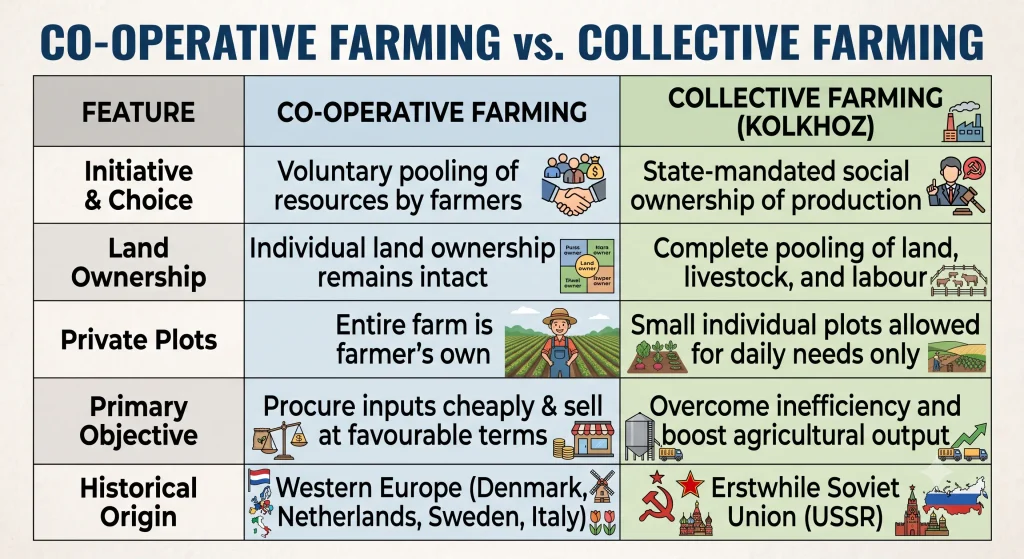
- Co-operative Farming: Farmers voluntarily resources pool करते हैं, लेकिन individual ownership preserve रहती है। Denmark में यह movement इतना successful रहा कि virtually हर farmer co-operative society का member है।
- Collective Farming (Kolkhoz Model): Soviet Union (USSR) में agriculture production boost करने और inefficiency खत्म करने के लिए state-controlled model लागू किया गया, जहाँ means of production पर collective social ownership थी।
5. Mining: Factors and Methods
- Evolution: Human history के development stages (Copper Age, Bronze Age, Iron Age) minerals की discovery reflect करते हैं। Industrial Revolution के साथ large-scale commercial mining begin हुई।
- Factors Affecting Mining Profitability:
- Physical Factors: Ore deposit का size, grade और mode of occurrence।
- Economic Factors: Mineral demand, available extraction technology, capital infrastructure, labour availability और transport logistics costs।
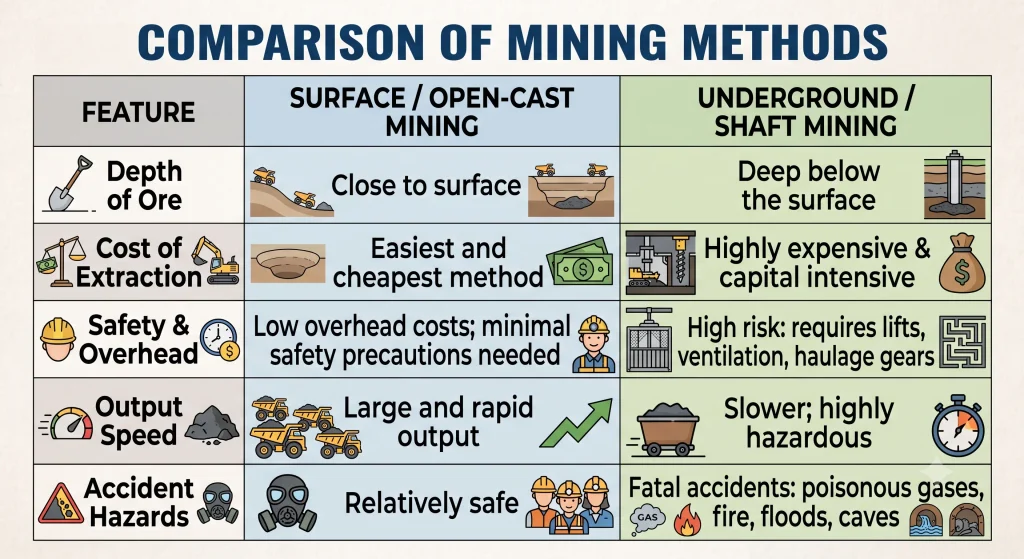
- Open-Cast / Surface Mining: Easiest और cheapest way; safety equipment और overhead expenses कम होते हैं; minerals rapid speed से extract होते हैं।
- Shaft / Underground Mining: जब ore deep underground स्थित हो, तब vertical shafts sink किए जाते हैं जिनसे underground galleries radiate करती हैं। Lifts, drills, haulage vehicles और ventilation systems require होते हैं। Poisonous gases, underground fires, cave-ins और flooding से fatal accidents का continuous threat रहता है।
- Global Trend in Mining: Developed economies high labour costs की वजह से mining और smelting stages से पीछे हट रही हैं। Developing countries (Africa, South America, Asia) जहाँ cheap labour available है, mining activities में dominate कर रही हैं; Africa के कई देशों में national earnings का 50% से अधिक हिस्सा केवल mineral exports से आता है।
6. High-Yield Board Exam Pointers
- Extensive Grain Farming Yield Paradox:“Why does extensive commercial grain farming have low yield per acre but high yield per person?”
- Answer: Farms huge size के होते हैं और total output extensive landmass पर spread होता है (making per acre yield low); लेकिन complete mechanisation की वजह से workers बहुत कम लगते हैं, जिससे per person productivity extremely high हो जाती है।
- Repeated 5-Marker: “Explain the key characteristics of Plantation Agriculture and the contribution of European colonisers.” (Cover: Huge capital, monoculture, estates linked to factories, British tea/rubber, French cocoa/coffee, Brazil fazendas)।
- Critical Distinction: “Differentiate between Transhumance and Pastoral Nomadism.” (Nomadic herding is general survival migration without seasonal periodicity; Transhumance is strict vertical/horizontal migration between plains and mountain pastures linked to summer/winter seasons).
- Important 1-Markers / MCQs:
- Base of chewing gum: Chicle (Zapota tree sap).
- Large coffee estates in Brazil: Fazendas.
- Kolkhoz model: Collective Farming in Soviet Union (USSR).
- Truck Farming: Vegetable farming situated overnight driving distance from urban centers.