Class 10 Political Science — Chapter 2: Federalism Revision Notes
1. What is Federalism? (Federal vs. Unitary System)
- Federalism (Core Definition): “Federalism is a system of government in which the power is divided between a central authority and various constituent units of the country.”
- Jurisdiction (Glossary Definition): “The area over which someone has legal authority. The area may be defined in terms of geographical boundaries or in terms of certain kinds of subjects.”
- Difference Between Federal and Unitary Systems:
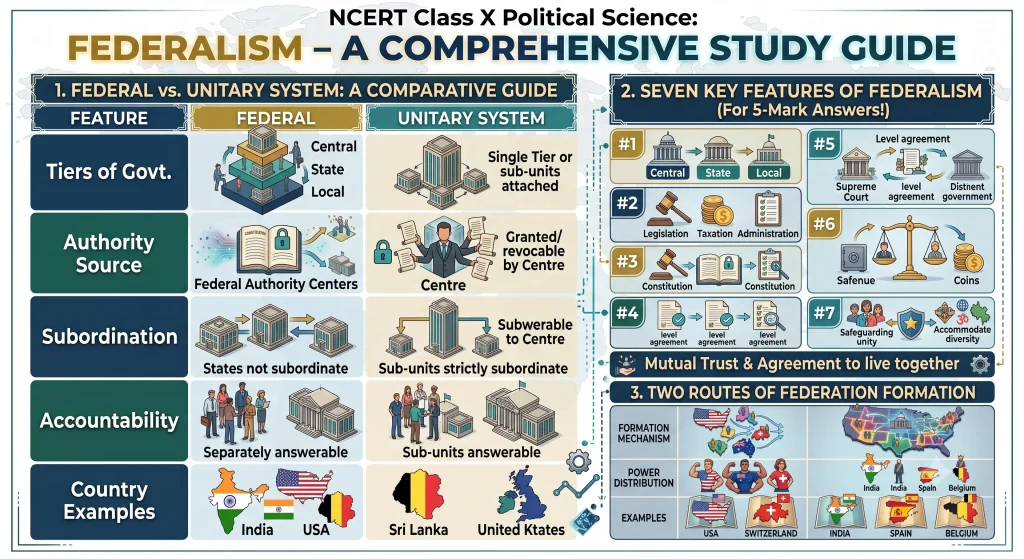
- Unitary System: या तो केवल one level of government होता है, या फिर sub-units central government के subordinate होते हैं। Central government provincial या local government को direct orders pass कर सकती है (उदा. Sri Lanka)।
- Federal System: Central government state governments को मनमाने orders नहीं दे सकती। State government के पास अपनी constitutional powers होती हैं, जिनके लिए वह central government के प्रति answerable नहीं होती; दोनों levels सीधे people के प्रति answerable होते हैं।
- Key Historical Transition: Belgium 1993 में unitary से federal system में shift हुआ जब regional governments को constitutionally guaranteed powers दी गईं। दूसरी तरफ Sri Lanka व्यावहारिक रूप से एक unitary system बना रहा।
2. Key Features of Federalism
CBSE Board Exams में 5-mark answers के लिए NCERT के ये 7 features सबसे high-scoring points हैं:
- Two or more levels of government: इसमें government के two or more tiers होते हैं (जैसे Central, State और Local)।
- Specific Jurisdiction: Different tiers समान citizens पर शासन करते हैं, लेकिन legislation, taxation और administration के specific matters में हर tier का अपना distinct Jurisdiction होता है।
- Constitutional Guarantee: हर tier का existence और authority संविधान द्वारा constitutionally guaranteed होता है।
- Rigid / Non-unilateral Amendments: संविधान के fundamental provisions को कोई एक level unilaterally change नहीं कर सकता; ऐसे बदलावों के लिए both levels of government की consent अनिवार्य है।
- Umpire Role of Courts: Constitution और different levels of government की powers को interpret करने का अधिकार courts के पास होता है। Disputes सुलझाने में Highest Court (Supreme Court) umpire की तरह कार्य करता है।
- Financial Autonomy: प्रत्येक level की financial autonomy ensure करने के लिए sources of revenue संविधान में clearly specified होते हैं।
- Dual Objectives: Federal system के दो core objectives होते हैं:
- देश की unity को safeguard और promote करना।
- Regional diversity को accommodate करना।
- इसलिए ideal federal system में mutual trust और agreement to live together दोनों elements आवश्यक हैं।
3. Two Routes of Federation Formation
Federations ऐतिहासिक परिस्थितियों के आधार पर दो primary routes से बनती हैं:
- ‘Coming Together’ Federations:
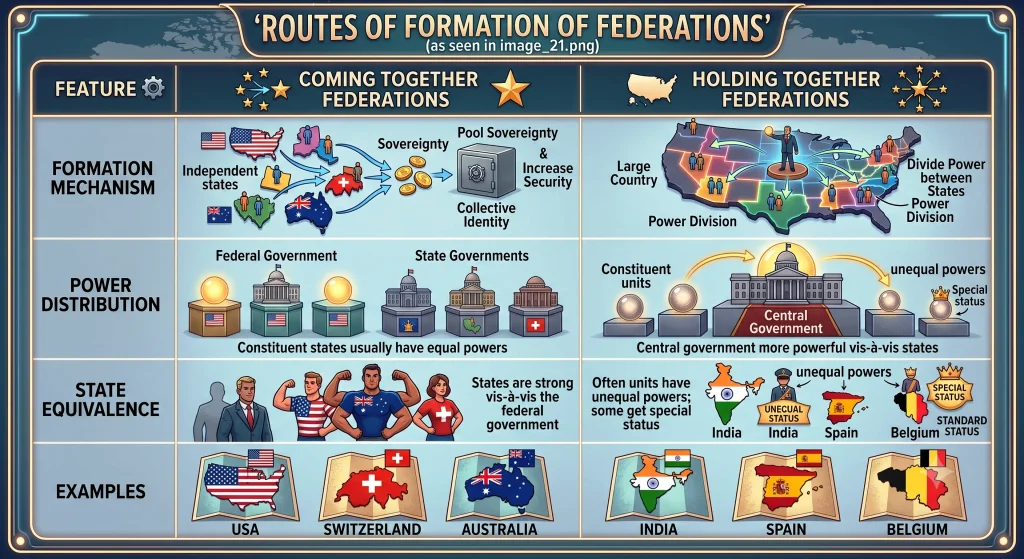
- Mechanism: Independent states अपनी security बढ़ाने के लिए अपनी sovereignty को pool करते हैं और identity retain करते हुए एक बड़ा unit बनाते हैं।
- Power Equation: Constituent units के पास आमतौर पर equal powers होती हैं और वे federal government के मुकाबले मजबूत स्थिति में होते हैं।
- Examples: USA, Switzerland, Australia।
- ‘Holding Together’ Federations:
- Mechanism: एक बड़ा देश अपनी internal diversity को manage करने के लिए अपनी power national government और constituent states के बीच divide करता है।
- Power Equation: Central Government ज्यादा powerful होती है, और different constituent units को अक्सर unequal powers दी जाती हैं (कुछ units को special provisions मिलते हैं)।
- Examples: India, Spain, Belgium।
4. What Makes India a Federal Country?
- Union of States: Constitution ने India को “Union of States” declare किया। यद्यपि इसमें ‘Federation’ word use नहीं हुआ, लेकिन Indian Union federal principles पर ही structured है।
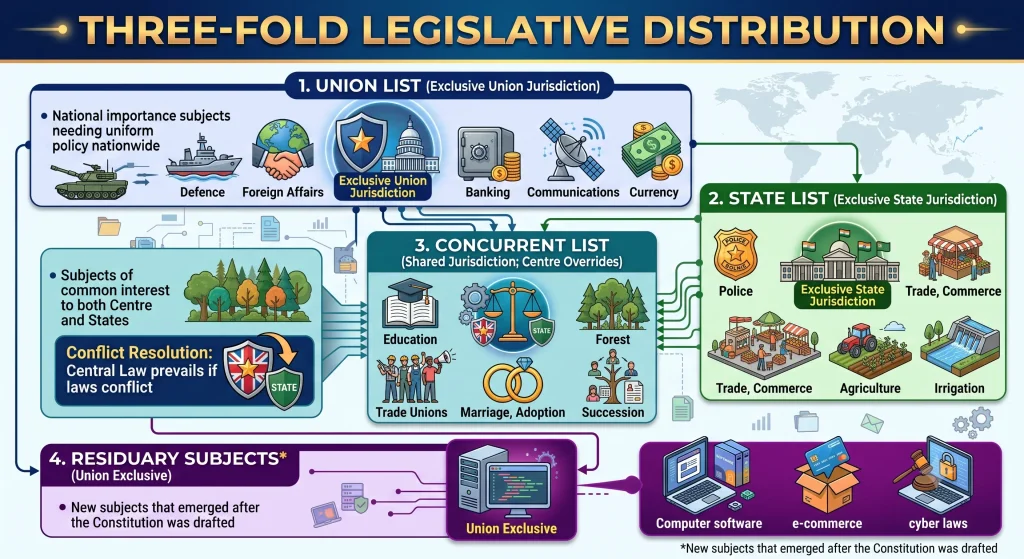
- Three-Fold Distribution of Legislative Powers (Three Lists):
- Asymmetric Federalism (Special Status & Union Territories):
- Special Provisions (Article 371): Assam, Nagaland, Arunachal Pradesh और Mizoram जैसे states को historical और cultural protection, indigenous land rights और jobs में priority के लिए special powers मिली हैं। Non-residents यहाँ land या house आसानी से नहीं खरीद सकते।
- Union Territories (UTs): Chandigarh, Lakshadweep या Delhi जैसे units बहुत छोटे हैं कि independent state बन सकें और किसी existing state में merge भी नहीं हो सकते। इनके पास state powers नहीं होतीं; इन्हें Central Government administer करती है।
- Rigid Amendment Procedure: इस basic power-sharing structure को बदलना आसान नहीं है। किसी भी change के लिए पहले Parliament के both Houses में at least two-thirds majority चाहिए, फिर at least half of the total State Legislatures का ratification mandatory है।
- Role of Judiciary: Constitution की implementation oversee करने में Judiciary decisive role निभाती है। Power distribution disputes में High Courts और Supreme Court final decision लेते हैं।
5. How is Federalism Practised in India?
केवल constitutional provisions पर्याप्त नहीं होते; Indian federalism की वास्तविक सफलता का श्रेय यहाँ की democratic politics के nature को जाता है:
(i) Linguistic States
- Historical Decision: 1947 के बाद भाषाई आधार पर States का reorganization किया गया ताकि एक भाषा बोलने वाले लोग एक state में रह सकें।
- Culture & Ethnicity Basis: कुछ states language के अलावा ethnicity, culture और geography के आधार पर बने (जैसे Nagaland, Uttarakhand, Jharkhand)।
- Outcome: शुरुआती डर के विपरीत, linguistic reorganization ने देश को more united बनाया और administration को practical और आसान बना दिया।
(ii) Language Policy
- No National Language: Indian Constitution ने किसी एक भाषा को National Language का दर्जा नहीं दिया।
- Hindi as Official Language: Hindi को Official Language identify किया गया, लेकिन यह केवल लगभग 40% (2011 census में 43.63%) भारतीयों की मातृभाषा है।
- Safeguards & 22 Scheduled Languages: Constitution के Eighth Schedule में Hindi के अतिरिक्त 21 अन्य languages को Scheduled Languages के रूप में recognize किया गया है। Central government examinations उम्मीदवार इनमें से किसी भी language में दे सकते हैं।
- English Compromise: 1965 में English का official use बंद होना था, लेकिन non-Hindi states (विशेषकर Tamil Nadu) के violent protests के बाद Center ने official purposes के लिए English और Hindi दोनों के usage को continue रखने का flexible decision लिया, जिससे Sri Lanka जैसे linguistic conflict से बचाव हुआ।
(iii) Centre-State Relations & Coalition Era
- Pre-1990 Scenario (Single-Party Dominance): लंबे समय तक Centre और अधिकतर States में एक ही party का शासन रहा, जिससे States स्वायत्त अधिकार exercise नहीं कर पाते थे। Centre rival parties की State Governments को Article 356 का misuse करके मनमाने ढंग से dismiss कर देती थी।
- Post-1990 Scenario (Era of Coalition Governments):
- Coalition Government (Glossary Definition): “A government formed by the coming together of at least two political parties. Usually partners in a coalition form a political alliance and adopt a common programme.”
- Lok Sabha में किसी single party को clear majority न मिलने के कारण National Parties को Regional Parties के साथ alliance बनाकर Centre में government बनानी पड़ी।
- Supreme Court Benchmark: Supreme Court के एक ऐतिहासिक फैसले ने Central Government द्वारा state governments की arbitrary dismissal पर सख्त constitutional check लगाया, जिससे State autonomy और federal culture मजबूत हुआ।
6. Decentralisation in India (The Third Tier)
- Decentralisation (Core Definition): “When power is taken away from Central and State governments and given to local government, it is called decentralisation.”
- Basic Rationale Behind Decentralisation:
- Local level की problems और issues को local people बेहतर समझते हैं।
- Local लोगों को पता होता है कि money कहाँ spend करनी है और resources manage कैसे करने हैं।
- Citizens directly decision-making में participate करते हैं, जिससे democratic participation की habit विकसित होती है (Local Self-Government का realization)।
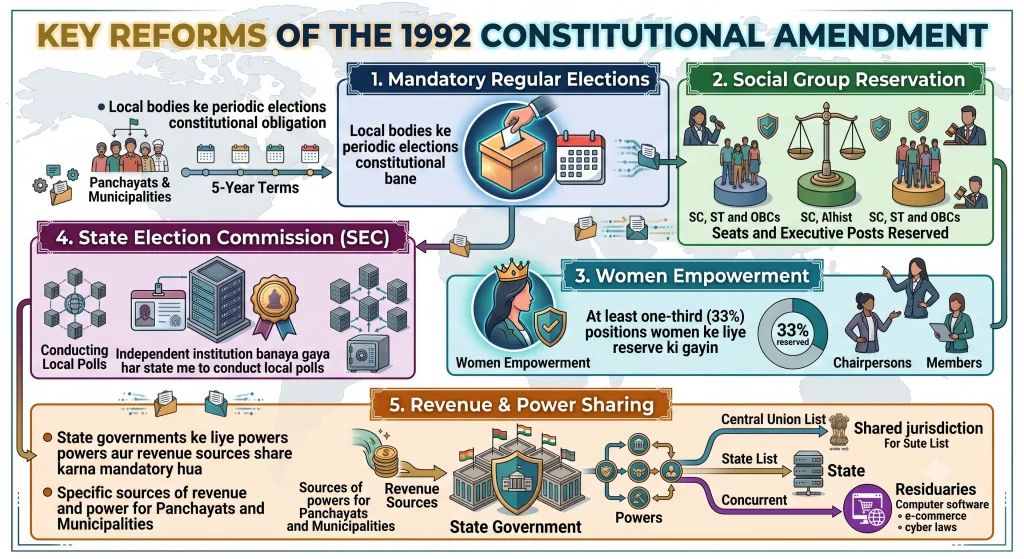
- Major Landmark: The 1992 Constitutional Amendment (73rd & 74th Amendments):
- Structure of Rural Local Government (Panchayati Raj):
- Gram Panchayat: Village level पर decision-making council; इसमें Ward Members (Panch) और President (Sarpanch) होते हैं, जिन्हें adult voters directly elect करते हैं।
- Gram Sabha: गाँव के सभी eligible voters इसके members होते हैं। यह Gram Panchayat का budget approve करती है और वर्ष में कम से कम 2 से 3 बार review meeting करती है।
- Panchayat Samiti / Block / Mandal: कई Gram Panchayats को मिलाकर block level पर Samiti बनती है, जिसके members को area के panchayat members elect करते हैं।
- Zilla Parishad: District level की apex body। इसके members elected representatives, District के MPs, MLAs और district-level officers होते हैं। Zilla Parishad Chairperson इसका political head होता है।
- Structure of Urban Local Government:
- Municipalities: Towns में operate करती हैं; इनका political head Municipal Chairperson होता है।
- Municipal Corporations: Big cities में operate करती हैं; इनका political head Mayor कहलाता है।
- Critical Evaluation:
- Achievement: 36 लाख से ज्यादा elected representatives (जिनमें 10 लाख से अधिक महिलाएं हैं) के साथ यह दुनिया का सबसे बड़ा democratic experiment है।
- Shortcomings: Gram Sabha की meetings regularly आयोजित नहीं होतीं, और कई State Governments ने पर्याप्त powers और financial resources local bodies को transfer नहीं किए हैं।
7. Textbook Cartoons & Case Studies Explained
- Map & Global Fact (Page 14):
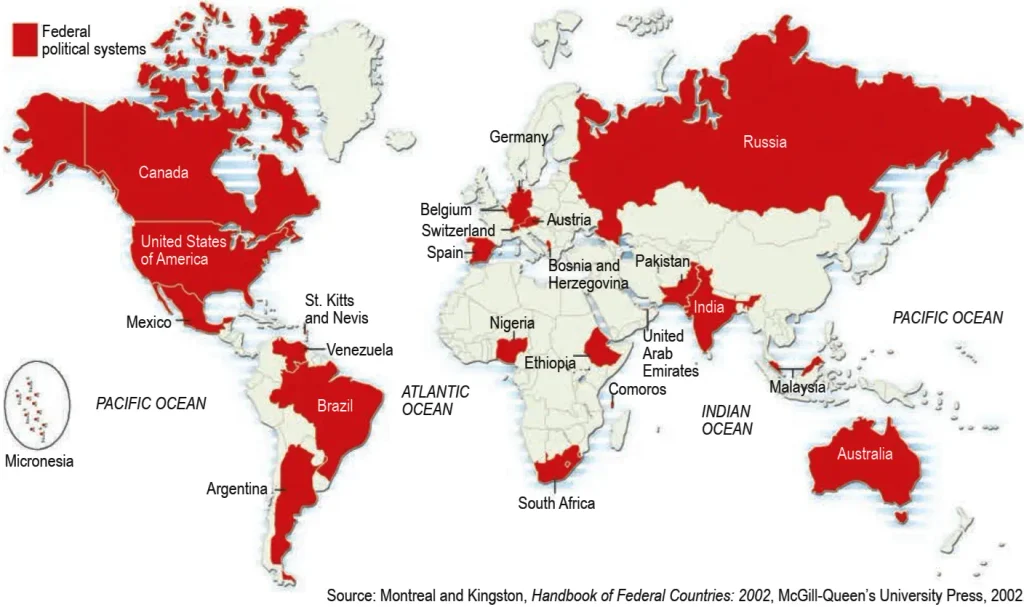
- दुनिया के 193 देशों में से केवल 25 देशों में federal system है, लेकिन वे world population का 40% हिस्सा govern करते हैं। World के अधिकांश बड़े देश federations हैं।
- Boy Reading Signboard: “Use Hindi”:
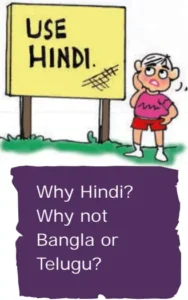
- Visual: बच्चा बोर्ड देखकर सोचता है: “Why Hindi? Why not Bangla or Telugu?”
- Message: India की multilingual diversity को दर्शाता है और यह स्पष्ट करता है कि बिना regional consensus के केवल एक भाषा थोपना national integration के लिए risky हो सकता है।
- Cartoon 1: “The States Plead for More Powers” (Page 21):
- Visual: Central leader (Indira Gandhi) कड़ाही से ‘Powers to States’ बाँट रही हैं, और विभिन्न Chief Ministers भिक्षापात्र (begging bowls) लेकर कतार में खड़े हैं।
- Message: 1990 से पहले की extreme centralization और State Governments की financial/political dependency पर व्यंग्य।
- Cartoon 2: “Perils of Running a Coalition Government” (Page 21):
- Visual: Prime Minister (Atal Bihari Vajpayee) एक सिंहासन पर बैठे हैं जो regional party leaders के bomb/dynamite barrels पर टिका हुआ है और आग की लपटों से घिरा है।
- Message: Coalition government चलाने की अस्थिरता और coalition partners को continuously संतुष्ट रखने का political tension।
- International Case Study: Porto Alegre, Brazil (Participative Democracy):
- Porto Alegre शहर ने local decentralisation को direct citizen participation के साथ combine किया।
- लगभग 13 लाख citizens wards/sectors में meeting करके city budget planning में direct participate करते हैं।
- Result: Public money केवल rich areas में खर्च होने के बजाय poor settlements में buses चलाने और slum-dwellers के rehabilitation में allocate हुई। (ऐसा ही similar planning experiment India के Kerala state में देखा गया)।
8. High-Yield Board Exam Pointers
- Constitutional Terms: Indian Constitution में ‘Federation’ शब्द का उल्लेख नहीं है; Article 1 इसे “Union of States” घोषित करता है।
- Residuary Jurisdiction: Computer software, cyber laws और modern e-commerce जैसे subjects जो constitution बनने के बाद आए, उन पर कानून बनाने की exclusive power केवल Union Government के पास है।
- Repeated 5-Marker: “Explain the key provisions of the 1992 constitutional amendment regarding decentralisation in India.” (Must cite: Regular elections, SC/ST/OBC reservation, 1/3rd women reservation, State Election Commission, Sharing of state revenue).
- Crucial 3-Marker: “Distinguish between ‘Coming Together’ and ‘Holding Together’ federations with examples.” (Focus on: Pooling sovereignty vs. dividing power; equal powers vs. unequal/asymmetric powers).