
Class 10 Science Chapter 7 Activities | How do Organisms Reproduce?
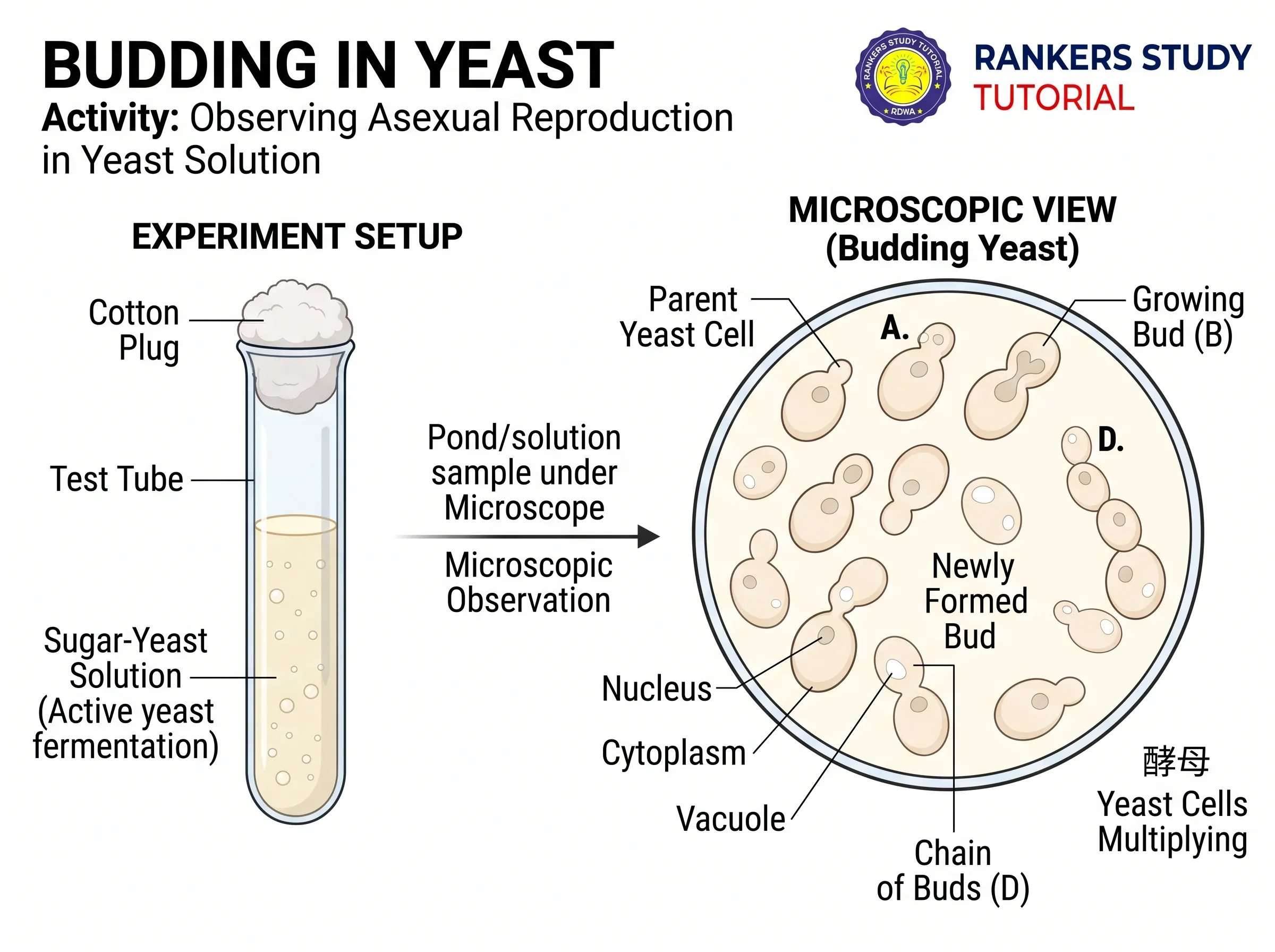
Activity 7.1: Budding in Yeast
Culture Growth and Observation of Yeast Reproduction
Experimental Procedure
- Dissolve about 10 g of sugar in 100 mL of water.
- Take 20 mL of this sugar solution in a test tube and add a pinch of yeast granules to it.
- Close the test tube with a cotton plug and place it in a warm location.
- After 1 to 2 hours, take a small drop of the yeast culture onto a glass slide, cover with a coverslip, and observe under a microscope.
Observations & Biological Mechanism
- Observation: Yeast cells are observed exhibiting small outward protuberances or buds growing from the parent cell surface, which may separate or form short chains.
- Reproductive Mode: Budding is a form of asexual reproduction where a small bud develops as an outgrowth due to repeated cell division at one specific site.
- Inference: Unicellular organisms like yeast multiply rapidly in nutrient-rich sugary media via budding.
Q1: What is the purpose of dissolving sugar in water when preparing the yeast culture in Activity 7.1?
Answer: Sugar serves as an essential nutrient and energy source (carbohydrate) to fuel rapid metabolic activity and cellular growth in yeast cells.
Q2: How does budding in yeast differ from binary fission seen in Amoeba?
Answer: In binary fission, a parent cell splits into two equal daughter cells. In budding, an unequal outgrowth (bud) develops on the parent cell, grows, and eventually detaches as a smaller individual.
Q3 (Application Based): Why is a warm place recommended for incubating the yeast test tube rather than a freezing environment?
Answer: Moderate warmth provides optimum thermal kinetic energy for intracellular respiratory and enzymatic reactions, whereas low temperatures deactivate metabolic enzymes and halt budding.
Q4 (Application Based): Are the offspring produced by budding in yeast genetically identical to the parent cell? Justify.
Answer: Yes, because budding is an asexual mode of reproduction driven by mitotic cell divisions, meaning the offspring inherit an exact replica of the parent’s DNA, barring rare copying errors.
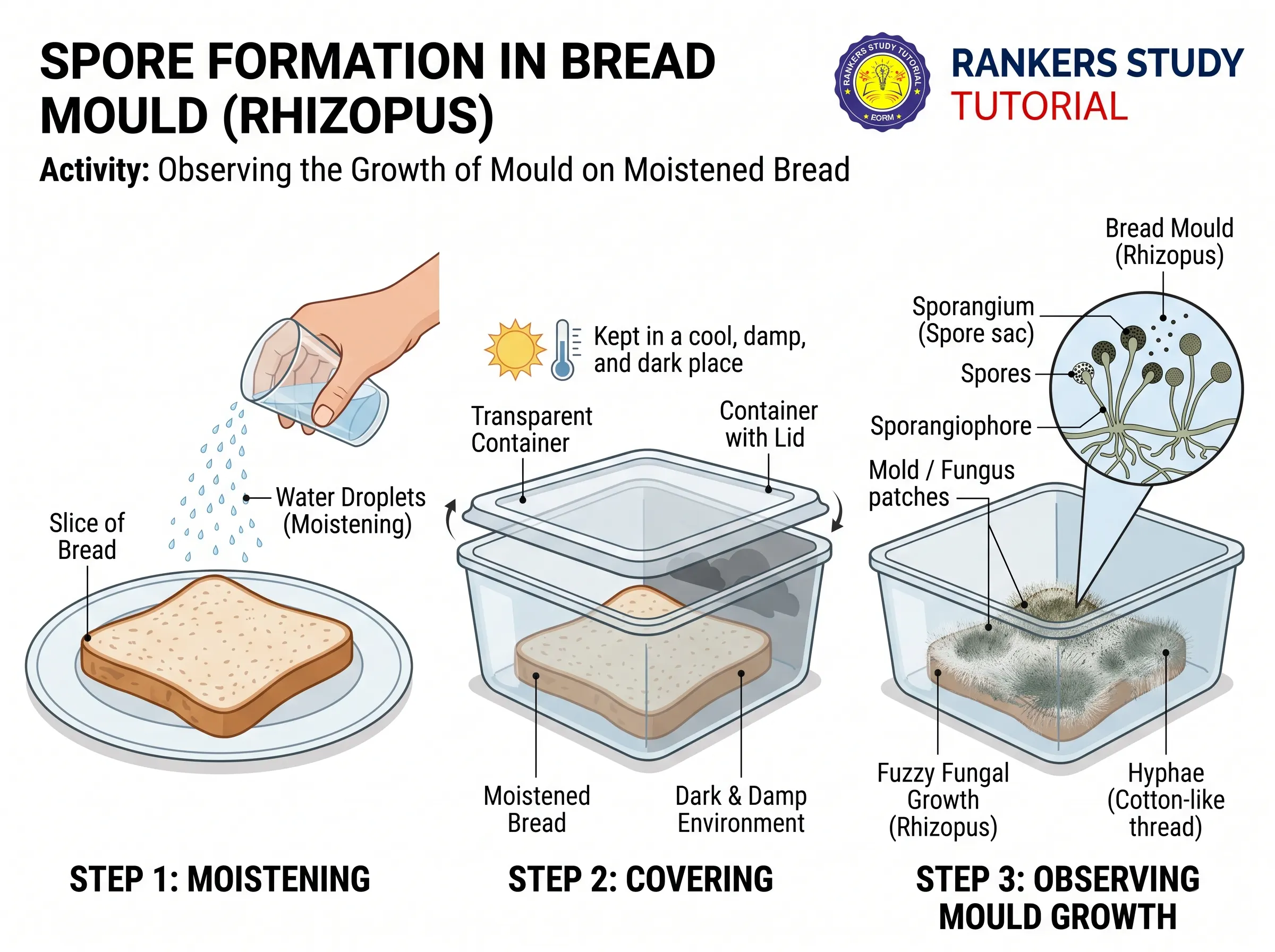
Activity 7.2: Spore Formation in Bread Mould
Observation of Rhizopus Growth on Moist Bread
Experimental Procedure
- Take a slice of fresh bread and wet it slightly with water.
- Keep the moist bread slice inside a cool, damp, and dark place.
- Examine the surface of the bread daily using a magnifying glass or microscope over a span of one week.
- Record the appearance of thread-like structures and tiny blob-on-a-stick bodies.
Observations & Biological Mechanism
- Observation: White cotton-like growth appears initially, which turns black over days as fine thread-like hyphae develop vertical stalks ending in spherical blob structures.
- Reproductive Structures: The blobs are sporangia containing hundreds of microscopic spores protected by thick walls.
- Inference: Bread mould (Rhizopus) reproduces asexually via spore formation, enabling widespread dispersal through air.
Q1: What are the blob-on-a-stick structures observed on bread mould, and what do they contain?
Answer: The blobs are sporangia, which contain specialized reproductive cells called spores that can develop into new Rhizopus individuals.
Q2: Why are the spores of Rhizopus covered by thick walls?
Answer: Thick protective walls shield spores against harsh environmental conditions such as desiccation and extreme temperatures until they encounter a moist surface to germinate.
Q3 (Application Based): How does spore formation benefit simple multicellular organisms in colonizing distant new food sources?
Answer: Spores are extremely lightweight and microscopic, allowing them to be easily carried over long distances by air currents to land on fresh nutrient substrates.
Q4 (Application Based): Are the thread-like hyphae seen spreading across the bread surface considered reproductive organs?
Answer: No, hyphae are vegetative structures responsible for nutrient absorption and body growth, whereas only the aerial sporangia function as reproductive parts.
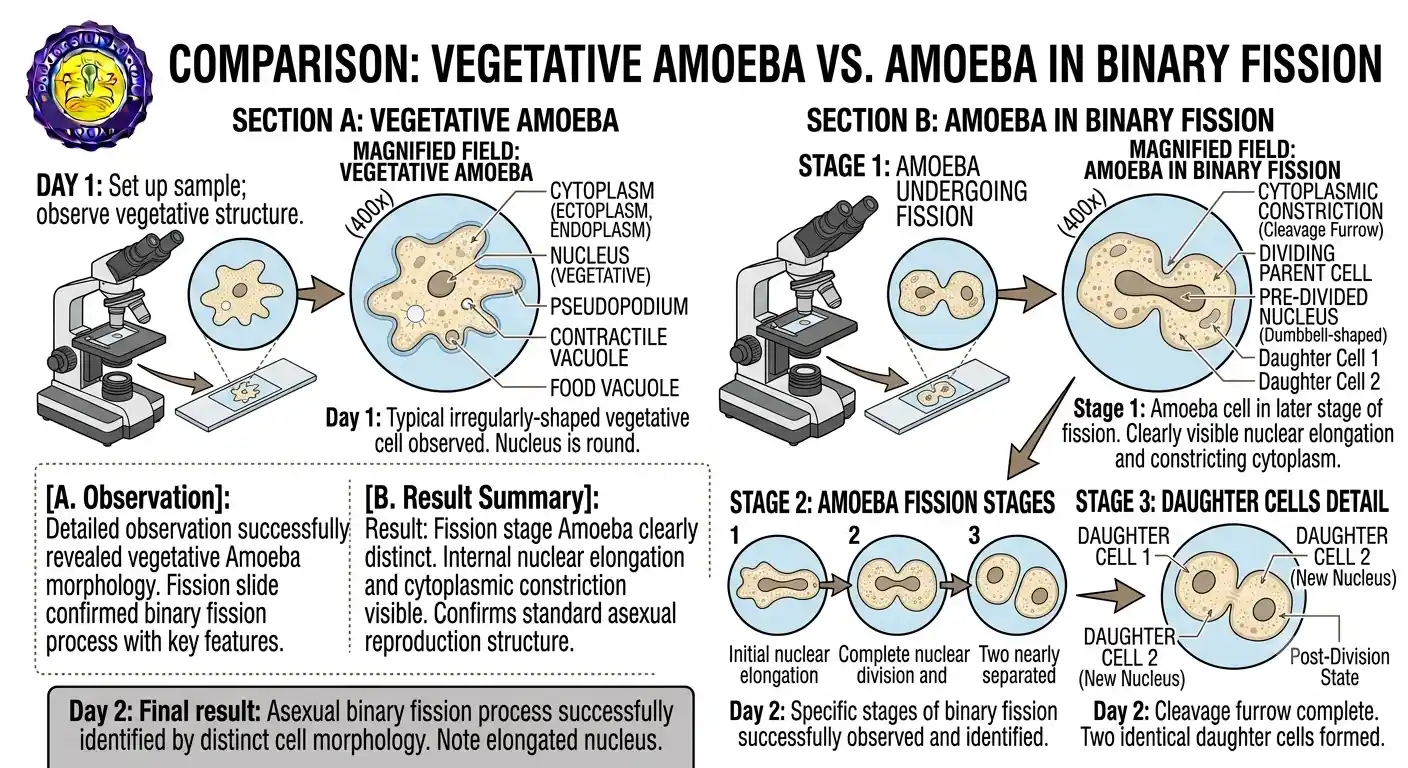
Activity 7.3: Binary Fission in Amoeba
Microscopic Comparison of Undivided Amoeba vs. Binary Fission Stages
Experimental Procedure
- Mount and observe a permanent microscope slide of a normal vegetative Amoeba.
- Examine another permanent slide depicting Amoeba undergoing binary fission.
- Compare nuclear elongation, cytoplasmic constriction, and the final splitting into two daughter cells across both slides.
Observations & Biological Mechanism
- Nuclear Division: The single nucleus lengthens and divides mitotically into two identical daughter nuclei.
- Cytoplasmic Division: The cell membrane constricts in the middle, pinching the cytoplasm into two equal halves.
- Inference: Unicellular organisms reproduce via cell division (fission), where parent identity merges into two independent daughter cells.
Q1: In what plane does binary fission take place in Amoeba?
Answer: In Amoeba, the splitting of the two cells during binary fission can take place in any plane.
Q2: Contrast binary fission in Amoeba with binary fission in Leishmania.
Answer: In Amoeba, division occurs along any irregular plane. In Leishmania, binary fission takes place in a definite orientation relative to its whip-like flagellar structure at the cell tip.
Q3 (Application Based): Why can unicellular organisms like Amoeba reproduce simply through cell division, whereas complex multicellular organisms cannot?
Answer: Unicellular bodies consist of a single isolated cell where simple splitting suffices. Multicellular bodies are intricate assemblies of specialized tissues and organs arranged in definite positions, making random cell-by-cell division impractical.
Q4 (Application Based): How does the malarial parasite Plasmodium multiply during unfavourable conditions compared to binary fission?
Answer: Plasmodium undergoes multiple fission, simultaneously dividing its nucleus into numerous daughter nuclei, each surrounded by cytoplasm, producing many daughter cells at once.
Activity 7.4: Fragmentation in Spirogyra
Microscopic Examination of Filamentous Algae Fragments
Experimental Procedure
- Collect pond or lake water containing dark green filamentous algal masses.
- Place one or two green filaments onto a clean glass slide.
- Add a drop of glycerine, apply a coverslip gently, and examine under a compound microscope.
- Identify cellular partitions, spiral chloroplast bands, and fragmentation sites.
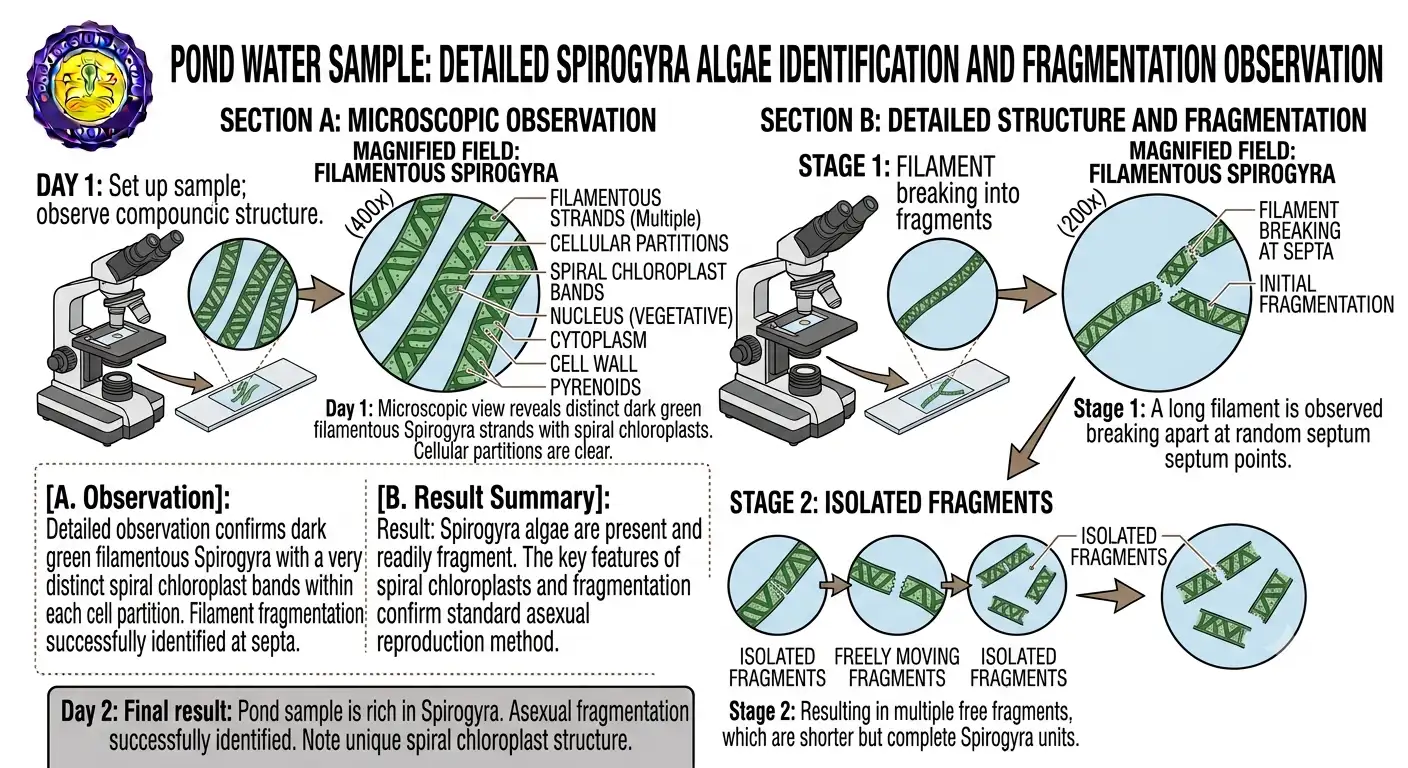
Observations & Biological Mechanism
- Observation: Long green ribbon-like filaments are visible, consisting of identical rectangular cells joined end-to-end.
- Reproductive Mode: Upon maturation, simple multicellular filaments break up spontaneously into two or more smaller pieces.
- Inference: Each independent fragment undergoes cell division and growth to regenerate a full multicellular individual, a process called fragmentation.
Q1: What is fragmentation, and in what type of organisms is it commonly observed?
Answer: Fragmentation is an asexual reproductive method where a mature organism breaks into pieces, each developing into a new individual. It is common in simple multicellular organisms like Spirogyra.
Q2: Why is fragmentation restricted to simple multicellular body designs rather than complex vertebrates?
Answer: Complex animals possess interdependent organ systems and specialized tissues that cannot regenerate an entire body from arbitrary severed fragments.
Q3 (Application Based): Distinguish between regeneration (as seen in Planaria) and fragmentation (as seen in Spirogyra).
Answer: Fragmentation is a routine mode of reproduction where the body breaks up upon maturation. Regeneration is primarily a restorative ability where specialized cells reconstruct lost body parts after accidental injury or cutting.
Q4 (Application Based): How do specialized cell types maintain developmental control when regenerating missing organs in organisms like Hydra?
Answer: Specialized regenerative cells proliferate to form a mass of undifferentiated cells, which subsequently undergo regulated developmental differentiation to establish proper anatomical structures.
Activity 7.5: Vegetative Propagation in Potato Tubers
Sprouting of Buds from Potato Notches on Moist Cotton
Experimental Procedure
- Examine a potato tuber to locate surface indentations known as ‘eyes’ or buds.
- Slice the potato into smaller sections, ensuring some pieces include a bud/notch while others do not.
- Spread moistened cotton wool inside a flat tray and arrange the potato pieces on top, keeping track of those with buds.
- Maintain moisture levels and observe sprouting behavior over several days.
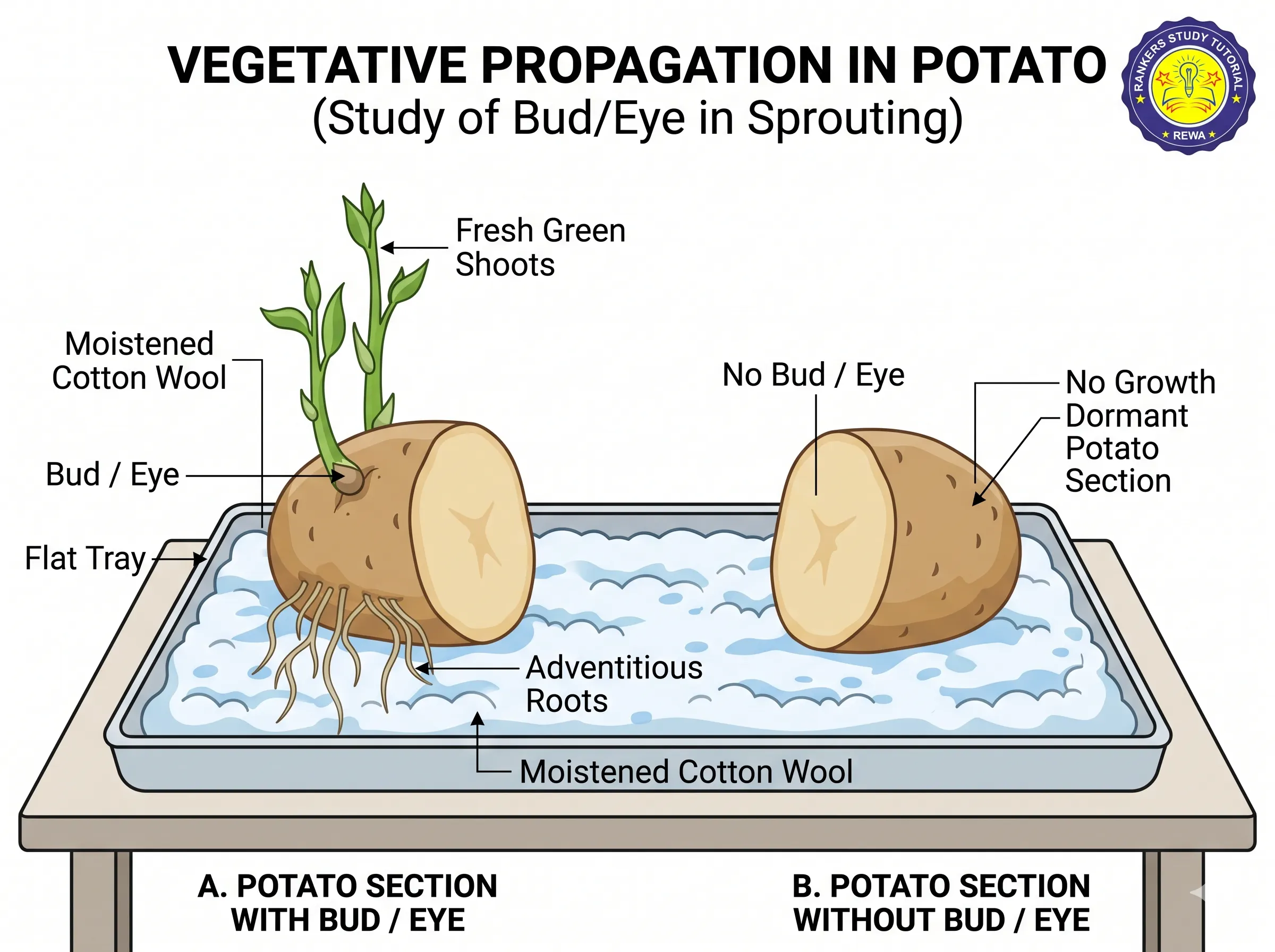
Observations & Biological Mechanism
- Observation: Only potato sections containing a notch or bud sprout fresh green shoots and adventitious roots. Pieces lacking buds remain dormant and decay.
- Vegetative Propagation: New plants are derived directly from vegetative plant organs (roots, stems, leaves) without sexual structures.
- Advantages: Enables rapid crop multiplication, early fruit bearing, and genetic uniformity identical to the parent.
Q1: Which potato pieces give rise to fresh green shoots and roots in Activity 7.5?
Answer: Only the potato pieces containing a bud (or eye/notch) give rise to fresh green shoots and roots.
Q2: Name two agricultural methods that utilize vegetative propagation to cultivate horticultural crops.
Answer: Layering and grafting (used for sugarcane, roses, and grapes).
Q3 (Application Based): What are the primary horticultural advantages of growing plants via vegetative propagation rather than from seeds?
Answer: Vegetatively propagated plants bear flowers and fruits much earlier, and they allow cultivation of seedless varieties like bananas, seedless oranges, and roses.
Q4 (Application Based): How does Bryophyllum propagate naturally using its leaves?
Answer: Buds produced along the marginal notches of Bryophyllum leaves fall onto damp soil and develop into independent young plantlets.
Activity 7.6: Vegetative Propagation in Money Plant
Stem Cutting Propagation Using Nodes and Leaves
Experimental Procedure
- Select a healthy money plant vine.
- Cut several stem pieces such that each contains at least one leaf (including the nodal region).
- Cut alternative stem portions lying strictly between two leaves (internodal cuts).
- Immerse the basal cut ends of all stem pieces in water-filled vessels and monitor growth over consecutive days.
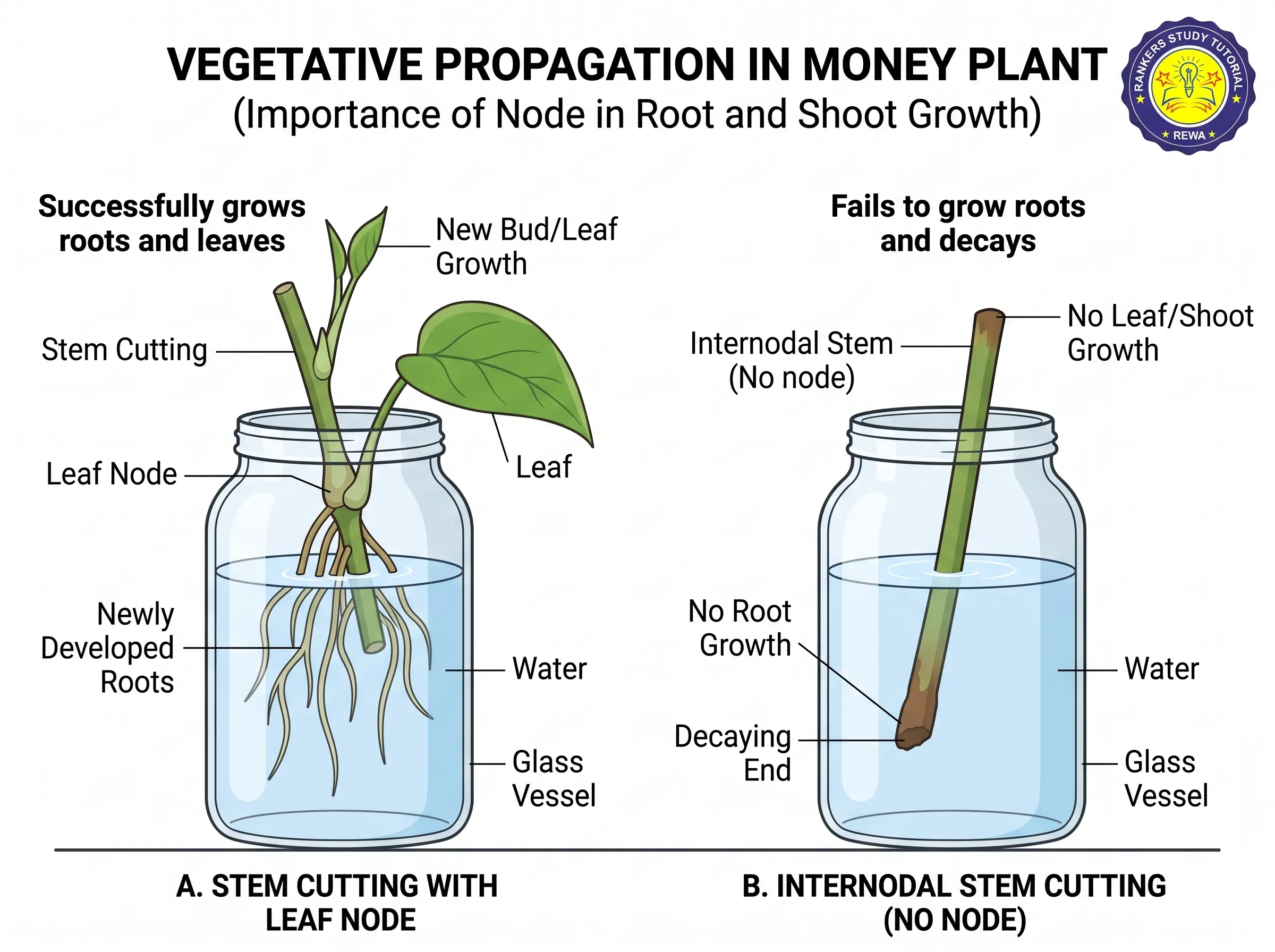
Observations & Biological Mechanism
- Observation: Stem cuttings possessing a leaf node sprout adventitious roots and new leaves, whereas internodal stem pieces fail to grow and eventually wither.
- Meristematic Activity: Nodes contain meristematic tissue capable of cell division and organogenesis.
- Inference: Successful vegetative stem propagation requires nodal meristems capable of generating root and shoot systems.
Q1: Which stem pieces successfully grow new leaves and roots in Activity 7.6?
Answer: Only the stem pieces containing at least one leaf node grow and give rise to fresh roots and leaves.
Q2: What is tissue culture, and what are its main benefits in plant propagation?
Answer: Tissue culture involves growing new plants from isolated cells or tissue from growing tips placed in artificial nutrient media containing hormones. It allows rapid production of disease-free ornamental plants.
Q3 (Application Based): Why do internodal stem cuttings fail to develop roots in water propagation tests?
Answer: Internodal regions lack specialized meristematic cells or dormant buds necessary to initiate root and shoot differentiation.
Q4 (Application Based): Are plants produced via vegetative stem cuttings genetically identical to the parent stock?
Answer: Yes, because vegetative propagation is an asexual process based on mitosis, ensuring offspring inherit exact genetic copies of the parent plant.
Activity 7.7: Anatomy of Germinating Seeds
Dissecting Soaked Bengal Gram (Chana) Seeds
Experimental Procedure
- Soak a few seeds of Bengal gram (chana) in water and leave them overnight.
- Drain excess water, wrap the seeds in a moist cloth, and keep them for a day to initiate germination.
- Ensure seeds remain humid without drying out.
- Carefully peel the seed coat, split the seed open, and identify internal embryonic structures (Fig. 7.9).
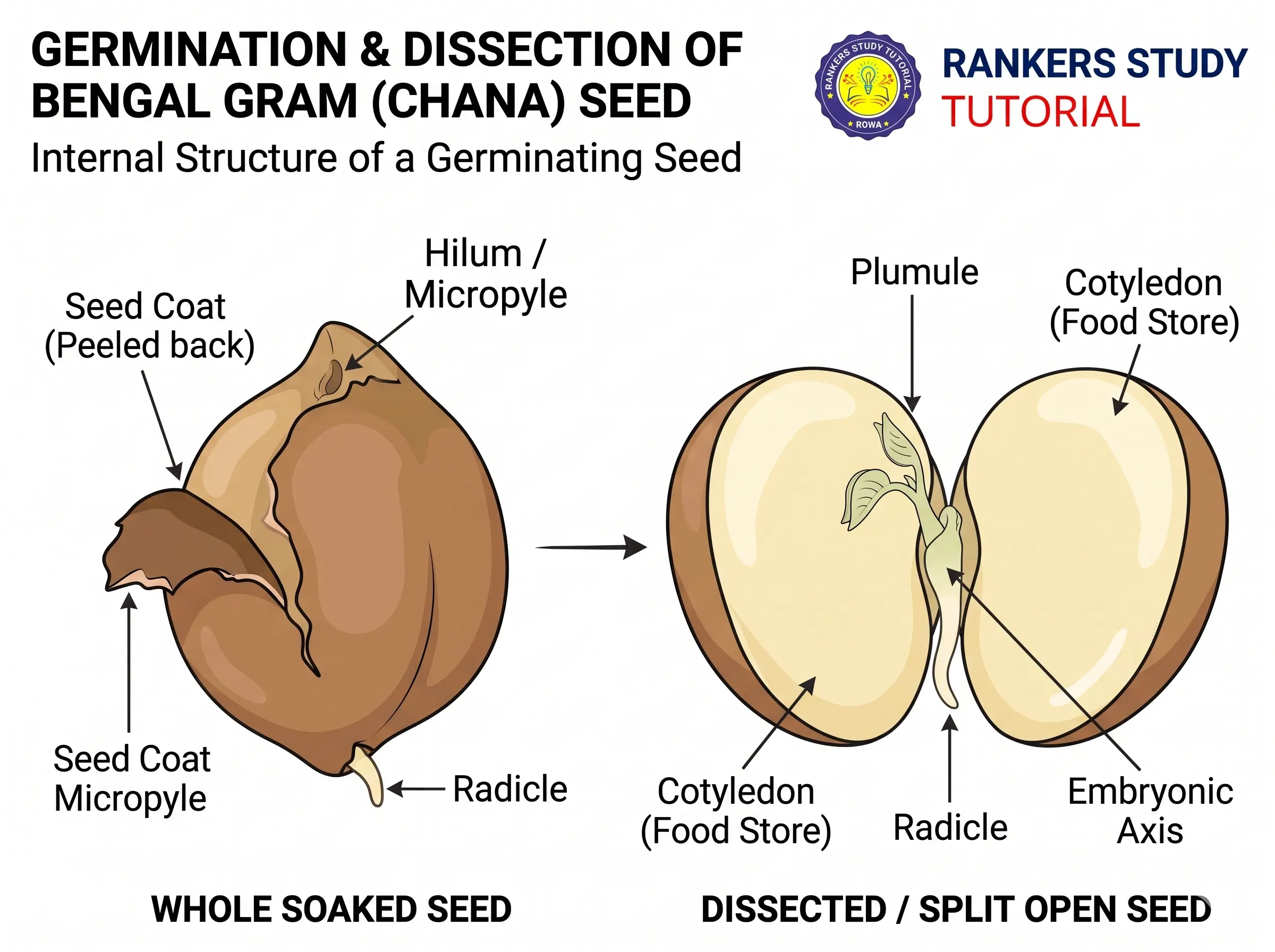
Observations & Biological Mechanism
- Observation: Two fleshy cotyledons containing stored food reserves are revealed, along with an embryonic axis bearing the plumule (future shoot) and radicle (future root).
- Germination: The activation of metabolic processes in the seed embryo driven by water absorption and warmth.
- Inference: Seeds pack a dormant embryonic plant along with nutritive cotyledons to support early seedling development before photosynthesis begins.
Q1: What are the primary internal parts identified upon splitting an imbibed gram seed?
Answer: Fleshy cotyledons (food stores), the plumule (future shoot), and the radicle (future root).
Q2: What roles do the plumule and radicle play during seedling development?
Answer: The plumule develops into the future shoot system above ground, while the radicle develops into the future root system anchored in the soil.
Q3 (Application Based): Why is soaking seeds overnight and wrapping them in a wet cloth necessary before dissecting or planting them?
Answer: Imbibition softens the tough seed coat and reactivates dormant embryonic enzymes, swelling the seed and making internal embryonic structures easy to isolate and examine.
Q4 (Application Based): What is the function of cotyledons during early seed germination before the seedling emerges above the soil surface?
Answer: Cotyledons store rich nutritional reserves (starches, proteins, lipids) that fuel cellular respiration and growth of the embryonic axis until true green leaves form for photosynthesis.
Section 7.3: Human Reproductive Systems and Puberty
Anatomy of Male and Female Reproductive Tracts and Fertilisation
Core Concept Summary
- Male Reproductive System: Testes (produce sperm and testosterone in scrotum at lower body temperature), vas deferens, prostate/seminal vesicles (add nutrient fluid), and urethra/penis.
- Female Reproductive System: Ovaries (produce eggs and hormones), fallopian tubes/oviducts (site of fertilisation), uterus/womb (embryo implantation), cervix, and vagina.
- Placenta: A specialized disc-like vascular tissue connecting the developing embryo to the uterine wall, facilitating glucose, oxygen, and waste exchange.
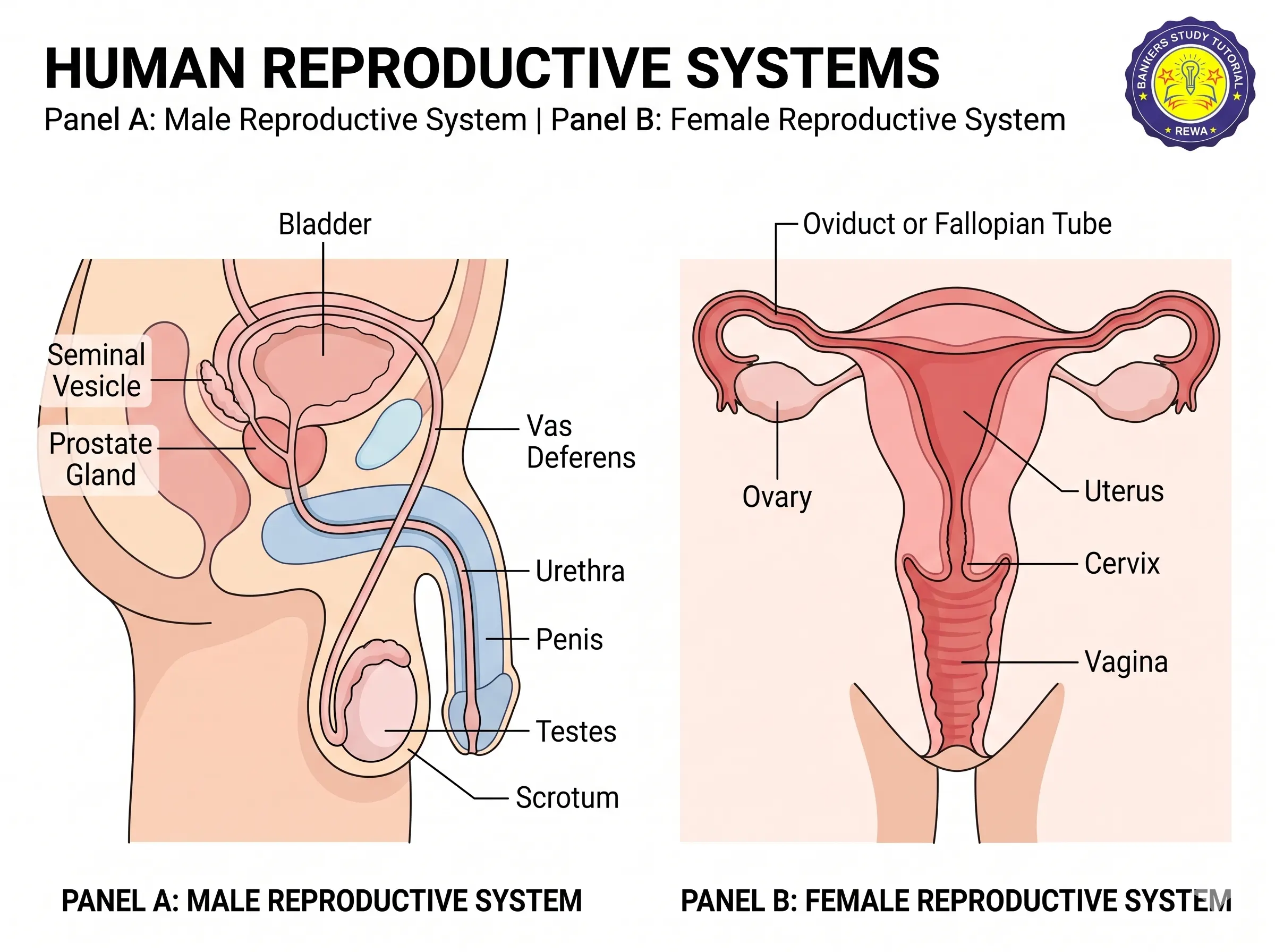
Q1: Why are the testes located outside the abdominal cavity within the scrotum?
Answer: Sperm formation requires a temperature slightly lower than the normal internal body temperature, which is provided by the external scrotal sac.
Q2: What is the specific site of fertilisation in the human female reproductive system?
Answer: Fertilisation occurs in the oviduct or Fallopian tube.
Q3 (Application Based): Explain the structural and functional role of the placenta during human gestation.
Answer: The placenta is a disc embedded in the uterine wall with embryonic villi surrounded by maternal blood spaces. It provides a large surface area for the transfer of oxygen and glucose from mother to foetus, and carbon dioxide and nitrogenous wastes from foetus to mother.
Q4 (Application Based): What causes menstruation to occur each month in human females if fertilisation does not take place?
Answer: If the egg is not fertilised, the thick, spongy uterine lining prepared for implantation is no longer needed. It slowly breaks down and sheds out through the vagina as menstrual blood and mucus.