Class 8 Science Chapter 1 MCQs: Crop Production and Management (Set 1)
Cultivating crops to feed our large population demands regular production, proper field management, and organized distribution. In NCERT Class 8 Science Chapter 1, “Crop Production and Management,” students discover the fundamental practices farmers perform across agricultural seasons—from tilling the ground to safe granary storage.
To excel in CBSE assessments, school periodic tests, and science Olympiads, practicing conceptual and competency-based questions is essential. This test delivers 50 balanced multiple-choice questions featuring picture recognition, assertion-reasoning, and practical farm scenarios.
Quick Chapter Summary & Core Topics Tested
Before attempting the quiz, review the key agricultural practices covered in the textbook:
Cropping Patterns:
Kharif Crops: Sown during the rainy season (June to September). Examples include paddy, maize, soyabean, groundnut, and cotton.
Rabi Crops: Grown during the winter season (October to March). Examples include wheat, gram, pea, mustard, and linseed.
Soil Preparation: Ploughing or tilling turns and loosens the soil, allowing root aeration, assisting earthworms and beneficial bacteria, and bringing nutrient-rich soil to the top. Big lumps called crumbs are smoothed using a leveller. Implements include the plough, hoe, and tractor-driven cultivator.
Sowing & Seed Selection: Healthy seeds sink in water, while hollow, damaged seeds float. A tractor-drawn seed drill distributes seeds at uniform depths and spacing while covering them with soil to prevent bird consumption. Crops like paddy are first germinated in nurseries before being transplanted into fields.
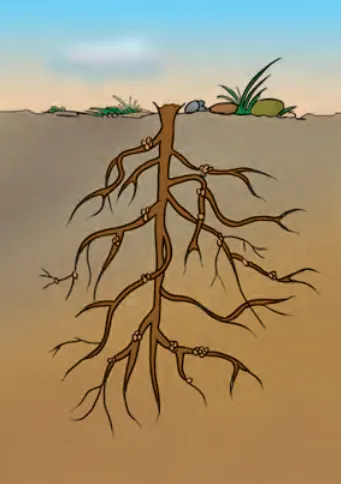
Manure vs. Chemical Fertilisers: Manure is organic matter derived from decomposed cattle dung and plant waste that enriches the soil with humus and enhances water retention. Chemical fertilizers (NPK, urea, superphosphate) supply concentrated nutrients but provide no organic humus and can contribute to water runoff pollution over time. Alternating crops with legumes restores soil nitrogen via symbiotic Rhizobium root bacteria.
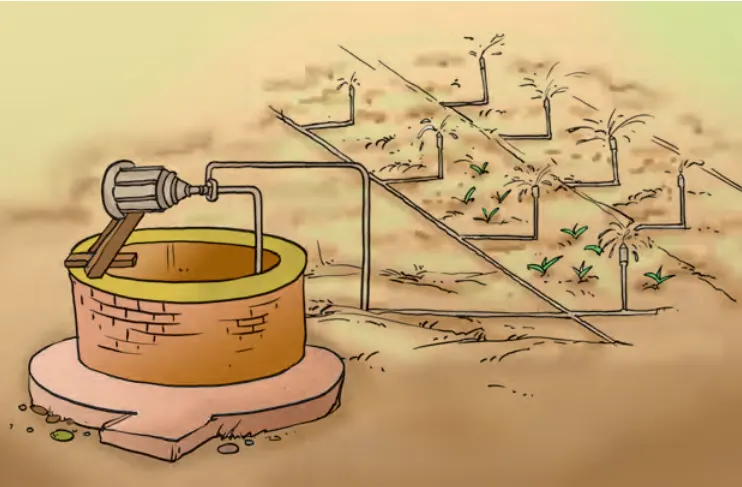
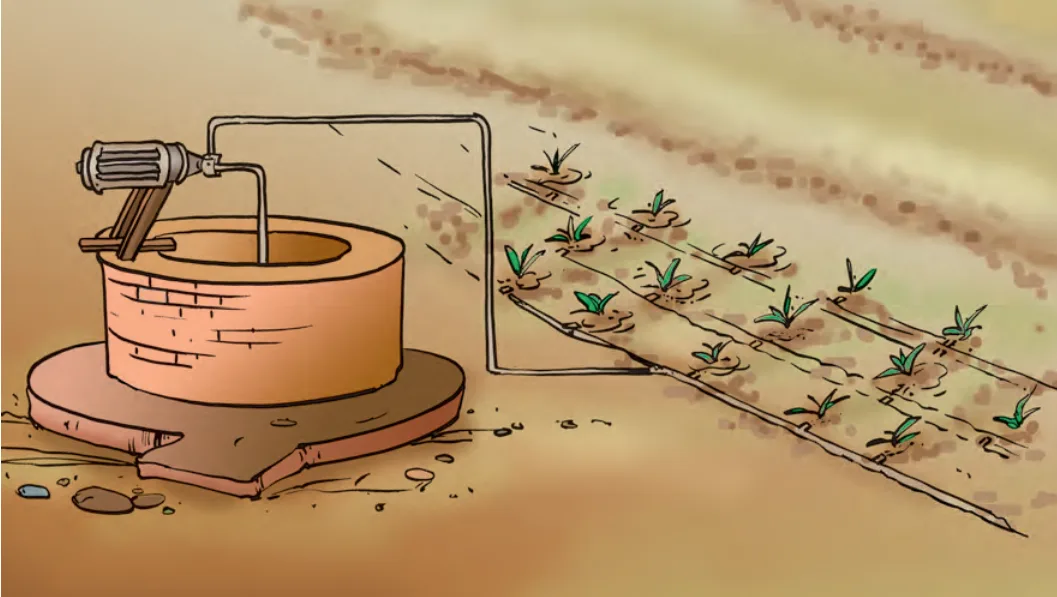
Irrigation Systems: Supply of water at scheduled intervals. Traditional techniques include moat (pulley), chain pump, dhekli, and rahat (lever). Modern methods include sprinklers (ideal for uneven land and sandy soil) and drip irrigation (delivers water drop-by-drop directly to roots with zero waste, ideal for fruit orchards and water-scarce regions).
Weeding: Removal of competing, undesirable plants using tools like the khurpi or chemical weedicides such as 2,4-D (sprayed before weeds produce flowers and seeds).
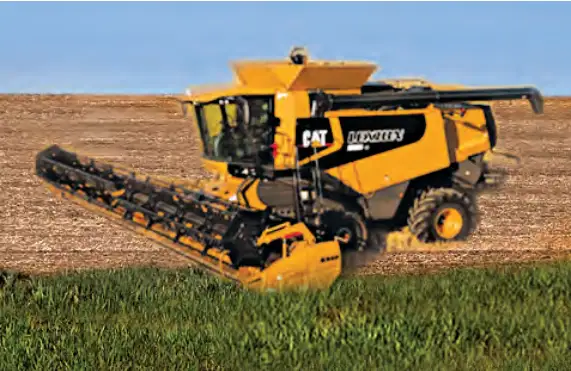
Harvesting, Threshing & Storage: Cutting mature crops (using sickles or harvesters) takes place after 3 to 4 months. Threshing separates grain from chaff, often performed jointly using a combine. Small farmers use winnowing. Harvested grains are dried in the sun to eliminate moisture before storage in silos or granaries. Dried neem leaves serve as domestic pest deterrents.
Animal Husbandry: Large-scale commercial rearing, feeding, sheltering, and care of domesticated livestock.
Interactive Quiz: 50 Class 8 Science Chapter 1 MCQs
Test your understanding using the interactive practice quiz below. Select an option to check if you are right, review the correct answer, and read the explanation.
Answered: 0/50Score: 0/50✓ 0 | ✗ 0
Section A: Picture-Based Questions
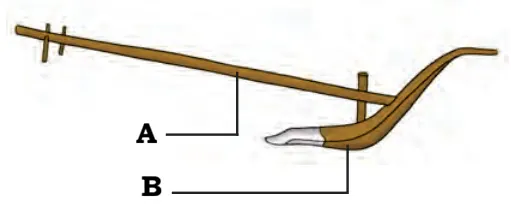
1. Look at the diagram below illustrating a traditional wooden plough:
Identify Part A (the long main wood piece) and Part B (the triangular iron strip):
Explanation: As shown in Fig. 1.1 (a), the long wooden log is called the ploughshaft, while the strong triangular iron strip is the ploughshare[cite: 16].
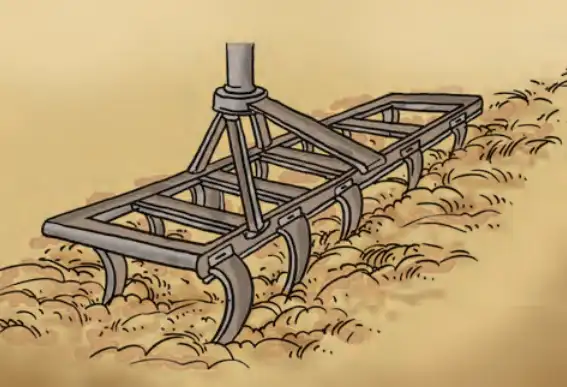
2. Study the modern implement shown in the image below:
What primary benefit does this implement offer over manual seed broadcasting?
Explanation: The seed drill sows seeds uniformly at equal distance and depth, and ensures soil covers seeds to prevent damage from birds while saving time and labour[cite: 18].
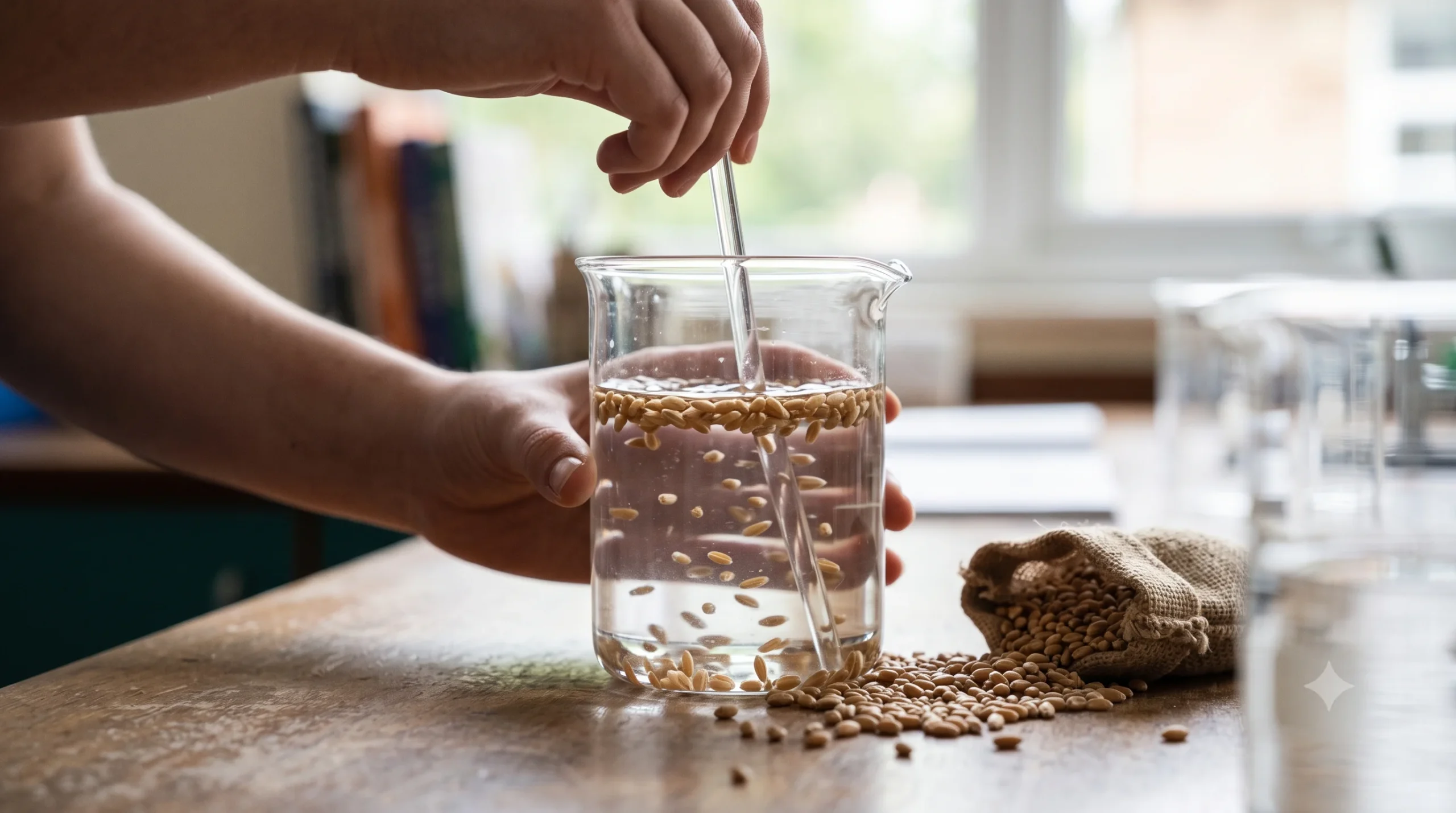
3. In the seed selection water test shown below, what does the floating Layer X represent?
Explanation: Damaged seeds become hollowed out by pests and are lighter, which makes them float on the water surface[cite: 17].
4. Identify the modern irrigation system shown in the image below:
For which terrain and soil type is this system best suited?
Explanation: The sprinkler system is especially useful on uneven terrain where sufficient water is not available and for sandy soils[cite: 22].
5. Study the drip irrigation method shown below:
Which type of cultivation benefits most from this technique?
Explanation: Water falls drop-by-drop directly near the roots without waste, making the drip system ideal for fruit plants, trees, and gardens in dry regions[cite: 22].
6. Look at the farm machine in the image below, known as a “Combine”:
Which two operations are performed simultaneously by this machine?
Explanation: A combine acts as both a harvester and a thresher, cutting the standing mature crop and separating grain from chaff[cite: 24].
7. Identify the root nodules shown in the leguminous plant image below:
What microorganisms reside inside these nodules to enhance soil fertility?
Explanation:Rhizobium bacteria live symbiotically in the root nodules of leguminous plants and fix atmospheric nitrogen into the soil[cite: 19, 40].
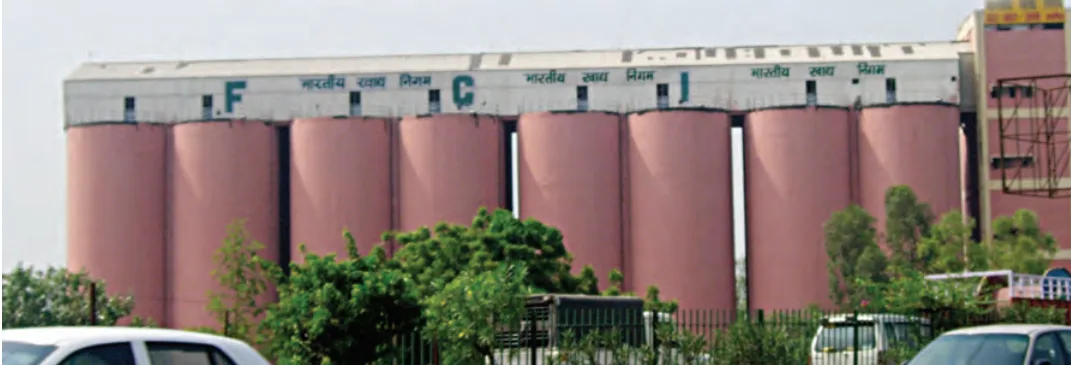
8. Identify the large-scale industrial storage structures shown below:
What are these tall storage towers called?
Explanation: Large-scale storage of grains to protect them from pests like rats and insects is done in metallic or concrete towers called silos and granaries[cite: 25].
Section B: Competency & Case-Based Scenarios
9. Case Scenario: Farmer Suresh cultivated wheat on the same land for 4 continuous seasons without adding manure or leaving the field fallow. What will happen to the soil over time?
Explanation: Continuous plantation removes vital minerals season after season without giving the soil time to replenish, resulting in nutrient deficiency and weak crops[cite: 18].
10. Which crop sequence exemplifies an effective crop rotation strategy practiced in North India?
Explanation: Growing legumes alternately replenishes the soil with nitrogen naturally through nitrogen-fixing root bacteria[cite: 19].
11. Why do farmers loosen and till the soil before sowing seeds?
Explanation: Loosening soil enables root aeration at deeper levels, encourages earthworms, and brings deeper nutrient-rich layers to the top[cite: 15, 16].
12. What are the big chunks of soil left in ploughed fields, and which implement breaks and flattens them?
Explanation: The ploughed field may contain big clumps of soil called crumbs, which are broken and leveled using a leveller[cite: 16].
13. Why are paddy seeds first grown in nurseries before field transplantation?
Explanation: Raising seedlings in a nursery permits selection of healthy plants and deliberate spacing to avoid overcrowding[cite: 18].
14. Which statement correctly identifies a key advantage of organic manure over chemical fertilizers?
Explanation: Manure is natural organic matter that adds humus, makes soil porous for gas exchange, and enhances water-retention capacity[cite: 20].
15. Why must harvested cereal grains be dried thoroughly before long-term storage?
Explanation: Excess moisture promotes microbial decay and attracts pests; drying grains prevents spoilage during storage[cite: 24].
Section C: Assertion & Reasoning (CBSE Pattern)
16. Assertion (A): Paddy can easily be cultivated as a winter crop in India. Reason (R): Paddy requires standing water, provided predominantly by monsoon rainfall.
Explanation: Assertion (A) is false because paddy requires excessive water and cannot grow in dry winter; Reason (R) is true[cite: 15].
17. Assertion (A): Weeding is best carried out before the weeds produce flowers and seeds. Reason (R): Removing weeds before seed formation prevents further dispersal and reproduction across the field.
Explanation: Uprooting weeds before they set seed halts their life cycle and keeps the field clean for subsequent plantings[cite: 23].
18. Assertion (A): Excessive and continuous use of chemical fertilizers reduces long-term soil fertility. Reason (R): Chemical fertilizers supply plants with high amounts of nitrogen, phosphorus, and potassium.
Explanation: Both statements are true, but R does not explain why fertility decreases. Fertility decreases because chemical fertilizers add no organic humus and harm beneficial soil microorganisms[cite: 19, 20].
19. Assertion (A): Earthworms and soil microbes are widely known as friends of the farmer. Reason (R): Earthworms consume growing crop plants and remove them from the soil.
Explanation: Assertion is true, but Reason is false: Earthworms decompose dead organic waste into humus and loosen soil; they do not eat live crops[cite: 15].
20. Assertion (A): Stubble burning after harvesting is recommended by agricultural experts. Reason (R): Stubble burning creates air pollution and poses a fire hazard for crops.
Explanation: Assertion (A) is false because stubble burning is harmful and discouraged; Reason (R) is true[cite: 24].
Section D: Chapter Concepts (Q21 to Q50)
21. When plants of the same kind are cultivated on a large scale at one place, it is called a:
Explanation: Cultivating plants of the same variety at one place on a large scale constitutes a crop[cite: 14].
22. Which of the following is an example of a Kharif crop?
Explanation: Soyabean is grown during the monsoon rainy season, making it a Kharif crop[cite: 15].
23. Rabi crops in India are cultivated during which months?
Explanation: Rabi crops are winter-season crops sown in October and harvested around March[cite: 15].
24. Which of the following crops is NOT a Rabi crop?
Explanation: Cotton requires rainy season conditions and is classified as a Kharif crop[cite: 15].
25. What is the fundamental first step before growing any crop?
Explanation: Preparing the soil via tilling and loosening is the primary task before sowing seeds[cite: 15].
26. Which simple agricultural tool features a bent iron plate and is used for pulling weeds?
Explanation: A hoe has a bent iron plate working like a blade to loosen soil and remove unwanted weeds[cite: 16, 17].
27. Modern tractor-driven cultivators are preferred because they:
Explanation: Cultivators pulled by tractors cover large fields rapidly, saving farm labour and time[cite: 17].
28. Which of the following is an inorganic chemical salt produced in factories?
Explanation: Urea is a factory-manufactured inorganic chemical fertilizer[cite: 19, 20].
29. What does the fertilizer abbreviation NPK stand for?
Explanation: NPK supplies the three macronutrients: Nitrogen (N), Phosphorus (P), and Potassium (K)[cite: 19].
30. Why is organic manure considered better than chemical fertilizers?
Explanation: Manure enriches soil humus, increases water retention, and improves soil structure without causing runoff pollution[cite: 20].
31. What is the process of supplying water to crops at regular intervals called?
Explanation: Providing water to growing crops at scheduled intervals is termed irrigation[cite: 20].
32. Why do crops require more frequent irrigation during summer months?
Explanation: High summer temperatures accelerate the rate of water evaporation from both soil and foliage[cite: 20].
33. Which of the following is a traditional irrigation system that uses a pulley?
Explanation: The moat is a traditional pulley-system where animal or human power draws water from a well[cite: 21].
34. Which traditional irrigation method operates using an animal-driven lever system?
Explanation: Rahat uses a lever mechanism operated by cattle to lift water out of wells[cite: 21].
35. Undesirable plants that grow naturally alongside the main crop are termed:
Explanation: Uncultivated, competitive plants that grow naturally with crop plants are called weeds[cite: 23].
36. Why is weeding necessary for maintaining high crop yields?
Explanation: Weeds consume the soil nutrients, light, water, and root space meant for the crop[cite: 23].
37. Which chemical is commonly sprayed as a weedicide to eradicate unwanted plants?
Explanation: 2,4-D is an effective weedicide used to destroy weeds without harming agricultural crops[cite: 23].
38. What health precaution should farmers take when handling weedicide sprayers?
Explanation: Weedicide chemicals may harm the respiratory system, so farmers should cover their nose and mouth[cite: 23].
39. The process of cutting and collecting mature crops from fields is called:
Explanation: Cutting and gathering crops after maturity is called harvesting[cite: 23].
40. In India, how long does it typically take for a cereal crop to mature?
Explanation: Most common cereal crops like wheat and paddy mature within 3 to 4 months[cite: 23].
41. What curved tool is used traditionally in India for manual harvesting?
Explanation: Farmers manually cut crops close to the ground using a curved handheld blade called a sickle[cite: 23].
42. Separating grain seeds from surrounding chaff is called:
Explanation: The mechanical separation of grains from harvested stalks and chaff is known as threshing[cite: 24].
43. Farmers with small land holdings separate grain and chaff through wind action called:
Explanation: Winnowing relies on the wind to blow lighter chaff away while heavier grains fall straight down[cite: 24].
44. Which of the following groups consists exclusively of Indian harvest festivals?
Explanation: Celebrations marking the joy of agricultural harvests include Pongal, Baisakhi, Holi, Diwali, Nabanya, and Bihu[cite: 24].
45. What domestic natural remedy is placed inside home grain bins to deter pests?
Explanation: Dried neem leaves are placed in iron storage drums at home to protect grain from insects and fungi[cite: 24, 25].
46. The large-scale rearing, feeding, sheltering, and caring of domesticated animals is called:
Explanation: Rearing animals with proper feed, housing, and care on a large commercial scale is called animal husbandry[cite: 25].
47. Cod liver oil extracted from fish is an exceptionally rich source of which vitamin?
Explanation: Cod liver oil from fish is widely known as a valuable natural source of Vitamin D[cite: 25].
48. Leaving an agricultural field fallow between successive crop cycles helps to:
Explanation: Leaving land uncultivated (fallow) gives natural biological processes time to restore fertility[cite: 18, 19].
49. What happens if wheat is sown during the Kharif season (July)?
Explanation: Wheat is a winter crop requiring cool temperatures and moderate moisture; heavy monsoon rainfall rots its seeds and roots[cite: 15, 27].
50. An organic compost created through the action of earthworms on plant and animal wastes is called:
Explanation: The process of creating compost from biological waste using earthworms is called vermicomposting[cite: 18].