Class 8 Science Chapter 2 MCQs: Microorganisms Friend and Foe (Set 1)
Mastering Chapter 2 of Class 8 Science, “Microorganisms: Friend and Foe,” is essential for scoring top marks in CBSE school examinations, competitive tests like the National Science Olympiad (NSO), and NTSE foundations. Microscopic life forms exist all around us—in air, water, soil, and even inside the bodies of plants and animals. While some microorganisms serve as invaluable partners in baking, medicine production, and soil fertility, others act as dangerous pathogens causing diseases and spoiling food.
This interactive practice set features 50 CBSE-aligned multiple-choice questions categorized into diagram-based problems, case studies, assertion-reason items, and textbook concepts. Each question is engineered to evaluate conceptual clarity, critical thinking, and real-life scientific applications.
Quick Chapter Summary & Core Topics Tested
Before starting the test, review these essential concepts from NCERT Chapter 2:
Classification of Microbes: Microorganisms are divided into four primary groups: Bacteria, Fungi, Protozoa, and Algae. Viruses are considered unique microscopic entities because they reproduce strictly inside living host cells (such as bacteria, plants, or animals).
Commercial and Household Utility:
Lactobacillus multiplies in milk and converts lactose into lactic acid to form curd.
Yeast rapidly respires and produces carbon dioxide gas bubbles, causing dough to rise in baking. Yeast is also used industrially to ferment sugars into alcohol, beer, and wine (discovered by Louis Pasteur in 1857).
Medicinal Uses: Antibiotics like streptomycin, tetracycline, and erythromycin are produced from bacteria and fungi to inhibit or kill pathogenic microbes. Penicillin was discovered by Sir Alexander Fleming in 1929 from a green mould culture. Vaccines introduce dead or weakened microbes to stimulate long-term antibody production (discovered by Edward Jenner for smallpox in 1798).
Environmental Cleanup & Soil Health: Decomposers degrade organic waste into simple soil nutrients. Symbiotic Rhizobium bacteria in the root nodules of leguminous plants and free-living cyanobacteria (blue-green algae) fix atmospheric nitrogen into the soil.
Harmful Microbes & Pathogens: Microbial diseases that spread through air, water, food, or direct contact are termed communicable diseases. Insect carriers like the female Anopheles mosquito spread malaria (Plasmodium), female Aedes mosquitoes transmit dengue virus, and houseflies contaminate uncovered food.
Food Preservation Techniques: Chemical preservatives like sodium benzoate and sodium metabisulphite, salting (osmosis), sugar syrup, vinegar/oil barriers, boiling, refrigeration, and pasteurisation (heating to 70°C for 15–30 seconds followed by sudden chilling) prevent microbial proliferation and food poisoning.
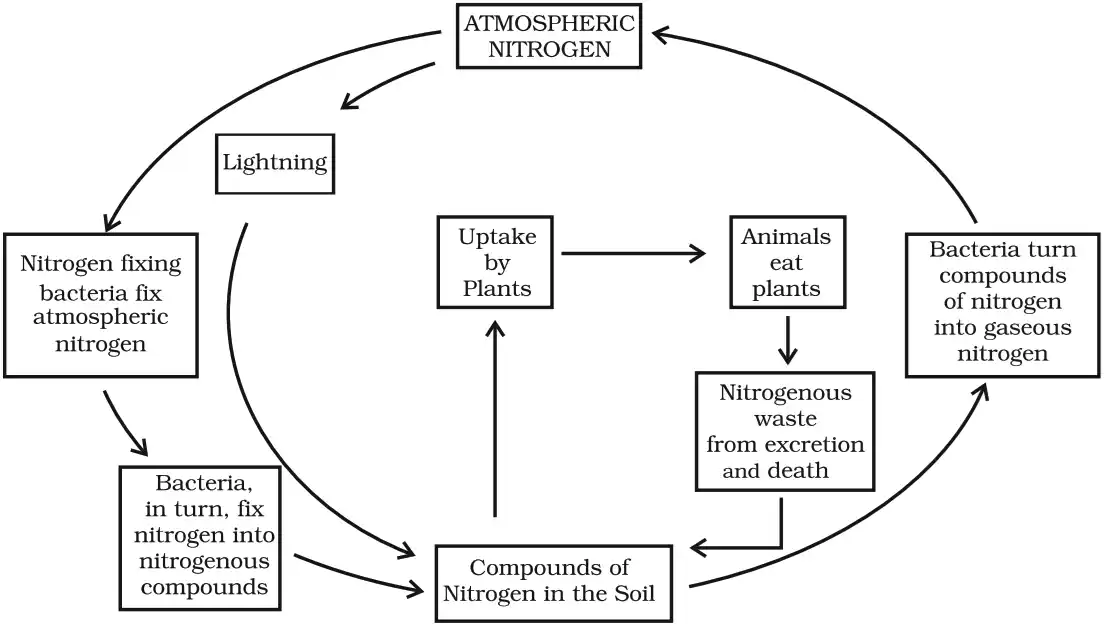
The Nitrogen Cycle: A closed biogeochemical cycle maintaining Earth’s atmospheric nitrogen balance at a constant 78% via biological fixation, plant assimilation, decomposition, and bacterial denitrification.
Interactive Quiz: 50 Class 8 Science Chapter 2 MCQs
Test your preparation with the interactive test below. Click any option to verify your answer instantly, see the correct solution, and read the explanation.
Answered: 0/50Score: 0/50✓ 0 | ✗ 0
Section A: Picture-Based Questions
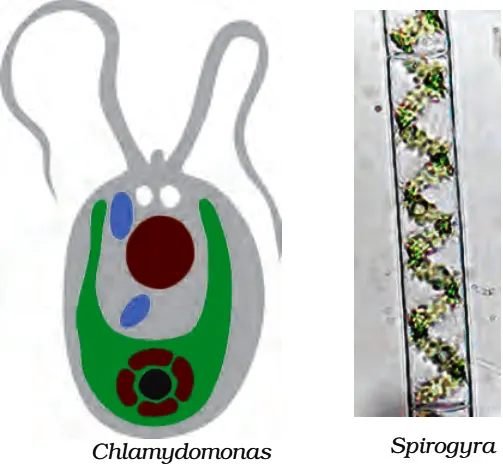
1. Observe the given illustration showing two common microscopic organisms:
To which major microbial group do Chlamydomonas and Spirogyra belong?
Explanation: Both Chlamydomonas and Spirogyra are classified under the plant-like photosynthetic microbial group called algae[cite: 183, 184].
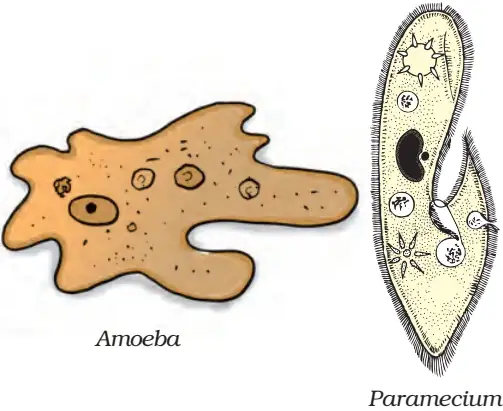
2. Study the given diagrams of unicellular organisms:
Which of the following diseases is caused by a pathogen belonging to the group of Protozoa shown above?
Explanation: Serious diseases like dysentery and malaria are caused by protozoans, whereas typhoid and TB are bacterial infections[cite: 183].
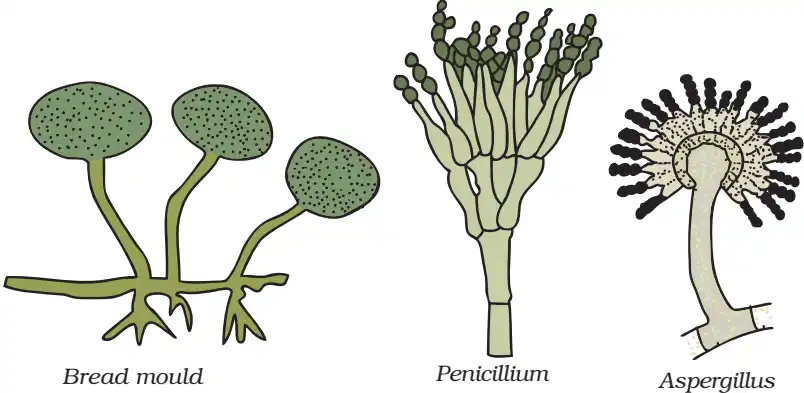
3. Look at the fungal specimens shown in the diagram:
From which of the organisms shown was the landmark antibiotic ‘Penicillin’ developed by Alexander Fleming in 1929?
Explanation: In 1929, Alexander Fleming isolated penicillin from the green mould Penicillium notatum[cite: 186].
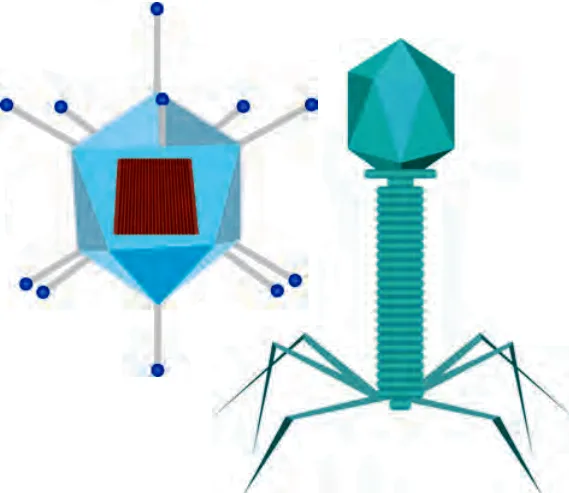
4. Observe the biological structures shown below:
What unique biological property distinguishes these entities from all other microbes?
Explanation: Viruses are non-cellular outside host organisms and reproduce only inside the cells of bacteria, plants, or animals[cite: 183].
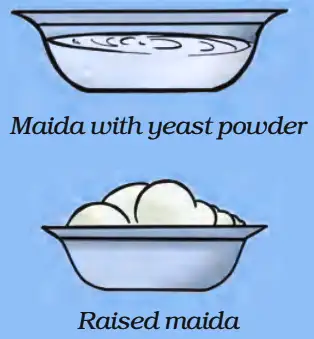
5. Study the laboratory dough rising demonstration shown below:
What is responsible for the rapid rise in the volume of the dough?
Explanation: Yeast reproduces rapidly and produces carbon dioxide during respiration[cite: 186]. Bubbles of this gas fill the dough and increase its volume[cite: 186].
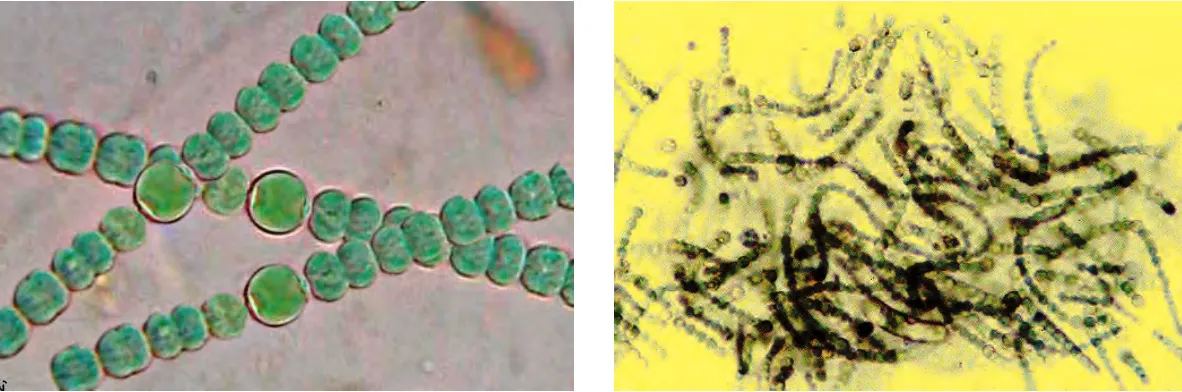
6. Identify the filaments of microorganisms pictured in the microscopic view:
What critical ecological role do these cyanobacteria (blue-green algae) perform in soil?
Explanation: Cyanobacteria (blue-green algae) fix nitrogen gas from the atmosphere to enrich soil and boost fertility, acting as biological nitrogen fixers[cite: 187].
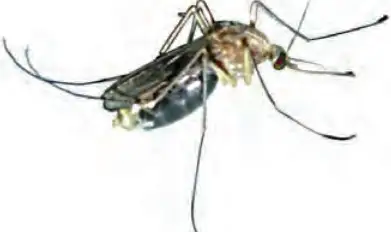
7. Observe the insect vector illustrated below:
Which specific pathogen is transmitted to humans by this insect?
Explanation: The female Anopheles mosquito acts as a vector carrying the malaria parasite (Plasmodium)[cite: 189]. The female Aedes mosquito transmits the dengue virus[cite: 189].
8. Study the cyclical representation shown below:
What natural pathway converts fixed nitrogen compounds in the soil back into free atmospheric nitrogen gas?
Explanation: Certain denitrifying bacteria present in soil convert nitrates and nitrogenous compounds into elemental nitrogen gas that escapes back to the atmosphere[cite: 193].
Section B: Competency & Case-Based Scenarios
9. Case Scenario: Aman came down with a severe common cold and requested his doctor write a prescription for penicillin tablets to cure him immediately. The physician refused. What was the scientific basis of the doctor’s decision?
Explanation: Antibiotics kill or inhibit bacteria and fungi; they have no effect against viral infections such as influenza or the common cold[cite: 186, 187].
10. Case Scenario: Reema prepared mango pickle using mustard oil, salt, and spices. After six months, the pickle remained fresh and free from mold, whereas raw slices of mango kept in a bowl spoiled in four days. Why?
Explanation: Common salt draws out moisture, and oil forms an anaerobic protective seal; food-spoiling bacteria cannot proliferate in high-salt, oily media[cite: 191, 192].
11. In Activity 2.5, Pot A with plant remains decomposed into soil manure after three weeks, but Pot B with plastic toys and polythene bags showed no change. What competency conclusion is deduced?
Explanation: Microbes degrade natural organic waste into simple plant nutrients (humus), but lack enzymes to digest synthetic polymers like plastics[cite: 188].
12. Commercial milk supplied in cartons and plastic pouches does not spoil for days without boiling because it has undergone pasteurisation. What does this process involve?
Explanation: In pasteurisation (discovered by Louis Pasteur), milk is heated to around 70°C for 15–30 seconds and chilled immediately to destroy pathogens without altering nutritional flavor[cite: 192].
13. During a community hygiene campaign, health workers advised residents not to allow stagnant water to pool in coolers, old tyres, or flowerpots. What disease control mechanism is targeted here?
Explanation: Mosquitoes lay eggs and breed in still water[cite: 189]. Keeping the surroundings clean and dry halts their reproductive life cycle, controlling vector-borne diseases[cite: 189].
14. What happens when dead or weakened microbes are introduced into a healthy human body during vaccination?
Explanation: Weakened/killed antigens stimulate lymphocytes to produce antibodies[cite: 187]. These antibodies remain in the body to neutralize future exposures[cite: 187].
15. Food poisoning occurs when food contaminated with specific microbes is ingested. What makes such spoiled food hazardous to human life?
Explanation: Bacteria and molds growing on spoiled food secrete toxins that cause acute gastrointestinal illness, vomiting, and can even prove fatal[cite: 191].
Section C: Assertion & Reasoning (CBSE Pattern)
16. Assertion (A): Antibiotics are highly effective medicines against common cold, flu, and chickenpox. Reason (R): Common cold and chickenpox are caused by viral pathogens, not bacteria.
Explanation: Assertion is false because antibiotics do not work against viral diseases[cite: 187]. Reason is true because flu and chickenpox are indeed caused by viruses[cite: 183, 187].
17. Assertion (A): Jam and jelly preserves do not spoil easily even after opening when prepared with high sugar concentration. Reason (R): Sugar reduces moisture content, inhibiting the growth of food-spoiling bacteria.
Explanation: High sugar osmotic pressure dehydrates microbial cells and limits water availability, checking bacterial reproduction[cite: 192].
18. Assertion (A): Growing leguminous crops like peas and beans restores nitrogen in deficient soil. Reason (R): The atmosphere of the Earth contains approximately 78% nitrogen gas.
Explanation: Both facts are true, but R does not explain A. Legumes replenish nitrogen because their symbiotic Rhizobium nodules fix nitrogen into usable forms[cite: 192, 193].
19. Assertion (A): Houseflies are recognized as major vectors of communicable digestive diseases like cholera. Reason (R): Houseflies inject malaria parasites directly into blood when biting humans.
Explanation: Houseflies pick up pathogens from feces and transfer them onto uncovered food[cite: 189]. They do not bite or transmit malaria; female Anopheles mosquitoes do[cite: 189].
20. Assertion (A): Antibiotics should be consumed frequently in high doses whenever someone feels mildly unwell, without medical consultation. Reason (R): Taking antibiotics unnecessarily can kill beneficial body bacteria and induce drug resistance.
Explanation: Assertion is false because indiscriminate antibiotic usage is dangerous[cite: 187]. Reason is true as wrong dosing destroys beneficial flora and lowers future drug efficacy[cite: 187].
Section D: Chapter Concepts (Q21 to Q50)
21. Microorganisms that cause diseases in humans, animals, and plants are scientifically called:
Explanation: Disease-causing microorganisms are referred to as pathogens[cite: 189].
22. Which bacterium promotes the formation and curdling of milk into curd?
Explanation:Lactobacillus multiplies in warm milk and ferments lactose into lactic acid to produce curd[cite: 185].
23. Who discovered the process of fermentation in the year 1857?
Explanation: Louis Pasteur discovered the microbiological process of fermentation in 1857[cite: 186].
24. Edward Jenner discovered the vaccine for which deadly disease in 1798?
Explanation: Edward Jenner established the world’s first successful vaccine for smallpox in 1798[cite: 187].
25. Robert Koch in 1876 discovered Bacillus anthracis, the bacterium that causes which dangerous disease?
Explanation: Robert Koch identified Bacillus anthracis, the causative agent of anthrax disease in cattle and humans[cite: 190].
26. The process of converting sugar into alcohol by yeast cells in the absence of oxygen is known as:
Explanation: The biochemical transformation of sugar into alcohol by yeast is called fermentation[cite: 186].
27. Which of the following is an example of an antibiotic derived from bacteria and fungi?
Explanation: Streptomycin, tetracycline, and erythromycin are standard manufactured antibiotics produced from microbes[cite: 186, 187].
28. Which chemical preservatives are most commonly added to commercial jams and fruit squashes to check spoilage?
Explanation: Sodium benzoate and sodium metabisulphite are chemical food preservatives used in jams and squashes[cite: 192].
29. Citrus canker is a plant disease affecting lemon, orange, and lime trees. What is its causative agent and mode of transmission?
Explanation: Citrus canker is caused by bacteria and spreads across groves through airborne currents[cite: 191].
30. Rust of wheat is a fungal crop infection. How are its spores primarily transmitted from field to field?
Explanation: Rust of wheat is caused by fungi and is transmitted through air and infected seed stocks[cite: 191].
31. Yellow vein mosaic of bhindi (okra) is caused by which pathogen and transmitted by which vector?
Explanation: Yellow vein mosaic of bhindi is a viral disease transmitted from plant to plant by insects[cite: 191].
32. Which of the following human diseases is caused by a virus and spread via airborne water droplets and direct contact?
Explanation: Chickenpox and measles are viral diseases spread through air and direct physical contact[cite: 190]. Typhoid and cholera are bacterial[cite: 190].
33. Hepatitis A is transmitted to healthy individuals primarily through which medium?
Explanation: Hepatitis A is a viral liver infection transmitted via contaminated drinking water; boiling water provides prevention[cite: 190].
34. Foot and mouth disease that afflicts cattle is caused by which class of agent?
Explanation: Foot and mouth disease in cattle is a virulent infection caused by a virus[cite: 190].
35. What percentage of the Earth’s atmosphere consists of nitrogen gas?
Explanation: Nitrogen gas makes up approximately 78% of the Earth’s atmosphere[cite: 193].
36. Which physical atmospheric phenomenon assists naturally in the fixation of nitrogen gas?
Explanation: Lightning generates extreme energy that binds atmospheric nitrogen and oxygen into nitrogenous compounds washed into soil[cite: 192, 193].
37. Female Aedes mosquito is notorious as the vector for transmitting which disease?
Explanation: The female Aedes mosquito acts as the carrier for dengue virus[cite: 189].
38. Bread mould belongs to which category of microorganisms?
Explanation: Bread mould (Rhizopus) is a fungus that grows on moist bread under warm conditions[cite: 183, 184].
39. Which of the following is an example of a unicellular protozoan with an irregular shape and pseudopodia?
Explanation:Amoeba is a single-celled protozoan that captures prey and moves using false feet (pseudopodia)[cite: 184, 258].
40. Microorganisms can survive in which types of natural environments?
Explanation: Microbes are ubiquitous and thrive in all environments ranging from boiling hot springs to frozen ice sheets and deep salt lakes[cite: 185, 197].
41. Which ancient preservative method is traditionally utilized to prevent fish and meat from spoiling?
Explanation: Covering fish and meat with dry salt is an age-old method to check bacterial decomposition[cite: 192].
42. Why are oral polio drops administered to young children under national immunization programmes?
Explanation: Polio drops are an oral vaccine containing attenuated viruses that induce protective antibody formation[cite: 187].
43. Which of the following is a unicellular organism capable of independent survival?
Explanation:Paramecium is a single-celled ciliated protozoan that carries out all life functions independently[cite: 184, 185].
44. Microbial diseases that can spread from an infected person to a healthy person through air, water, food, or physical contact are known as:
Explanation: Infectious diseases transmitted across individuals through contaminated air, water, food, or contact are termed communicable diseases[cite: 189].
45. Why is refrigeration effective in keeping leftovers and cooked food from spoiling?
46. What chemical is produced when dilute alcohol solutions are further fermented on a commercial scale using acetic acid bacteria?
Explanation: Acetic acid (vinegar) is manufactured on a large scale by microbial oxidation of alcohol[cite: 186].
47. Why are antibiotics occasionally supplemented into the feed of poultry and livestock?
Explanation: Antibiotics are mixed into animal feed to control and prevent opportunistic microbial infections in livestock and poultry herds[cite: 187].
48. Which common traditional Indian snacks rely on bacteria and yeast for dough/batter fermentation?
Explanation: Lactic acid bacteria and yeast cells ferment rice-dal pastes and flour doughs to prepare spongy idlis, dosas, and bhaturas[cite: 185].
49. What simple hygiene practice prevents the droplets carrying cold viruses from infecting healthy classmates when sneezing?
Explanation: Keeping a handkerchief over the mouth and nose stops moisture droplets loaded with virus particles from dispersing into the air[cite: 189].
50. Why is the nitrogen cycle essential for the sustainability of life on Earth?
Explanation: Nitrogen is an essential building block of amino acids, proteins, and DNA; cyclic flow maintains constant atmospheric concentration while fueling plant and animal life[cite: 193].