CBSE Class 10 History Chapter 2: Nationalism in India – NCERT Solutions & Important Questions
Class 10 Social Science
CBSE / NCERT Solutions
History Chapter 2
Nationalism in India
Comprehensive, student-friendly NCERT solutions for Class 10 History Chapter 2. Contains full in-text activity discussions, primary source analyses, picture interpretations, and textbook exercise solutions structured for high-scoring board exam preparation with responsive layout and visual slots.
Part 1
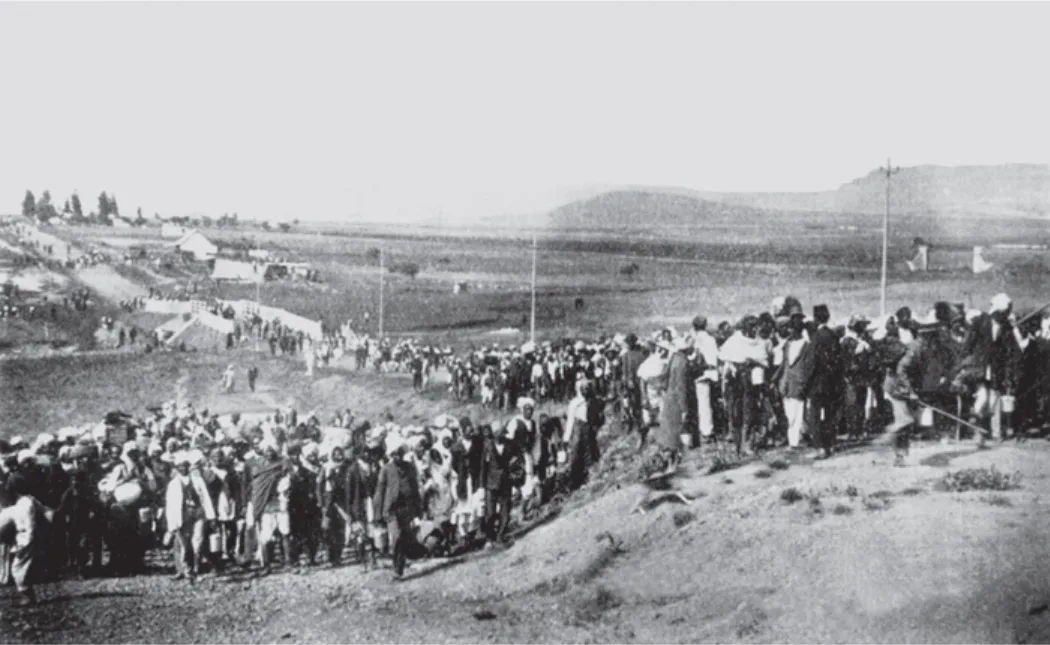
Fig. 2: Indian workers marching through Volksrust, South Africa, 6 November 1913, demonstrating mass satyagraha.
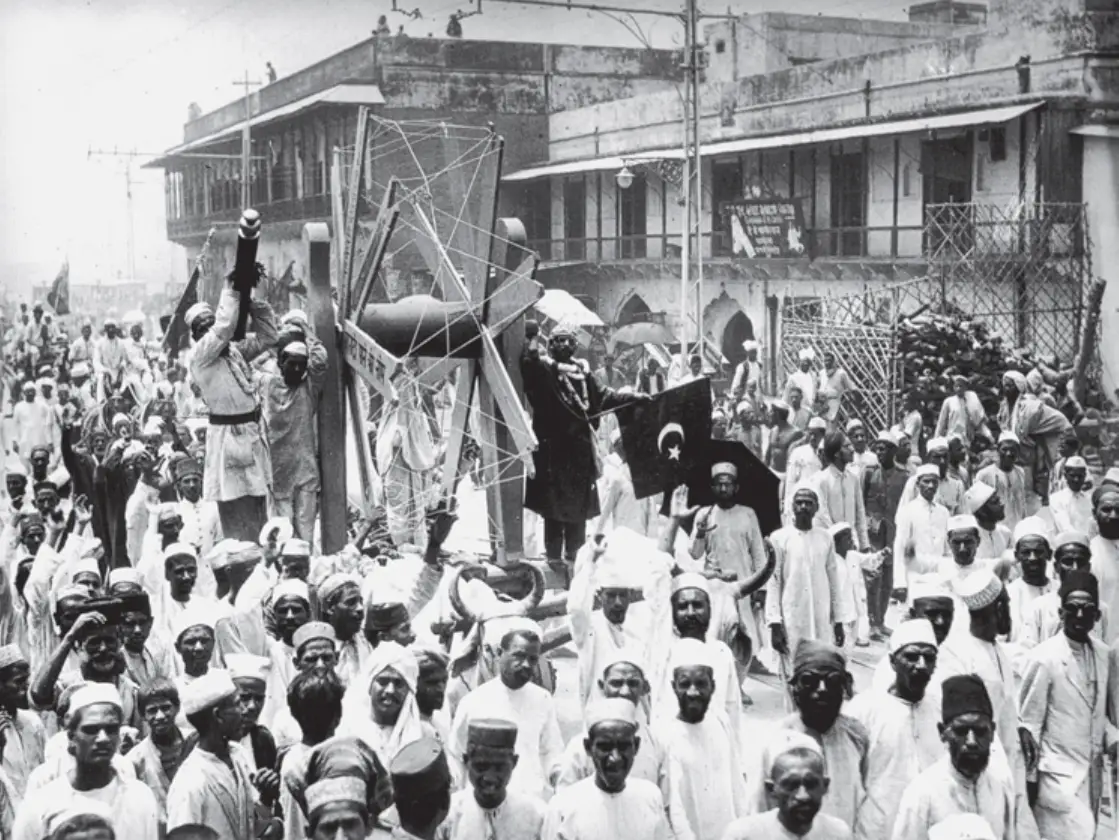
Fig. 4: Boycott and public bonfires of foreign cloth in July 1922, key symbols of non-cooperation.
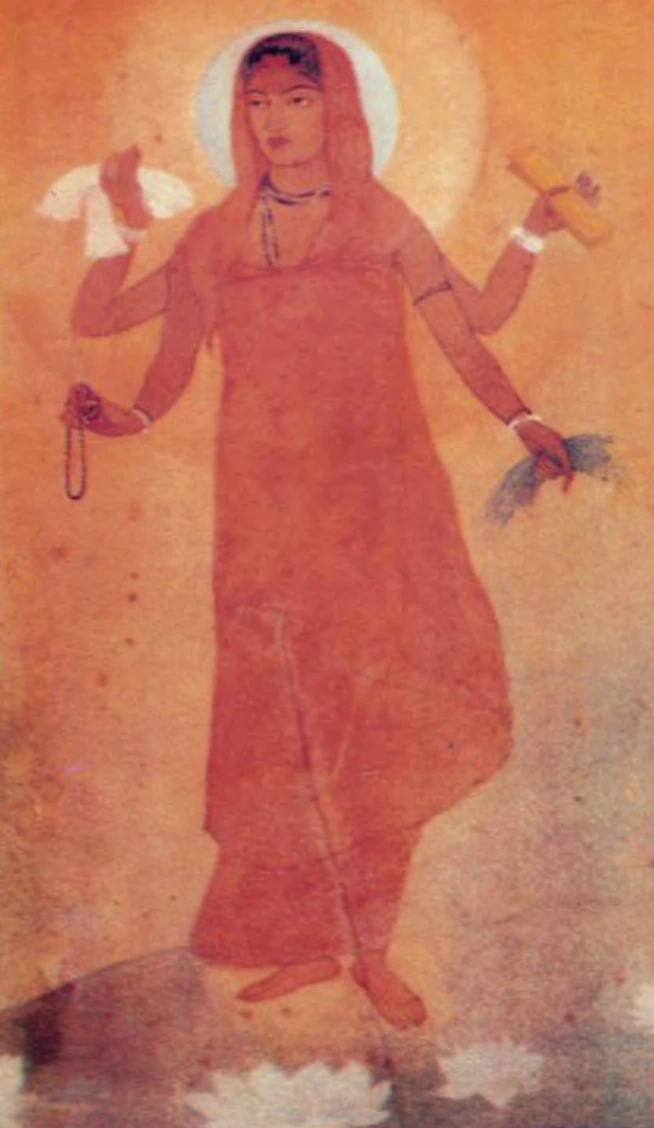
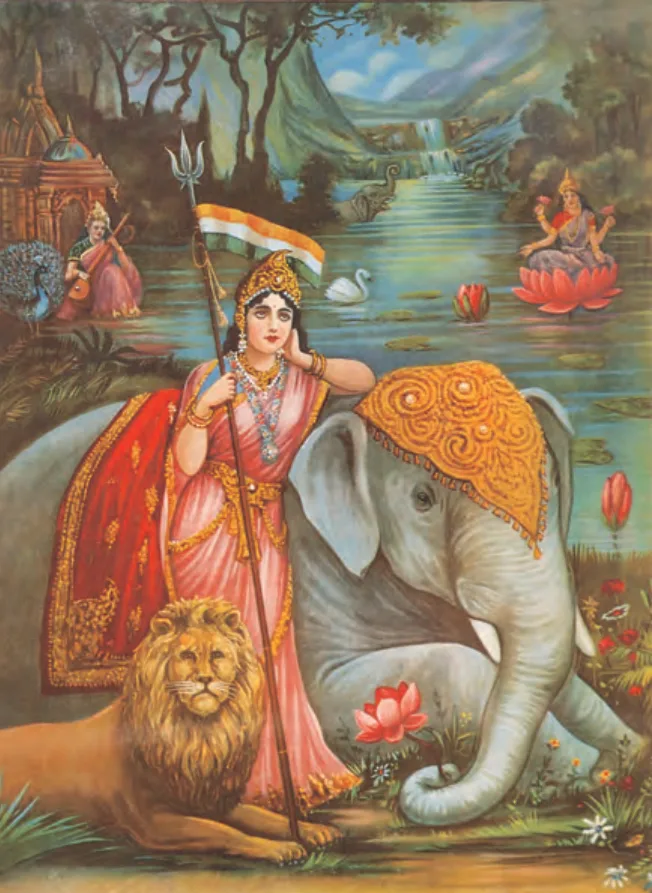
Fig. 12 & Fig. 14a: Contrasting personifications of Bharat Mata—from an ascetic spiritual figure to a sovereign with lion, elephant, and trishul.
Part 2
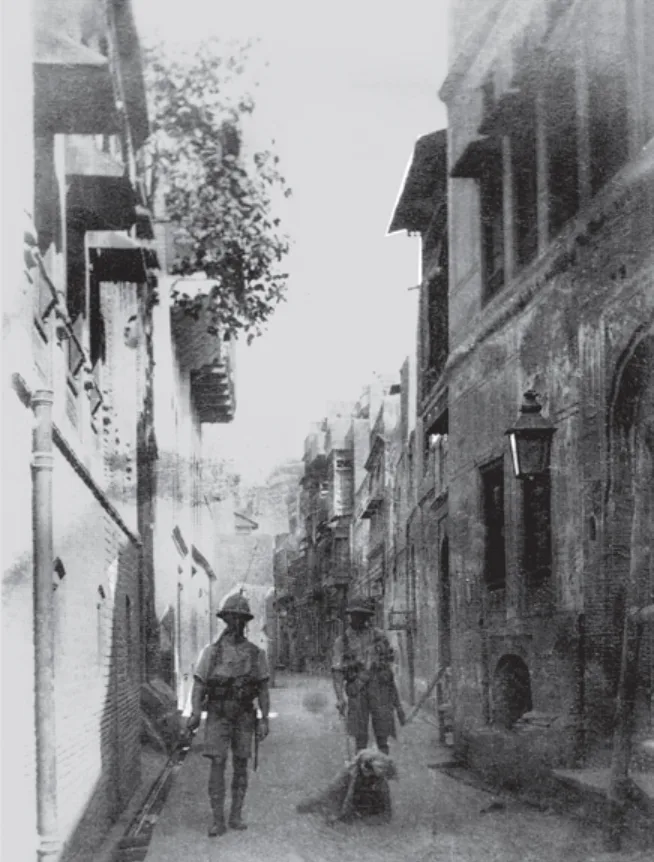
Fig. 3: British troops administering punitive crawling orders in Amritsar following the 1919 massacre.
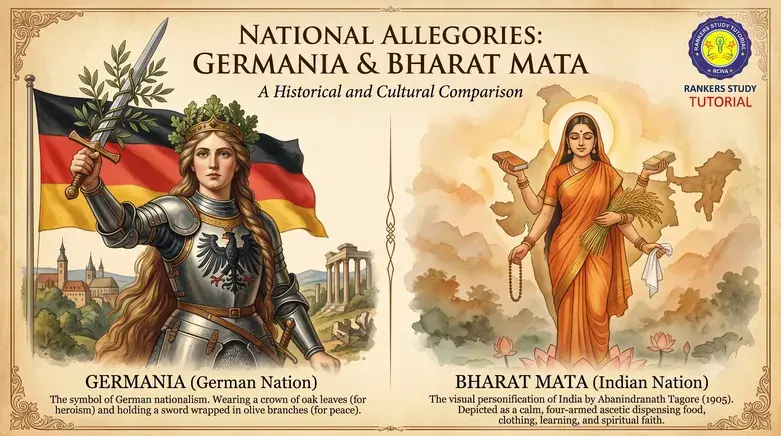
Visual Comparison: Allegories of nationhood—Germania (Philip Veit) alongside Bharat Mata (Abanindranath Tagore).
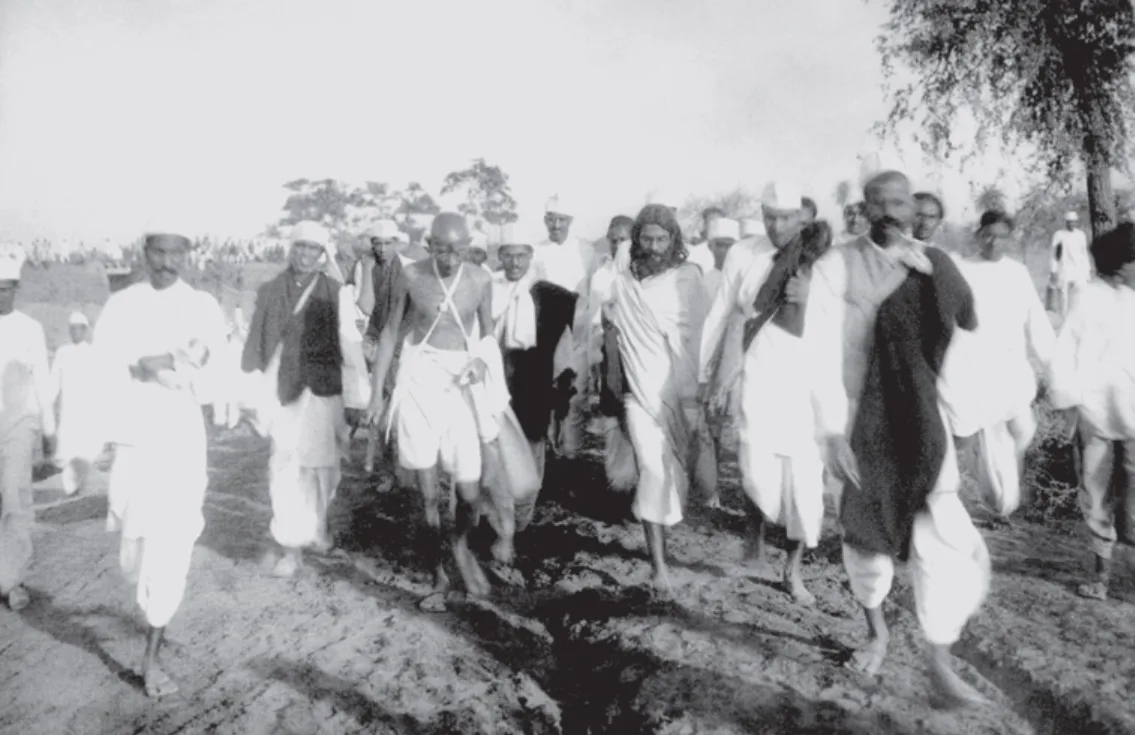
Fig. 7: Mahatma Gandhi accompanied by 78 trusted volunteers marching from Sabarmati to Dandi in 1930.
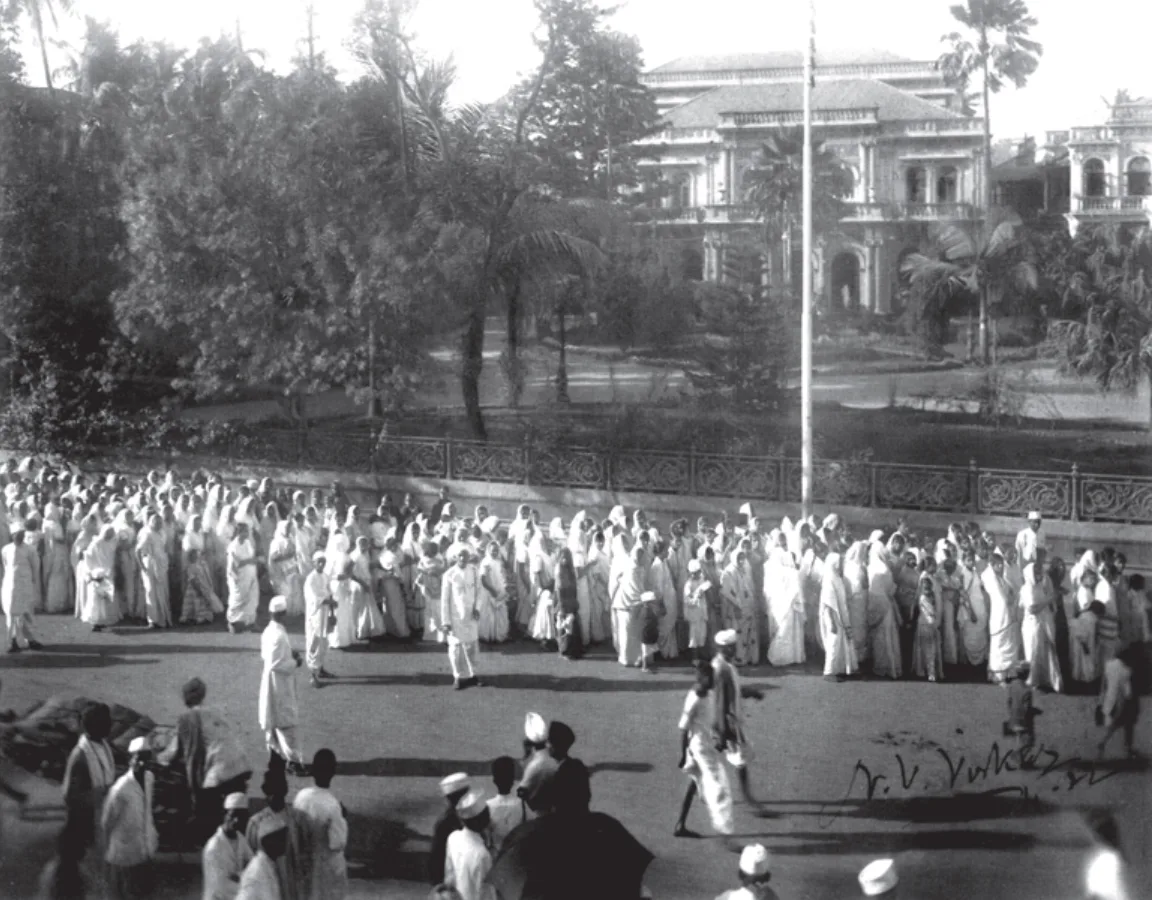
Fig. 9: Women of all generations stepping onto streets to participate in national demonstrations.
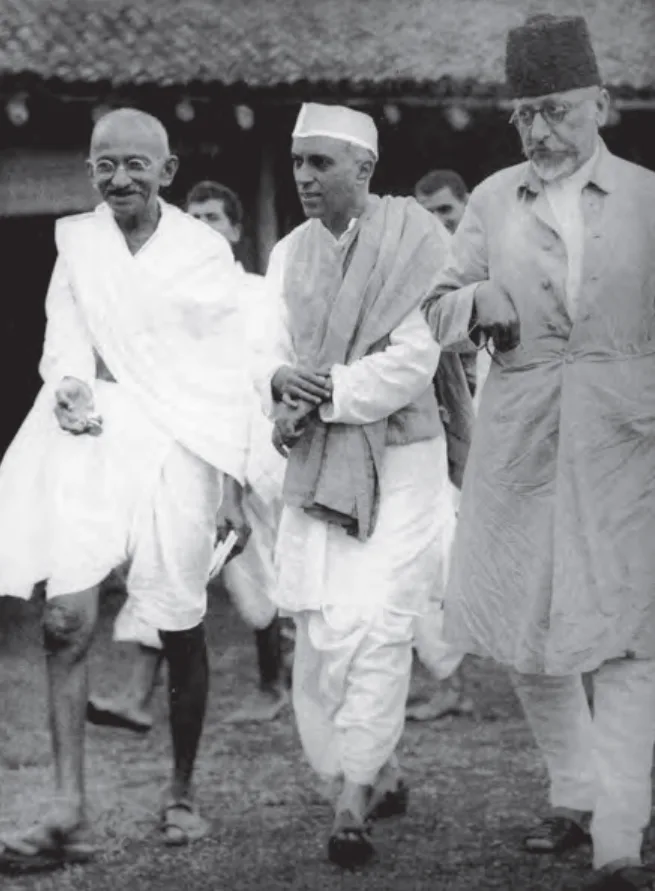
Fig. 10: National leaders at Sevagram Ashram, representing varied viewpoints on political representation.
Part 3
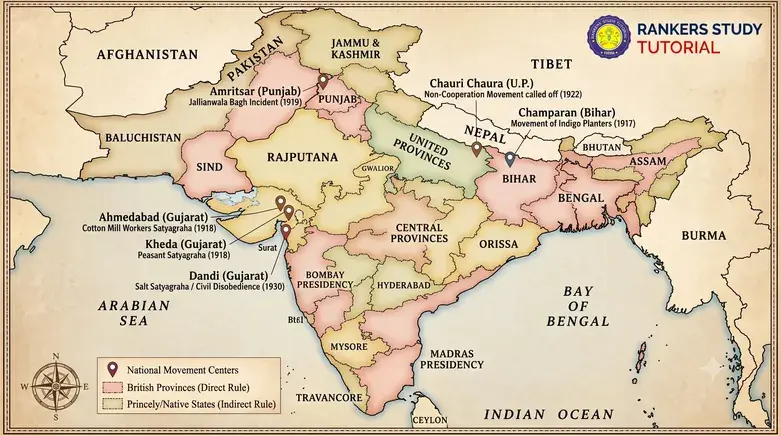
Visual Reference 1: Map of Key Satyagraha Sites — Champaran, Kheda, Ahmedabad, Amritsar, Chauri Chaura, and Dandi.
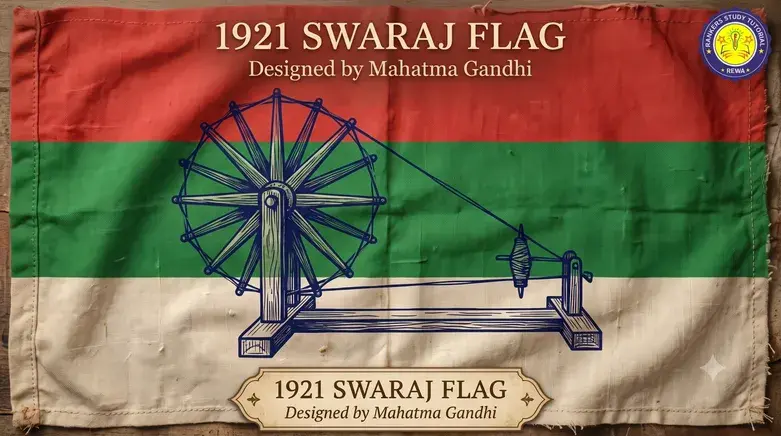
Visual Reference 2: The Swaraj Tricolour Flag (1921) with Charkha in the centre, symbolizing national self-reliance and unity.
In-Text Activities, Source Discussions & Picture Interpretations
Page 32 — Activity (Source A: Satyagraha as Active Resistance)
Question: Read the text carefully. What did Mahatma Gandhi mean when he said satyagraha is active resistance?
- Distinction from Passive Resistance: Gandhiji clarified that passive resistance is frequently misconstrued as a tool of those lacking physical power. In contrast, satyagraha requires immense moral courage and relentless spiritual fortitude.
- Soul-Force, Not Physical Violence: Satyagraha does not seek the physical destruction of the opponent, nor does it involve malice or revenge. It relies on pure truth, compassion, and the power of love to awaken the conscience of the oppressor.
- Dynamic Mass Engagement: Rather than being inactive or submissive, it requires intense non-violent activity, moral conviction, and self-suffering to persuade the wrongdoer to recognize truth instead of being coerced by arms.
Page 35 — Activity (Poster Design for Students, 1921)
Task: The year is 1921. You are a student in a government-controlled school. Design a poster urging school students to answer Gandhiji’s call to join the Non-Cooperation Movement.
| Poster Component | Recommended Content & Visual Design |
|---|---|
| Main Slogan | “Boycott Colonial Schools — Stand Up for Swaraj!” |
| Sub-Heading | Answer the Call of Mahatma Gandhi: Break the Shackles of Educational Subjugation! |
| Core Action Points |
|
| Visual Elements | A drawing of an open classroom gate with students walking toward a rising sun stamped with the Charkha (spinning wheel), leaving behind colonial schoolbooks. |
Page 36 — Activity & Source B (Peasant Response in Awadh, 1920)
Activity: If you were a peasant in Uttar Pradesh in 1920, how would you have responded to Gandhiji’s call for Swaraj? Give reasons for your response.
Response and Justification:
- Immediate Support for Swaraj: As an oppressed tenant in Awadh, I would enthusiastically embrace the call for Swaraj, joining the Oudh Kisan Sabha led by Baba Ramchandra and Jawaharlal Nehru.
- Reasons for Joining:
- Relief from Heavy Taxation: Talukdars and landlords extracted exorbitant rents and countless illegal cesses that drove rural families into permanent debt.
- Abolition of Begar: Peasants were forced to perform unpaid bonded labor (begar) on landlords’ farms.
- Security of Land Tenure: Tenants were constantly evicted from their fields to prevent them from acquiring legal tenancy rights over the land.
- Social Boycott: Organizing community nai-dhobi bandhs provided a peaceful, non-violent collective weapon to cut off essential services to tyrannical landholders.
Page 37 — Activity (Martyrs of Anti-Colonial Resistance)
Task: Find out about other participants in the National Movement who were captured and put to death by the British.
- Alluri Sitaram Raju (1924): Led the tribal guerrilla struggle in the Gudem Hills of Andhra Pradesh against restrictive British forest laws, defending tribal livelihood rights until he was captured and executed in 1924.
- Bhagat Singh, Sukhdev, and Rajguru (1931): Young revolutionaries of the Hindustan Socialist Republican Army (HSRA) who sacrificed their lives on the gallows in Lahore Central Jail for challenging colonial power and fighting for socialist liberation.
- Matangini Hazra (1942): A 73-year-old freedom fighter in Midnapore, Bengal, who was shot and killed by colonial police while leading a peaceful Quit India procession holding aloft the Indian tricolour.
- Kanaklata Barua (1942): A teenage martyr from Assam who laid down her life while attempting to hoist the national flag at the local police station during the Quit India Movement.
Page 44 — Discuss (Motivations Behind the Civil Disobedience Movement)
Question: Why did various classes and groups of Indians participate in the Civil Disobedience Movement?
| Social Group | Primary Grievance / Motivation | What Swaraj Meant to Them |
|---|---|---|
| Rich Peasants (Patidars & Jats) | Agricultural prices crashed during the Great Depression, leaving them unable to pay state revenue demands. | Reduction and revision of land revenue demands. |
| Poor Peasants & Tenants | Plummeting incomes made it impossible to pay cash rent to landlords. | Remission of unpaid rent and redistribution of land. |
| Business Class & Industrialists | Faced colonial restrictions, high import duties, and unfavorable sterling-rupee exchange ratios. | Protection against foreign imports and an economy free from colonial constraints. |
| Industrial Working Class | Suffered under extremely low wages, long working hours, and harsh factory conditions. | Better living wages, humane working hours, and fair treatment. |
| Women | Responded to Gandhiji’s moral appeal; participated in protest marches, picketed liquor and foreign cloth shops. | Seeing direct service to the nation as an essential duty while entering the public sphere. |
Page 46 — Discuss (Source D: Sir Muhammad Iqbal on Communal Groups)
Question: Read Source D carefully. Do you agree with Iqbal’s idea of communalism? Can you define communalism in a different way?
- Critical Evaluation of Iqbal’s View: Sir Muhammad Iqbal presented communalism in an idealized light, arguing that religious communities in India formed distinct cultural entities that required separate territorial and political safeguards rather than standard European-style majoritarian democracy. While preserving cultural heritage is legitimate, institutionalizing political separation ultimately fostered deep communal divisions and mistrust.
- Modern Definition of Communalism: In contemporary social and political science, communalism denotes a divisive ideology where religious identity is used to assert political dominance, treating the interests of one religious group as hostile or incompatible with those of other communities, undermining national unity and secular harmony.
Page 49 — Activity (Figs. 12 & 14: Visual Allegories of Bharat Mata)
Question: Look at Figs. 12 and 14. Do you think these images will appeal to all castes and communities? Explain your views briefly.
- Inclusivity Limitations: Both depictions drew heavily from classical Hindu religious symbolism—the ascetic prayer beads (japamala), Vedic manuscripts, sacred lotus blossoms, and the trident (trishul).
- Alienation of Non-Hindu Communities: While these visual metaphors stirred patriotic sentiment among many Hindus, they did not naturally reflect the cultural or religious heritage of Indian Muslims, Christians, Parsis, or Sikhs, causing some groups to feel excluded from this visual idea of the nation.
NCERT Textbook Exercises (Write in Brief & Discuss)
Write in brief: Question 1 — Explain the Following:
(a) Why growth of nationalism in the colonies is linked to an anti-colonial movement
- Discovery of Shared Unity: Diverse social groups and communities in colonized nations discovered their collective unity through their common struggle against foreign rule.
- Shared Bond of Exploitation: The common experience of economic extraction, political subjugation, and racial discrimination under imperial governance formed a shared bond connecting diverse classes.
- Anti-Imperial Purpose: Unlike European nationalism, which often developed out of sovereign state building, colonial nationalism grew directly as a collective effort to overthrow imperial subjugation.
(b) How the First World War helped in the growth of the National Movement in India
- Economic Strain: Defense expenditure increased substantially, financed by war loans, increased customs duties, and the introduction of income tax.
- Price Rise: Commodity prices doubled between 1913 and 1918, causing severe hardship for ordinary citizens.
- Forced Rural Recruitment: The military forced rural youth into army service to supply soldiers for European battlefields, sparking widespread anger across villages.
- Famines & Influenza Epidemic: Crop failures in 1918–19 and 1920–21, alongside an influenza epidemic, resulted in the loss of 12 to 13 million lives, turning public despair into anti-colonial unrest.
(c) Why Indians were outraged by the Rowlatt Act
- Undemocratic Passage: Passed hurriedly through the Imperial Legislative Council in 1919 despite unanimous opposition from Indian representatives.
- Suspension of Civil Rights: Granted the colonial government sweeping authority to repress political activities and detain individuals without trial for up to two years.
- Denial of Basic Legal Protections: Denied citizens access to fair trial and legal defense, provoking widespread public condemnation as a “Black Act”.
(d) Why Gandhiji decided to withdraw the Non-Cooperation Movement
- Outbreak of Violence at Chauri Chaura: In February 1922, a peaceful demonstration at Chauri Chaura (Gorakhpur, UP) turned violent, resulting in protesters burning a police station and killing 22 policemen.
- Strict Commitment to Non-Violence: Gandhiji believed the movement was deviating into violence and that satyagrahis needed systematic training before they would be prepared for mass struggle.
Write in brief: Question 2 — What is meant by the idea of satyagraha?
Question: What is meant by the idea of satyagraha?
- The Power of Truth: Satyagraha emphasized the fundamental strength of truth and the necessity of searching for truth.
- Moral Force over Physical Coercion: It maintained that if the cause was just and the struggle was against injustice, physical violence was unnecessary to defeat the oppressor.
- Appealing to Conscience: Rather than forcing opponents through intimidation, a satyagrahi sought to persuade them to recognize and accept the truth by appealing to their conscience.
- Soul-Force (Non-Violence): Grounded in the principle of Ahimsa (non-injury), satyagraha represented an active moral force capable of uniting people across lines of division.
Write in brief: Question 3 — Newspaper Reports
(a) The Jallianwala Bagh Massacre
THE BOMBAY CHRONICLE — 15 APRIL 1919: BRUTAL MASSACRE IN AMRITSAR
- Unarmed Gathering: On 13 April 1919, thousands of men, women, and children gathered inside Jallianwala Bagh in Amritsar, some to peacefully protest the Rowlatt Act arrests and others to celebrate Baisakhi.
- Ruthless Attack: General Dyer entered the walled ground with British troops, sealed the narrow exit passageway, and ordered continuous firing on the trapped crowd without warning, killing hundreds and wounding over a thousand.
- Colonial Reign of Terror: Dyer admitted his objective was to produce a moral effect and strike fear into satyagrahis, followed by martial law, street floggings, and humiliating crawling orders.
(b) The Simon Commission
THE HINDUSTAN TIMES — 4 FEBRUARY 1928: NATION REJECTS ALL-WHITE SIMON COMMISSION
- All-British Composition: The Tory government in Britain constituted a Statutory Commission headed by Sir John Simon to review India’s constitutional framework without including a single Indian representative.
- Universal Rejection: Arriving in Bombay in February 1928, the commission was met with nationwide strikes, black-flag protests, and the unified slogan “Go Back Simon” supported by both the Congress and the Muslim League.
- Colonial Lathi Charges: Peaceful protestors faced police violence across cities, leading to the severe lathi charge in Lahore that fatally injured veteran leader Lala Lajpat Rai.
Write in brief: Question 4 — Comparing Bharat Mata and Germania
Question: Compare the images of Bharat Mata in this chapter with the image of Germania in Chapter 1.
| Feature / Dimension | Germania (Chapter 1) | Bharat Mata (Chapter 2) |
|---|---|---|
| Visual Representation | Depicted as a strong, assertive figure wearing armor and holding a sword wrapped in olive branches. | Portrayed by Abanindranath Tagore as a calm, serene, ascetic figure dressed in saffron robes. |
| Attributes Carried | Oak-leaf crown (heroism), shield with imperial eagle, tricolour flag, and iron sword. | Rosary beads (spiritual asceticism), sheaves of grain (food), white cloth, and ancient manuscripts (education). |
| Underlying Values | Stands for state power, martial readiness, military defense, and national strength. | Stands for motherly devotion, spiritual calm, self-sacrifice, and cultural purity. |
| Later Evolutions | Depicted defending the Rhine or mourning political defeats (e.g., Hübner’s Fallen Germania). | Later popular prints showed her with a trishul, lion, and elephant, reflecting sovereign strength. |
Discuss: Question 1 — Social Groups in Non-Cooperation Movement
Question: List all the different social groups which joined the Non-Cooperation Movement of 1921. Then choose any three and write about their hopes and struggles to show why they joined the movement.
Participating Social Groups: Middle-class townspeople (teachers, students, lawyers), rural peasants (Awadh), tribal communities (Andhra Pradesh), plantation laborers (Assam), and urban merchants and traders.
Three Selected Groups: Hopes and Struggles
- 1. Peasants of Awadh (United Provinces):
- Hopes: Looked forward to the abolition of begar, significant reductions in land revenue, security against eviction, and fair treatment from landlords.
- Struggles: Led by Baba Ramchandra, they organized nai-dhobi bandhs and formed the Oudh Kisan Sabha. When local protests turned violent with the looting of grain stores and attacks on estates, their methods strained relations with the Congress leadership.
- 2. Tribal Communities of the Gudem Hills (Andhra Pradesh):
- Hopes: Wanted the restoration of traditional customary access to graze cattle and gather fuel and fruit from reserved forests, along with liberation from unpaid road-building labor.
- Struggles: Led by Alluri Sitaram Raju, they engaged in guerrilla warfare, attacking colonial police stations and resisting British forces until Raju was captured and executed in 1924.
- 3. Plantation Workers in Assam:
- Hopes: Sought freedom to leave the tea plantations and retain contact with their native home villages.
- Struggles: Held under the Inland Emigration Act of 1859, they walked out in defiance to head home; stranded by transport strikes, they were intercepted by police and subjected to severe beatings.
Discuss: Question 2 — Salt March as a Symbol of Resistance
Question: Discuss the Salt March to make clear why it was an effective symbol of resistance against colonialism.
- Universal Daily Necessity: Salt was consumed equally by rich and poor alike; taxing it and maintaining a government production monopoly affected every household in India.
- Exposing Colonial Oppression: The salt tax offered a clear, relatable illustration of administrative greed, making an abstract demand like Swaraj immediately understandable to ordinary citizens.
- Mass Mobilization Across Classes: The 240-mile journey from Sabarmati to Dandi drew thousands of villagers who came out to hear Gandhiji speak on non-violent civil disobedience.
- Breaking Colonial Law: On 6 April 1930, by boiling sea water at Dandi, Gandhiji initiated a nationwide movement where thousands broke salt laws, boycotted foreign textiles, and picketed excise shops.
Discuss: Question 3 — Women’s Participation in Civil Disobedience
Question: Imagine you are a woman participating in the Civil Disobedience Movement. Explain what the experience meant to your life.
“For decades, my daily existence was confined strictly to household chores, tending the hearth, and raising children behind family walls. When Mahatma Gandhi called on the nation to defy unjust laws, it gave my life an entirely new moral purpose. Stepping into the streets alongside my sisters, manufacturing illegal salt, picketing liquor shops, and facing police batons made me realize that working for the country is a sacred duty. Even though conservative leaders still expect us to return home, walking in these processions has given me pride, courage, and an enduring sense of national dignity.”
Discuss: Question 4 — The Separate Electorates Dispute
Question: Why did political leaders differ sharply over the question of separate electorates?
- Dr. B.R. Ambedkar’s Position (Depressed Classes): Believed social discrimination, poverty, and untouchability could be resolved only through direct political power, demanding reserved legislative seats and separate electorates for Dalit communities.
- Mahatma Gandhi’s Stand: Opposed separate electorates on the grounds that political division would entrench caste barriers, permanently segregate Dalits, and weaken their social integration into broader Indian society.
- The Poona Pact Resolution (1932): Following Gandhiji’s fast unto death, an agreement was reached granting reserved seats for the Depressed Classes in provincial and central councils, but to be voted on by the joint general electorate.
- Muslim League’s Position (Muhammad Ali Jinnah & Sir Muhammad Iqbal): Sought reserved seats and minority protections, fearing that open majoritarian democracy would leave Muslim identity and culture overshadowed by a Hindu majority.
Project Guidance & Comparative Perspectives
Project Work: Anti-Colonial Movements in India and Indo-China
Assignment Task: Find out about the anti-colonial movement in Indo-China. Compare and contrast India’s national movement with the ways in which Indo-China became independent.
| Comparative Parameter | Indian National Movement | Indo-China (Vietnam) Movement |
|---|---|---|
| Colonial Rulers | British Imperial Empire. | French Colonial Rule (later Japanese occupation during WWII). |
| Primary Ideology & Methods | Predominantly mass non-violence, satyagraha, civil boycotts, and constitutional agitation. | Organized armed revolutionary struggle, peasant guerrilla warfare, and Marxist-Leninist military mobilization. |
| Key Leadership | Mahatma Gandhi, Jawaharlal Nehru, Sardar Patel, and the Indian National Congress. | Ho Chi Minh and the Viet Minh (League for the Independence of Vietnam). |
| Outcome & Independence | Achieved independence in August 1947 through political transfer of power accompanied by partition into India and Pakistan. | Defeated French forces militarily at Dien Bien Phu (1954), followed by prolonged warfare against the US until national reunification in 1975. |
Visual Study References