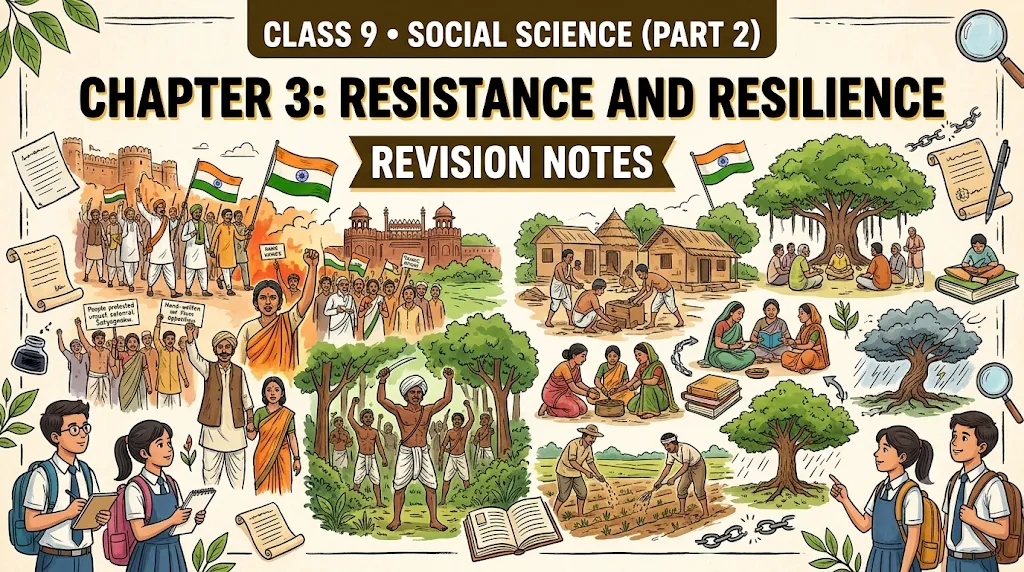
Class 9 Social Science Part 2 Chapter 3 Revision Notes: Resistance and Resilience (1000-1700 CE)
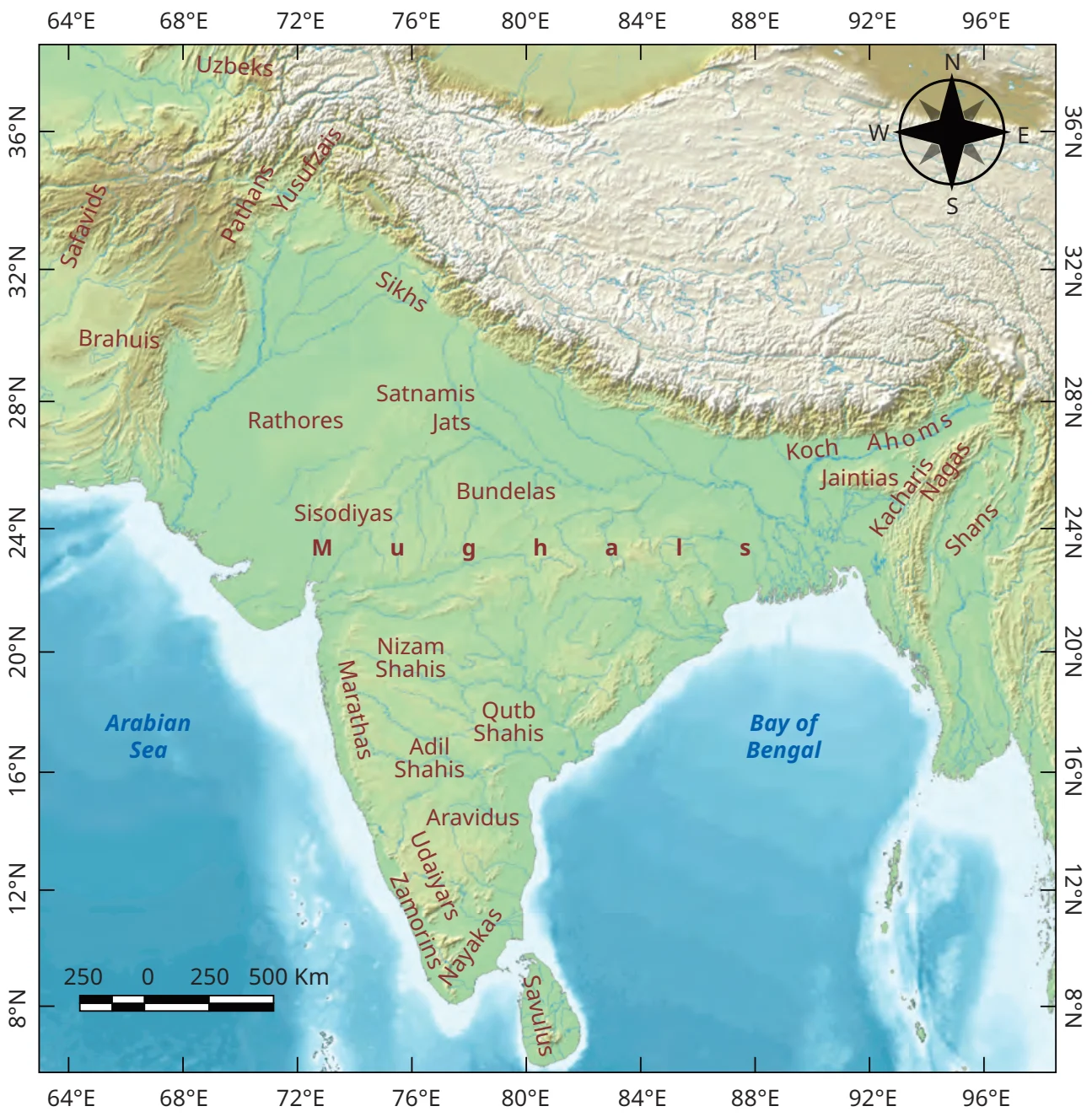
1. Understanding Resistance and Resilience
1000 CE से 1700 CE का period profound political, social, और cultural changes का गवाह था। Indian subcontinent को लगातार external invasions और wars का सामना करना पड़ा। लेकिन इस दौरान regional powers ने foreign invaders का कड़ा Resistance (प्रतिरोध) किया। इसके साथ ही, Indian civilization ने अद्भुत Resilience (लचीलापन) दिखाया, जिससे इसके core ideas और traditions सुरक्षित रहे।
📚 Important Definitions
Resilience: Challenging और unstable situations (जैसे political unrest) में survive और adapt करने की capacity। यह society की उस ability को दर्शाता है जिसके द्वारा वह hardships को endure करता है और अपनी socio-cultural व spiritual traditions को preserve करता है। Examples: destroyed places of worship को restore करना और religious lines के पार coexistence establish करना।
Resistance: अपने political power, territory, या cultural identity को protect करने के लिए किसी force या threat का actively विरोध (oppose) करना। यह warfare, diplomacy, या alliances के form में हो सकता है।
Connection: Resilience असल में Resistance का backbone है। Political leadership resistance का कारण बनता है, लेकिन endure करने की strength Resilience से आती है। 1000-1700 CE का period केवल invasions की story नहीं है, बल्कि conflict और cooperation दोनों का mix है।
🎯 Competency-Based Questions (CBSE Level)
Q1. [Conceptual] Choose the most appropriate answer. Resistance and resilience are closely connected because:
Ans: (b) Resilience enables communities to endure difficulties and sustain resistance.
Q2. [Analytical] Give an example from Indian history where Resilience went beyond just political or military spheres.
Ans: Communities demonstrated resilience by restoring destroyed places of worship, modifying customs to suit changing times, and establishing lasting patterns of coexistence across religious and cultural lines, keeping their socio-cultural identity alive.
Q3. [Assertion-Reason] Assertion (A): The period between 1000 CE and 1700 CE in India was merely a dark story of invasions and defeats.
Reason (R): Indian society displayed strong resistance and resilience to preserve its socio-cultural traditions.
Ans: A is incorrect, R is correct. The period was not just a story of invasion; it was characterized by conflict, cooperation, and immense societal resilience.
Q4. [Application] If a kingdom uses diplomacy and strategic alliances rather than direct warfare to stop an invading army, is it still considered “Resistance”?
Ans: Yes. Resistance is not limited to warfare; it actively includes diplomacy, negotiation, and forming alliances to challenge a threat and protect territory.
Q5. [Fact-Based] What was a major economic reason that attracted foreign invasions into the Indian subcontinent from the 7th century onwards?
Ans: The surplus agrarian produce of the fertile plains fed by perennial river systems contributed heavily to the region’s wealth, making it an attractive target for territorial expansion.
2. Safeguarding Sovereignty: Resistance and Confederacies
Mid-7th century से Arab forces ने sea और land routes से invasions शुरू किए। इन्हें Deccan, Malwa, Kashmir, और Rajasthan के rulers ने repulse (खदेड़) दिया।
- Mahmūd of Ghaznī (1001 CE): उसने Hindu Shāhi dynasty के ruler Jayapāla पर attack किया।
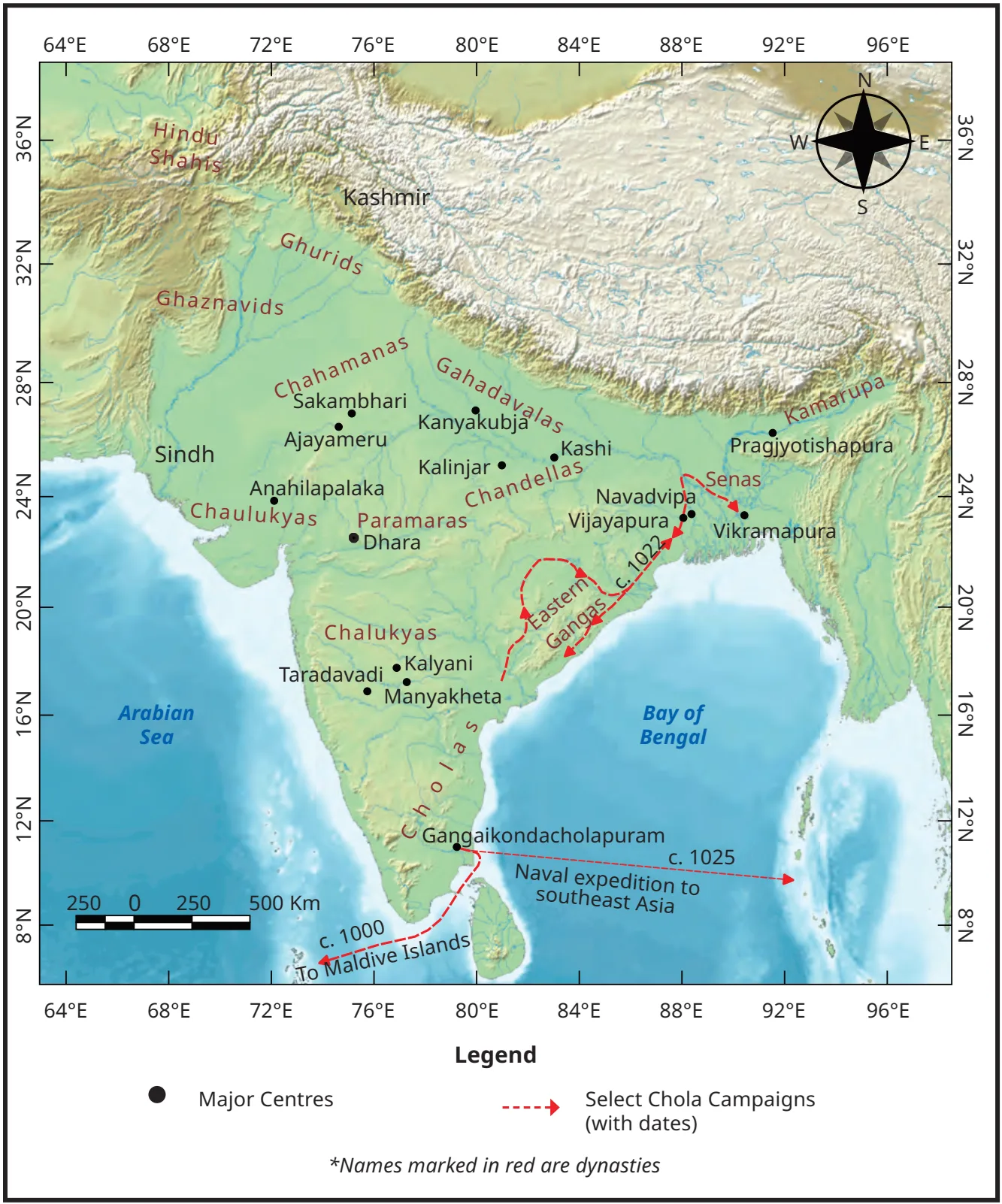
- Fierce Resistance: 11th और 12th century में Hindu Shāhis, Chandellas, Solankīs, और Chauhans ने Turkish invaders का कड़ा resistance किया।
- Queen Naiki Devi: 1178 में, Chaulukya queen Naiki Devi ने Mount Abu के पास Kasahrada के battle में Muhammad Ghurī को defeat किया।
- Regional Defiance: हालांकि 12th century के अंत तक Chauhāns और Gahadavālas जैसे kingdoms पर Turkic control हो गया, फिर भी Chandellas जैसे rulers ने अगले 100 वर्षों तक stiff resistance किया। Rajputana के कई states लगातार resistance के centres बने रहे, जबकि peninsular India काफी हद तक Turkic control से free रहा।
2.1 Rajput Dynasties & Delhi Sultanate (1200-1500 CE)
1206 में Delhi Sultanate establish हुआ, जिसने Iqta system (salary के बदले military commanders को land assign करना) जैसी centralised administration शुरू की। इससे peasantry पर tax burden बढ़ गया। Sultanate forces ने military campaigns के दौरान sacred sites को destroy किया, जिससे Devagiri के Yadavas, Warangal के Kakatiyas, और Karnataka के Hoysalas जैसे local rulers ने अपनी socio-cultural continuity बचाने के लिए stiff resistance किया।
2.2 Rajput-Mughal Dynamics (1500-1700 CE)
1526 में First Battle of Panipat में Bābur ने Ibrahim Lodi को defeat किया। 1527 में, Mewar के Rāņā Sangram Singh I (Rāņā Sāngā) ने Bābur के खिलाफ Rajput confederacy को lead किया (Battle of Khanua)। Mughals को अपने empire को consolidate करने के लिए Rajputs की military और administrative strength की आवश्यकता थी, इसलिए उन्होंने उन्हें Mansabs देकर empire में integrate किया। Amber के Kachhwāha Rajputs ने Mughals के साथ cooperative relationships establish किए, जबकि Mewar ने stiff resistance जारी रखा।
📚 Important Definitions
Mansab: इसका अर्थ है ‘rank’ या ‘office’। Akbar ने Mansabdari system शुरू किया, जिसने military organisation को civil administration के साथ combine कर दिया। इसने nobility के बीच एक clear hierarchy establish की, जिससे imperial control मज़बूत हुआ।
2.3 Mewar’s Resistance
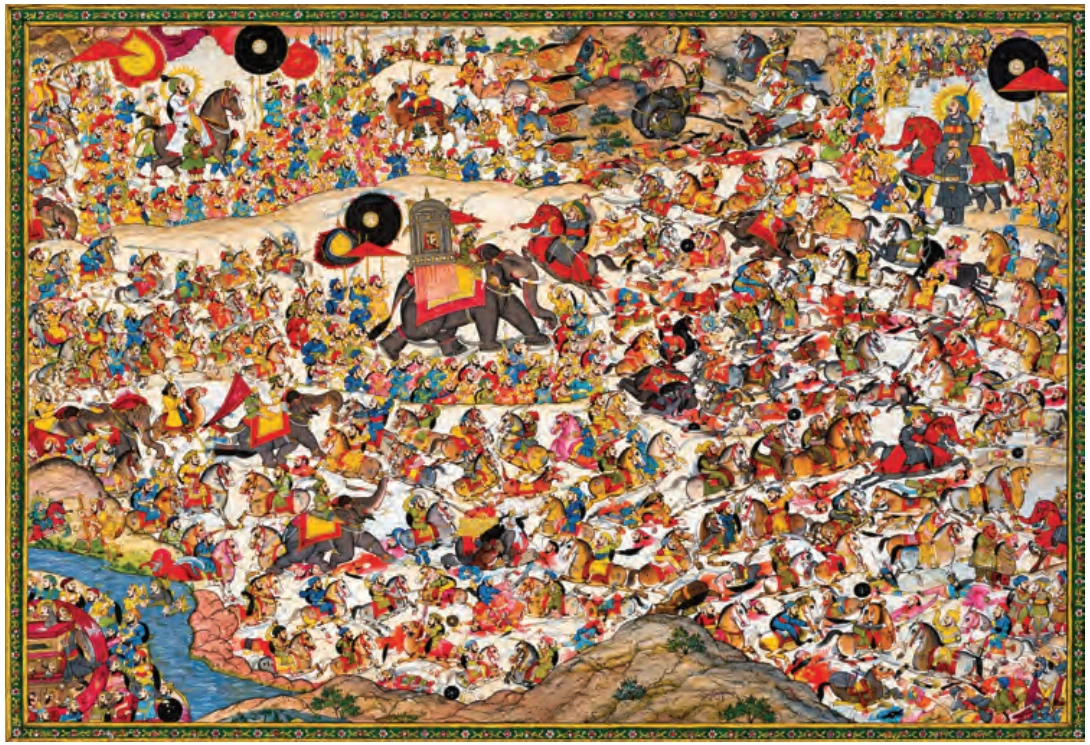
Akbar ने 1567-68 में Chittor पर attack किया। Rāņā Udai Singh के leadership में Rajputs ने 5 महीने तक stiff resistance किया और फिर strategically Aravalli Hills में retreat कर गए। 1576 में Battle of Haldighati में उनके successor, Mahārāņā Pratap ने Mughal forces का सामना किया।
- Guerrilla Warfare: Mahārāņā Pratap ने अपनी military strategy modify की और guerrilla warfare अपनाया। उन्होंने Aravalli के rugged terrain का advantage उठाकर Mughals पर surprise attacks और ambushes किए।
- Battle of Dewair (1582): इस battle में key Mughal military outposts collapse हो गईं और Pratap ने 1580s तक Mewar के बड़े हिस्से को reclaim कर लिया।
- Diplomatic Victory: Pratap के successor Mahārāņā Amar Singh ने भी Jahangir के खिलाफ resistance जारी रखा। Eventually Mughals को Mewar की distinct political position को recognize करना पड़ा। उन्होंने एक peace treaty sign की, जिसके तहत Mewar leadership को Mughal court में personal attendance से exemption दी गई, जो उनकी autonomy का clear proof था।
💡 Don’t Miss Out: The Bhil Alliance
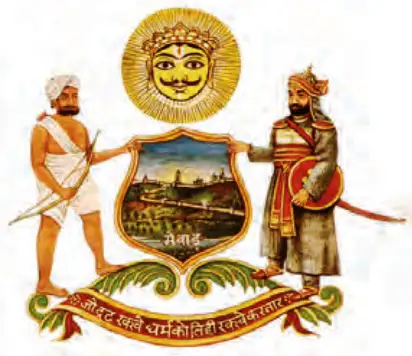
Battle of Haldighati में Bhil community ने Mahārāņā Pratap को crucial tactical और logistical support provide किया। Aravalli region का उनका knowledge, guerrilla warfare में expertise, और archery skills बहुत काम आए। इस deep alliance को Mewar के State Emblem (Coat of Arms) में immortalize किया गया है, जहाँ एक Rajput और एक Bhil warrior को local deity Eklingji (Shiva) के साथ दिखाया गया है।
🔍 Let’s Explore
Poet Dursā Arhā wrote about Mahārāņā Pratap: “You kept your horses unbranded, your head unbowed… You never participated in the Nauroz festival, nor did you mount guard for the imperial presence during Jharokha Darshan.”
Identify any two specific actions mentioned in the text which show that Mahārāņā Pratap maintained his independence from the Mughal court.
🎯 Competency-Based Questions (CBSE Level)
Q1. [Assertion-Reason] Assertion (A): Resistance to the Delhi Sultanate was solely for maintaining political power.
Reason (R): The Sultanate forces often demolished local sacred sites, forcing rulers to fight for socio-cultural continuity as well.
Ans: A is incorrect but R is correct. Resistance was fueled by BOTH political factors and the determination to preserve socio-cultural continuity (sacred sites).
Q2. [Analytical] Why did the Mughal Empire actively seek to collaborate with and integrate Rajput rulers into their administration via the Mansabdari system?
Ans: The Mughals needed the military might, steadfast loyalty, and deep local administrative strength of the Rajputs to consolidate, expand, and stabilize the vast Mughal Empire in India.
Q3. [Case-Based] Mahārāņā Pratap retreated into the rugged Aravalli Hills after the Battle of Haldighati. How did this geographical feature aid his resistance against the superior Mughal army?
Ans: The rugged terrain of the Aravalli Hills provided natural defenses and safe retreats. It allowed him to effectively employ guerrilla warfare tactics—launching surprise attacks, raids, and ambushes that heavily disrupted the Mughal forces.
Q4. [Conceptual] What was the outcome of the Battle of Dewair (1582) for the Kingdom of Mewar?
Ans: It resulted in the collapse of key Mughal military outposts and enabled Mahārāņā Pratap to reclaim control over the majority of Mewar’s ancestral territories.
Q5. [Picture-Based] Looking at the Mewar Coat of Arms (Fig 3.5), what profound message does the inclusion of a Bhil warrior alongside a Rajput warrior convey about Mewar’s resistance?
Ans: It conveys that Mewar’s successful resistance against the massive Mughal Empire was not achieved by Rajputs alone, but through a deeply respectful, enduring strategic alliance and collaboration with the tribal Bhil community.
3. Regional Endurance: Ahoms, Vijayanagara & Marathas
3.1 The Ahom Kingdom
Assam के Ahom kingdom ने लगभग 6 centuries (1228-1826) तक अपनी political independence maintain की।
- Strategy: Ahom commanders को Assam के forests, river systems (Brahmaputra), और monsoon cycles का deep knowledge था। उन्होंने direct confrontation के बजाय local terrain का advantage उठाया।
- Mughal Clashes: 1662 में Mir Jumlā ने Ahom capital Garhgaon पर capture किया, लेकिन King Jayadhvaj Singha ने जल्द ही treaty तोड़ दी।
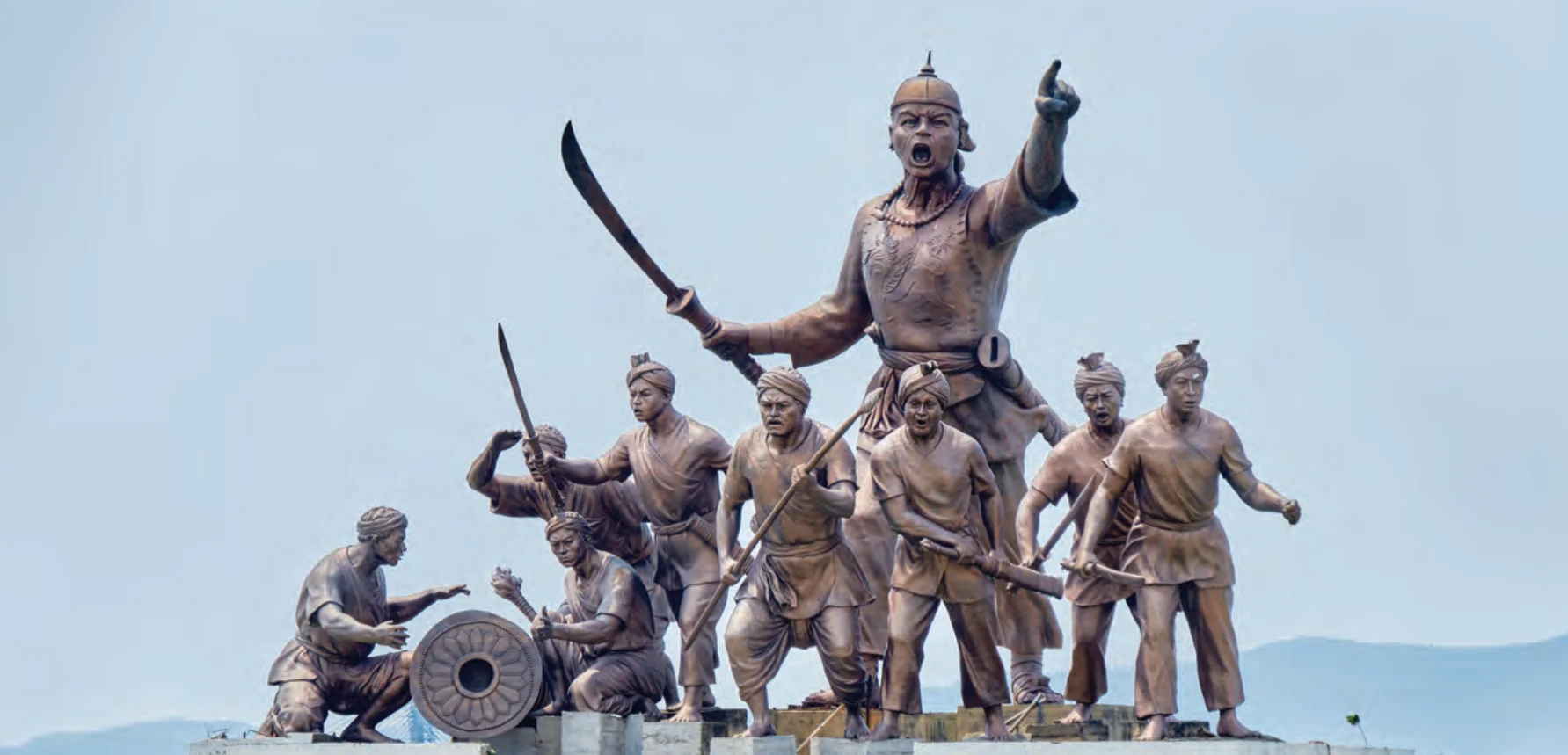
- Battle of Saraighat (1671): Ahom commander Lachit Borphukan ने Mughal fleet को decisively defeat किया और Brahmaputra river को एक effective territorial boundary बना दिया।
- Ahom Navy: उनकी navy बहुत powerful थी। उन्होंने bāchārī नामक light और fast boats का use किया, जो river warfare के लिए specifically design की गई थीं।
- Paik System: उनकी success का एक और reason उनका strong military-administrative organisation, Paik System था।

3.2 Vijayanagara Empire
South में Delhi Sultanate (Malik Kafur और Muhammad bin Tughlaq) के expansion को रोकने के लिए 1336 में Harihara और Bukkā ने Vijayanagara Empire (‘City of Victory’) establish किया (वर्तमान Hampi, Karnataka के पास)।
- Natural Defence: Rugged, rocky terrain और powerful river ने इसे एक strong natural defence provide किया।
- Expansion: Bukkā और उनके बेटे Kumāra Kampana ने Madurai Sultanate को defeat किया और Kanchipuram व Srirangam के temples (divine images) को reinstate किया।
- Cultural Hub: यह trade, culture, और political power का major centre बन गया। यहाँ Kannada, Telugu, Tamil, और Sanskrit literature को promote किया गया।
💡 Don’t Miss Out: The Slipper Incident
1565 में Battle of Talikota के बाद Vijayanagara Empire छोटे Nāyakas में fragment हो गया। Madurai के Muthu Vīrappa Nāyak III ने Mughals की subordination accept करने से refuse कर दिया। जब Mughal emperor ने अपनी supremacy दिखाने के लिए एक ‘royal slipper’ भेजा, तो Nayak ने उसे respect देने के बजाय उसमें अपना पैर डाल दिया और mockingly पूछा कि Badshah ने matching pair क्यों नहीं भेजी! इसके बाद उन्होंने Mughal envoys को expel कर दिया। यह उनके fierce defiance का symbol था।
3.3 Marathas: The Quest for Swarājya
17th और 18th century में Deccan में Marathas एक formidable military और administrative power बनकर उभरे। 1674 में Chhatrapati Shivājī ने एक independent Maratha state establish किया, जो Swarājya (self-rule) के idea पर आधारित था (external control से free)।
- Prolonged Warfare: Marathas ने Mughals के खिलाफ prolonged wars लड़े। इससे Mughal Empire (especially Aurangzeb) economically और politically इतना exhaust हो गया कि Aurangzeb को Maratha resistance suppress करने के लिए Deccan में 20+ years बिताने पड़े।
- Strategic Alliances: Marathas ने various territories पर control बढ़ाने के लिए strategic alliances किए और एक vast tributary network बनाया।
- Role of Forts: Marathas ने Raigad और Sinhagad जैसे strategic forts बनाए। Hills और deep valleys के बीच ये forts guerrilla warfare के लिए secure bases (strategic nuclei) बन गए।
- Forts administration और judicial authority के centres भी थे।
- इनमें water sources और armouries होते थे जो prolonged sieges सहने की resilience/self-sufficiency देते थे।
🤔 Let’s Watch & Think
Watch any video on “Tales of Forts” (Ministry of Culture). How did rulers perceive the importance of forts in terms of strategic concerns?
🎯 Competency-Based Questions (CBSE Level)
Q1. [Case-Based] The Ahom army consistently defeated the larger Mughal forces in the Brahmaputra valley. Besides guerrilla tactics, which specific naval asset provided them a massive advantage in river warfare?
Ans: The use of light, fast boats called “bāchārī,” which were specifically built and optimized for river warfare on the Brahmaputra.
Q2. [Analytical] How did the physical geography of the Deccan aid the Marathas in their quest for Swarājya against the Mughal Empire?
Ans: The Deccan’s landscape, characterized by hills and deep valleys, was perfect for guerrilla warfare. It allowed the Marathas to build a strategic network of hill forts (like Raigad) to launch swift surprise attacks and ensure safe retreats against the slower, bulkier Mughal armies.
Q3. [Assertion-Reason] Assertion (A): Kumāra Kampana of the Vijayanagara Empire reinstated divine images in the temples of Kanchipuram and Srirangam.
Reason (R): He successfully defeated the Madurai Sultanate, bringing an end to their rule and restoring the region’s cultural sites.
Ans: Both A and R are correct, and R is the correct explanation of A.
Q4. [Application] You are tasked with designing a Maratha fort to withstand a 6-month Mughal siege. Apart from thick defensive walls and cannons, what two internal features are absolutely critical for the survival of the soldiers inside?
Ans: Secure internal water sources (reservoirs/tanks) and vast food storage granaries (along with heavily stocked armouries).
Q5. [Picture-Based] Look at the image of the bāchārī boat model (Fig 3.8). What physical feature of this boat makes it so advantageous for the Ahom navy during the Battle of Saraighat?
Ans: Its extremely long, narrow, and light design, equipped with numerous oars on both sides, allowed it to maneuver swiftly and turn rapidly in the complex currents of the Brahmaputra river compared to the large, sluggish Mughal ships.
4. The Sikhs & Jat Resistance
4.1 The Sikhs: Spiritual and Political Resilience
Late 15th century में Guru Nanak ने एक major spiritual movement की foundation रखी जो बाद में Sikhism कहलाया। इसने devotion to one God, social equality, और rejection of rituals पर ज़ोर दिया।
- Mughal Oppression: Mughals (Jahangir) ने 5th Guru, Guru Arjan Dev को execute करवा दिया। बाद में 1675 में Aurangzeb ने 9th Guru, Guru Tegh Bahadur को भी execute किया। इस brutality ने Sikh history का direction बदल दिया।
- Mīrī-Pīrī: 6th Guru, Guru Hargobind ने Akāl Takht (temporal authority) establish किया। यह concept ‘Mīrī’ (political/temporal power) और ‘Pīrī’ (spiritual authority – Golden Temple / Harmandir Sahib) का integration था।
- The Khalsa (1699): 10th Guru, Guru Gobind Singh ने ‘Khalsa’ order establish किया, जिसने Mughals के खिलाफ defense के लिए एक strict martial code अपनाया। अब spiritual identity और political identity एक हो गए थे।
- Misals: Sustained Mughal hostility (और Guru Gobind Singh के sons की execution) के कारण Sikhs ने खुद को armed groups में organize किया, जिन्हें Misals कहा जाता था, जो बाद में strong confederacies बन गए। इसमें कई peasant communities के लोग भी soldiers बन गए।
4.2 Jat Resistance
17th century में Ganga-Yamuna Doab की farming community (Jats), Mughals के heavy taxes, exploitation, और Aurangzeb की strict religious policies से resentful थे।
- 1669 में Gokul Jat की leadership में उन्होंने rebel किया। Mughals को इसे suppress करने में भारी struggle करना पड़ा।
- 1686 में, जब Aurangzeb Deccan campaigns में busy था, Jats ने Sinsani और Sogar के zamindars के under फिर से revolt किया। Heavy losses के बावजूद, उनका resistance जारी रहा। Italian traveller Niccolao Manucci ने भी इस resistance का description दिया है।
🎯 Competency-Based Questions (CBSE Level)
Q1. [Assertion-Reason] Assertion (A): The martyrdom of Guru Arjan Dev and Guru Tegh Bahadur shifted the orientation of the Sikh community.
Reason (R): The brutal persecution convinced the Sikhs that spiritual devotion had to be coupled with armed resistance and collective political organization.
Ans: Both A and R are correct, and R is the correct explanation of A.
Q2. [Analytical] Why and how did groups such as the Sikhs and Jats assert their political power and identity during periods of Mughal authority?
Ans: They asserted power in response to heavy economic taxation, exploitation, and brutal religious persecution by the Mughals. The Jats rebelled using peasant uprisings, while the Sikhs formed martial orders like the Khalsa and organized into armed confederacies (misals) to defend their faith and territory.
Q3. [Case-Based] Guru Hargobind established a concept where the Golden Temple represented ‘Pīrī’ (spiritual authority). What did the Akāl Takht represent in this new framework?
Ans: The Akāl Takht represented ‘Mīrī’, which is temporal (worldly/political) authority to administer justice, address governance, and counter Mughal political dominance.
Q4. [Fact-Based] Under whose leadership did the Jats first rebel against the Mughal Empire in 1669?
Ans: Gokul Jat.
Q5. [Application] If a community faces severe political pressure and hostility from a massive empire, how does the formation of groups like the Sikh ‘Misals’ ensure their survival?
Ans: Forming armed groups (Misals) decentralizes military power into highly mobile, collective units. It transforms ordinary peasants into trained soldiers, providing a unified, defensive administrative structure that makes it extremely hard for a central empire to crush them completely in one battle.
5. Bhakti Tradition & Temple Resilience
5.1 Bhakti Tradition
11th से 17th century के बीच India के spiritual landscape में profound transformation आया। Bhakti (personal devotion to the divine) को local languages में devotional hymns के through express किया गया।
- इसने socio-religious equality, simplicity, और inclusivity पर ज़ोर दिया (जैसे Eknath in Marathi)।
- Two Streams: Nirguņa bhakti (formless divine की devotion) और Saguņa bhakti (divine with attributes की devotion)।
- Non-material Worship: जब temples destroy किए जा रहे थे, तब devotees ने Nām Kīrtan (reciting divine names) और Sankīrtan / Satsang (community singing) का सहारा लिया। इसे destroy या suppress करना impossible था।
- Chaitanya Mahāprabhu ने Qazi के restrictions के खिलाफ protest करने के लिए public sankīrtan का use किया।
- Assam में Sankardev ने Kirtana Ghosha compose किया।
- Language & Literature: Tulsidas की Ramcharitmānas जैसी literary works ने regional languages (Awadhi) का use करके Ramayana की spiritual teachings को आम घरों तक पहुँचाया। Women saints (जैसे Mirabai, Lāl Ded, Atukuri Molla) ने भी prominent role play किया।
💡 Don’t Miss Out: Goddess Worship & Sufism
India में goddesses की worship की लंबी tradition रही है। Rulers conflict के समय Kali, Durga, Bhavani को protectors मानते थे। कहा जाता है कि Shivājī को Mughals से resist करने के लिए goddess Tulja Bhavani ने sword दी थी।
इसी दौरान India में Sufism (mystical dimension of Islam) का भी expansion हुआ (Chishti, Suhrawardi, Qaddiriyya orders)। Sufis ने Indian languages (Hindavi, Bengali) का use किया और prāṇāyāma (जिसे Persian में habs-i-dam कहा गया) जैसे yogic practices को भी incorporate किया।
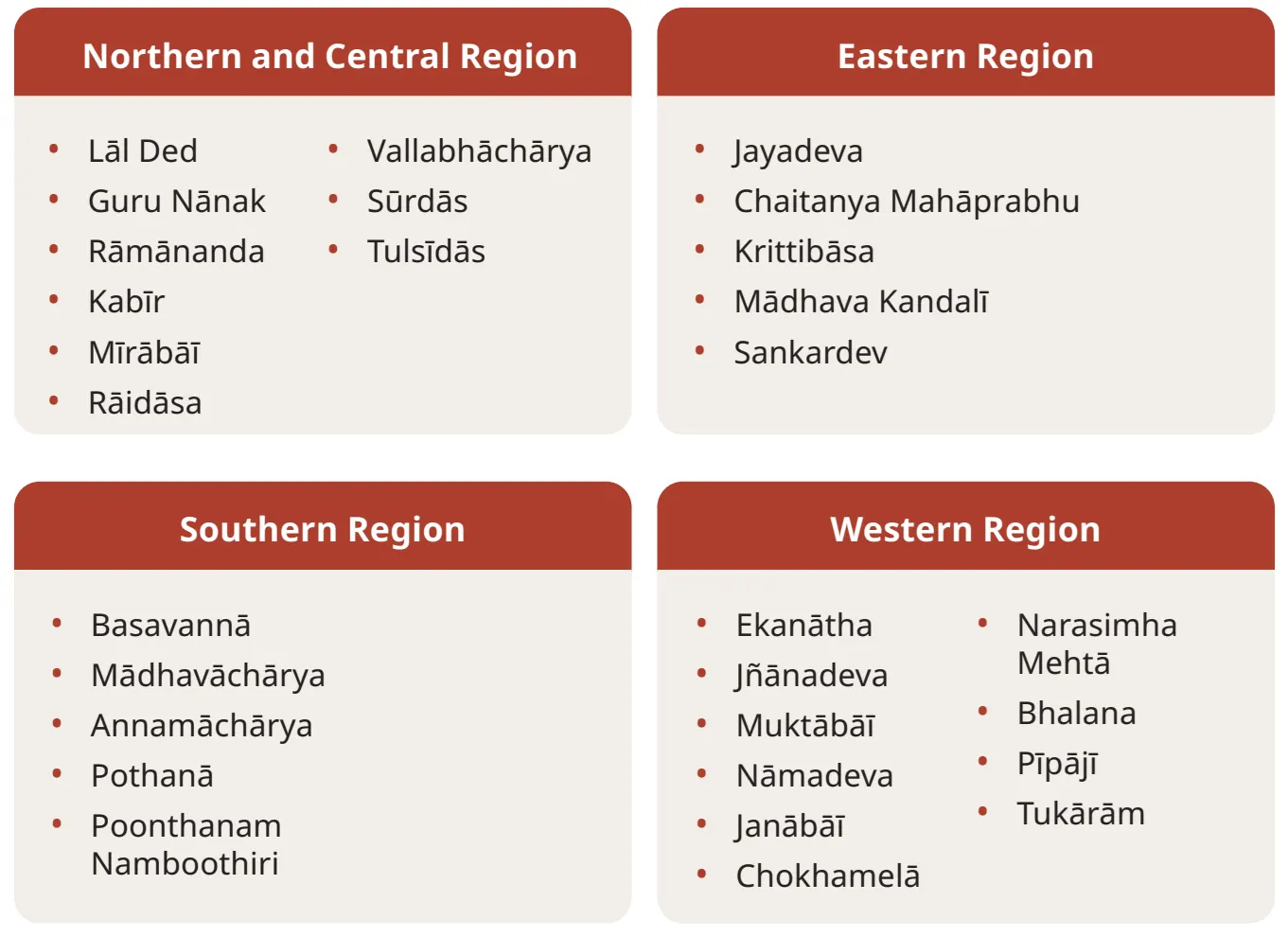
🤔 Think About It
Lal Ded says that it is ‘easy’ to learn scriptures but ‘hard’ to live them. What is the difference between knowing a rule and actually following it?
🔍 Let’s Map
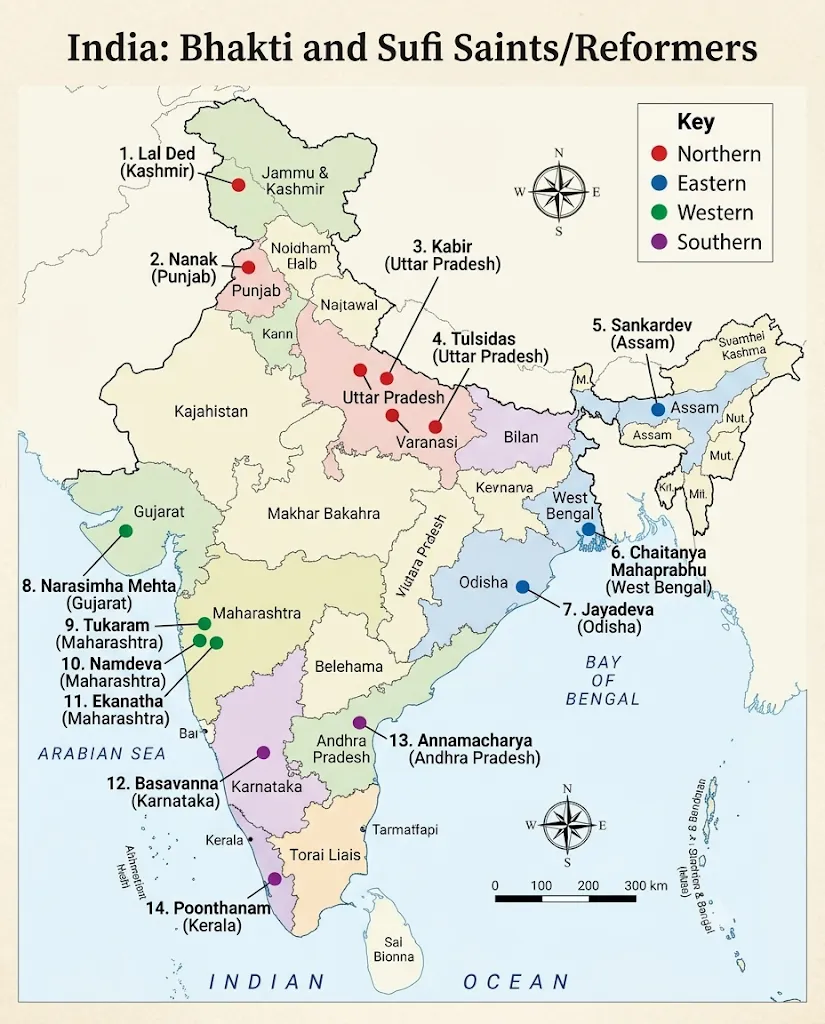
On a map of India, locate and label the present-day states associated with the saints mentioned in the infographic. Also, find and mark a saint from your own state who is not on the list.
– Northern: Kabir, Tulsidas (Uttar Pradesh); Nanak (Punjab); Lal Ded (Kashmir).
– Eastern: Chaitanya Mahaprabhu (West Bengal); Sankardev (Assam); Jayadeva (Odisha).
– Western: Tukaram, Namdeva, Ekanatha (Maharashtra); Narasimha Mehta (Gujarat).
– Southern: Basavanna (Karnataka); Annamacharya (Andhra Pradesh); Poonthanam (Kerala).
📚 Important Definitions
Sulh-i-Kul: Akbar द्वारा adopt की गई state policy जिसका meaning है ‘peace with all’ या ‘universal toleration’। इसका political purpose non-Muslim powers का support secure करना था।
5.2 Temples: Economic Hubs & Sacred Sites
Temples केवल places of worship नहीं थे, बल्कि वे society के Economic Hubs थे।
- Economy: Temples manage extensive land grants. वे thousands of artisans, priests, और administrators को employment देते थे। उन्होंने irrigation works को support किया और cultivators/merchants को credit (loans) भी दिया।
(Example: Thanjavur का Brihadeeswara Temple)। - Political Legitimacy: Rulers अपनी authority को legitimate बनाने के लिए temples का patronage करते थे। For example, Odisha के Gajapati rulers खुद को Lord Jagannath का ‘Rauta’ (deputy) मानते थे।
- Architectural Change: 11th century के बाद, invasions में कई temples destroy किए गए। 16th century के बाद, destruction से बचने के लिए, कई temples ordinary houses (Havelis) की तरह बनाए जाने लगे (जिन्हें Haveli Temples कहा गया)। इनके tall shikharas नहीं होते थे और वे narrow lanes में छिपे होते थे।
(Example: Amer का Jagat Shiromani Temple)।
🎯 Competency-Based Questions (CBSE Level)
Q1. [Analytical] Consider the statement: “A tradition becomes more resilient when people can carry it with them.” Explain using examples from the Bhakti tradition.
Ans: I agree. When monumental temples were destroyed by invaders, the Bhakti tradition ensured the survival of faith because worship shifted to non-material forms like ‘Nām Kīrtan’ (reciting divine names) and ‘Satsang’ (community singing). You cannot destroy a song or a prayer carried in people’s hearts, making the tradition highly resilient and portable.
Q2. [Case-Based] The Brihadeeswara Temple at Thanjavur received massive donations of gold and land. Instead of just hoarding it, how did such temples act as central pillars of the local economy?
Ans: Temples acted as economic hubs by using this wealth to finance local irrigation works, support agrarian development, extend credit (loans) to cultivators and merchants, and provide steady employment to hundreds of artisans, architects, and musicians.
Q3. [Assertion-Reason] Assertion (A): From the 16th century onwards, many newly built temples in northern and western India lacked tall shikharas and resembled ordinary houses.
Reason (R): The architectural shift to the ‘Haveli temple’ style was a deliberate adaptation by communities to hide sacred sites and avoid destruction by invading forces.
Ans: Both A and R are correct, and R is the correct explanation of A.
Q4. [Conceptual] What was the political implication of Akbar adopting the policy of ‘Sulh-i-Kul’ (absolute peace)?
Ans: Politically, it was intended to secure the support, trust, and alliances of non-Muslim political powers (like the Rajputs) by promoting universal toleration, allowing the Mughal Empire to stabilize.
Q5. [Fact-Based] Name the literary work composed by Sankardev that remains central to present-day Vaishnava traditions in Assam.
Ans: The Kirtana Ghosha.
6. Indian Economy: Agriculture & Trade
Frequent invasions के बावजूद Indian economy dynamic रही। State income का main source Land Revenue था। Alauddin Khilji और Mohammad bin Tughlaq के time यह agricultural production का 50% तक raise कर दिया गया था।
- Irrigation & Agriculture: Agricultural output बढ़ाने के लिए rope pulleys, spinning wheels, और Persian wheels जैसी technologies का use किया गया। Vijayanagara Empire ने small-scale irrigation में heavy investment किया।
- Trading Networks: Inland trade (Caravans के ज़रिए) और seaborne trade काफी expand हुआ। Banjārās जैसी local trading communities rural areas को urban markets से जोड़ती थीं।
Delhi Sultans और Mughals ने maritime trade पर ज़्यादा focus नहीं किया, इसलिए यह पूरी तरह से regional local communities के control में रहा। - European Arrival: 16th century में Portuguese, Dutch, English, और French के arrival से India global commerce का एक major intersection बन गया।
- Hundī: यह एक financial instrument (bill of exchange) था जो आज के bank cheques की तरह function करता था। इसे sarrāfs (money-changers) operate करते थे।
🤔 Think About It
What do you think made hundī a safer and more convenient choice than physically transporting money across long distances?
🤔 Think About It
Identify some cultural and economic pillars that exist in any community (places of faith, traditions, business, and trade, etc.). How do you think these contribute to resilience within a society facing invasions/external pressures?
🎯 Competency-Based Questions (CBSE Level)
Q1. [Scenario-Based] Imagine a market in a port town of India such as Surat or Masulipatnam. You are a foreign trader from France and want to make a deal on cotton textiles. How would you secure the product, and whose help would you seek?
Ans: I would not be able to buy directly from farmers. I would have to rely heavily on the complex network of local Indian merchant groups. I would specifically seek the help of ‘dubhashīs’ (interpreters) to overcome the language barrier, and local brokers/bankers to negotiate bulk prices and ensure the weavers deliver the required quality on time.
Q2. [Analytical] Why did the Delhi Sultans and early Mughals leave the highly profitable coastal maritime trade largely in the hands of regional local communities?
Ans: Their primary concerns and military expertise were strictly land-based (political expansion and land revenue collection). They lacked a strong naval vision, caring only about collecting customs duties at ports, thus leaving the actual commerce to local maritime merchants.
Q3. [Assertion-Reason] Assertion (A): The introduction of the Persian wheel significantly enhanced the agrarian economy during the medieval period.
Reason (R): The Persian wheel was a financial instrument used by Sarrafs to exchange currency.
Ans: A is correct but R is incorrect. The Persian wheel was an advanced irrigation technology used to lift water for agriculture, not a financial instrument (that was the Hundī).
Q4. [Conceptual] What was the economic function of the ‘sarrāfs’ in medieval Indian trade networks?
Ans: Sarrāfs acted as money-changers and bankers who operated the complex networks of Hundīs (bills of exchange), facilitating secure, large-scale commercial transactions across long distances.
Q5. [Fact-Based] Which famous ruler wrote the Amukthamālyadā, emphasizing the fair treatment of foreign traders and the maintenance of ports?
Ans: Krishnadevaraya, the ruler of the Vijayanagara Empire.
The Big Questions (Chapter Objectives Solved)
1. How did Indian rulers use resistance and alliances to safeguard their lands?
2. What factors contributed to the resilience of different kingdoms and communities during this period?
3. How did the Bhakti tradition foster a sense of solidarity?
4. How did the expansion of agriculture, trade, and commerce keep the economy sound?
List

Class 9 Social Science Part 2 Chapter 4 Governance and Public Policy Revision Notes
Class 9 Social Science Part 2 Chapter 3 Resistance and Resilience Revision Notes

Class 9 Social Science Part 2 Chapter 2 Life on Earth Revision Notes

Class 9 Social Science Part 2 Chapter 1 Oceans and Life Revision Notes
Class 9 Social Science (History) — Chapter 4: Early Humans and Beginning of Civilisation