Class 9 Social Science Part 1 Chapter 3 Revision Notes: Atmosphere and Climate (वायुमंडल और जलवायु)
जब हम आकाश की ओर देखते हैं, तो हमें floating clouds, sunshine, और cool breeze का अनुभव होता है। यह सब पृथ्वी के चारों ओर फैले हवा के एक कंबल (blanket of air) के कारण होता है, जिसे Atmosphere (वायुमंडल) कहते हैं। यह Earth’s gravity द्वारा पृथ्वी से जुड़ा रहता है और विभिन्न गैसों का मिश्रण है जो सभी जीवों के अस्तित्व के लिए आवश्यक है। Atmosphere हमें सूर्य की हानिकारक ultraviolet (UV) radiation से बचाता है, सूर्य की कुछ ऊर्जा को रोककर पृथ्वी का temperature नियंत्रित करता है, और weather व climate systems (temperature, humidity, air pressure) को प्रभावित करता है।
📚 Important Definition
Gravity (गुरुत्वाकर्षण): A fundamental physical force of attraction between objects that have mass or energy (such as the Sun and the Earth). The force of attraction that the Earth’s mass exerts on objects on or close to its surface is called Earth’s gravity.
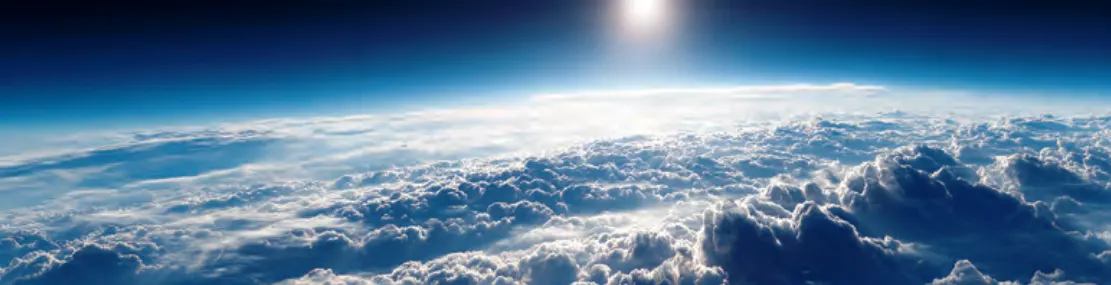
The atmosphere acts as a protective shield around Earth, regulating temperature, supporting life, and driving all weather phenomena.
🤔 Think About It: What If There Were No Atmosphere?
Can you imagine what would happen if there were no atmosphere?
1. Composition and Structure of the Atmosphere (वायुमंडल की संरचना)
Composition of the Atmosphere
Earth’s atmosphere विभिन्न गैसों का मिश्रण है। इसमें Nitrogen (78%) और Oxygen (21%) दो सबसे प्रमुख गैसें हैं जो जीवन के लिए आवश्यक हैं। इसके अलावा कम मात्रा में Argon (0.93%), Carbon Dioxide (0.04%), और अन्य गैसें (0.03% — जैसे helium, neon, krypton, xenon, ozone, और hydrogen) पाई जाती हैं। वायुमंडल में water vapour (लगभग 0.1% से 0.4% तक) और tiny dust particles भी होते हैं, जो cloud formation और precipitation में मुख्य भूमिका निभाते हैं। वायुमंडल का composition ऊँचाई (altitude) के साथ बदलता रहता है।
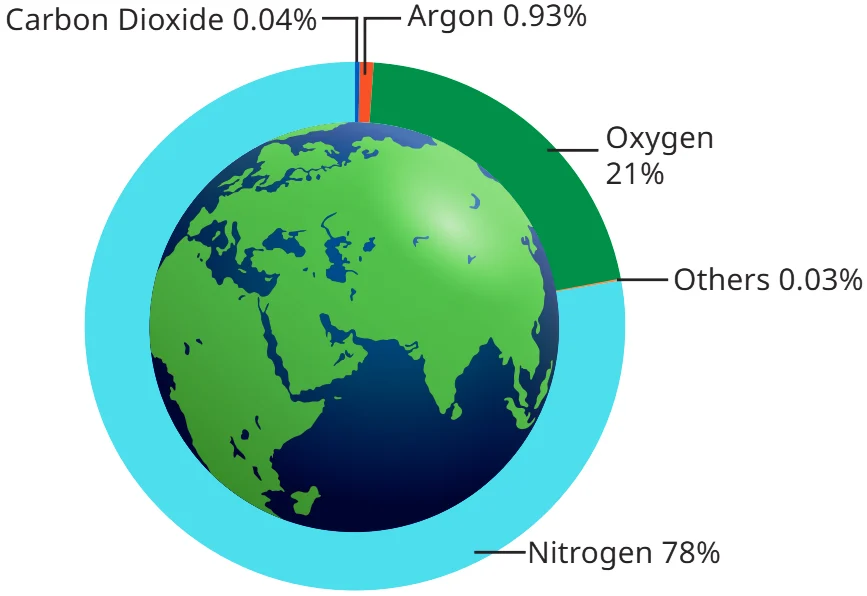
Nitrogen and Oxygen together make up 99% of dry air, while trace gases like Carbon Dioxide and Ozone play vital roles in trapping heat and blocking UV rays.
🔍 Let’s Recall: How is Nitrogen Useful for Plants?
How is nitrogen useful for plants?
Structure of the Atmosphere (Five Layers)
वायुमंडल की परतदार संरचना (layered structure) बढ़ती altitude के साथ temperature और air density में होने वाले बदलावों पर आधारित है। Air density पृथ्वी की सतह के पास सबसे अधिक होती है और ऊँचाई के साथ घटती जाती है।
📚 Important Definition
Altitude (ऊँचाई): The height of a location above mean sea level, usually measured in metres or feet. Mean sea level is considered zero.
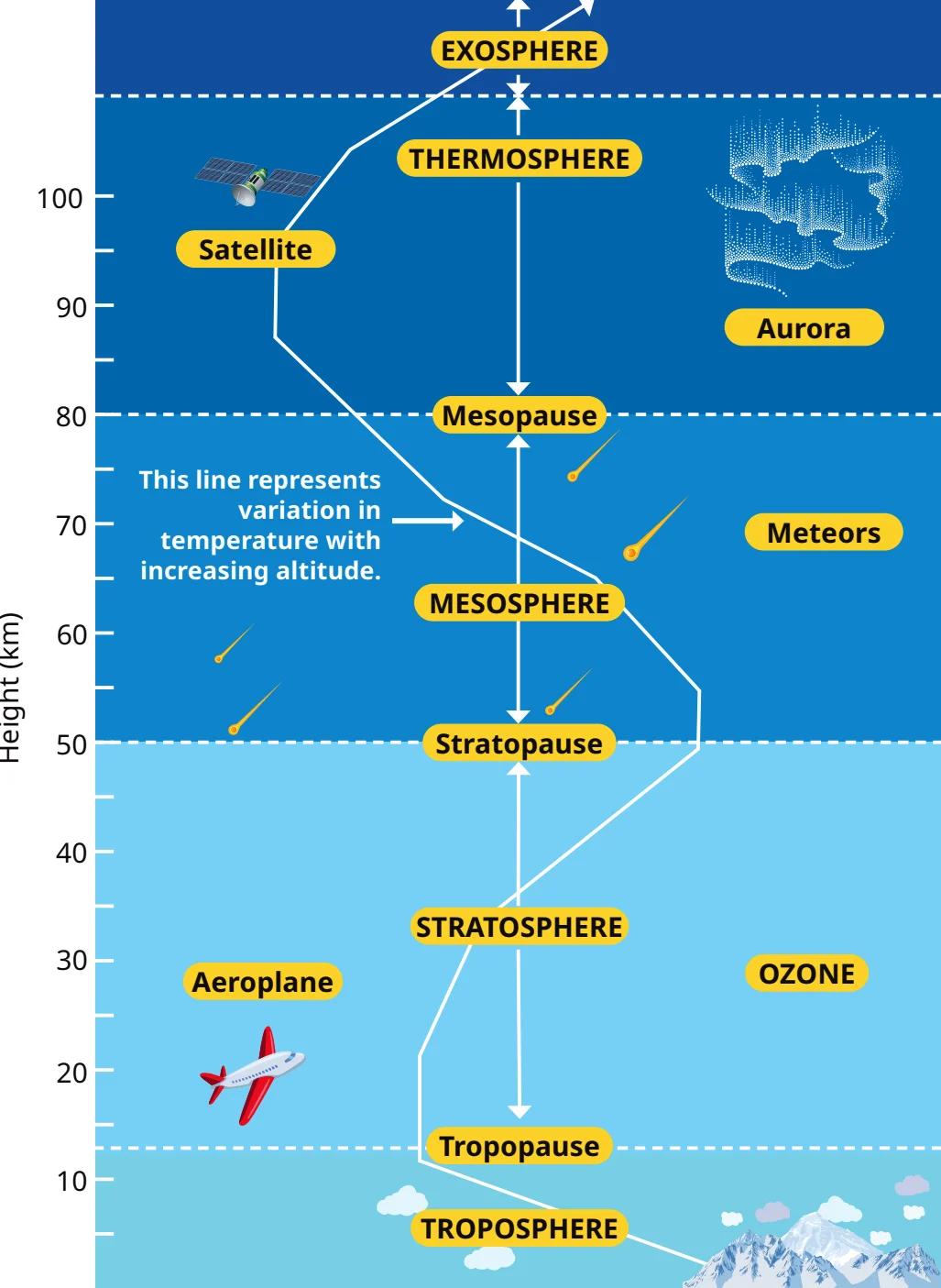
Notice the white temperature curve showing how temperature decreases in the Troposphere and Mesosphere, but increases in the Stratosphere and Thermosphere.
- 1. Troposphere (क्षोभमंडल — avg. height ~12 km): सबसे महत्वपूर्ण परत। यहाँ ऊँचाई बढ़ने पर temperature घटता है। हम इसी परत की हवा में साँस लेते हैं और अधिकांश water vapour व clouds यहीं होते हैं। लगभग सभी weather phenomena (rainfall, fog, hail) इसी परत में होते हैं। इसकी ऊपरी सीमा (transition zone) को tropopause कहते हैं।
- 2. Stratosphere (समतापमंडल — up to 50 km): बादलों और मौसम की गड़बड़ियों से मुक्त होने के कारण यह aeroplanes उड़ाने के लिए आदर्श है। इसमें Ozone gas layer होती है जो सूर्य की हानिकारक UV radiation को छानती है। ऊपरी सीमा: stratopause।
- 3. Mesosphere (मध्यमंडल — up to 80 km): यहाँ ऊँचाई के साथ temperature फिर घटता है। अंतरिक्ष से आने वाले अधिकांश meteorites (उल्कापिंड) इसी परत में जलकर नष्ट हो जाते हैं। ऊपरी सीमा: mesopause।
- 4. Thermosphere (बाह्य वायुमंडल — 80 to 700 km): यहाँ X-rays और short-wave UV radiation के अवशोषण से temperature बहुत तेजी से बढ़ता है। इसका एक भाग Ionosphere है, जो पृथ्वी से भेजी गई radio waves को वापस परावर्तित कर radio transmission में मदद करता है। Auroras (northern & southern lights) इसी परत में होते हैं।
- 5. Exosphere (बहिर्मंडल): सबसे ऊपरी परत जहाँ हवा अत्यंत पतली होती है और कमजोर gravity के कारण helium और hydrogen जैसी हल्की गैसें अंतरिक्ष में तैर जाती हैं।
💡 Don’t Miss Out: Temperature Rule, Auroras & Atmospheric Pressure
• Temperature Decrease Rule: ऊँचाई के साथ temperature केवल Troposphere और Mesosphere में ही घटता है।
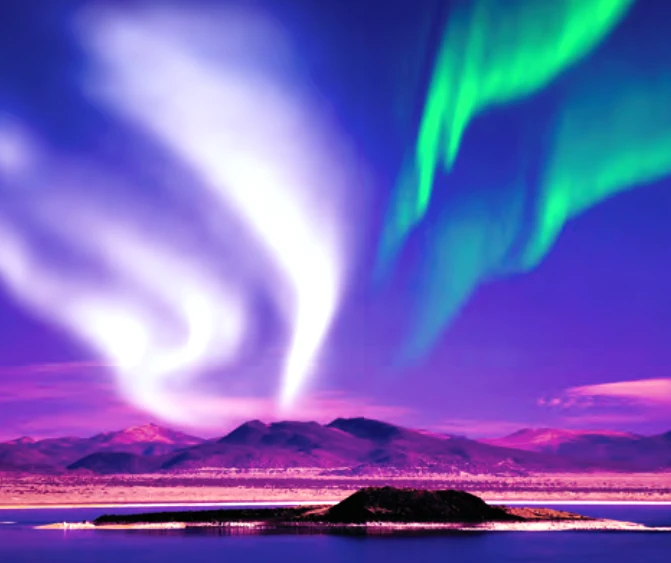
• Aurora (Fig. 3.4): Latin शब्द ‘aurora’ का अर्थ ‘dawn’ या ‘morning light’ है, जो Roman goddess of dawn के नाम पर रखा गया है। सूर्य से आने वाली solar wind (charged particles) पृथ्वी के magnetic poles की ओर मुड़कर अलग-अलग गैसों से टकराती है और रंगीन रोशनी पैदा करती है—Northern Hemisphere में Aurora Borealis और Southern Hemisphere में Aurora Australis।
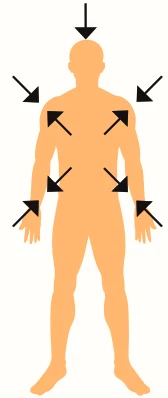
• Why Don’t We Feel Air Pressure? (Fig. 3.5): हमारे ऊपर की हवा हमारे शरीर पर चारों ओर से भारी दबाव डालती है, लेकिन हमारे शरीर के अंदर का pressure इसके बराबर होकर बाहरी atmospheric pressure को cancel कर देता है।
🎯 Competency-Based Questions (Section 1)
Q1. [Scenario-Based] A commercial pilot climbs above stormy rain clouds to reach a calm, cloud-free layer of the atmosphere for a smooth flight. Which layer has the pilot entered, and what protective gas layer is found there?
Ans: The Stratosphere, which contains the protective Ozone layer that filters out harmful ultraviolet radiation.
Q2. [Assertion-Reason] Assertion (A): We do not feel crushed by the massive weight of the atmosphere pressing down on our bodies.
Reason (R): Air presses on us from all sides, and our bodies exert an equal internal counter-pressure that cancels out the external atmospheric pressure.
Ans: Both A and R are true, and R is the correct explanation of A.
Q3. [Analytical] In which two layers of the atmosphere does temperature decrease with increasing altitude?
Ans: Only in the Troposphere and the Mesosphere.
Q4. [Conceptual] How does the Thermosphere support global communication and create Auroras?
Ans: The Ionosphere (part of the Thermosphere) reflects radio waves back to Earth to enable radio transmission, while interactions between charged solar wind particles and atmospheric gases near the magnetic poles create colourful Auroras.
Q5. [Fact-Based] In which atmospheric layer do most meteorites entering from space burn up?
Ans: The Mesosphere (extending up to 80 km).
2. Weather, Climate & Their Elements (मौसम, जलवायु और तत्व)
Weather (मौसम) किसी स्थान के वायुमंडल की hour-to-hour और day-to-day स्थिति है (जो हर दिन बदल सकती है)। जबकि Climate (जलवायु) किसी बड़े क्षेत्र में लंबे समय—आमतौर पर 30 years or more—के मौसम की औसत स्थिति (sum total of weather conditions and variations) को कहते हैं।
📚 Important Definition
Insolation: The incoming solar energy from the Sun that is intercepted by the Earth.
Five Major Elements of Weather and Climate
- 1. Temperature & Insolation: Temperature दिन-रात और मौसम के अनुसार बदलता है। Insolation भूमध्य रेखा (equator) से ध्रुवों (poles) की ओर घटती है, इसलिए ध्रुवों की ओर तापमान कम होता जाता है। इसके आधार पर पृथ्वी तीन heat zones में बँटी है: Torrid Zone (23½°N to 23½°S), North & South Temperate Zones (23½° to 66½°), और Frigid Zones (66½° to Poles)।
- 2. Humidity (आर्द्रता): भूमि और जल स्रोतों से evaporation के कारण हवा में मौजूद water vapour की मात्रा। जैसे-जैसे हवा गर्म होती है, उसकी water vapour धारण करने की क्षमता बढ़ती है—जिससे उमस भरे दिनों में कपड़े देर से सूखते हैं और पसीना धीरे सूखता है।
- 3. Precipitation (वर्षण): जब हवा water vapour से saturate होकर condense होती है और gravity के कारण नीचे गिरती है—जैसे drizzle, rain, snow, sleet, और hail। यह prevailing winds, mountains, और seasons से प्रभावित होती है। Rain सबसे आम रूप है, यह तापमान कम करती है, और अधिकांश groundwater वर्षा के जल से ही एकत्र होता है।
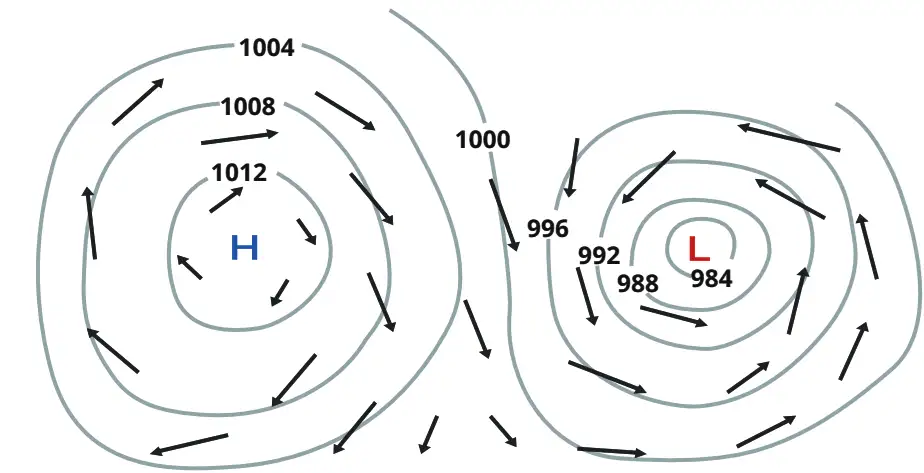
- 4. Atmospheric Pressure (वायुदाब): पृथ्वी की सतह पर हवा के भार द्वारा डाला गया दबाव। यह sea level पर सर्वाधिक होता है और ऊँचाई के साथ तेजी से घटता है। जहाँ तापमान अधिक होता है, हवा गर्म होकर ऊपर उठती है → Low Pressure (cloudy skies & wet weather)। जहाँ तापमान कम होता है, ठंडी भारी हवा नीचे बैठती है → High Pressure (clear & sunny skies)। हवा हमेशा High Pressure से Low Pressure की ओर चलती है, और इसकी दिशा पृथ्वी के rotation से प्रभावित होती है।
- 5. Wind (पवन): High-pressure से low-pressure क्षेत्र की ओर हवा की गति। यह हल्की (dry leaves उड़ाने वाली) या तेज (तूफान में पेड़ उखाड़ने वाली) हो सकती है। Winds का नाम उस दिशा पर रखा जाता है जहाँ से वे आती हैं (जैसे पश्चिम से आने वाली = westerly)।
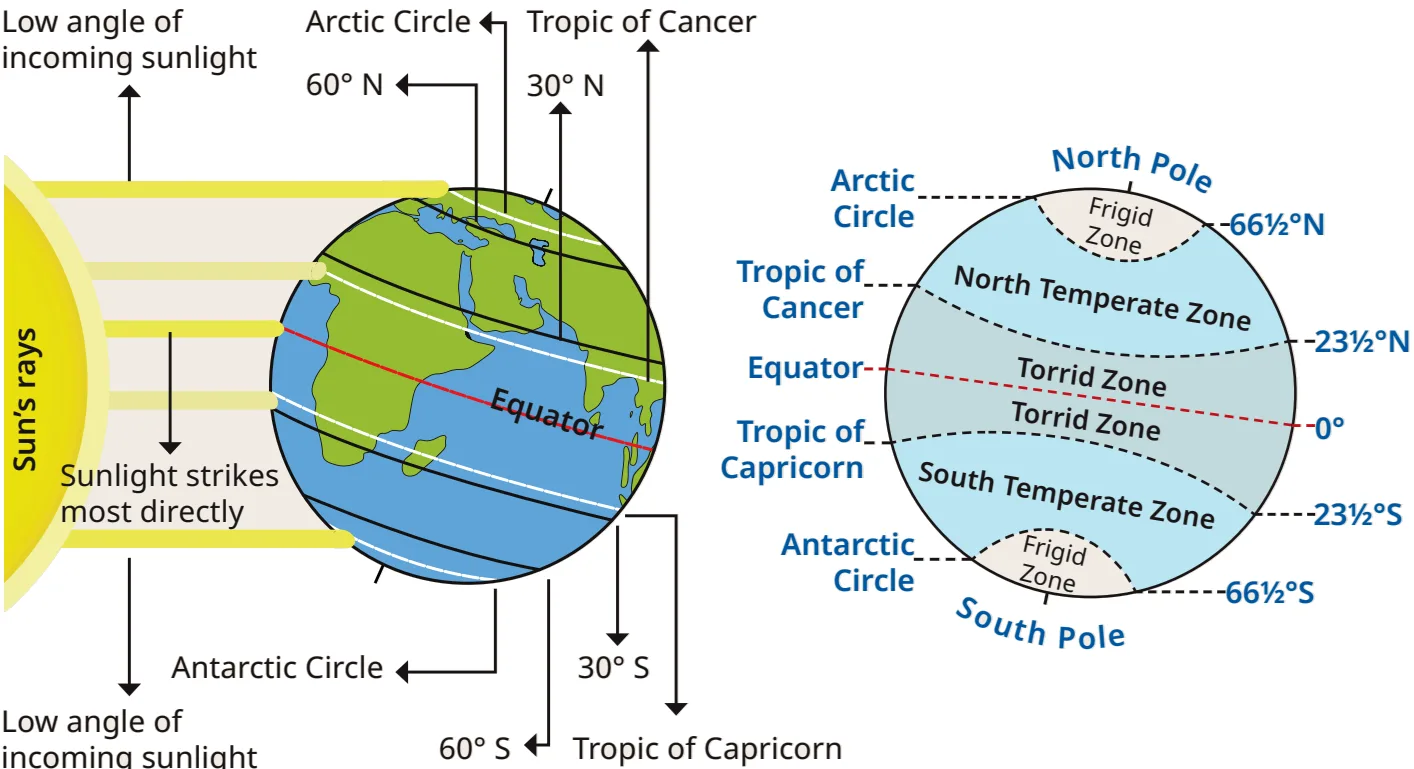
Sunlight strikes most directly at the Equator (Torrid Zone) and at a low slanting angle near the poles (Frigid Zones), creating Earth’s distinct heat zones.
🤔 Think About It: Problems Caused by Strong Winds
Sometimes the wind is so strong that it is difficult to walk against it. Can you think of other times when strong winds have caused problems?
Table 3.1: Wind Speeds and Their Common Effects
| Wind Category | Speed (km/hr) | Common Effects |
|---|---|---|
| Calm | 0–1 | Calm; smoke rises vertically. |
| Light breeze | 6–11 | Wind can be felt on the face; leaves rustle; ordinary vane moves. |
| Strong breeze | 39–49 | Large branches sway in the wind; umbrellas are difficult to use. |
| Storm | 103–117 | Very rarely experienced; usually accompanied by widespread damage. |
🔍 Let’s Explore: Other Categories of Wind Based on Speed
Find out other categories of wind based on speed (Beaufort Scale) and their common effects.
Local Winds: Sea Breeze & Land Breeze
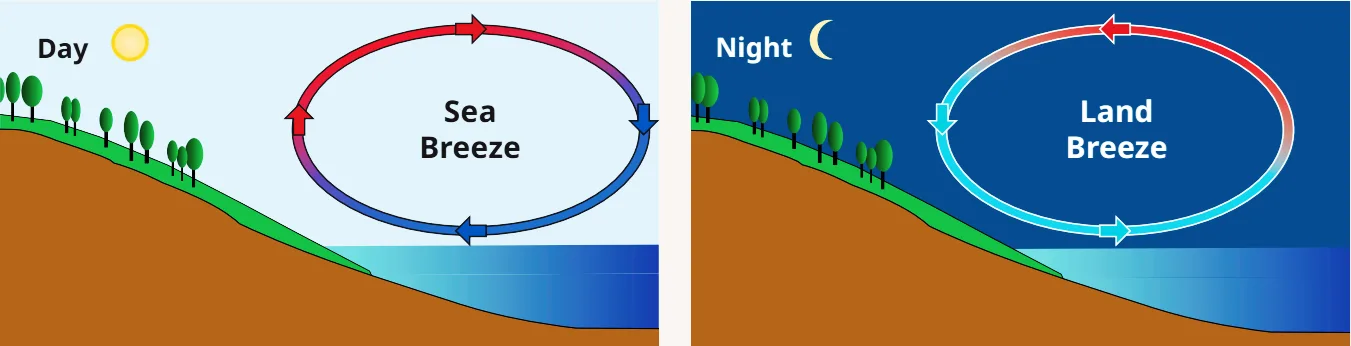
- Sea Breeze (समुद्री समीर — Day): दिन (विशेषकर दोपहर) में भूमि समुद्र से जल्दी गर्म होती है → भूमि पर Low Pressure बनता है → ठंडी हवा समुद्र से भूमि (sea to land) की ओर चलती है।
- Land Breeze (स्थलीय समीर — Night): रात में differential surface cooling के कारण भूमि समुद्र से जल्दी ठंडी होती है → हवा भूमि से समुद्र (land to sea) की ओर चलती है। चूँकि रात में तापमान व दबाव का अंतर कम होता है, इसलिए इसकी गति धीमी होती है। ये दोनों तटीय क्षेत्रों (coastal regions) में moderate climate बनाए रखते हैं।
🎯 Competency-Based Questions (Section 2)
Q1. [Scenario-Based] On a hot afternoon at a beach in Goa, a cool breeze blows steadily from the Arabian Sea onto the shore. What is this local wind called, and what pressure condition over the land causes it?
Ans: Sea Breeze. During the day, land heats up faster than the sea, creating a low-pressure area over the land that draws cooler air from the high-pressure sea.
Q2. [Assertion-Reason] Assertion (A): On a hot and humid day, wet clothes take much longer to dry and sweat evaporates slowly.
Reason (R): Warm air has a higher capacity to hold water vapour, and when the air is already saturated with moisture, evaporation slows down.
Ans: Both A and R are true, and R is the correct explanation of A.
Q3. [Analytical] Why is the wind speed of a Land Breeze at night generally lower than that of a Sea Breeze during the day?
Ans: Because at night, the difference in temperature and air pressure between the cooler land and the slightly warmer sea is relatively small, resulting in a gentler wind speed.
Q4. [Conceptual] What is the difference between ‘Weather’ and ‘Climate’?
Ans: Weather refers to the hour-to-hour and day-to-day atmospheric conditions of a place, whereas Climate is the average of weather conditions and variations over a large area for an extended period (usually 30 years or more).
Q5. [Fact-Based] If a wind blows from the west towards the east, what is it called?
Ans: A westerly (winds are always named after the direction they blow from).
3. Seasons in India & The Monsoon Mechanism (भारत की ऋतुएँ और मानसून)
भारत की जलवायु को Tropical Monsoon कहा जाता है। Indian Meteorological Department (IMD) ने भारत में चार मुख्य मौसम (seasons) माने हैं:
- 1. Winter (December to early April): सबसे ठंडे महीने Dec–Jan (NW India में 10–15°C; भूमध्य रेखा की ओर SE India में 20–25°C)।
- 2. Summer / Pre-monsoon (April to June/July): पश्चिम व दक्षिण में April और उत्तर में May सबसे गर्म महीना होता है (inland India में average 32–40°C)।
- 3. Monsoon / Advancing Monsoon (June to September): नम south-west summer monsoon मई के अंत या जून की शुरुआत में पूरे देश में फैल जाता है।
- 4. Post-monsoon / Retreating Monsoon (October to December): उत्तर-पश्चिम भारत में Oct–Nov आमतौर पर cloudless रहते हैं, जबकि दक्षिण भारत में इस समय अधिक वर्षा होती है। (Himalayan states temperate होने के कारण दो अतिरिक्त मौसम—autumn और spring—भी अनुभव करते हैं।)
Table 3.2: Six Traditional Indian Seasons (Ṛtu)
परंपरागत रूप से भारत में 12 महीनों को 6 भागों (प्रत्येक ~2 महीने) में बाँटा गया है:
| Season (Ṛtu) | Indian Calendar Months | Gregorian Calendar Months |
|---|---|---|
| Vasanta (Spring) | Chaitra–Vaiśhākha | March–April |
| Grīshma (Summer) | Jyeshtha–Āshāḍha | May–June |
| Varshā (Monsoon) | Śhrāvaṇa–Bhādrapada | July–August |
| Śharad (Early Autumn) | Āśhvina–Kārtika | September–October |
| Hemanta (Late Autumn) | Mārgaśhīrsha–Pausha | November–December |
| Śhishira (Winter) | Māgha–Phālguna | January–February |
🤔 Think About It: Seasonal Rāgas in Hindustani Classical Music
Hindustani Classical music associates certain rāgas with specific seasons. Which rāgas are connected to each season?
The Mechanism & Importance of Monsoon (मानसून की कार्यप्रणाली और महत्व)
प्राचीन नाविकों (sailors) ने हवा के इस उलटफेर का लाभ उठाकर समुद्री यात्राएँ कीं। अरब व्यापारियों ने इसे ‘Monsoon’ नाम दिया, जो अरबी शब्द ‘mausim’ (season) से बना है।
📚 Important Definitions
Monsoon: The seasonal reversal in the wind direction during a year.
Lunar Mansions (Nakshatras): A traditional way of dividing the sky into 27 equal parts along the Moon’s path. Since the Moon takes ~27 days to orbit the Earth relative to the stars, it moves through one nakshatra (‘house’) each night.
- South-West (Summer) Monsoon (June–September): गर्मियों में भारतीय भूभाग (landmass) आसपास के महासागरों की तुलना में जल्दी गर्म होता है → भारत पर Low Pressure और Indian Ocean पर High Pressure बनता है। नमी से भरी हवाएँ Indian Ocean, Arabian Sea, और Bay of Bengal से भूमि की ओर बहती हैं और देश की अधिकांश वर्षा कराती हैं।
- North-East (Winter) Monsoon (October–February): सर्दियों में भूमि जल्दी ठंडी होती है → भूमि पर High Pressure और समुद्र पर Low Pressure बनता है। ठंडी व शुष्क हवाएँ भूमि से समुद्र की ओर बहती हैं। जब ये हवाएँ Bay of Bengal के ऊपर से गुजरती हैं, तो नमी उठाकर पूर्वी तट—विशेष रूप से Tamil Nadu, Andhra Pradesh, और Karnataka के हिस्सों में वर्षा कराती हैं।
- Vital Role in Indian Life: भारत की अधिकांश कृषि (sowing & growing crops) मानसून पर निर्भर है। अच्छा मानसून पर्याप्त खाद्य उत्पादन और नदियों, जलाशयों (reservoirs) व कुओं में जल स्तर सुनिश्चित करता है। यह ग्रामीण रोजगार, परिवहन और त्योहारों को प्रभावित करता है—जबकि अत्यधिक वर्षा से floods और कमजोर मानसून से droughts आते हैं।
💡 Ancient Rainfall Knowledge & Modern Weather Missions
• Ancient Texts: Kautilya के Arthaśhāstra में वर्षा के वैज्ञानिक मापन और राजस्व/राहत प्रबंधन का उल्लेख है। Krishiparāśhara (सूर्य व चंद्रमा की स्थिति) और Varāhamihira की Brihatsamhitā (27 nakshatras) में वर्षा की भविष्यवाणी की विधियाँ हैं। 5th c. CE में Kālidāsa ने Meghadūtam में मध्य भारत में मानसून के आगमन की तारीख और बादलों के मार्ग का वर्णन किया है।
• Modern Initiatives: Ministry of Earth Sciences के तहत National Monsoon Mission (NMM) और ‘Mission Mausam’ भारत को ‘Weather Ready’ और ‘Climate Smart’ बनाने के लिए सटीक forecasting models विकसित कर रहे हैं (agriculture, disaster management, और rural development के लिए)।
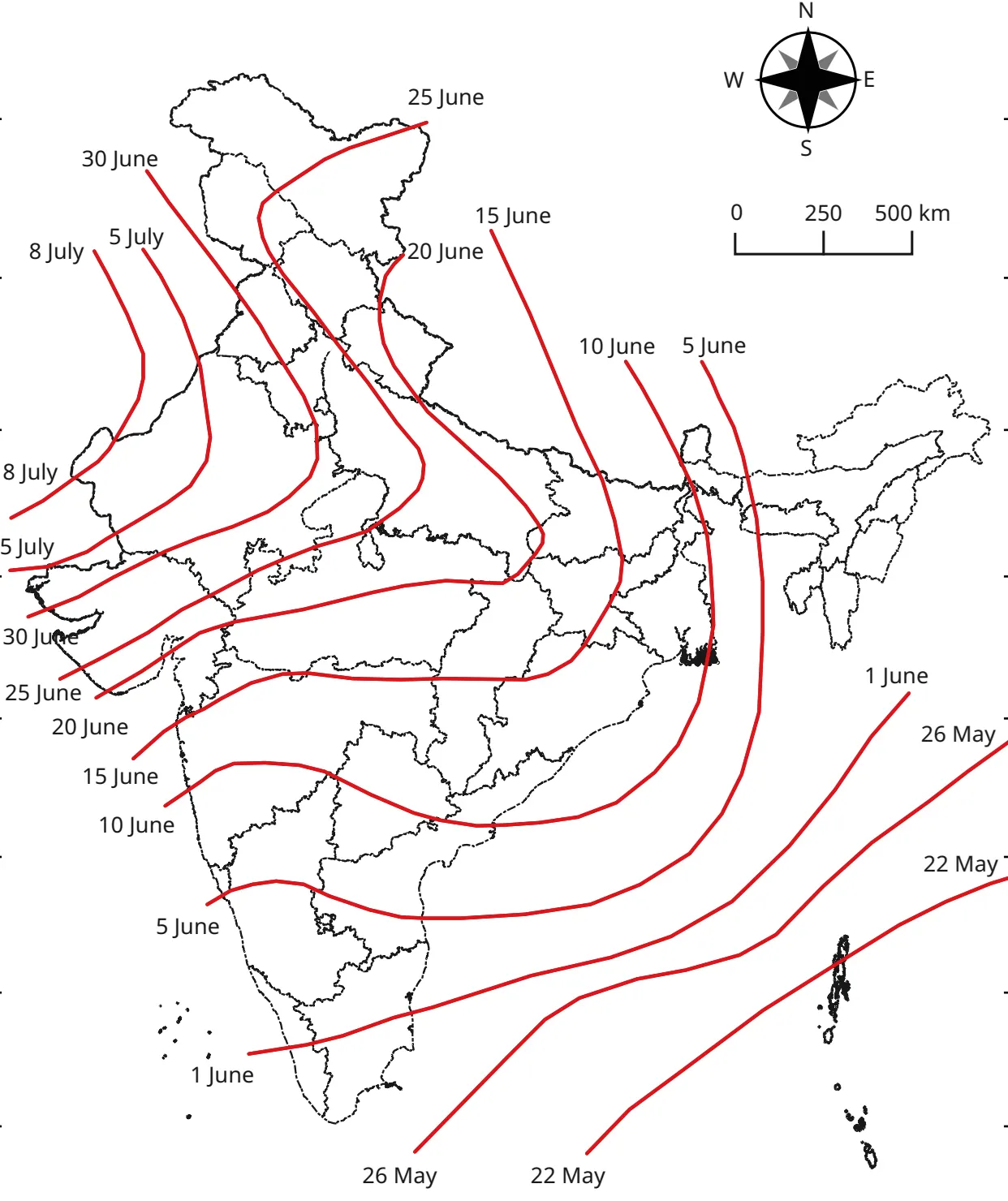
The South-West Monsoon hits the Andaman Islands around 22 May, reaches Kerala by 1 June, covers Central India by 15 June, and reaches western Rajasthan by 8 July.
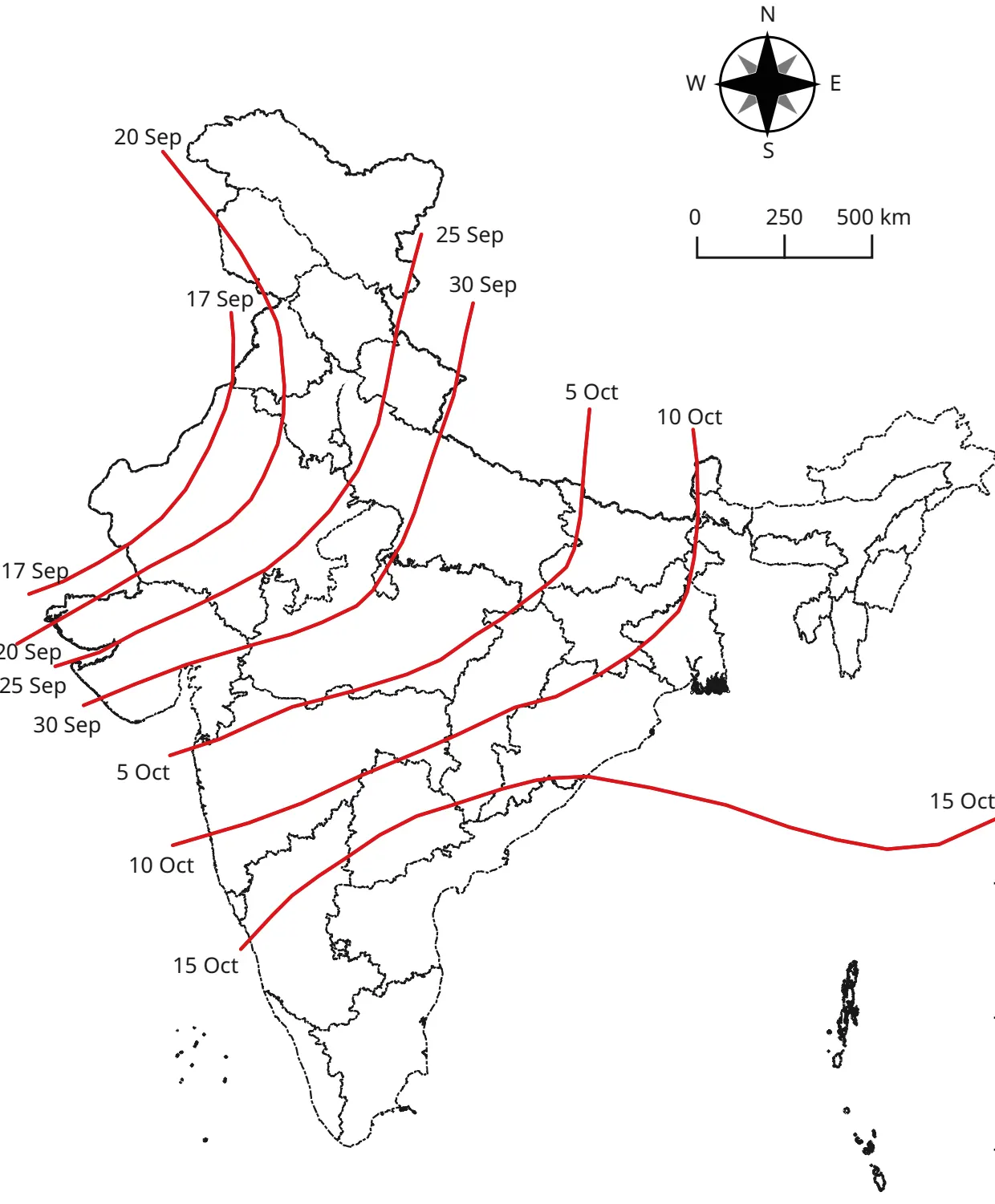
Monsoon withdrawal begins from northwestern India around 17 September and retreats from most of peninsular India by mid-October.
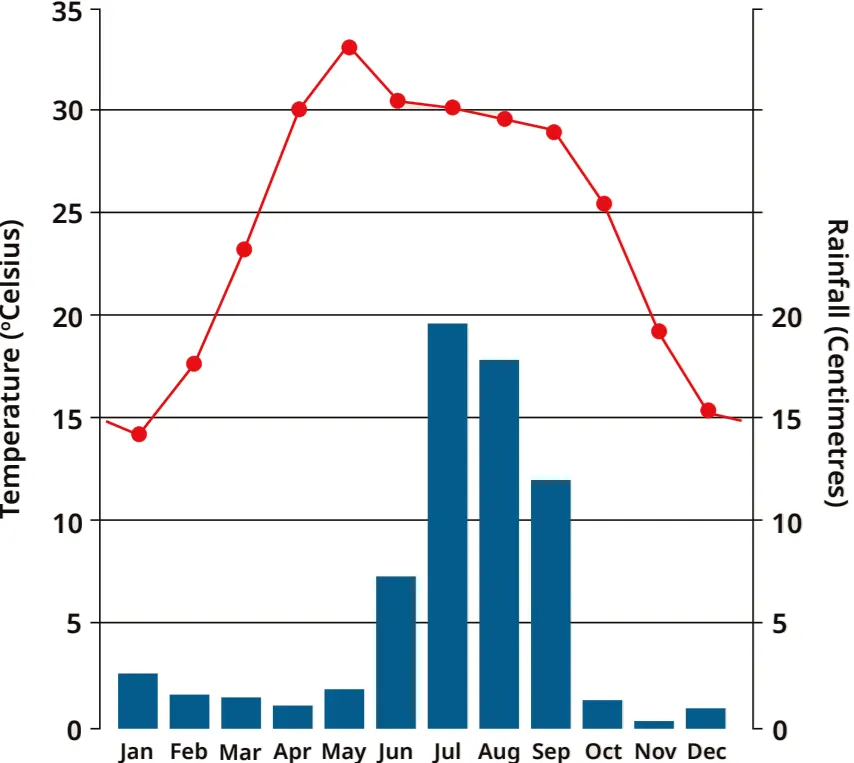
Delhi’s graph highlights India’s climatic diversity: inland stations (like Delhi & Jodhpur) have extreme summers and winters, coastal stations (like Thiruvananthapuram & Mumbai) enjoy equable climates, high-altitude stations (like Leh) remain cold and dry, and Chennai receives peak rain during the retreating winter monsoon (Oct–Dec).
🔍 Let’s Explore: How Monsoon Affects Daily Life Around Us
Describe how the monsoon affects the lives of people around you.
🎯 Competency-Based Questions (Section 3)
Q1. [Scenario-Based] While northern India experiences dry, cloudless skies in November, Chennai in Tamil Nadu receives heavy rainfall. Which monsoon winds cause this winter rainfall?
Ans: The North-East (Winter) Monsoon winds, which pick up moisture while passing over the Bay of Bengal and bring rain to the eastern coast (Tamil Nadu, Andhra Pradesh, and parts of Karnataka).
Q2. [Assertion-Reason] Assertion (A): During summer, moist monsoon winds blow from the Indian Ocean towards the Indian landmass.
Reason (R): The Indian landmass heats up faster than the surrounding oceans, creating a low-pressure area over land and high pressure over the ocean.
Ans: Both A and R are true, and R is the correct explanation of A.
Q3. [Analytical] How did ancient Indian scholars like Varāhamihira and Kālidāsa contribute to our understanding of the monsoon?
Ans: Varāhamihira’s Brihatsamhitā used 27 lunar mansions (nakshatras) to predict seasonal rainfall for farming, while Kālidāsa’s Meghadūtam (5th c. CE) recorded the onset date and path of monsoon clouds over central India.
Q4. [Conceptual] What is the main objective of the Government of India’s ‘Mission Mausam’?
Ans: To position India as a global leader in weather and climate sciences, making the nation ‘Weather Ready’ and ‘Climate Smart’ through precise observation, modelling, and forecasting for agriculture, disaster management, and rural development.
Q5. [Fact-Based] According to Table 3.2, which traditional Indian season (Ṛtu) corresponds to the Gregorian months of July–August?
Ans: Varshā (Indian calendar months: Śhrāvaṇa–Bhādrapada).
4. Climate Change, Carbon Footprint & Punjab Floods 2025 (जलवायु परिवर्तन)
Climate Change (जलवायु परिवर्तन) आज पृथ्वी की सबसे गंभीर चुनौती है। इसका अर्थ तापमान, वर्षा और हवा के पैटर्न में होने वाले long-term changes हैं। इसका मुख्य कारण मानव गतिविधियाँ—burning of fossil fuels, deforestation, और industrial pollution—हैं, जो वायुमंडल में greenhouse gases (carbon dioxide, methane, nitrous oxide, water vapour) को बढ़ाकर गर्मी को कैद करती हैं। इसके परिणामस्वरूप floods, droughts, melting glaciers, rising sea levels, और biodiversity loss बढ़ रहे हैं, जिसका गंभीर असर agriculture, health, और महिलाओं व बच्चों सहित सभी वर्गों पर पड़ता है।
📚 Important Definition
Carbon Footprint: The total amount of greenhouse gases released into the atmosphere as a result of human activities, such as energy use, transportation, or the production of goods and services.
🔍 Let’s Explore: My Carbon Footprint & Climate Action Pledge
Evaluate daily habits across Transport, Electricity, Water, and Waste/Plastics (Low = 1 pt, Medium = 2 pts, High = 3 pts, Very High = 4 pts). What simple changes can reduce your carbon footprint?
1. Transport: Walk, cycle, or use public transport/carpooling instead of taking private cars for short distances.
2. Electricity & Water: Always switch off lights and fans when leaving a room, shift to renewable energy where possible, and use water judiciously (e.g., bucket instead of long showers).
3. Waste & Plastics: Strictly reuse, recycle, and refuse single-use plastics like disposable bottles, bags, and straws.
Case Study: Punjab Floods 2025
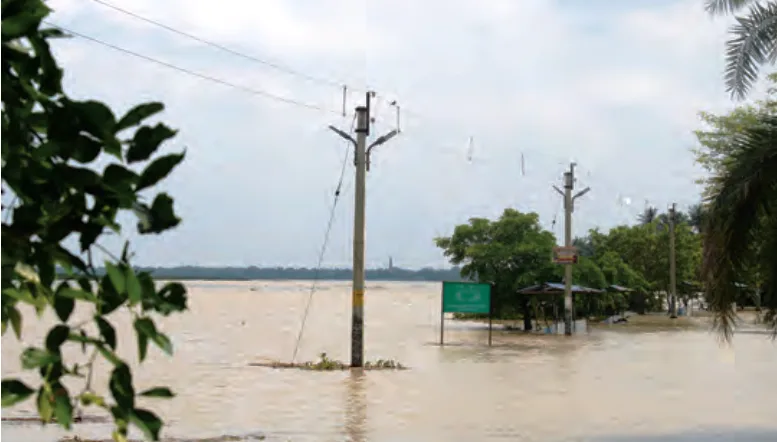
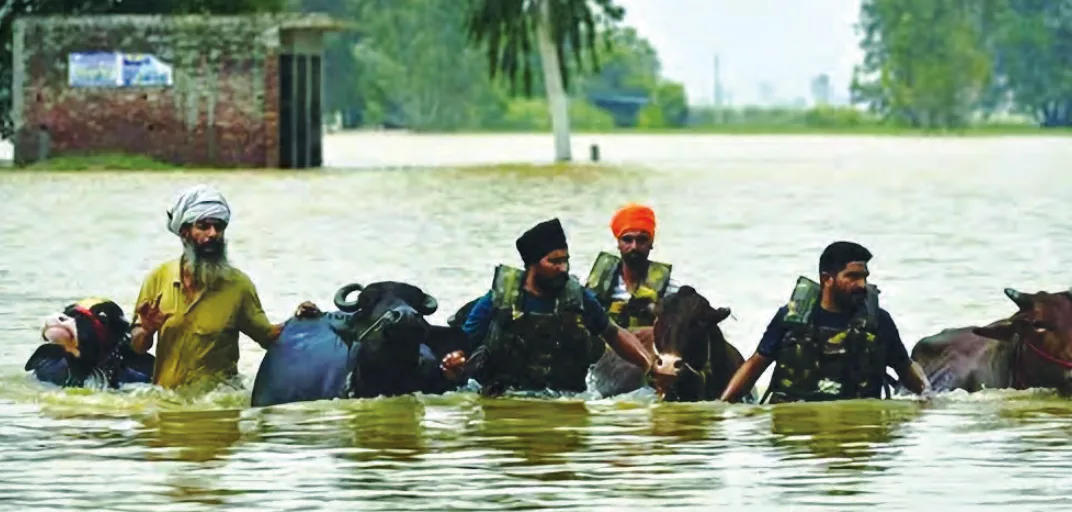
2025 में भारी मानसूनी बारिश और Satluj, Beas, Ravi, व Ghaggar नदियों के उफान से पंजाब में भीषण बाढ़ आई, जिससे भारी आर्थिक, सामाजिक और पर्यावरणीय नुकसान हुआ:
- Natural Causes: Western disturbances द्वारा तेज हुई अत्यधिक मानसूनी बारिश (पंजाब के साथ-साथ हिमाचल प्रदेश और जम्मू-कश्मीर में भी), जिससे पहले से उफान पर बह रही नदियाँ (Satluj, Beas, Ravi, Ghaggar) ओवरफ्लो हो गईं।
- Human-made Causes: पुराने और कमजोर नदी तटबंध (dhūsī bāndh), नदियों के बहुत करीब घरों व खेतों का निर्माण (जिससे बाढ़ के पानी के फैलने की प्राकृतिक जगह कम हो गई), नदियों व बांधों में silt और mud का जमाव (जिससे जल धारण क्षमता घटी), और बाढ़ की चेतावनी (warnings) का देर से या अस्पष्ट मिलना।
- Devastating Effects: (1) कई लोगों ने जान गँवाई; (2) हजारों लोगों को घर छोड़कर relief camps में जाना पड़ा; (3) बड़े पैमाने पर farmland और paddy (धान) की फसलें बर्बाद हुईं; (4) poultry और dairy farms नष्ट हुए व कई गाय-भैंस और मुर्गियाँ मारी गईं; (5) सड़कें, पुल, border fences, और सरकारी इमारतें क्षतिग्रस्त हुईं; (6) गंदे जमा पानी से waterborne diseases और sanitation की समस्याएँ फैलीं।
🤔 Classroom Discussion: NDMA Guidelines & Role of Youth in Flood Management
How could better planning have reduced flood damage? What are the NDMA guidelines for flood management, and how can youth help?
🎯 Competency-Based Questions (Section 4)
Q1. [Scenario-Based] A student switches from travelling by private car to using a bicycle for school, switches off fans when leaving the room, and avoids single-use plastics. What environmental metric is the student actively reducing?
Ans: Their Carbon Footprint (the total amount of greenhouse gases released into the atmosphere due to their daily activities).
Q2. [Assertion-Reason] Assertion (A): The devastating Punjab Floods of 2025 were caused purely by natural heavy rainfall.
Reason (R): Weak embankments (dhūsī bāndh), construction too close to rivers, siltation in dams, and delayed warnings significantly aggravated the flood damage.
Ans: A is False, R is True. The floods resulted from a combination of both natural factors (monsoon + western disturbances) and human-made factors.
Q3. [Analytical] How does silt and mud accumulation in rivers and dams increase the risk of severe flooding?
Ans: Accumulated silt and mud reduce the depth and water-holding capacity of riverbeds and reservoirs, causing water to overflow embankments much more quickly during heavy rains.
Q4. [Conceptual] Name four major greenhouse gases that trap heat and drive global warming.
Ans: Carbon dioxide, methane, nitrous oxide, and water vapour.
Q5. [Fact-Based] What are the old river embankments in Punjab called, and which national authority issues guidelines for flood management in India?
Ans: Dhūsī bāndh; the National Disaster Management Authority (NDMA).
The Big Questions (Chapter Objectives Solved)
1. What is the composition of the atmosphere?
2. How do the different layers of the atmosphere affect the planet Earth?
3. What is the mechanism of monsoon?
4. How can we reduce our carbon footprint?
List
Class 9 Social Science Part 1 Chapter 3 Atmosphere and Climate Revision Notes

Class 9 Social Science Part 1 Chapter 4 Early Humans and Beginning of Civilisation Revision Notes

Class 9 Social Science Part 1 Chapter 5 States and Society upto 1000 CE Revision Notes

Class 9 Social Science Part 1 Chapter 6 Democracy Revision Notes
Class 9 Social Science Part 1 Chapter 7 Elections Revision Notes