Class 9 Social Science Part 1 Chapter 4 Revision Notes: Early Humans and Beginning of Civilisation
Humanity का इतिहास kingdoms और empires से बहुत पुराना है। Writing के आविष्कार से पहले के काल (Prehistory) को मुख्य रूप से archaeological evidence से समझा जाता है। दुनिया की सबसे प्रारंभिक writing systems लगभग 5,000 years ago विकसित हुईं:
- Harappan Script (Sindhu lipi): Seals और pottery पर मिली pictographic script, जिसे अभी तक decipher नहीं किया जा सका है।
- Cuneiform (Mesopotamia) & Hieroglyphic (Egypt): ये दोनों scripts decipher हो चुकी हैं और लगभग 5,000 साल पहले historical period की शुरुआत को दर्शाती हैं।
- Brahmi Script: लगभग 400 BCE से southern India और Ganga Valley में उपयोग की गई; बाद में 3rd century BCE में Emperor Ashoka और दक्षिण भारत के Iron Age लोगों द्वारा इसे formalise किया गया।
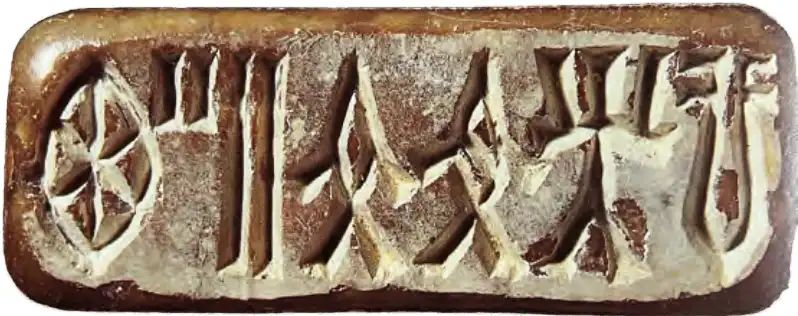
🔍 Let’s Explore: Why is the Harappan Script Still Undeciphered?
Observe Fig. 4.1 and discuss why the Harappan script has not yet been deciphered, and what efforts have been made to decode it.
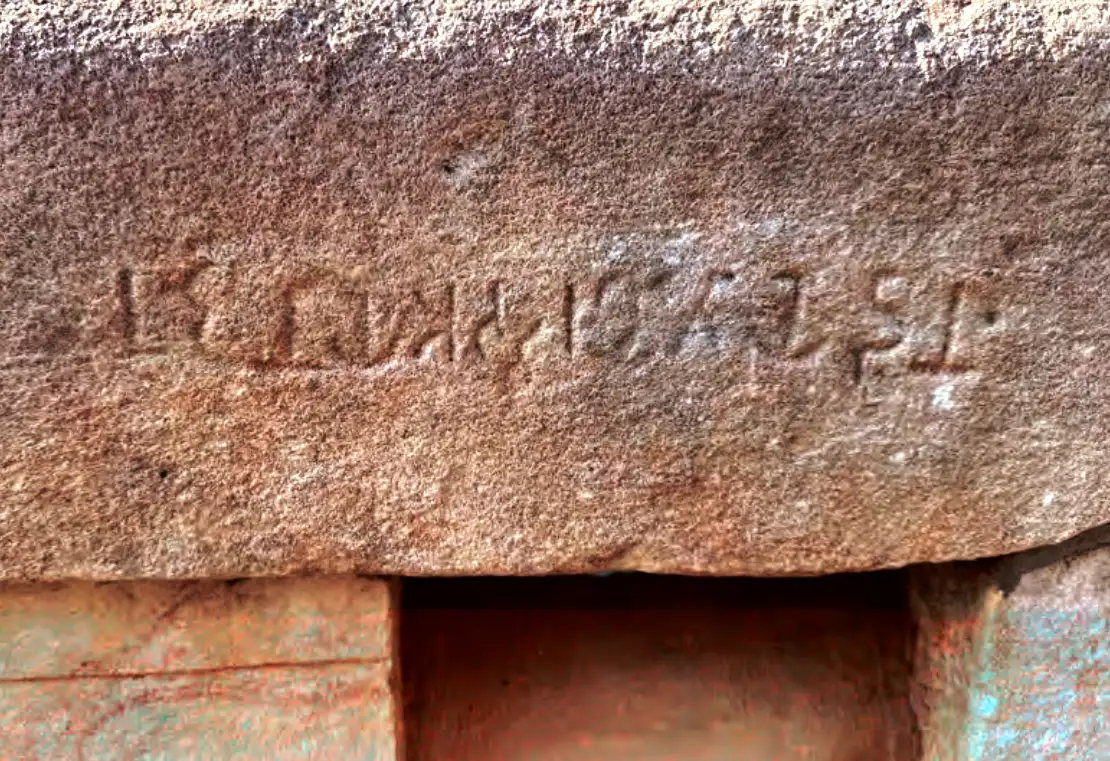
1. The Invention of Writing & Human Evolution (मानव विकास)
The Invention of Writing: Before and After
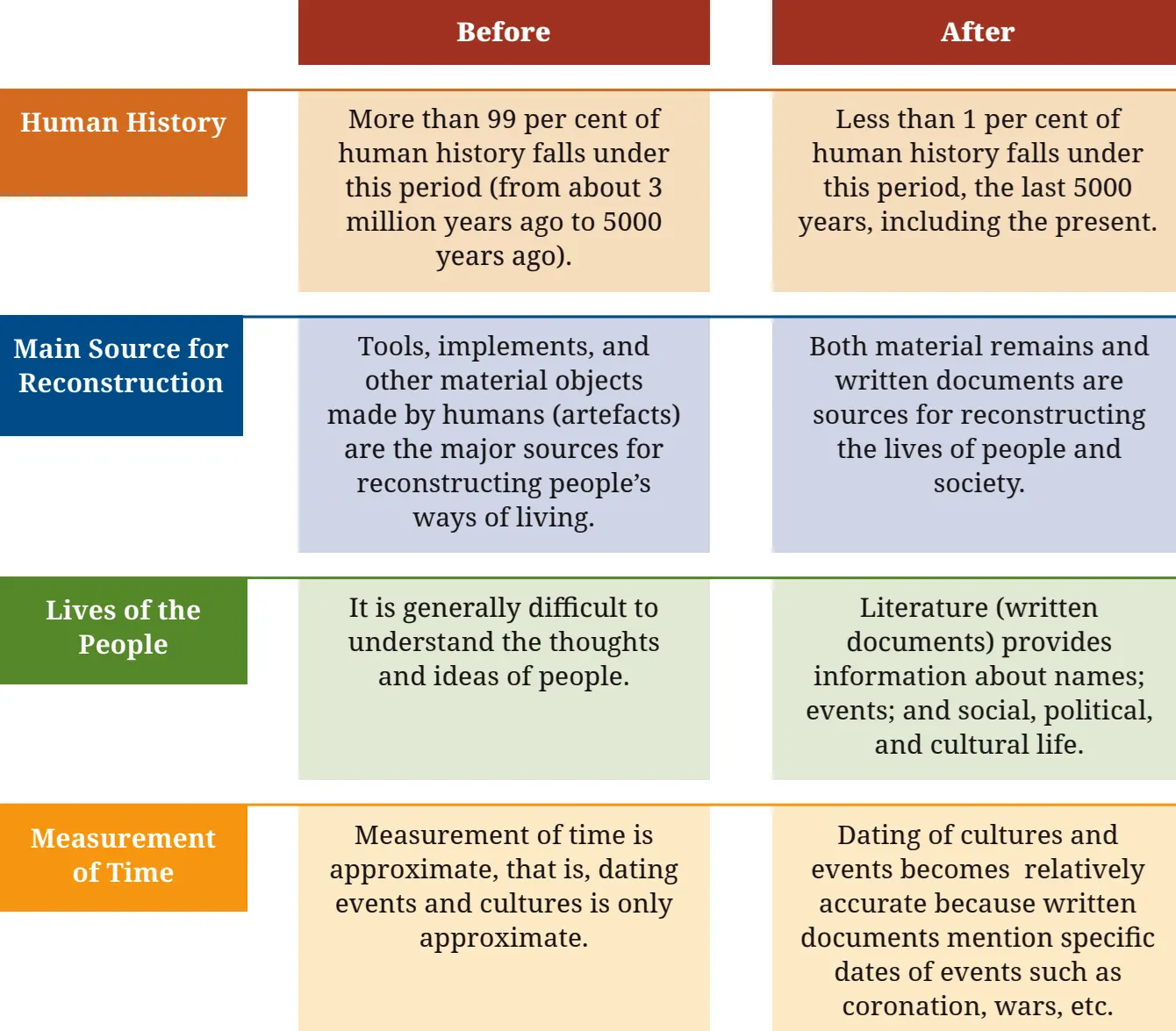
| Feature | Before Writing (Prehistory) | After Writing (History) |
|---|---|---|
| Share of Human History | More than 99% of human history (from ~3 million years ago to 5,000 years ago). | Less than 1% of human history (the last 5,000 years, including the present). |
| Main Source | Tools, implements, and material objects (artefacts) made by humans. | Both material remains and written documents (literature, inscriptions). |
| Lives of People | Generally difficult to understand the exact thoughts and ideas of people. | Literature provides information about names, events, and social, political, and cultural life. |
| Measurement of Time | Dating of events and cultures is only approximate. | Dating becomes relatively accurate (specific dates of coronations, wars, etc.). |
Biological vs. Cultural Evolution & Out of Africa
- Biological Evolution: Gradual physical और genetic changes की प्रक्रिया जिससे हमारे प्रारंभिक पूर्वज australopithecines (australis = southern, pithecus = primates) विकसित होकर modern humans (Homo sapiens) बने।
- Cultural Evolution: यह बताता है कि Quaternary Period (पिछले 26 lakh years) में बदलते climate और environment के अनुसार जीवित रहने के लिए humans ने कैसे tools और technology विकसित की, और hunting-gathering से agriculture व surplus production तक पहुँचे।
- Migration Out of Africa: हमारे पूर्वज Africa में विकसित हुए। लगभग 2 million years ago, Homo erectus (handaxes और cleavers बनाने वाले) Africa से बाहर निकलने वाले पहले hominin थे और 2 से 0.5 million years ago के बीच Asia और Europe में फैल गए। दूसरी बड़ी लहर लगभग 125,000 years ago हुई, जो Homo sapiens (जो ~300,000 years ago Africa में विकसित हुए) से जुड़ी थी।
- Who Were Our Ancestors? Africa, Asia, और Europe की सबसे पुरानी बस्तियों को ‘Old World’ कहा जाता है। लगभग 3.3 million years ago सबसे पहले stone tools बनाए गए—जिन्हें extra-corporal limbs कहा जाता है क्योंकि वे मानव शरीर के विस्तार की तरह काम करते थे।
📚 Important Definitions
Hominin: A group that includes modern humans and our early human-like ancestors (tool makers).
Homo erectus: Refers to an upright or bipedal human ancestor.
Old World: Geographical area (Africa, Asia, and Europe) of the oldest human settlements of the earliest Palaeolithic period.
Fossil: Preserved remains, traces, or impressions of plants, animals, or humans from the distant past that got buried under earth layers and slowly turned into stone over thousands or millions of years.
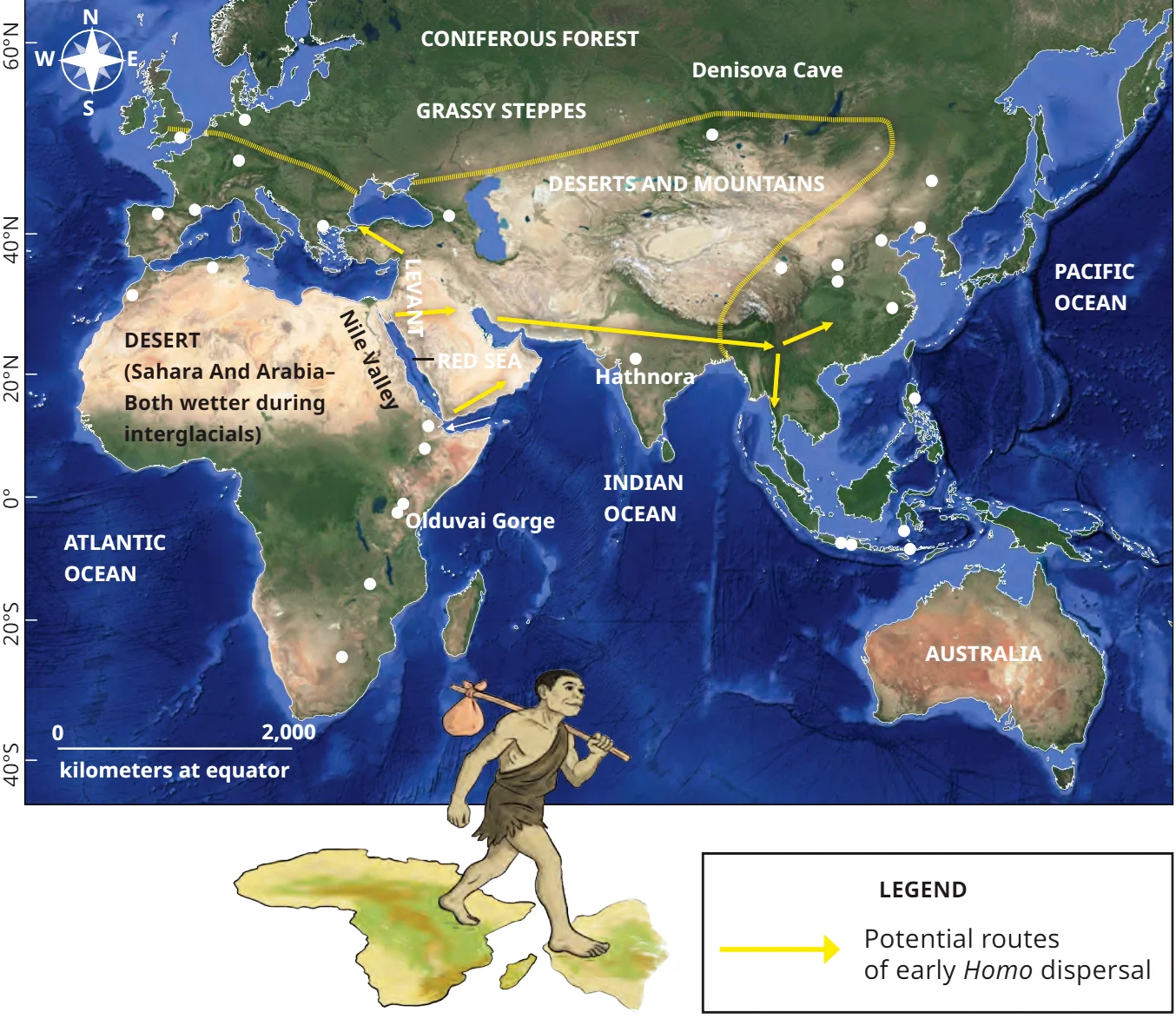
Notice key sites like Olduvai Gorge (Africa), Hathnora (India), and Denisova Cave (Siberia), and how wetter interglacial climates opened migration corridors across the Sahara and Arabia.
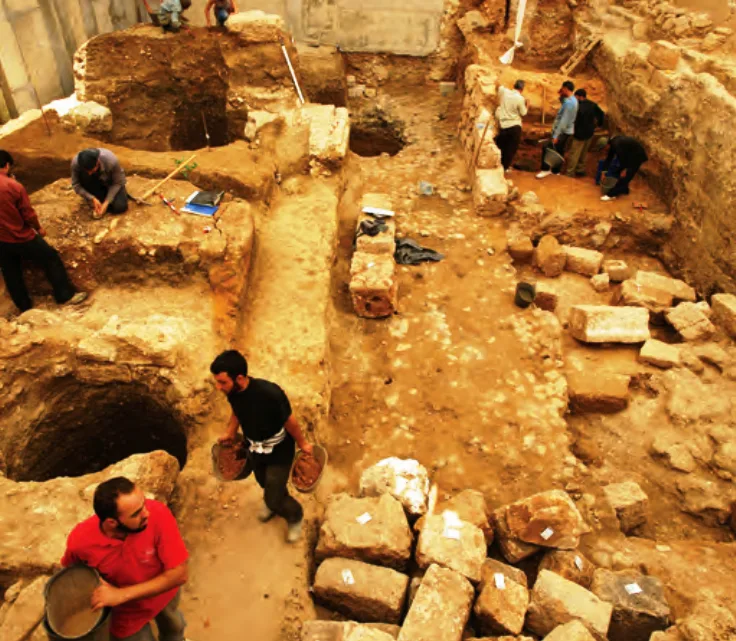
Archaeologists uncover tools, bones, and fossils, and also experiment by making and using similar tools to understand how early humans created and depended on them.
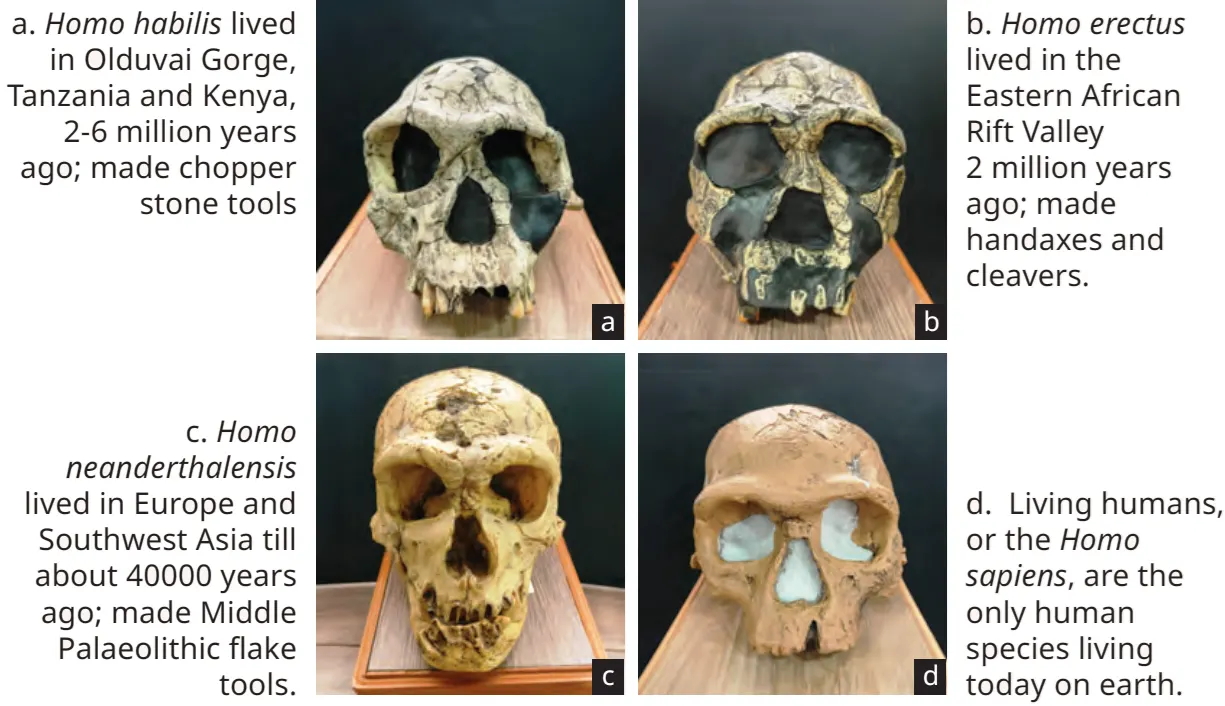
🔍 Let’s Explore: Observing Evolutionary Changes in Skulls (Fig. 4.6)
Do you notice any changes in the shape or features of the skulls across different ancestors? Can you observe a gradual straightening of the face?
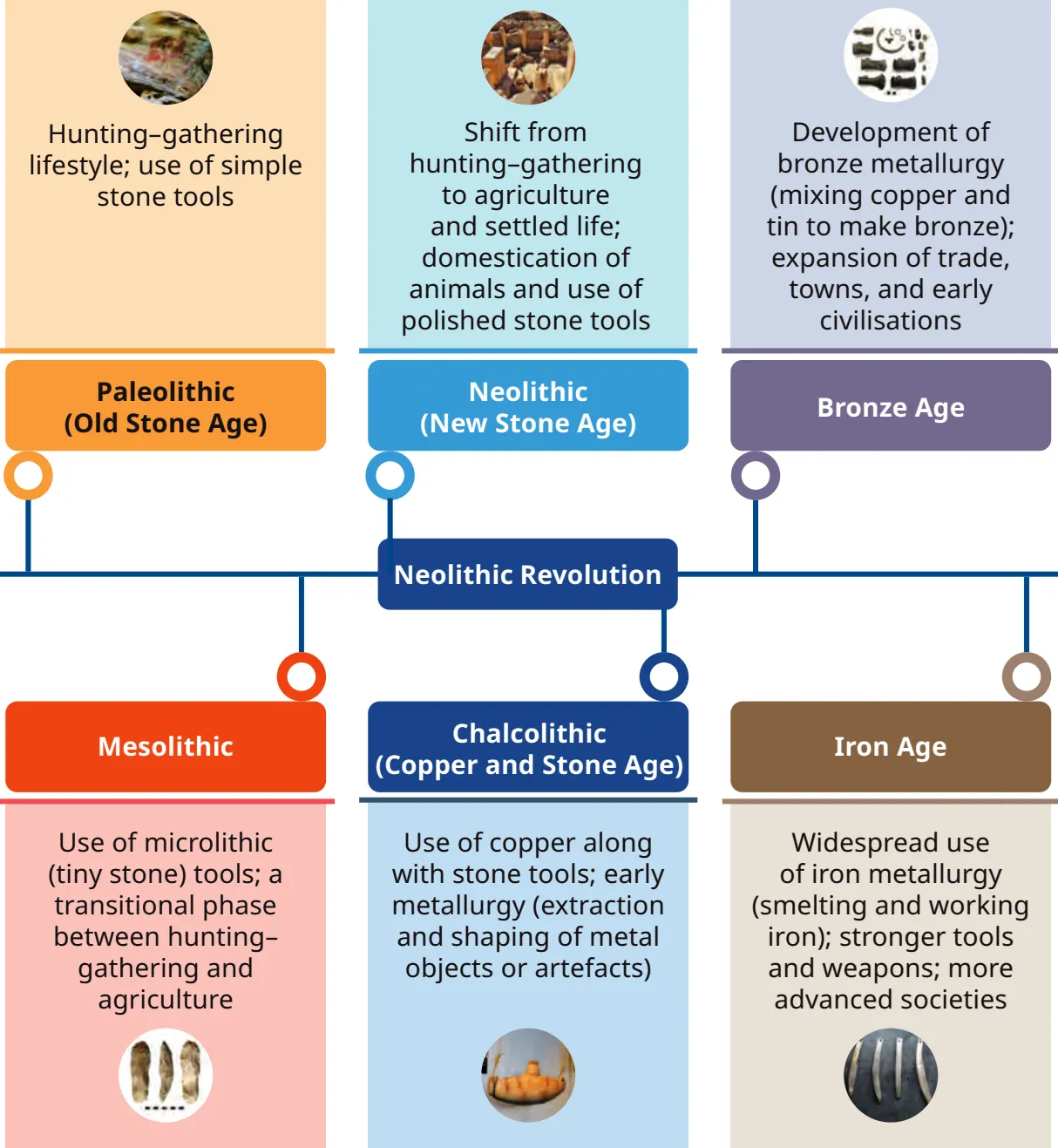
🤔 Think About It: Migration & The Neolithic Revolution
1. Why do you think early humans left Africa to migrate to other regions?
2. Why is the shift to farming during the Neolithic period called a ‘revolution’ rather than a simple change?
1. Early humans migrated out of Africa due to climate shifts (wetter interglacial periods turning deserts into grasslands), following migrating animal herds in search of food and water, and growing population pressure.
2. It is called a revolution because it fundamentally transformed human society—shifting people from nomadic hunter-gatherers to settled farmers who domesticated plants and animals, built permanent villages, invented pottery, and produced food surpluses that paved the way for urban civilisations.
🎯 Competency-Based Questions (Section 1)
Q1. [Scenario-Based] An archaeologist unearths a stone handaxe and cleaver dating back 1.5 million years in Asia. Which early human ancestor is most closely associated with inventing these tools and migrating out of Africa?
Ans: Homo erectus, who lived around 2 million years ago and was the first hominin to exit Africa.
Q2. [Assertion-Reason] Assertion (A): More than 99% of human history is reconstructed without the help of written documents.
Reason (R): Writing was invented only around 5,000 years ago, whereas human history spans over 3 million years.
Ans: Both A and R are true, and R is the correct explanation of A.
Q3. [Analytical] Why are early stone tools sometimes called ‘extra-corporal limbs’?
Ans: Because they functioned as physical extensions of the human body, enabling early humans to perform tasks like cutting, digging, and hunting that they could not accomplish with their hands alone.
Q4. [Conceptual] What is the difference between the Chalcolithic Age and the Bronze Age?
Ans: The Chalcolithic Age involved the use of pure copper alongside stone tools (early metallurgy), whereas the Bronze Age saw the development of bronze metallurgy (mixing copper and tin), leading to towns, trade, and early civilisations.
Q5. [Fact-Based] Which early human species is referred to as the ‘handy man’ and lived in Olduvai Gorge, Tanzania and Kenya?
Ans: Homo habilis.
2. Palaeolithic, Mesolithic & Neolithic Periods in India (पाषाण काल)
Stone Age को तीन चरणों में बाँटा गया है—Palaeolithic (palaeo = old, lithic = stone), Mesolithic, और Neolithic:
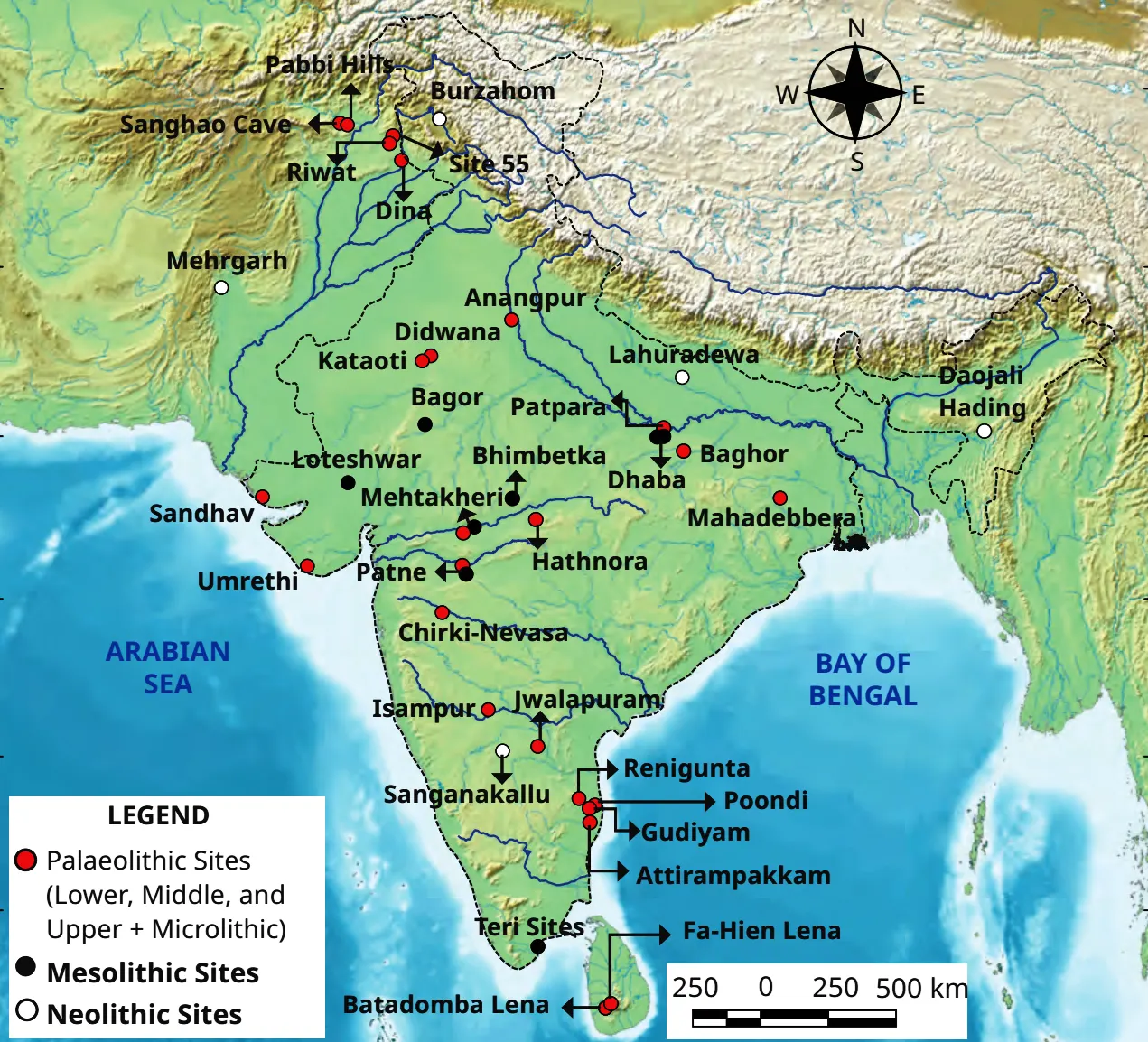
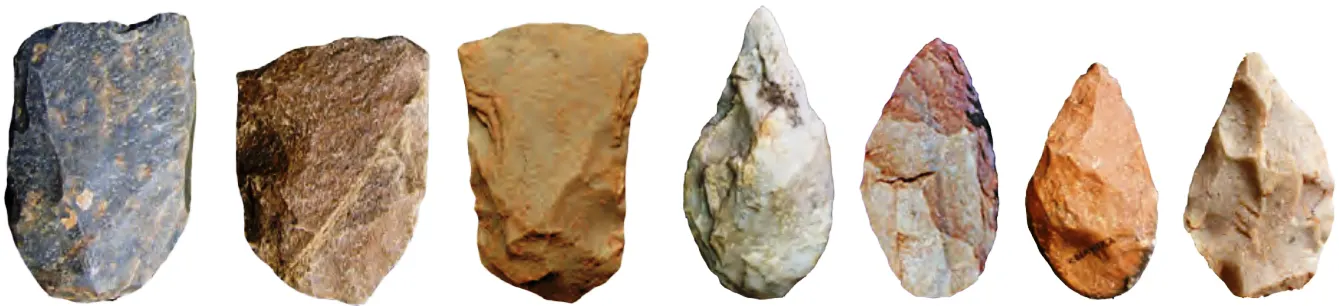
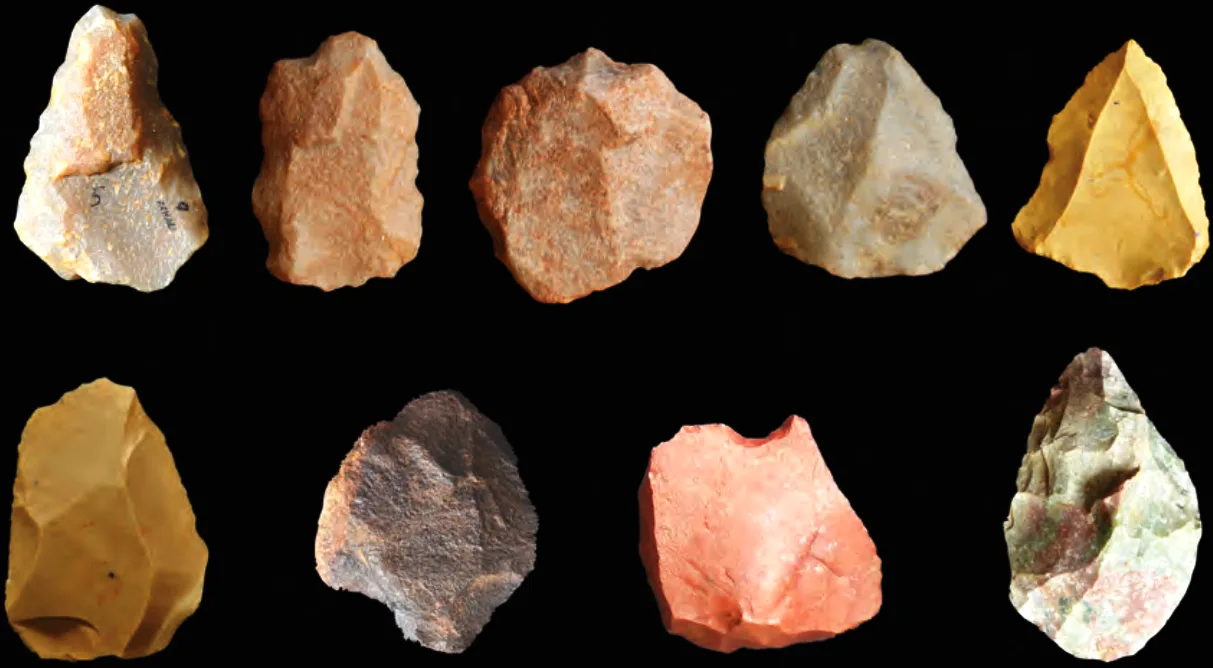
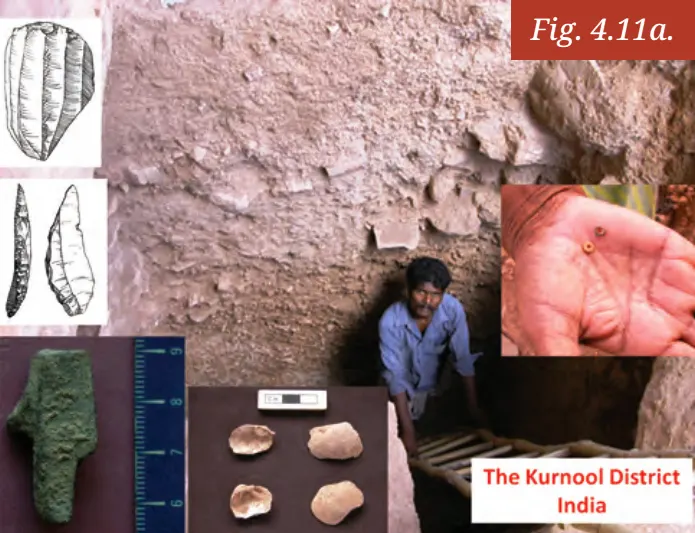
- Lower Palaeolithic: भारतीय उपमहाद्वीप में सबसे पुरानी मानव बस्ती लगभग 2 million years पुरानी है। Attirampakkam (Tamil Nadu, 1.5–1.7 mya) और Isampur (Karnataka, 1.2 mya) से quartzite और limestone के बने handaxes, cleavers, scrapers, और choppers मिले हैं। इनका उपयोग मांस काटने, कंद (tubers) खोदने, खाल छीलने, और protein-rich marrow निकालने के लिए हड्डियाँ तोड़ने में होता था।
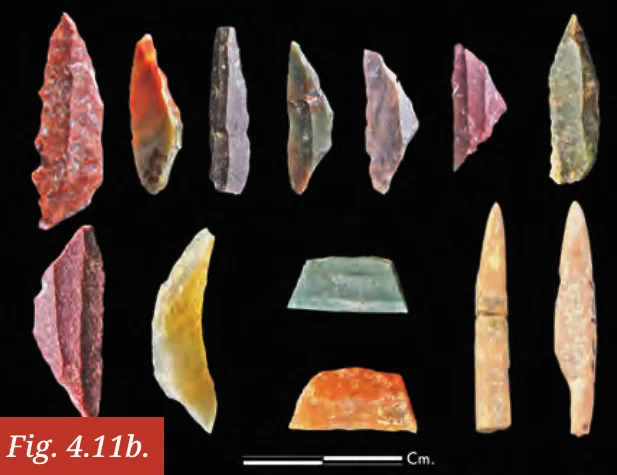
- Middle & Upper Palaeolithic: Middle Palaeolithic में छोटे tools (scrapers, borers, sharp points) से projectiles (भाले) बने। बाद में Homo sapiens (50,000–12,000 years ago, जो Australia और Americas तक फैले) ने bow and arrow, glassy-texture rocks से parallel-sided blades व microblades (handles में फिट किए गए), burin (engraver) (हड्डियों और ostrich eggshells पर नक्काशी के लिए), stone/bone/shell beads, body pigments, और cave paintings विकसित किए।
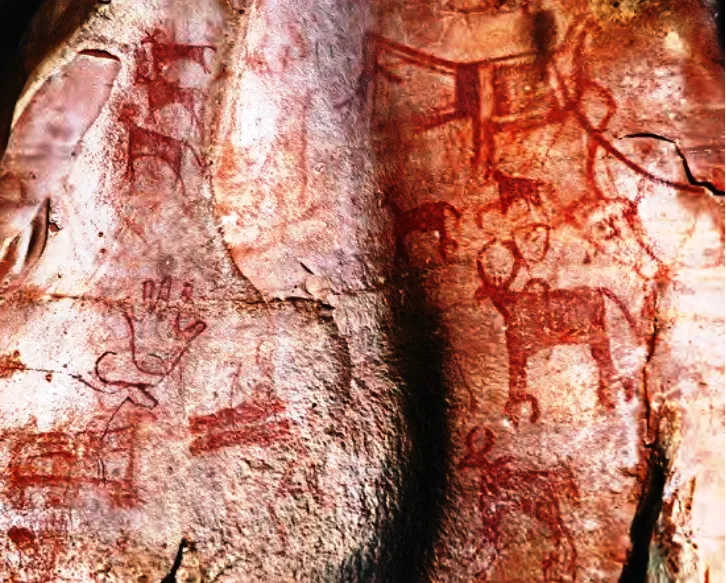
- Mesolithic Hunter-Gatherers (~12,000 years ago): पृथ्वी का climate गर्म होने से बर्फ पिघली और जंगल व घास के मैदान फैले, जिससे मानव इतिहास का पहला population explosion हुआ। लोगों ने microlithic tools से marine और freshwater fishing को मुख्य जीविका बनाया। मध्य प्रदेश का World Heritage Site Bhimbetka सैकड़ों painted rock shelters के लिए प्रसिद्ध है।
- Neolithic Revolution: लोगों ने plants और animals का domestication शुरू किया, food production व processing के लिए polished stone tools और earthenware pottery बनाई, और पहले स्थायी गाँव (village settlements) बसाए।
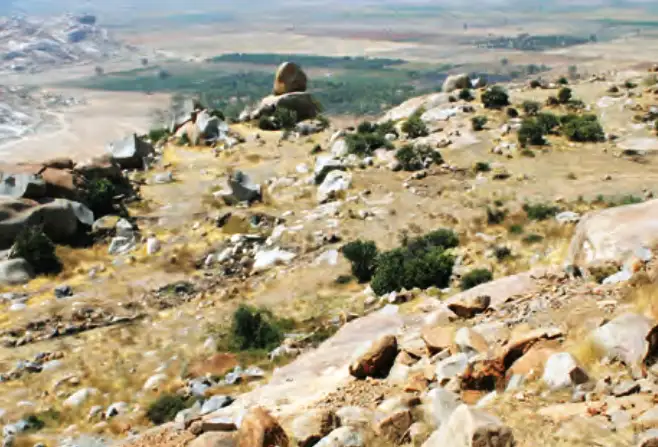
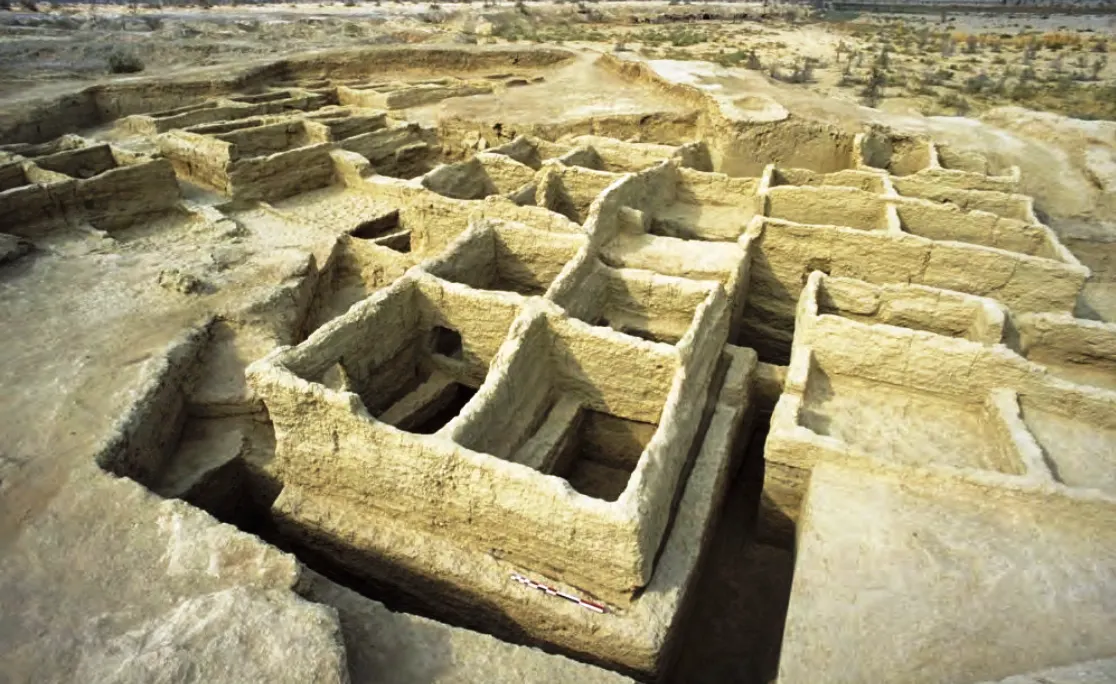
- Neolithic in India — Mehrgarh (~7000 BCE): Bolan River (वर्तमान Pakistan) पर स्थित Mehrgarh सबसे पुराना कृषि गाँव है। यहाँ sun-dried brick houses, granaries, graves, lapis lazuli/carnelian/shell के आभूषण, wheat & barley की खेती, और sheep, goats, व zebu humped bull का पालन होता था। 4000 BCE तक वे copper objects बनाने वाले पहले Chalcolithic लोग बने, जिसने ~3500 BCE में Sindhu-Sarasvatī civilisation की नींव रखी। 2500 BCE तक अधिकांश उपमहाद्वीप में Neolithic कृषि समुदाय (cereals, millets, pulses) फैल गए—जैसे कर्नाटक में granite hill पर स्थित Sanganakallu (2000 BCE)।
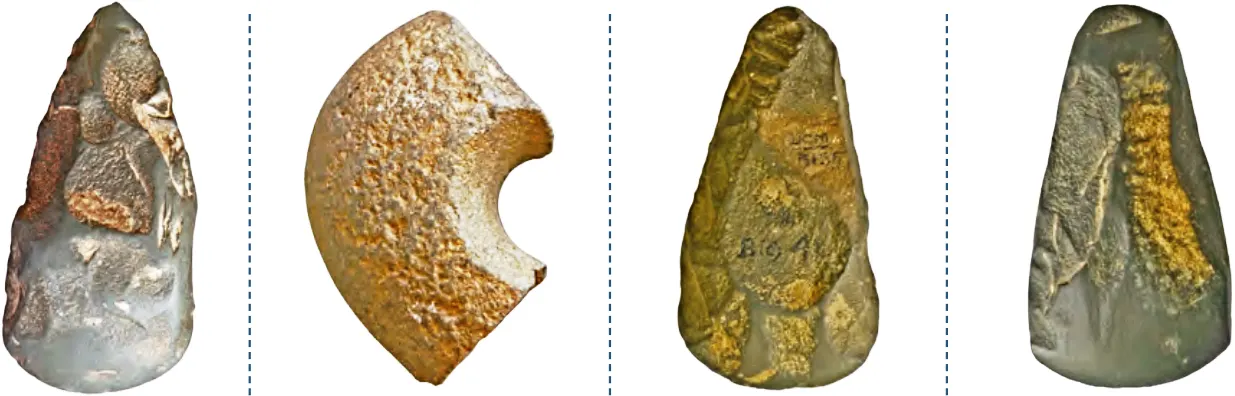
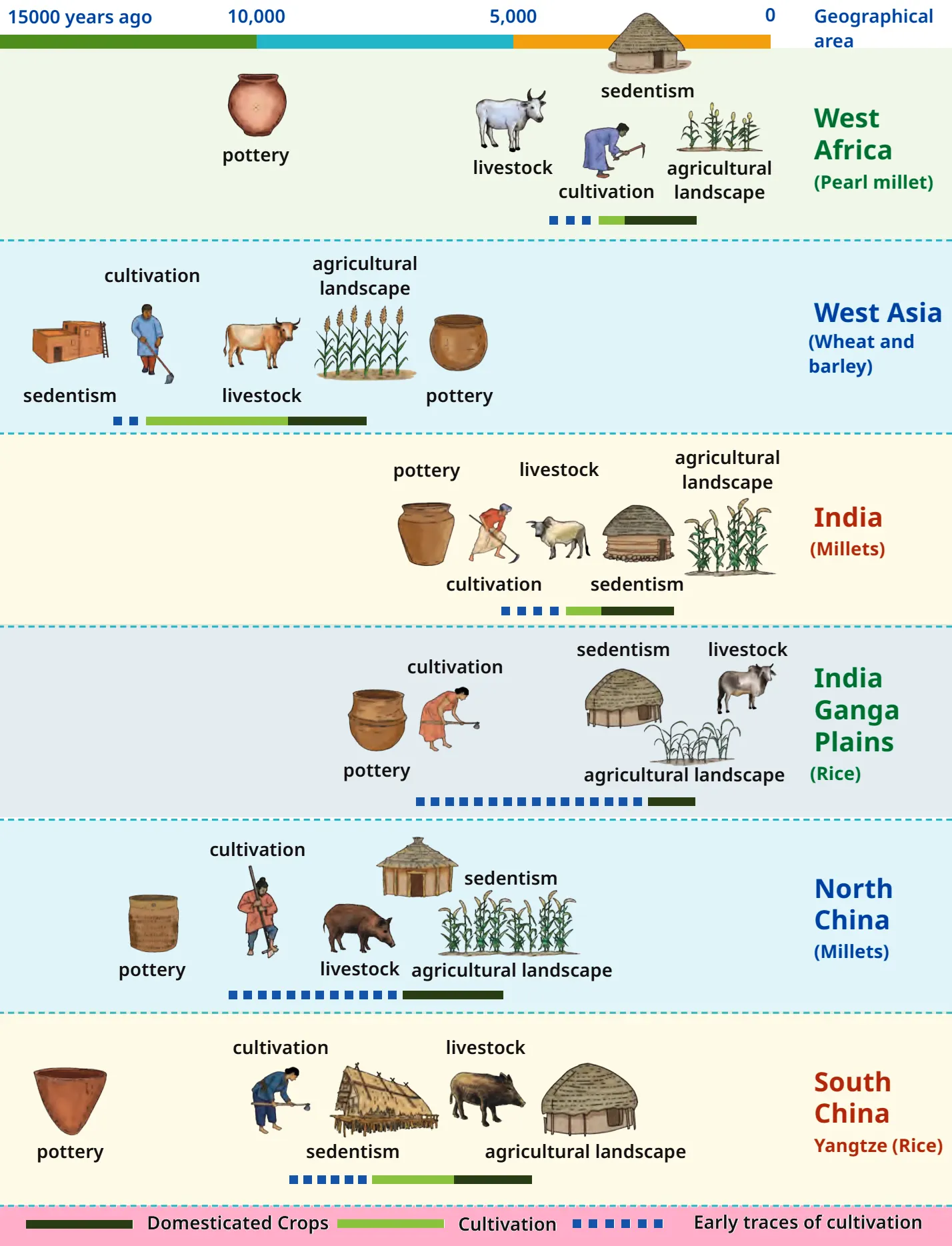
🤔 Think About It: Observing the Transition to Agriculture (Fig. 4.14)
Observe Fig. 4.14 and identify the animals domesticated, types of human habitats, and objects used. Are any of these still used in present times?
🎯 Competency-Based Questions (Section 2)
Q1. [Scenario-Based] An archaeologist finds tiny, sharp stone blades (microliths) fixed in handles alongside abundant fish bones and painted rock shelters. Which Stone Age period does this site belong to?
Ans: The Mesolithic period (around 12,000 years ago), when warming climates led to microlithic tools, fishing-based economies, and flourishing rock shelter art.
Q2. [Assertion-Reason] Assertion (A): Mehrgarh is considered a foundational site for the later Sindhu-Sarasvatī civilisation.
Reason (R): Starting around 7000 BCE as an early farming village, its people built sun-dried brick houses, cultivated wheat and barley, and mastered copper working by 4000 BCE.
Ans: Both A and R are true, and R is the correct explanation of A.
Q3. [Analytical] What does the chart on the transition to agriculture (Fig. 4.14) reveal about early farming across the world?
Ans: It reveals that the shift from hunting-gathering to farming occurred independently at different times in different regions, based on locally available wild grains like wheat/barley in West Asia and rice in the Ganga plains and Yangtze.
Q4. [Conceptual] What was a ‘burin’ used for by early Homo sapiens?
Ans: A burin was a distinctive stone engraver used to engrave symbolic features on bones and shells (such as ostrich eggs).
Q5. [Fact-Based] Name the two ancient Palaeolithic sites in Tamil Nadu and Karnataka dated to 1.2–1.7 million years ago.
Ans: Attirampakkam (Tamil Nadu) and Isampur (Karnataka).
3. The Sindhu-Sarasvatī (Harappan) Civilisation (सिंधु-सरस्वती सभ्यता)
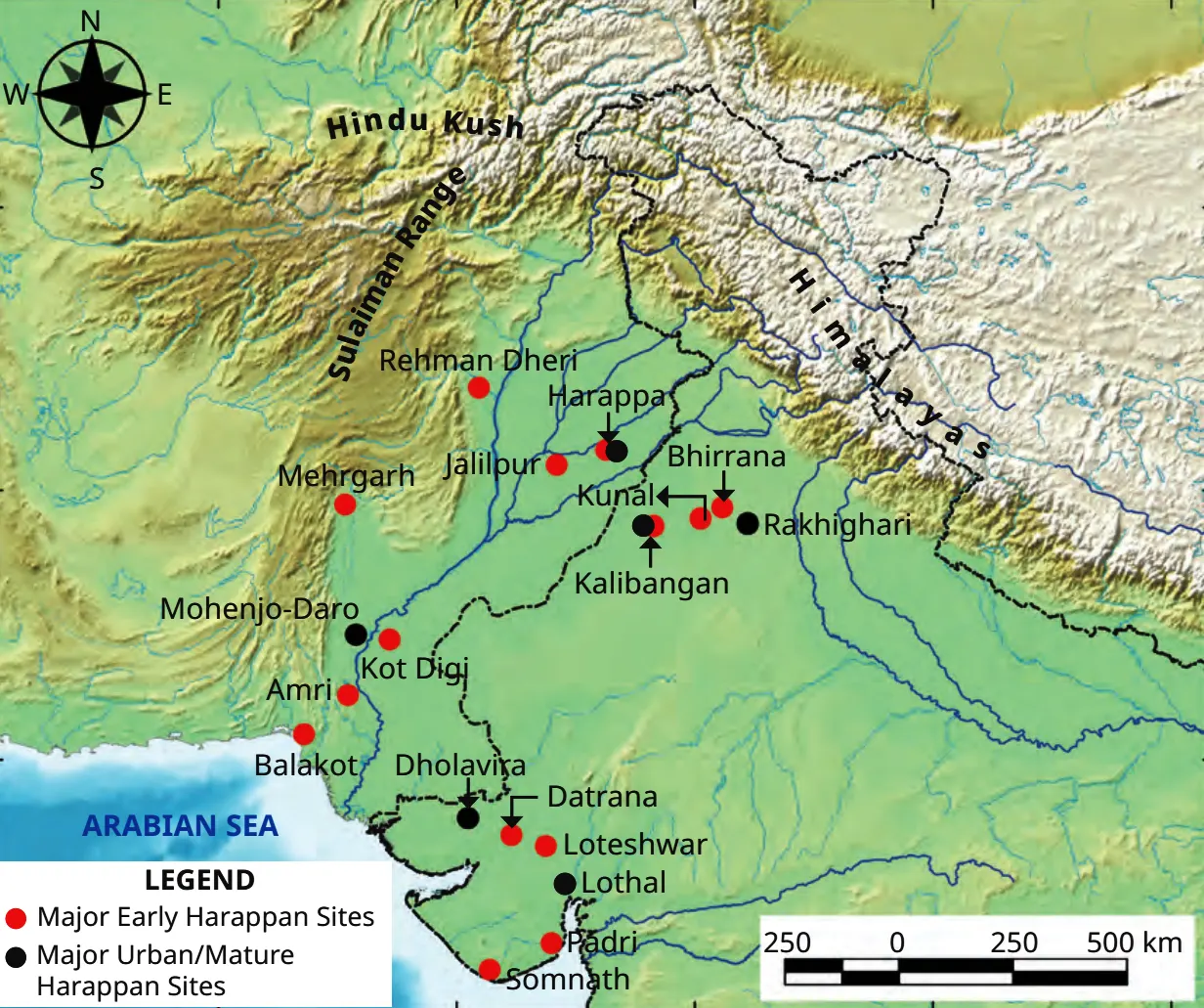
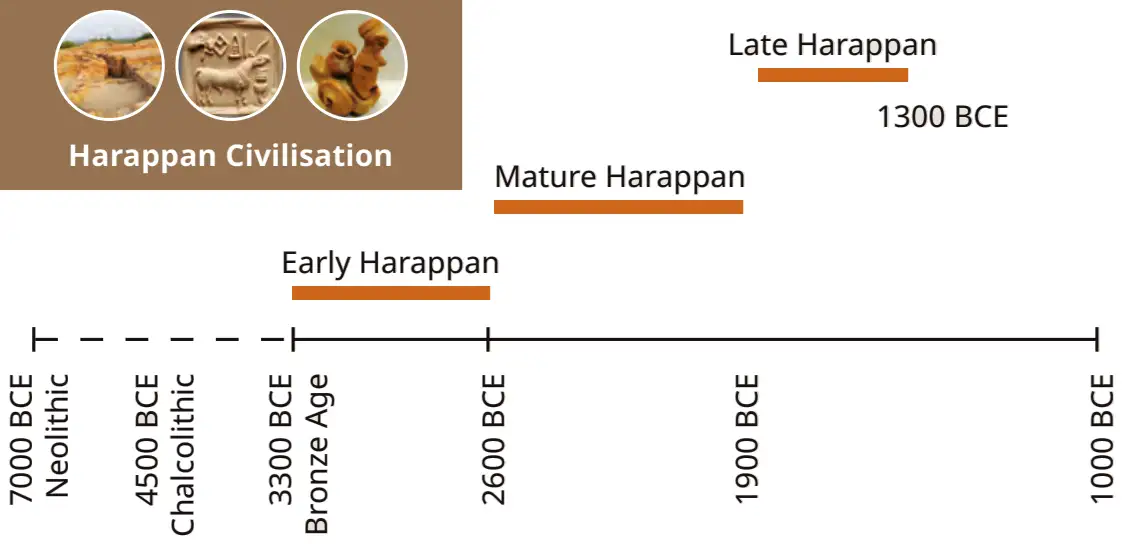
Indus और Ghaggar-Sarasvatī की उपजाऊ alluvial plains में copper tools के उपयोग से productivity और prosperity बढ़ी। Bhirrana और Kunal (dried Sarasvatī belt) में Pre-Harappan चरण 7000–5500 BCE के बीच शुरू हुआ। Early Harappan phase (3300–2600 BCE) में regional pottery, semi-precious stone beads (Harappa, Kunal in Haryana, Datrana in Gujarat), shell bangles, terracotta objects, perimeter walls, और pottery graffiti/seals (Harappa, Rehman Dheri, Kunal) विकसित हुए—जो Mature Harappan (2600–1900 BCE) के शहरी केंद्रों के अग्रदूत थे। इसके बाद Late Harappan (1900–1300 BCE) चरण आया।
💡 Harappan Agriculture & Water Management
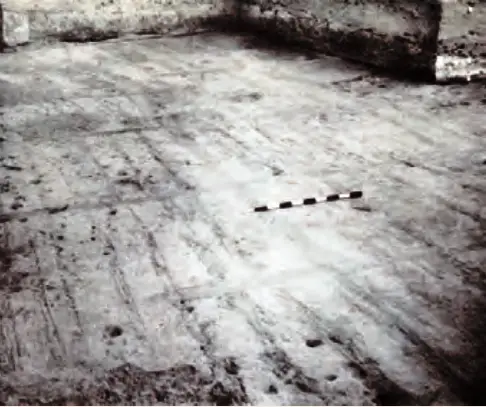
• Ploughed Field at Kalibangan: 5,000 साल पुराने खेत में horizontal और vertical furrows मिले हैं, जो आज की Rabi और Kharif जैसी double crop cultivation को दर्शाते हैं।
• Water Management: Baluchistan में check dams (gabarbands), Kachchh के Dholavira में दो नदियों का पानी मोड़कर बनाए गए interconnected stone/mud-brick/bedrock tanks, और Lothal का विशाल burnt-brick dockyard उनकी अद्भुत इंजीनियरिंग के प्रमाण हैं।
🤔 Think About It: Standardised Stone Weights & Rivers
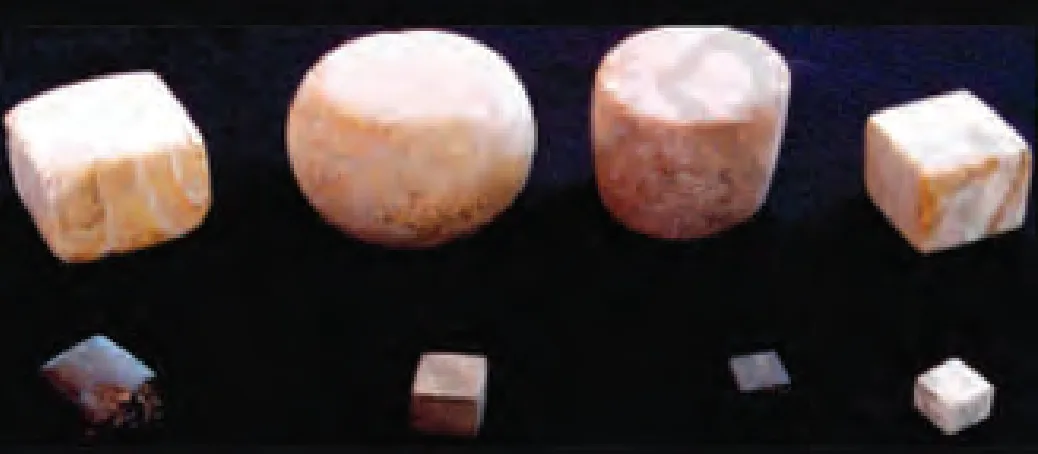
1. Harappans used a binary multiple (1, 2, 4, 8, 16…) system for smaller weights and multiples of ten for larger ones. How would long-distance trade have been affected without standard weights?
2. Why were rivers so important in the growth of early civilisations?
1. Without a standardised system of weights, merchants across different cities and regions would have faced constant disputes, cheating, and delays when exchanging goods, severely slowing down interregional and overseas trade.
2. Rivers provided perennial freshwater for drinking and irrigation, deposited nutrient-rich alluvial silt (like Egypt’s kemet) during annual floods for surplus farming, and served as natural highways for transporting heavy goods and building materials.
🎯 Competency-Based Questions (Section 3)
Q1. [Scenario-Based] Excavators at a 5,000-year-old Early Harappan site uncover perpendicular (horizontal and vertical) plough furrows in an ancient field. Which site is this, and what agricultural practice does it prove?
Ans: Kalibangan. It proves that Early Harappans practised double-crop cultivation, similar to modern Rabi and Kharif farming.
Q2. [Assertion-Reason] Assertion (A): Standardised cubical stone weights were crucial for Harappan long-distance trade.
Reason (R): Using a uniform binary system (1, 2, 4, 8, 16) for small units and multiples of ten for larger units ensured fairness and trust across interregional markets.
Ans: Both A and R are true, and R is the correct explanation of A.
Q3. [Analytical] How did the water management at Dholavira differ from the structure at Lothal?
Ans: Dholavira featured an elaborate water-harvesting system of dams, canals, and interconnected deep tanks to store freshwater from nearby streams, whereas Lothal featured a massive burnt-brick dockyard built for maritime shipping and trade.
Q4. [Conceptual] What were ‘gabarbands’ built by Early Harappans?
Ans: Gabarbands were check dams built across small streams in the foothills of Baluchistan and neighbouring regions to enhance irrigation.
Q5. [Fact-Based] Name two Early Harappan sites in India where evidence of early bead production has been found.
Ans: Kunal (Haryana) and Datrana (Gujarat) — alongside Harappa in Pakistan.
4. Bronze Age Civilisations: Mesopotamia (मेसोपोटामिया सभ्यता)
Mesopotamia (Greek: “land in between”) पश्चिम एशिया (वर्तमान Iraq, Kuwait, और Turkey व SW Iran के हिस्से) में Euphrates और Tigris नदियों के बीच स्थित था। Zagros और Taurus पहाड़ियों की तलहटी को इसकी उपजाऊ क्षमता के कारण ‘Fertile Crescent’ कहा जाता है। यहाँ 12,000 साल पहले खेती शुरू हुई और ~4500 BCE में copper tools आए। 3500 BCE से यहाँ चार प्रमुख city-state civilisations उभरीं:
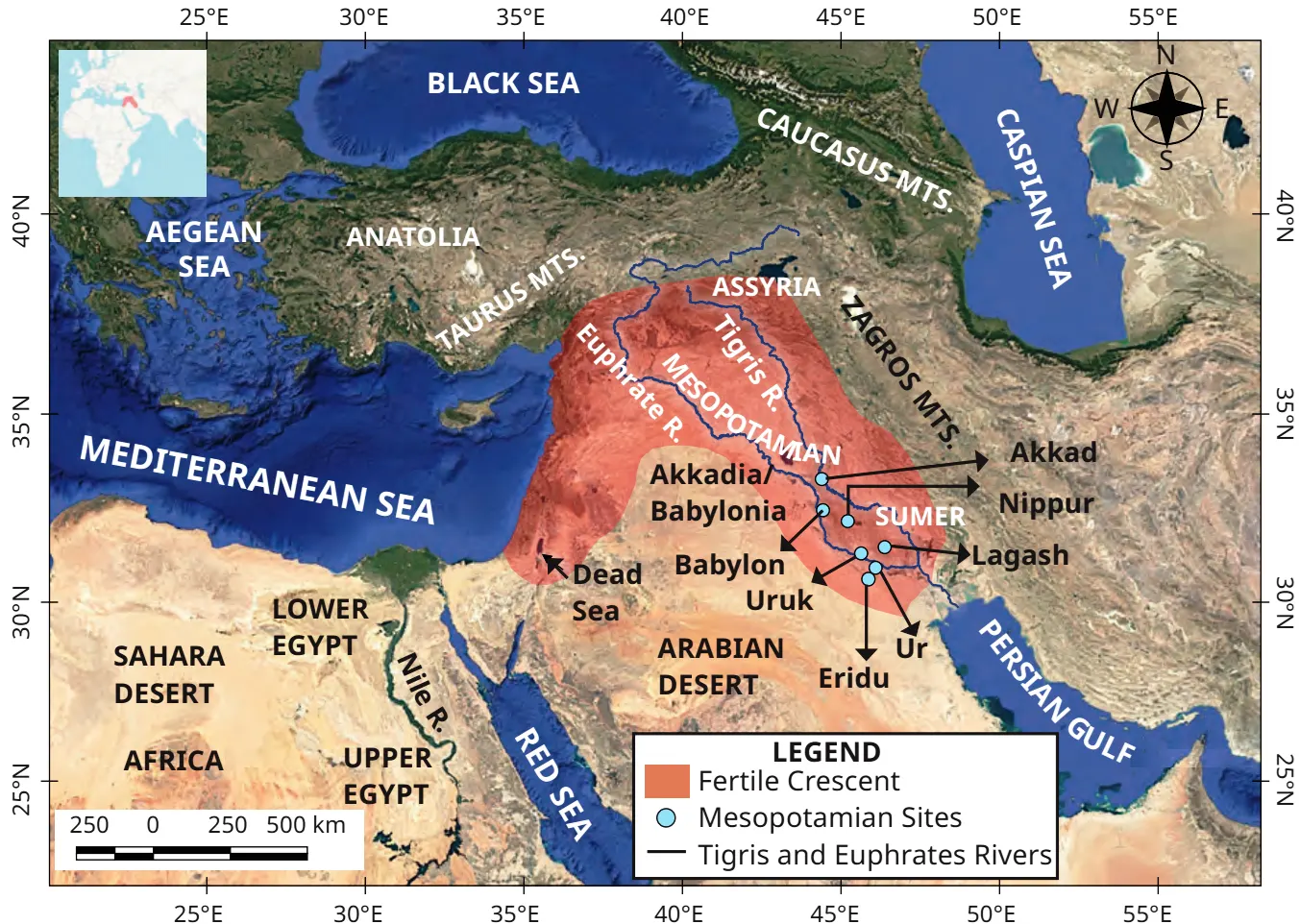
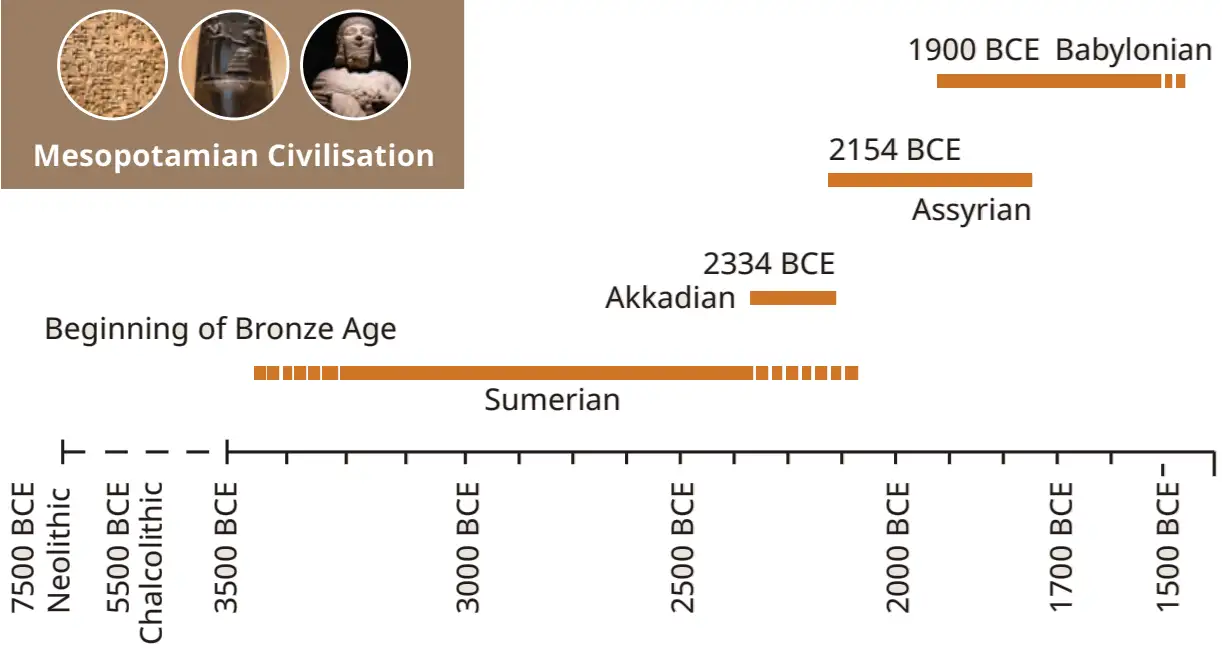
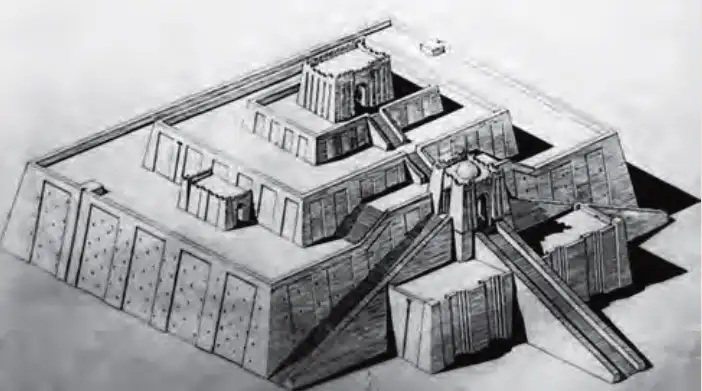
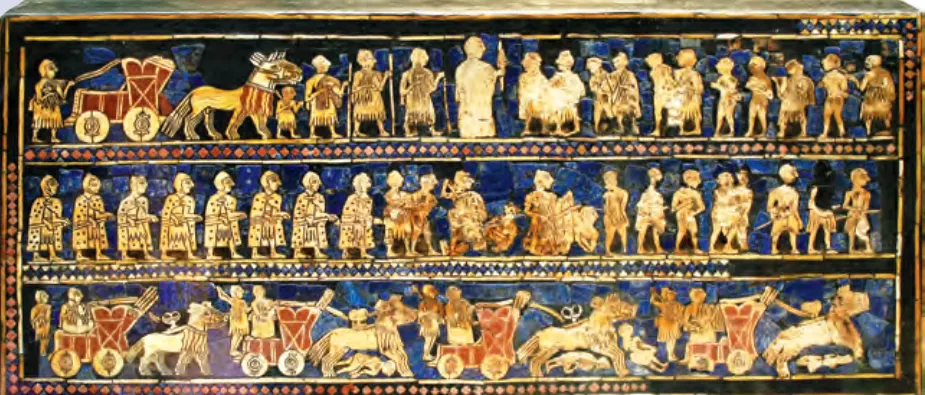
- 1. The Sumerians (3500 BCE onwards): Ur और Sumer (southern Iraq) में दुनिया की पहली city-based civilisation बसी। उन्होंने canal/dam irrigation, mud व burnt bricks, wheeled cart, sailboat, और base-60 number system (60-minute hour, 60-second minute, 360-degree circle) का आविष्कार किया। हर शहर एक विशाल stepped-pyramid मंदिर (Ziggurat) के चारों ओर बसा था, जो धार्मिक केंद्र के साथ-साथ city treasury भी था और सभी आर्थिक गतिविधियाँ temple authority से जुड़ी थीं। लगभग 3200 BCE में उन्होंने clay tablets पर Cuneiform script (Latin: cuneus = wedge) से लेखन शुरू किया, जिसमें scribes का स्थान पुजारियों जैसा उच्च था।
- 2. The Akkadians (2334 BCE): Akkad शहर को केंद्र बनाकर दुनिया का पहला dynastic empire स्थापित किया। उनकी भाषा अलग थी लेकिन script वही cuneiform थी। इसी समय Epic of Gilgamesh जैसे साहित्य का विकास हुआ। प्रसिद्ध राजा Sargon के cuneiform tablets Dilmun (Bahrain), Magan (Oman), और Meluhha (Sindhu-Sarasvatī/Harappan civilisation) के साथ व्यापार (semiprecious stone beads, ivory, timber, gold dust, copper) का उल्लेख करते हैं।
- 3. The Assyrians (2154 – early 1700 BCE): उत्तरी मेसोपोटामिया के Assur शहर से उभरे और पश्चिम व दक्षिण में फैले।
- 4. The Babylonians (1900 BCE onwards): राजा Hammurabi (1792 BCE) ने साम्राज्य विस्तार किया और Code of Hammurabi (नागरिक व सामाजिक कानूनों का संकलन) बनाया। 1400 BCE के अंत तक Hittites (Anatolia/Turkey के Indo-European शासक) के आक्रमणों, नई तकनीक, पर्यावरणीय गिरावट (environmental degradation), और आंतरिक समस्याओं से Babylon कमजोर हो गया।
📚 Key Terms: Mesopotamia
City-State: A sovereign state centred around a city that rules the surrounding territories.
Ziggurat: A tower-like stepped pyramid-shaped temple with several floors; served as the holy place and the city’s treasury (with a single entrance and restricted to high priests/priestesses).
Cuneiform: Wedge-shaped writing pressed onto damp clay tablets using sharp reeds; developed by Sumerians (~3200 BCE).
Hittites: Indo-European people who established a powerful empire in Anatolia (modern-day Turkey) around the 2nd millennium BCE.
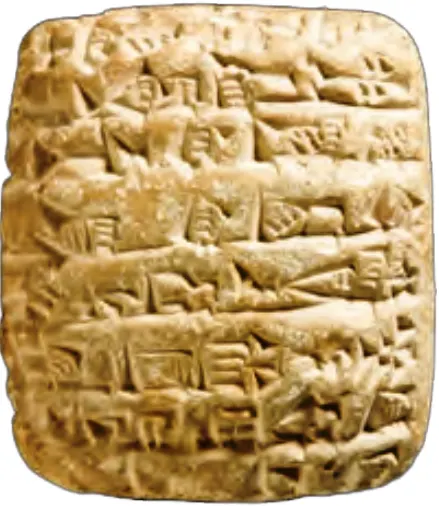
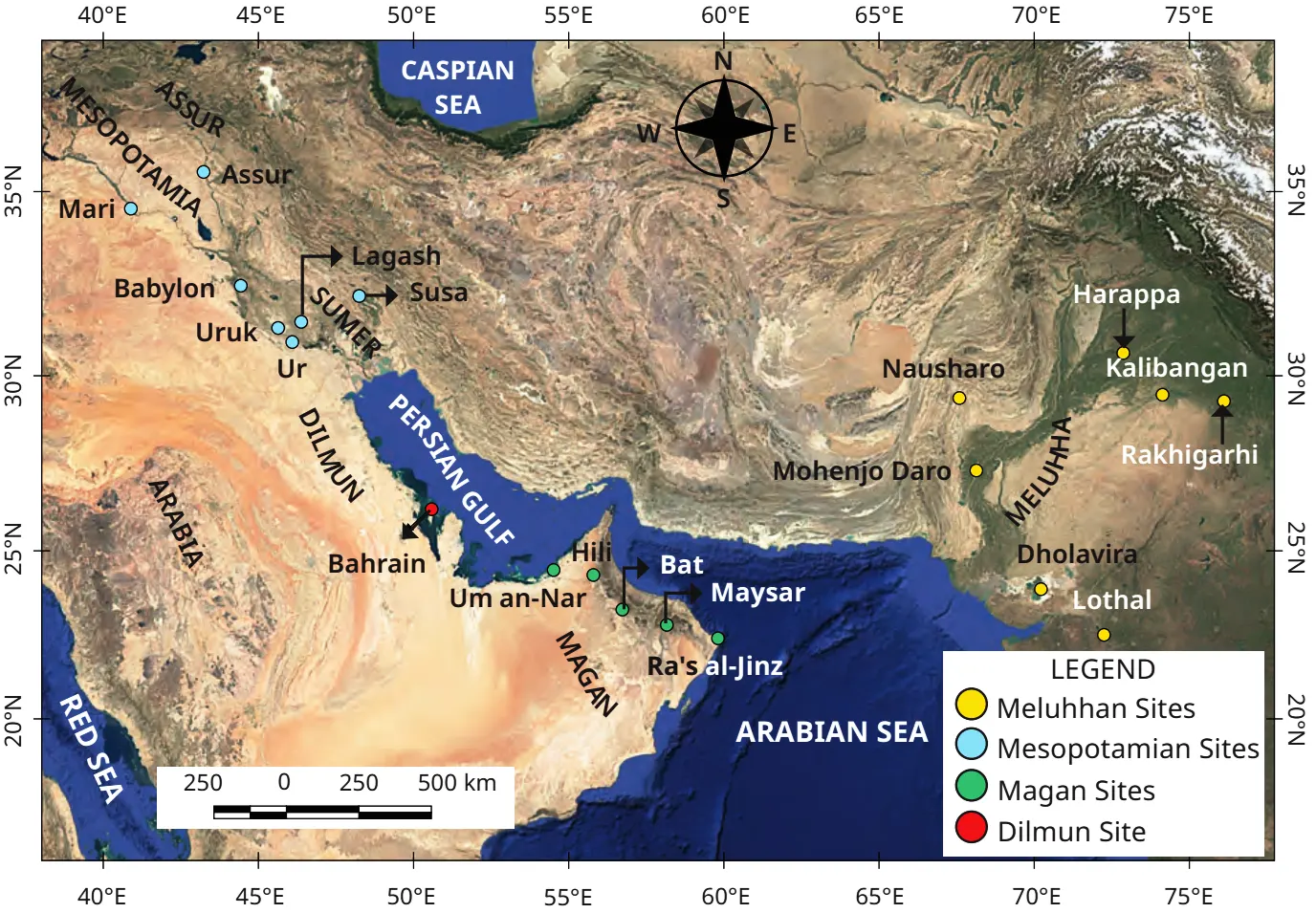
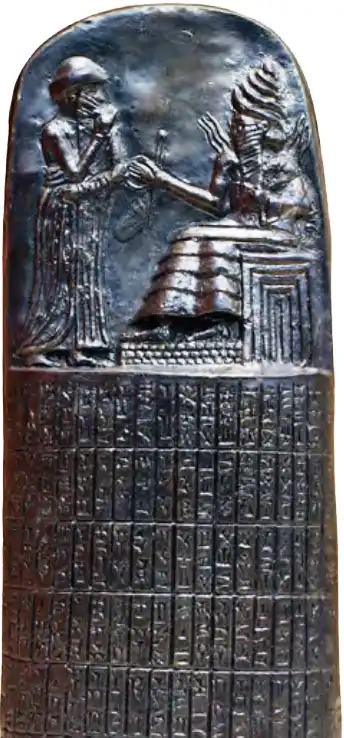
🔍 Let’s Explore: West Asia, Temples & Deciphered Scripts
1. Which countries constitute West Asia today?
2. What similarities exist between Indian temples and Sumerian temples as centres of socio-cultural and economic activity?
3. How does our understanding of a civilisation change when its script is deciphered?
1. Present-day West Asia includes Iraq, Iran, Kuwait, Saudi Arabia, Oman, UAE, Bahrain, Qatar, Yemen, Jordan, Syria, Lebanon, Israel, Palestine, and Turkey (Anatolia).
2. Both Indian temples (especially in South India) and Sumerian ziggurats served not only as centres of worship, but also as hubs of economic activity—managing land, granaries/treasuries, patronising artisans, and anchoring the growth of surrounding towns.
3. When a script is deciphered (like cuneiform), historians learn exact names of rulers, law codes, myths, trade partners, and beliefs; when undeciphered (like Harappan script), we must rely solely on physical artefacts and cannot know their exact language, names, or political history.
🎯 Competency-Based Questions (Section 4)
Q1. [Scenario-Based] While reading an Akkadian cuneiform tablet of King Sargon, a historian finds records of ships arriving with ivory, timber, and semi-precious stone beads from a land called ‘Meluhha’. Which civilisation is Meluhha identified with?
Ans: The Sindhu-Sarasvatī (Harappan) Civilisation.
Q2. [Assertion-Reason] Assertion (A): Modern timekeeping (60-minute hours and 60-second minutes) traces its roots back to ancient Sumer.
Reason (R): The Sumerians developed a mathematical number system based on the number 60, as well as the 360-degree circle.
Ans: Both A and R are true, and R is the correct explanation of A.
Q3. [Analytical] How did the Ziggurat reflect both the economic system and social hierarchy of Sumerian cities?
Ans: Economically, it served as the city’s treasury and controlled agriculture and trade; socially, entry to the sacred temple was restricted to high priests and priestesses of the ruling class, reflecting a strict social hierarchy.
Q4. [Conceptual] What was the historical significance of the Code of Hammurabi?
Ans: Compiled by the Babylonian king Hammurabi (1792 BCE), it was one of the earliest comprehensive written compilations of civil and social laws, serving as a foundational model for future legal systems.
Q5. [Fact-Based] Match the ancient trade regions with their modern locations: (a) Dilmun, (b) Magan, (c) Anatolia (Hittites).
Ans: (a) Dilmun — Bahrain; (b) Magan — Oman peninsula; (c) Anatolia — modern-day Turkey.
5. The Egyptian Civilisation (मिस्र की सभ्यता)
Greek इतिहासकार Herodotus (5th c. BCE) और 19th-century के ग्रंथ de L’Egypte से मिस्र के बारे में रोचक जानकारी मिलती है। मिस्र का इतिहास तीन कालखंडों में बँटा है—Old Kingdom (2686–2181 BCE), Middle Kingdom (2030–1650 BCE), और New Kingdom (1570–1069 BCE):
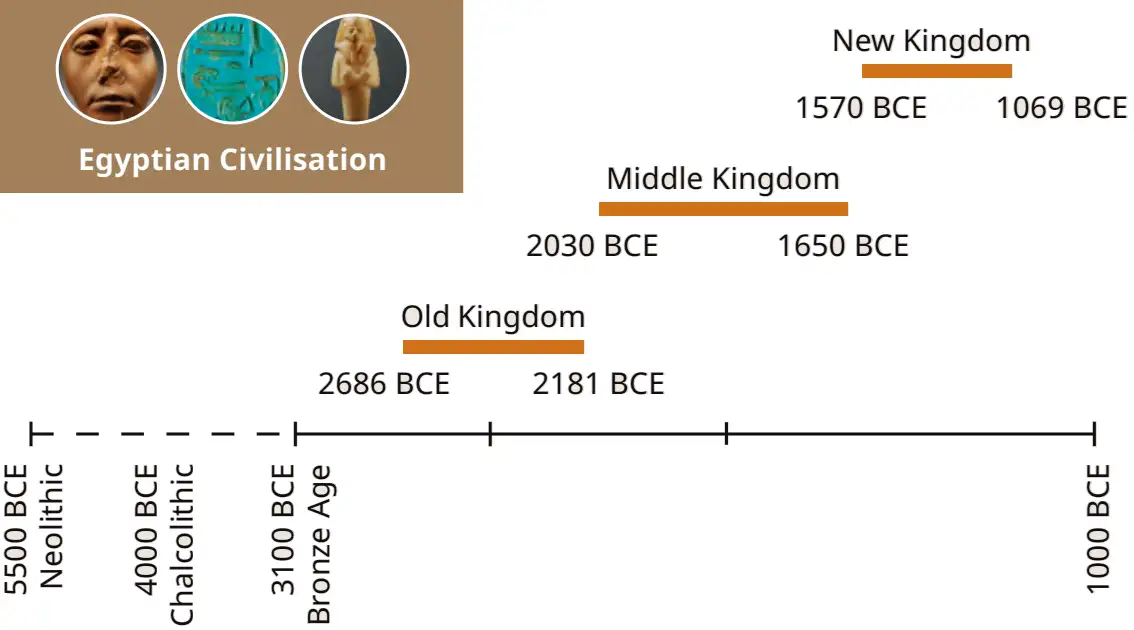
- Kemet & The Nile: Egyptians अपने देश को Kemet (‘the black’) कहते थे क्योंकि Nile की वार्षिक बाढ़ उपजाऊ काली मिट्टी लाती थी। नहरें और बांध बनाने के सामूहिक प्रयासों से स्थानीय शासन (local government) और administrative class का उदय हुआ।
- Papyrus & Libraries: वे papyrus के पौधे के तने की पट्टियों को दबाकर, सुखाकर और पॉलिश करके papyrus कागज बनाते थे (जैसे Papyrus Ebers में 700 से अधिक चिकित्सा उपाय और मंत्र हैं)। 2000 BCE की libraries में labeled jars के अंदर scrolls रखे जाते थे, जिनमें ‘Sindbad the Sailor’, ‘Aesop’s Fables’ जैसी पशु कथाएँ, और ‘Cinderella’ का सबसे पुराना रूप मिला है।
- Egyptian Calendar: Sirius (Dog Star) के उदय पर आधारित 365-day calendar (12 months × 30 days + 5 extra days), जो 3 मौसमों में बँटा था: Inundation (autumn), Peret (winter/growing), और Shemu (summer/harvest)।
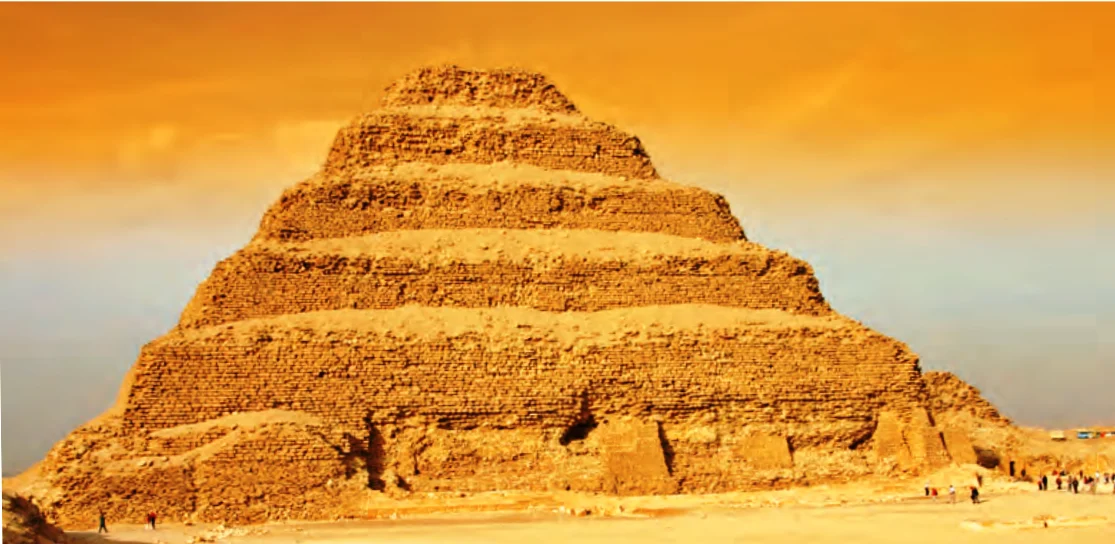
- Pharaohs, Pyramids & Mummification: शासकों को Pharaohs कहा जाता था। मिस्रवासी मानते थे कि हर व्यक्ति का एक spiritual double (ka) होता है। शव को बचाने के लिए Mummification (heart को छोड़कर आंतरिक अंग निकालकर natron से सुखाना, तेल लगाकर linen में लपेटना) किया जाता था। कब्र के ऊपर बने mastaba को एक के ऊपर एक रखकर Pyramids बने (जैसे Step Pyramid at Saqqara)।
- Leisure, Festivals & Women: वे swimming, canoeing, board games, music, और sistrum वाद्य यंत्र के साथ त्योहार (जैसे राजा के 30वें वर्ष पर Sed festival) मनाते थे। Greek/Roman महिलाओं की तुलना में Egyptian महिलाओं को अधिक अधिकार थे (property ownership, business)—जैसे रानी Cleopatra (69–30 BCE) 18 वर्ष की आयु में शासक बनीं।
💡 Don’t Miss Out: How Was the Egyptian Script Deciphered?
1799 में फ्रांसीसी सेना के इंजीनियर Pierre Bouchard को मिस्र में एक विशाल काला पत्थर मिला—Rosetta Stone—जिस पर Greek सहित तीन लिपियों में लिखा था। चूँकि लोग Greek पढ़ सकते थे, इसने bilingual dictionary का काम किया, और 1822 में फ्रांसीसी भाषाविद् Jean-François Champollion ने Egyptian hieroglyphs को decipher कर दिया।
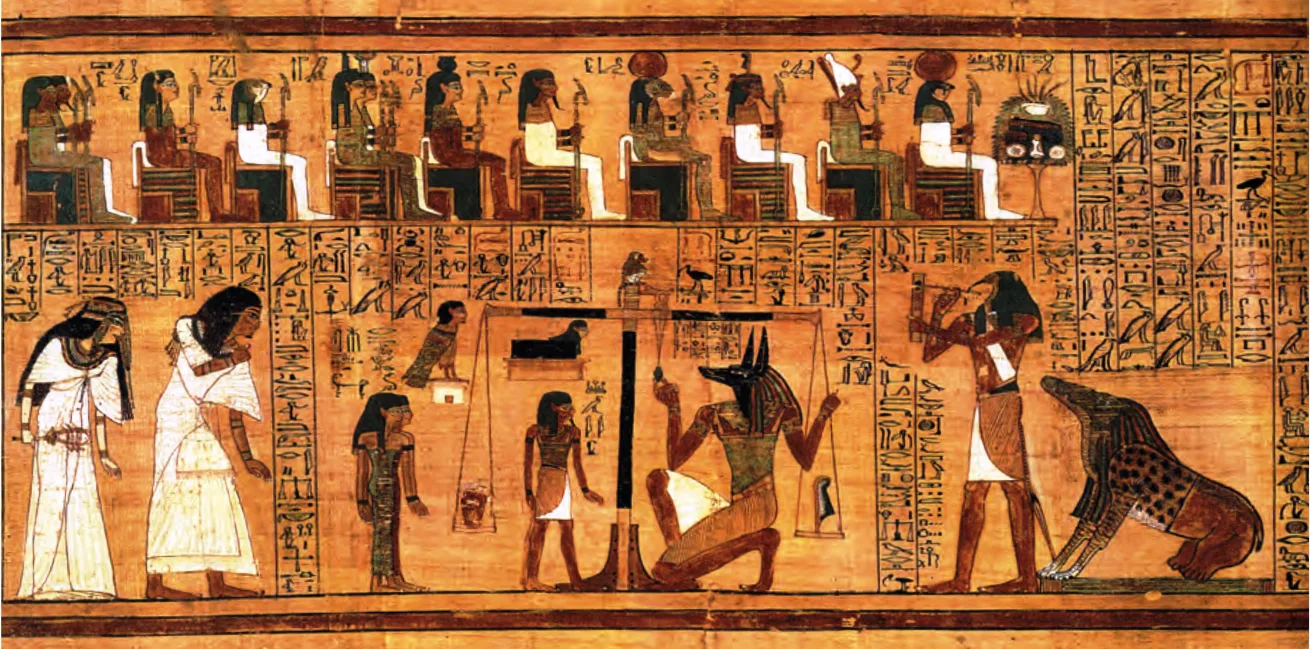
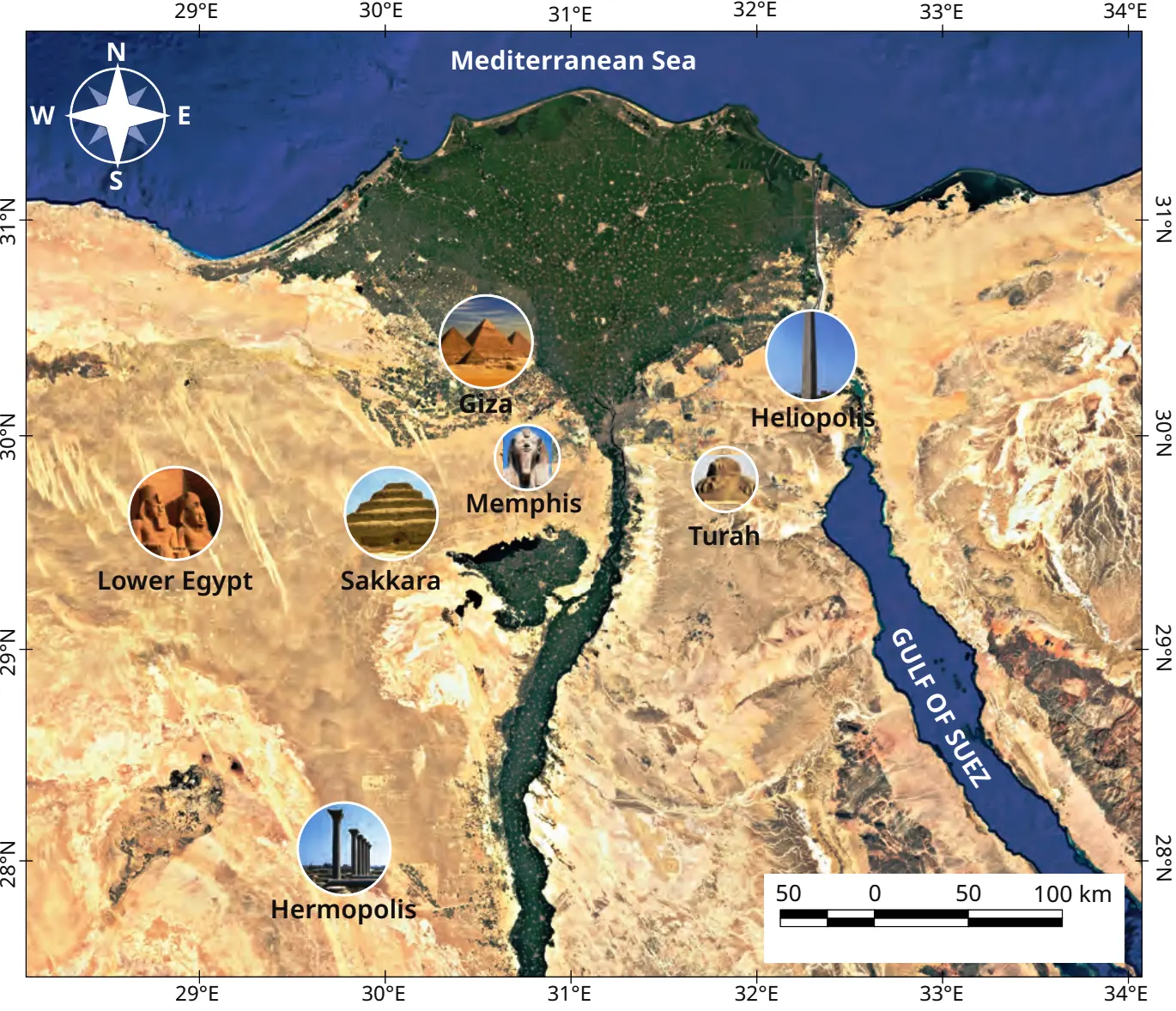
🤔 Think About It & Let’s Map: Papyrus of Ani & Upper/Lower Egypt
1. In the Papyrus of Ani (Fig. 4.29), why is there a scale with a heart on one side and a feather on the other?
2. Why is the northern part of Egypt called ‘Lower Egypt’ and the southern part ‘Upper Egypt’?
1. This represents the ancient Egyptian belief in moral judgement in the afterlife: a person’s heart (symbolising their deeds) was weighed against the feather of truth; only a pure heart lighter than the feather could enter the afterlife.
2. Because the River Nile flows from south to north into the Mediterranean Sea, the southern upstream region is higher in elevation (‘Upper Egypt’) while the northern downstream delta is lower (‘Lower Egypt’).
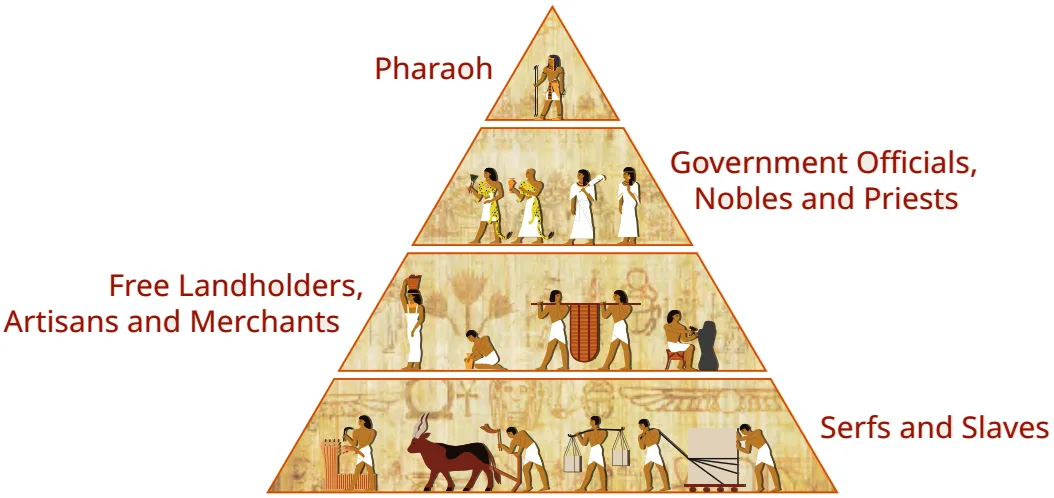
🔍 Let’s Explore: Daily Life in Egyptian Social Classes (Fig. 4.32)
What were the social classes and occupations of early Egypt, and what might a typical daily routine look like for each class?
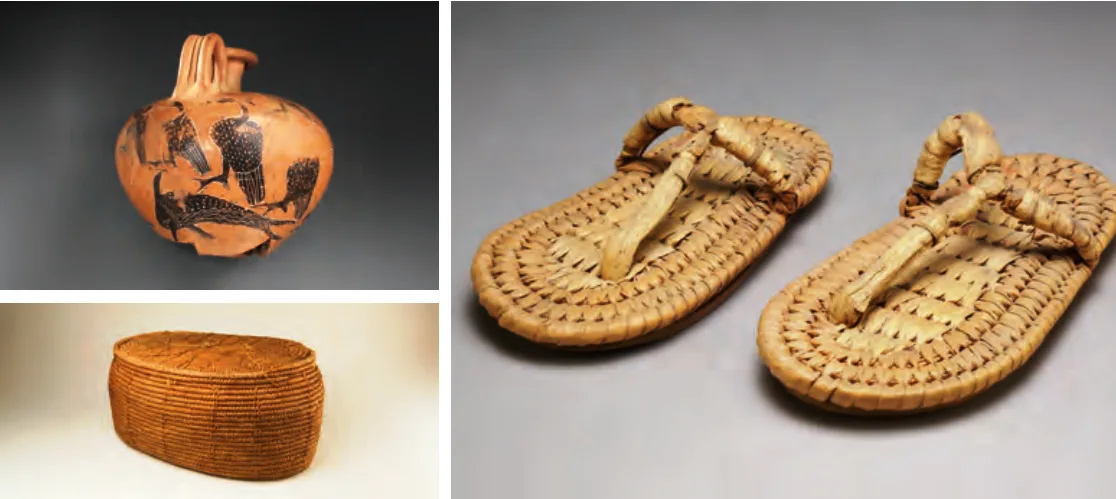
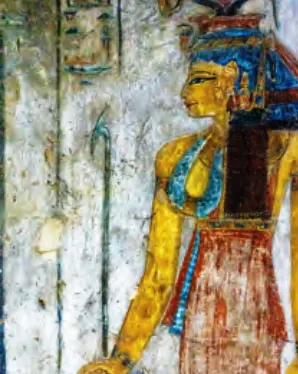
🤔 Think About It: Egyptian Fashion & Social Classes (Fig. 4.33)
What do the items in Fig. 4.33 tell you about Egyptian fashion and which social classes used them?
🎯 Competency-Based Questions (Section 5)
Q1. [Scenario-Based] In 1799, a French army engineer finds a black stone in Egypt inscribed with three scripts, including Greek. How did this discovery help Jean-François Champollion in 1822?
Ans: Because scholars could already read Greek, the Rosetta Stone acted like a bilingual dictionary, enabling Champollion to finally decipher ancient Egyptian hieroglyphs.
Q2. [Assertion-Reason] Assertion (A): Ancient Egyptians referred to their land as ‘Kemet’.
Reason (R): Kemet means ‘the black’, referring to the fertile black silt deposited along the Nile valley during annual summer inundations.
Ans: Both A and R are true, and R is the correct explanation of A.
Q3. [Analytical] Arrange the four tiers of the Egyptian Social Hierarchy Pyramid (Fig. 4.32) from top to bottom.
Ans: 1. Pharaoh → 2. Government Officials, Nobles and Priests → 3. Free Landholders, Artisans and Merchants → 4. Serfs and Slaves.
Q4. [Conceptual] What was the ‘Sed festival’ in ancient Egypt?
Ans: The Sed festival was a grand celebration held to mark a Pharaoh’s 30th year on the throne, demonstrating deep reverence for the ruler.
Q5. [Fact-Based] What is the ‘Papyrus Ebers’ famous for?
Ans: It is an ancient Egyptian papyrus scroll that lists more than 700 cures and spells of Egyptian medicine.
6. The Chinese Civilisation (चीनी सभ्यता)
चीनी सभ्यता Huang He (Yellow River) और Yangtze नदियों की घाटियों में फली-फूली (~7000 BCE Neolithic; ~2000 BCE Bronze Age; ~1600 BCE शहरी केंद्र)। चीन का इतिहास विभिन्न राजवंशों (dynasties) में बँटा है:
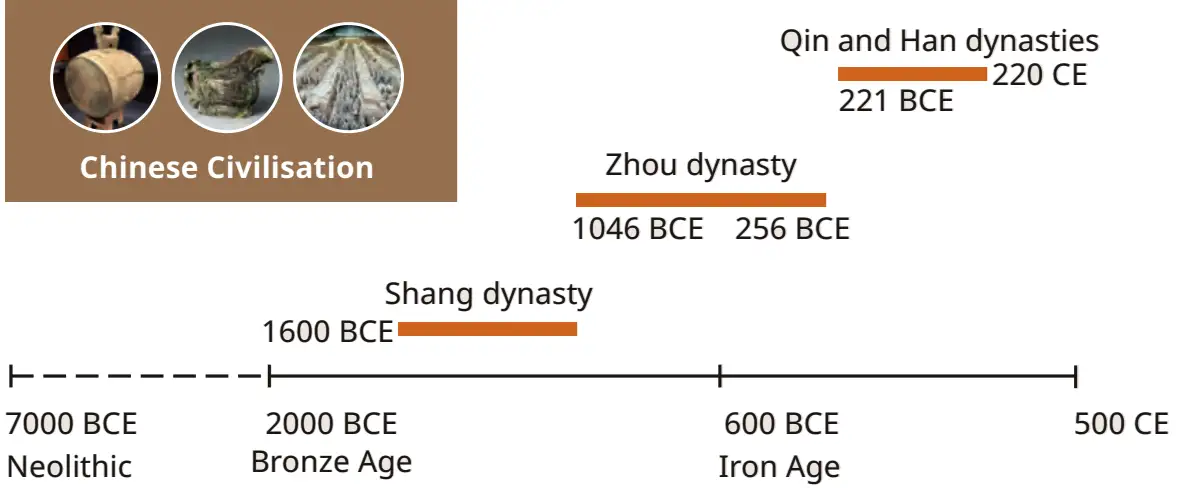
- Shang Dynasty (1600–1046 BCE) & Zhou Dynasty (1046–256 BCE): Bronze Age राजवंश। Zhou शासक राजा व पुजारी दोनों थे और “appointees of heaven” माने जाते थे, लेकिन प्रजा की समृद्धि न होने पर उन्हें हटाया जा सकता था। अधिकारियों का चयन archery, horsemanship, calculations, writing, और music की परीक्षा के बाद होता था।
- Iron Age (~600 BCE), Qin & Han Dynasties: Qin (Ch’in) Dynasty (221–206 BCE) चीन का पहला imperial राजवंश था जिसने देश को एकीकृत किया (संभवतः इसी से ‘China’ नाम पड़ा)। Han Dynasty (206 BCE–220 CE) के दौरान Silk (जो Neolithic 4000–3000 BCE से ज्ञात था) प्रमुख विदेशी व्यापार वस्तु बनी, जिससे प्रसिद्ध ‘Silk Route’ का नाम पड़ा।
- Oracle Bones & Logographic Script: चीन के सबसे पुराने रिकॉर्ड ‘oracles’ हैं—जानवरों की हड्डियों और कछुए के खोल पर उकेरे गए चिह्न जिन्हें गर्म करके दरारों से भविष्यवाणी की जाती थी। Chinese script logographic है (जहाँ हर चिह्न पूरे शब्द या morpheme को दर्शाता है, जैसे 人 = Person, 木 = Tree)।
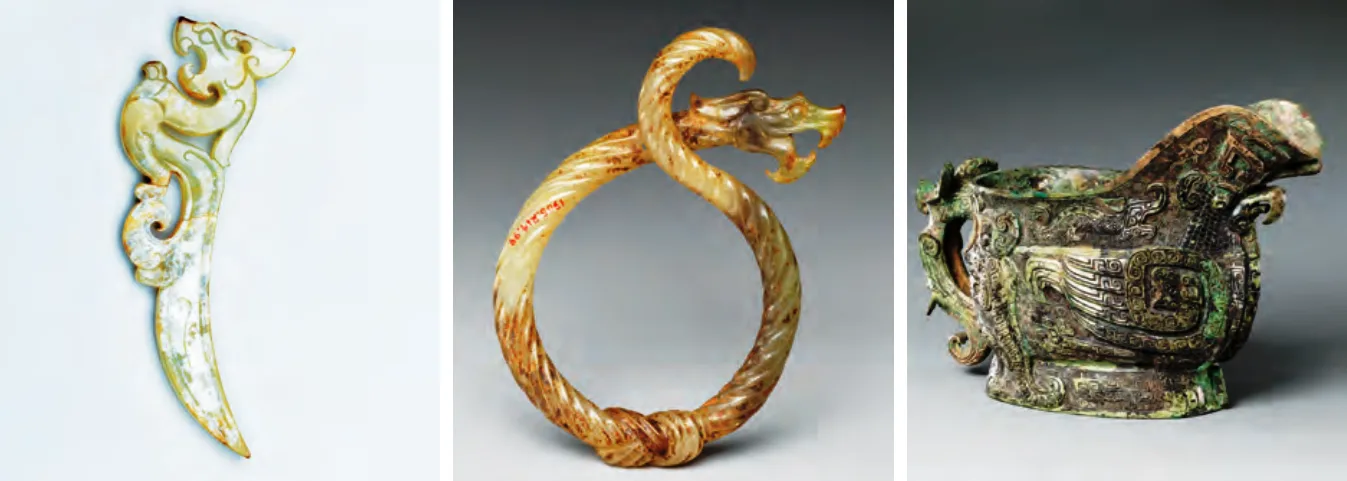
- Crafts & Great Wall of China: चीनी कारीगरों ने Jade (बाहर से मंगाया जाने वाला prestige पत्थर, जिससे संगीतमय मछलियाँ भी बनाई जाती थीं), marble ornaments, और bronze ritual vessels में महारत हासिल की। Great Wall of China का निर्माण 680 BCE से शुरू होकर 2,000 वर्षों तक (17th c. CE तक) nomadic tribes के हमलों से रक्षा के लिए चला।
- World-First Innovations: 1500 BCE तक चीनी समाज stratified था। Zhou काल में metal-based exchange शुरू हुआ और 5th c. BCE तक money economy बनी। चीन दुनिया में paper currency और public examination द्वारा civil services शुरू करने वाला पहला देश था।
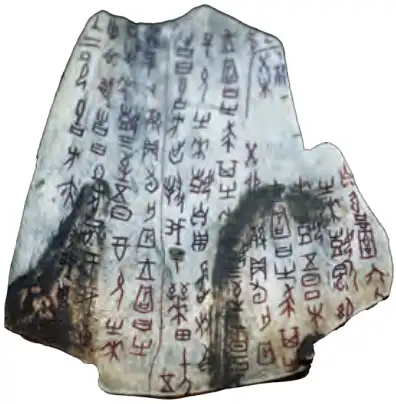
🔍 Let’s Explore: Chinese Logographic Script
Chinese characters represent entire words or ideas (e.g., 人 = Person, 木 = Tree). Explore two more examples where shapes connect to meanings.

🤔 Think About It & Let’s Recall: Great Wall & Silk Route
1. Besides defence against nomadic raids, what could have been other reasons for building the Great Wall of China?
2. How was India connected with the Silk Route and China in ancient times?
1. Beyond military defence, the Great Wall served to regulate and tax cross-border trade along the Silk Route, control immigration and smuggling, act as an elevated highway for rapid troop movement and smoke-signal communication, and display imperial power.
2. India connected to the Silk Route via northwestern mountain passes (like Takshaśhilā) and maritime ports, trading spices, textiles, and gemstones for Chinese silk. These same routes also carried Buddhism from India to China, inspiring Chinese pilgrims like Faxian and Xuanzang to visit Indian universities like Nālandā.
🎯 Competency-Based Questions (Section 6)
Q1. [Scenario-Based] In ancient China, a candidate wishing to become a public official is tested in archery, horsemanship, calculations, writing, and music. Which world-first administrative system does this reflect?
Ans: China was the first country in the world to develop civil services through public examination.
Q2. [Assertion-Reason] Assertion (A): The name ‘China’ probably originates from the Qin (Ch’in) dynasty.
Reason (R): The Qin dynasty (221–206 BCE) was the first imperial dynasty credited with unifying China.
Ans: Both A and R are true, and R is the correct explanation of A.
Q3. [Analytical] What do ancient Chinese ‘oracle bones’ reveal to modern historians?
Ans: Used by early Chinese rulers to foretell the future by interpreting cracks on heated animal bones and tortoise shells, oracle bones serve as the earliest written records revealing the hopes, desires, and fears of early Chinese society.
Q4. [Conceptual] How is a ‘logographic’ script like Chinese different from an alphabetic script?
Ans: In a logographic script, characters represent entire words or meaningful units (morphemes) often resembling objects or ideas, rather than representing individual spoken sounds.
Q5. [Fact-Based] During which Chinese dynasty did silk become such a major item of external trade that the trade route was named the ‘Silk Route’?
Ans: The Han dynasty (around the 2nd century BCE).
The Big Questions (Chapter Objectives Solved)
1. How did humans live on Earth before the beginning of civilisation?
2. How did humans communicate before writing was invented?
3. How is archaeology helpful in understanding our past?
4. How did early civilisations interact with each other?
List
Class 9 Social Science Part 1 Chapter 4 Early Humans and Beginning of Civilisation Revision Notes

Class 9 Social Science Part 1 Chapter 5 States and Society upto 1000 CE Revision Notes

Class 9 Social Science Part 1 Chapter 6 Democracy Revision Notes
Class 9 Social Science Part 1 Chapter 7 Elections Revision Notes

Class 9 Social Science Part 1 Chapter 8 Building Blocks in Economics – The Problem of Choice Revision Notes