
Class 10 Science Chapter 2 Activities | Acids Bases and Salts
Activity 2.1: Testing Acids and Bases with Indicators
Color Changes of Acid and Base Solutions with Synthetic and Natural Indicators
Experimental Procedure
- Collect laboratory samples: hydrochloric acid (HCl), sulphuric acid (H₂SO₄), nitric acid (HNO₃), acetic acid (CH₃COOH), sodium hydroxide (NaOH), calcium hydroxide [Ca(OH)₂], potassium hydroxide (KOH), magnesium hydroxide [Mg(OH)₂], and ammonium hydroxide (NH₄OH).
- Place a few drops of each solution on separate watch-glasses.
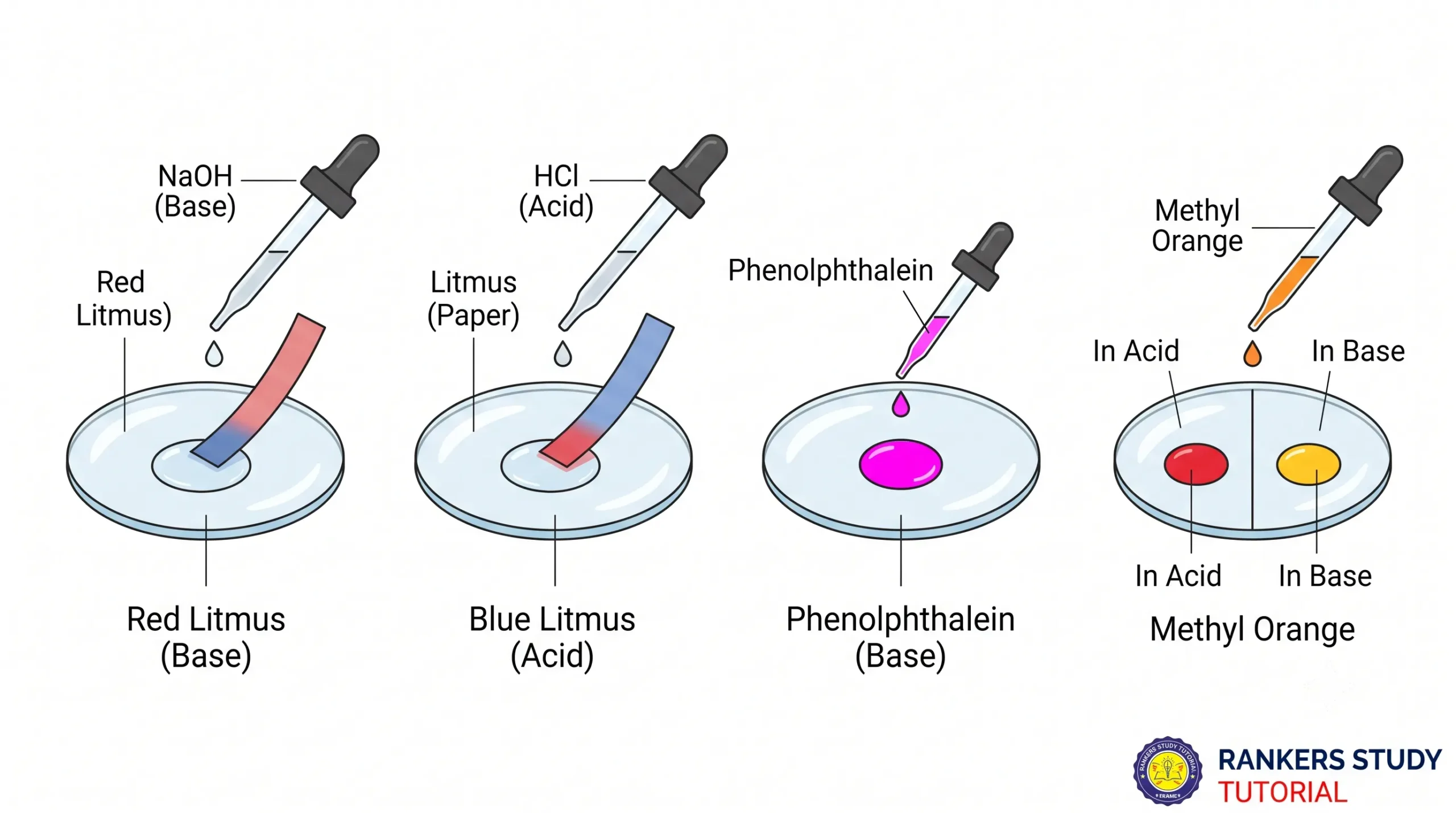
- Test each sample separately with red litmus solution, blue litmus solution, phenolphthalein solution, and methyl orange solution.
Observations & Chemical Mechanism
- Acids: Red litmus remains red; blue litmus turns red; phenolphthalein remains colorless; methyl orange turns red/pink.
- Bases: Red litmus turns blue; blue litmus remains blue; phenolphthalein turns bright pink; methyl orange turns yellow.
- Inference: Acid-base indicators change color depending on whether hydrogen ions (H⁺) or hydroxide ions (OH⁻) predominate in solution.
Q1: What distinct color change is observed when phenolphthalein and methyl orange are added separately to a solution of calcium hydroxide?
Answer: Calcium hydroxide [Ca(OH)₂] is a base. Therefore, phenolphthalein turns pink, and methyl orange changes from orange to yellow.
Q2: Why does a yellow curry stain on a white shirt turn reddish-brown when scrubbed with laundry soap, and how does it revert to yellow?
Answer: Curry contains turmeric, a natural indicator. Laundry soap is alkaline/basic in nature, turning the yellow turmeric pigment reddish-brown. When rinsed with excess water, the soap is washed away, neutralizing the medium back to neutral and restoring the original yellow color.
Q3 (Application Based): You are given three test tubes containing distilled water, an acidic solution, and a basic solution. If provided with only red litmus paper, how can you identify the contents of all three tubes?
Answer: Dip a strip of red litmus paper into all three test tubes one by one. The tube that turns red litmus paper blue contains the basic solution. Next, take this newly turned blue litmus paper and dip it into the remaining two tubes. The one that turns it back to red contains the acidic solution. The tube that causes no color change on either red or blue litmus contains neutral distilled water.
Q4 (Application Based): Gardeners observe that hydrangea flower petals bloom blue in acidic soil but turn pinkish-red in alkaline soil. How can this observation be utilized as an environmental diagnostic tool?
Answer: Hydrangea petal pigments act as natural acid-base indicators sensitive to soil pH. By inspecting petal coloration, gardeners and farmers can gauge the general acidity or alkalinity of backyard soil without specialized chemical testing kits.
Activity 2.2: Olfactory Indicators (Onion, Vanilla, Clove Oil)
Testing Odor Changes in Acidic and Basic Media
Experimental Procedure
- Tie finely chopped onions with clean cloth strips inside a plastic bag and leave overnight in a refrigerator to impart onion odor to the cloth.
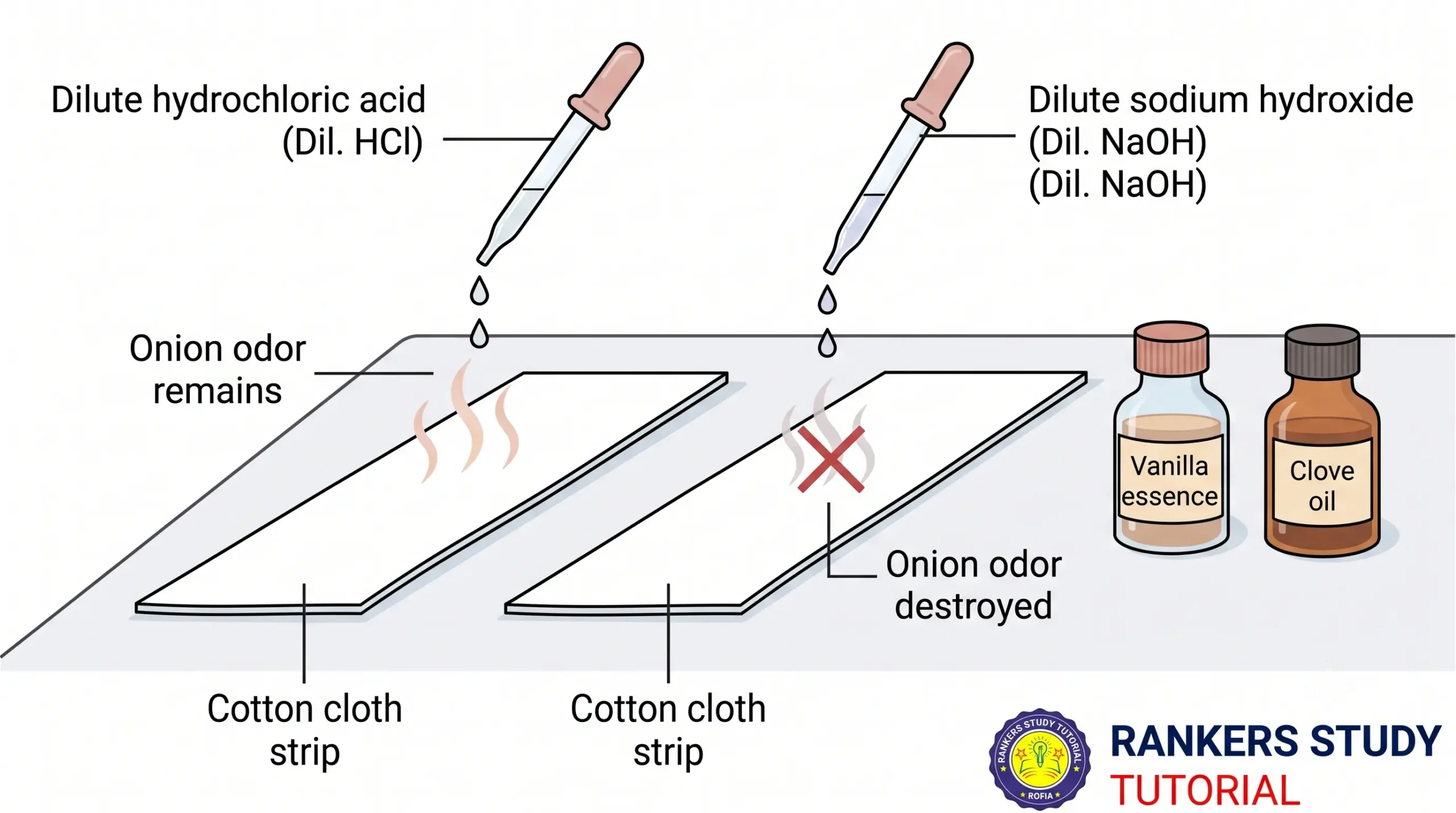
- Treat one onion cloth strip with a few drops of dilute HCl and another strip with dilute NaOH. Rinse with water and check the smell.
- Repeat odor tests using dilute vanilla essence and clove oil treated with dilute HCl and dilute NaOH separately.
Observations & Chemical Mechanism
- Acidic Medium (dilute HCl): The characteristic odor of onion, vanilla, and clove oil is retained and does not disappear.
- Basic Medium (dilute NaOH): The characteristic odor of onion, vanilla, and clove oil is completely destroyed or cannot be detected.
- Inference: Substances whose odor varies between acidic and basic environments are called olfactory indicators and are ideal for visually impaired students.
Q1: What happens to the smell of clove oil when mixed with sodium hydroxide solution?
Answer: When treated with a basic solution like sodium hydroxide (NaOH), the characteristic smell of clove oil diminishes and is completely lost.
Q2: Why are olfactory indicators particularly valuable for differently-abled students in laboratory environments?
Answer: Olfactory indicators signal changes in acidity or alkalinity through olfactory receptors (smell) rather than visual color transitions, enabling visually impaired students to identify acidic and basic media safely and independently.
Q3 (Application Based): A student adds a drop of an unknown liquid to an onion-treated cloth strip and observes that the pungent smell of onion persists. Can the student definitively conclude the liquid is an acid?
Answer: Not definitively. While acids retain the onion odor, neutral substances like pure water also do not destroy the odor. The student must verify that the liquid also neutralizes a base or tests positive on litmus to confirm acidity.
Q4 (Application Based): After handling chopped onions or raw fish, home cooks often rub their hands with lemon juice or vinegar to remove the lingering odor. Explain the chemical rationale behind this practice.
Answer: Fish and onion odors are often caused by volatile organic amines, which are basic in character. Mild acids like citric acid (in lemon) or acetic acid (in vinegar) react with these bases in a neutralization reaction, converting them into non-volatile, odorless ammonium-like salts.
Activity 2.3: Reaction of Acids with Active Metals
Generation and Testing of Hydrogen Gas Using Zinc Granules and Dilute Acid
Experimental Procedure
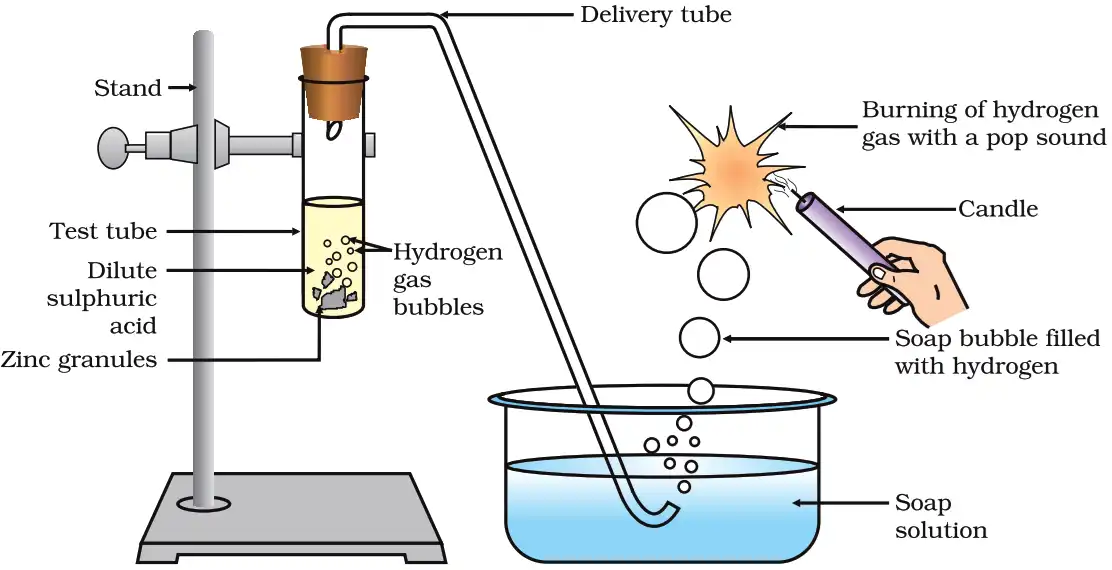
- Take about 5 mL of dilute sulphuric acid in a test tube and add a few granulated zinc pieces.
- Pass the gas evolved through a delivery tube into a trough containing soap solution.
- Bring a burning candle near the soap bubbles emerging from the trough.
- Repeat with dilute hydrochloric acid, nitric acid, and acetic acid.
Observations & Chemical Mechanism
- Observation: Gas bubbles form rapidly on the zinc surface, enter the soap solution, and produce light gas-filled soap bubbles that rise into the air. Bringing a flame close causes the bubble to burst with a ‘pop’ sound.
- Chemical Equation:
Zn(s) + H₂SO₄(aq) → ZnSO₄(aq) + H₂(g)↑ - General Rule:
Acid + Metal → Salt + Hydrogen gas
Q1: Why are the gas bubbles routed through a soap solution rather than directly into open water?
Answer: Hydrogen gas does not dissolve easily in water and is lighter than air. Passing it through soap solution traps the gas inside thin, visible soap bubbles that rise, making it safe and easy to perform the flame pop-test.
Q2: Why is hydrogen gas usually not evolved when zinc reacts with dilute nitric acid (HNO₃)?
Answer: Nitric acid is a powerful oxidizing agent. It oxidizes the hydrogen gas produced into water (H₂O) while being itself reduced to nitrogen oxides such as NO₂, NO, or N₂O. Only very dilute HNO₃ reacts with magnesium and manganese to liberate H₂.
Q3 (Application Based): Why are buttermilk, curd, lemon pickles, and tamarind chutney never stored in brass or copper containers?
Answer: Curd and sour foods contain organic acids (such as lactic acid and citric acid). These acids react with copper and zinc present in brass/copper vessels to produce toxic, soluble metallic salts that can cause severe food poisoning.
Q4 (Application Based): In hydrogen fuel cell vehicles, hydrogen gas is compressed under high pressure. Why does pure hydrogen burn silently at a burner nozzle, whereas in Activity 2.3 it burns with a sharp pop sound?
Answer: A small soap bubble contains a premixed mixture of hydrogen gas and air. When ignited, rapid, instantaneous combustion of this confined hydrogen-air mixture causes a miniature shockwave heard as a “pop”. At a controlled fuel nozzle, pure hydrogen meets air only at the point of ignition, burning smoothly and continuously.
Activity 2.4: Reaction of Strong Bases with Amphoteric Metals
Reaction Between Granulated Zinc Metal and Sodium Hydroxide Solution
Experimental Procedure
- Place a few pieces of granulated zinc metal in a clean glass test tube.
- Add 2 mL of strong sodium hydroxide (NaOH) solution.
- Warm the contents of the test tube gently over a spirit lamp.
- Collect the gas in soap solution and perform the flame test.
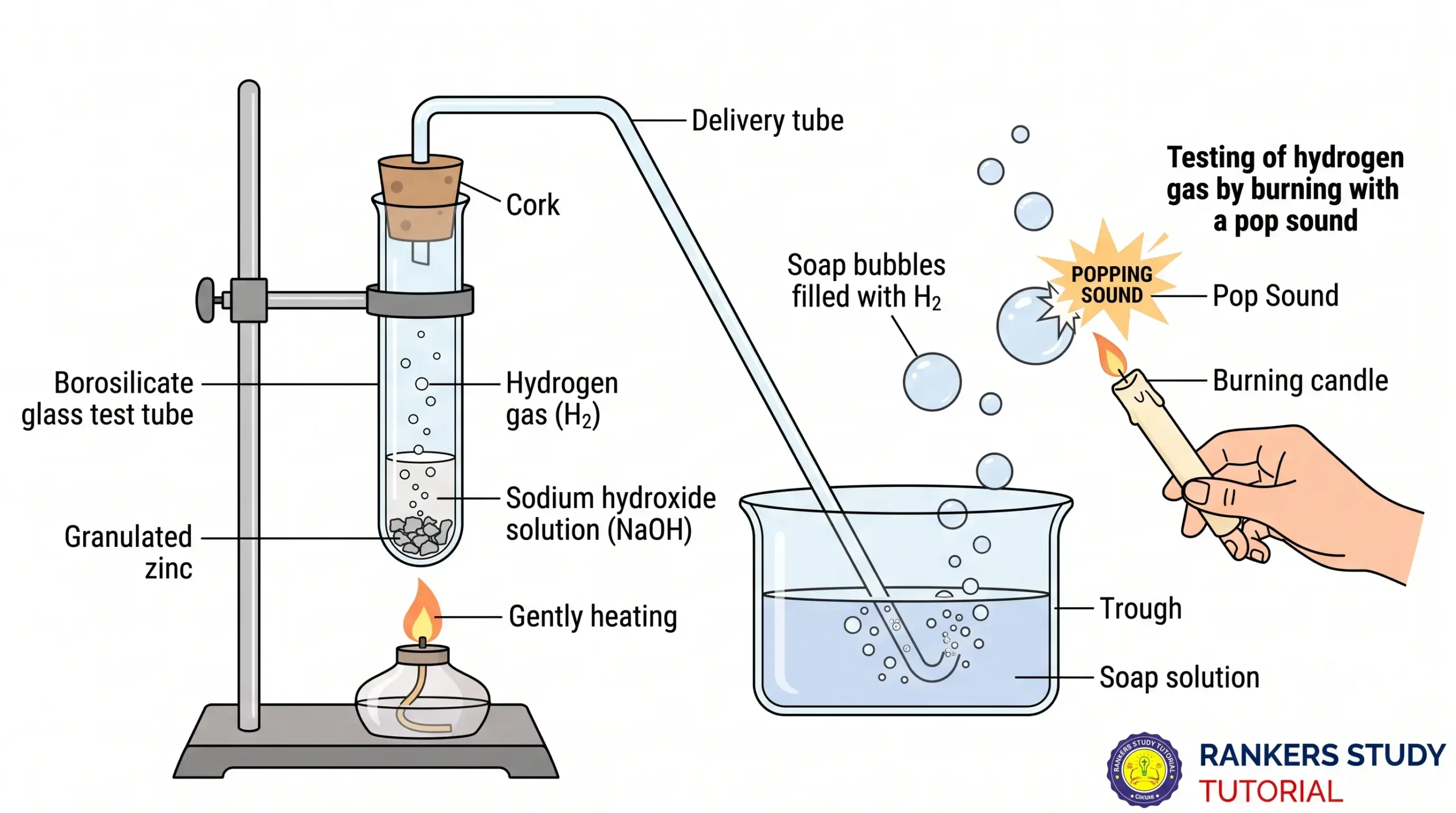
Observations & Chemical Mechanism
- Observation: Upon heating, tiny bubbles evolve from the surface of the zinc metal that burn with a pop sound when tested with a flame.
- Chemical Identity: Zinc reacts with alkali to form a complex salt, sodium zincate, liberating hydrogen gas.
- Chemical Equation:
2NaOH(aq) + Zn(s) ⎯⎯Δ→ Na₂ZnO₂(aq) + H₂(g)↑ - Limitation: Such reactions do not occur with all metals; only amphoteric metals like zinc and aluminium react with strong alkalis to liberate hydrogen.
Q1: Name the salt formed when zinc metal is heated with sodium hydroxide solution, and write its formula.
Answer: The salt formed is sodium zincate, having the chemical formula
Na₂ZnO₂.Q2: Do all metals react with alkalis to evolve hydrogen gas? Justify.
Answer: No, all metals do not react with bases to evolve hydrogen gas. Only amphoteric metals (such as zinc and aluminium) that can form oxy-anions react with strong bases to liberate hydrogen gas.
Q3 (Application Based): Highly concentrated caustic soda (NaOH) drain cleaners caution against use in aluminium plumbing pipes. Explain the chemistry behind this warning.
Answer: Aluminium is an amphoteric metal that reacts vigorously with concentrated sodium hydroxide solution to produce soluble sodium aluminate and flammable hydrogen gas:
2Al + 2NaOH + 2H₂O → 2NaAlO₂ + 3H₂↑. This corrosive attack thins and corrodes aluminium pipe walls, while the hydrogen generated creates high pressure and fire hazards.Q4 (Application Based): Write the formula of the negative ion (anion) present in the salt formed in Activity 2.4.
Answer: In sodium zincate (Na₂ZnO₂), the cation is sodium (Na⁺) and the negative polyatomic anion is the zincate ion,
ZnO₂²⁻.Activity 2.5: Reaction of Carbonates with Acids
Action of Dilute Hydrochloric Acid on Sodium Carbonate and Hydrogencarbonate
Experimental Procedure
- Label two dry test tubes as A and B. Place 0.5 g of Na₂CO₃ in tube A and 0.5 g of NaHCO₃ in tube B.
- Add about 2 mL of dilute HCl to each test tube through a thistle funnel.
- Direct the gas evolved through a delivery tube into a test tube containing freshly prepared lime water [Ca(OH)₂ solution].
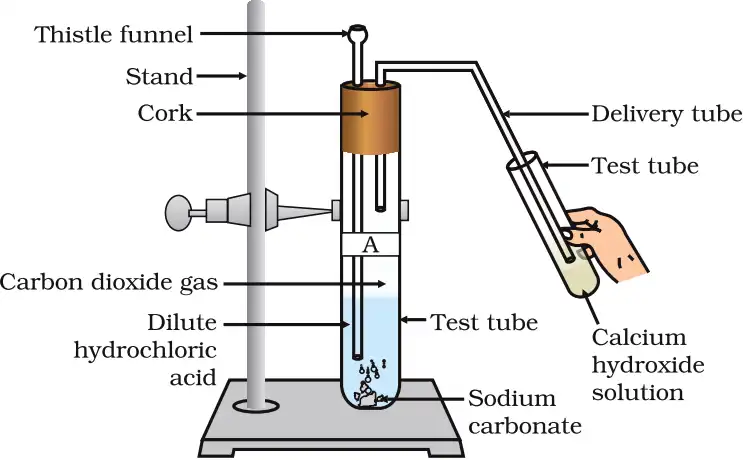
Observations & Chemical Mechanism
- Observation: Brisk effervescence occurs in both tubes. The evolved gas turns clear lime water milky. When excess gas is bubbled through, the milkiness clears.
- Chemical Equations:
Tube A:Na₂CO₃(s) + 2HCl(aq) → 2NaCl(aq) + H₂O(l) + CO₂(g)↑
Tube B:NaHCO₃(s) + HCl(aq) → NaCl(aq) + H₂O(l) + CO₂(g)↑
Lime water check:Ca(OH)₂(aq) + CO₂(g) → CaCO₃(s)↓ (white ppt) + H₂O(l)
Excess CO₂:CaCO₃(s) + H₂O(l) + CO₂(g) → Ca(HCO₃)₂(aq) (soluble) - General Rule:
Metal carbonate/hydrogencarbonate + Acid → Salt + CO₂ + H₂O
Q1: Why does the milky appearance of lime water disappear on passing excess carbon dioxide gas?
Answer: The milkiness is caused by the formation of insoluble calcium carbonate (CaCO₃). On passing excess CO₂, it forms calcium hydrogencarbonate [Ca(HCO₃)₂], which is completely soluble in water, making the liquid clear again.
Q2: Name three naturally occurring rock/mineral forms of calcium carbonate mentioned in the textbook.
Answer: Limestone, chalk, and marble are three different geological forms of calcium carbonate (CaCO₃).
Q3 (Application Based): When crushed eggshells are treated with dilute hydrochloric acid, brisk effervescence occurs, and the resulting gas extinguishes a candle. Explain with chemistry.
Answer: Eggshells are composed primarily of calcium carbonate (CaCO₃). Dilute HCl reacts with CaCO₃ to generate carbon dioxide gas:
CaCO₃ + 2HCl → CaCl₂ + H₂O + CO₂↑. Carbon dioxide does not support combustion, thereby extinguishing the burning flame.Q4 (Application Based): Antacid effervescent tablets contain sodium bicarbonate and solid citric acid. Why do they remain stable in packaging but fizz violently when dropped into water?
Answer: In the dry solid state, the acid and base cannot ionize; hence, no H⁺ ions are available to trigger a reaction. When dropped in water, the solid acid dissociates to release free H⁺ ions, which react with HCO₃⁻ ions to release carbon dioxide gas as effervescent bubbles.
Activity 2.6: Acid-Base Neutralisation Reaction
Phenolphthalein Color Cycling During Acid-Base Titration
Experimental Procedure
- Take about 2 mL of dilute sodium hydroxide solution (NaOH) in a test tube and add two drops of phenolphthalein indicator.
- Observe the resulting bright pink color.
- Add dilute hydrochloric acid (HCl) drop by drop with continuous swirling until the pink color vanishes.
- Add a few drops of NaOH again and observe whether the color returns.
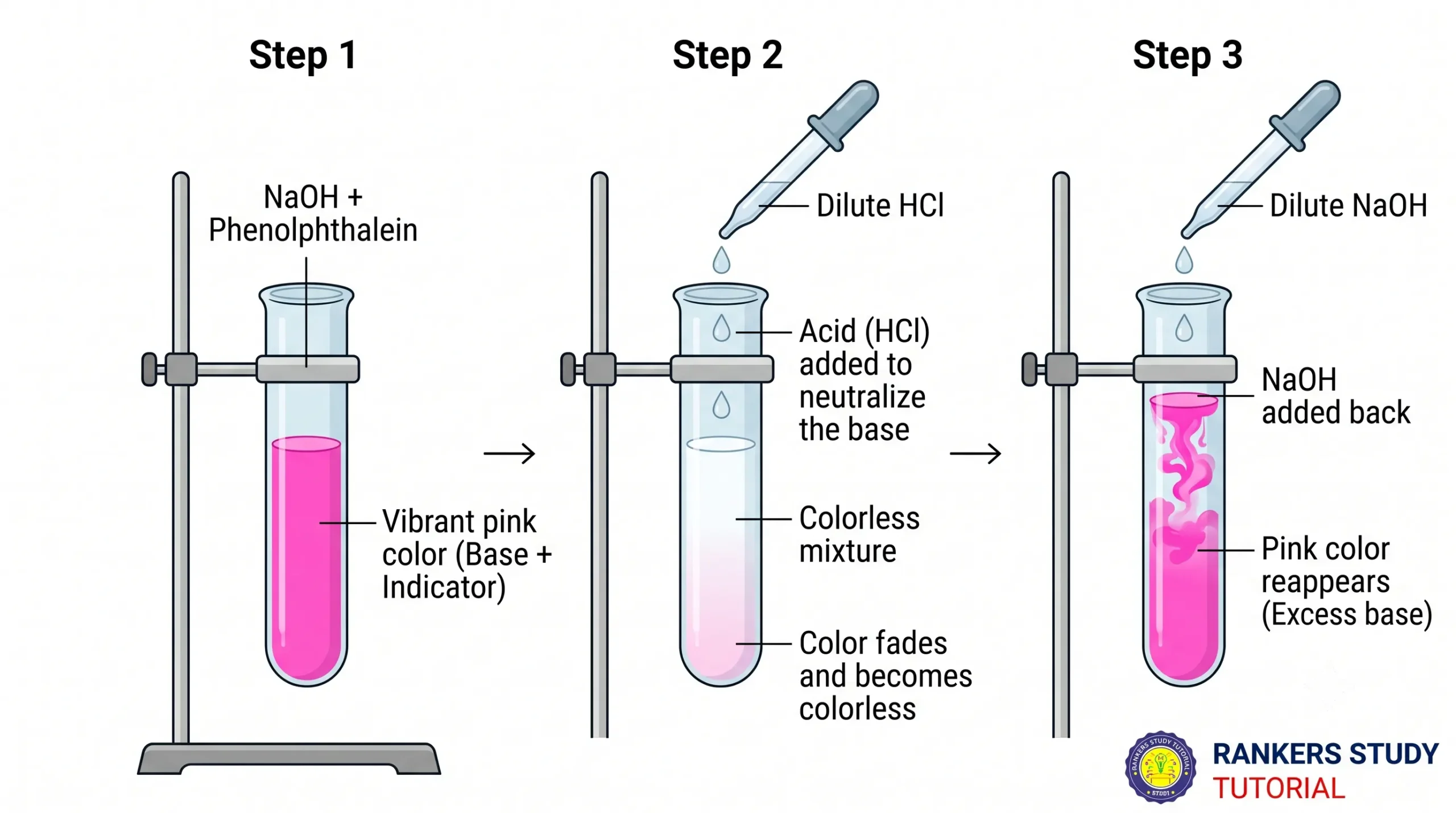
Observations & Chemical Mechanism
- Observation: Phenolphthalein turns pink in base, turns colorless upon adding excess acid, and turns pink again when additional base is added.
- Chemical Identity: The base (NaOH) is neutralized by the acid (HCl) to produce sodium chloride salt and water.
- Chemical Equation:
NaOH(aq) + HCl(aq) → NaCl(aq) + H₂O(l) - Ionic Definition:
H⁺(aq) + OH⁻(aq) → H₂O(l)
Q1: Why did the pink color of the phenolphthalein solution disappear upon adding dilute HCl?
Answer: Phenolphthalein remains pink only in an alkaline/basic medium. Adding dilute HCl neutralizes the hydroxide ions (OH⁻) with hydrogen ions (H⁺). Once the solution turns neutral/acidic, phenolphthalein becomes colorless.
Q2: What is the ionic basis of any neutralization reaction between a strong acid and a strong base?
Answer: The core ionic process is the combination of hydrogen/hydronium ions from the acid with hydroxide ions from the base to form unionized water molecules:
H⁺(aq) + OH⁻(aq) → H₂O(l).Q3 (Application Based): During indigestion, hyperacidity causes burning sensations in the stomach. Why is milk of magnesia or baking soda administered as a remedy?
Answer: Gastric juice contains excess hydrochloric acid. Mild non-corrosive bases like magnesium hydroxide [Mg(OH)₂] or sodium bicarbonate [NaHCO₃] react with the excess stomach acid via a neutralization reaction, forming neutral salts and water and relieving irritation.
Q4 (Application Based): A honeybee sting causes sharp, burning pain, whereas a wasp sting causes similar irritation. Why is baking soda applied to bee stings while vinegar is applied to wasp stings?
Answer: A bee sting injects acidic venom (methanoic acid), which is neutralized by applying a mild base like baking soda paste. Conversely, wasp venom is alkaline; applying a mild acid like vinegar (dilute acetic acid) neutralizes the alkaline irritant.
Activity 2.7: Reaction of Metallic Oxides with Acids
Dissolution of Black Copper Oxide in Dilute Hydrochloric Acid
Experimental Procedure
- Take a small amount of black copper(II) oxide (CuO) in a clean glass beaker.
- Add dilute hydrochloric acid slowly while stirring continuously with a glass rod.
- Observe the dissolution of the black solid and the change in color of the solution.
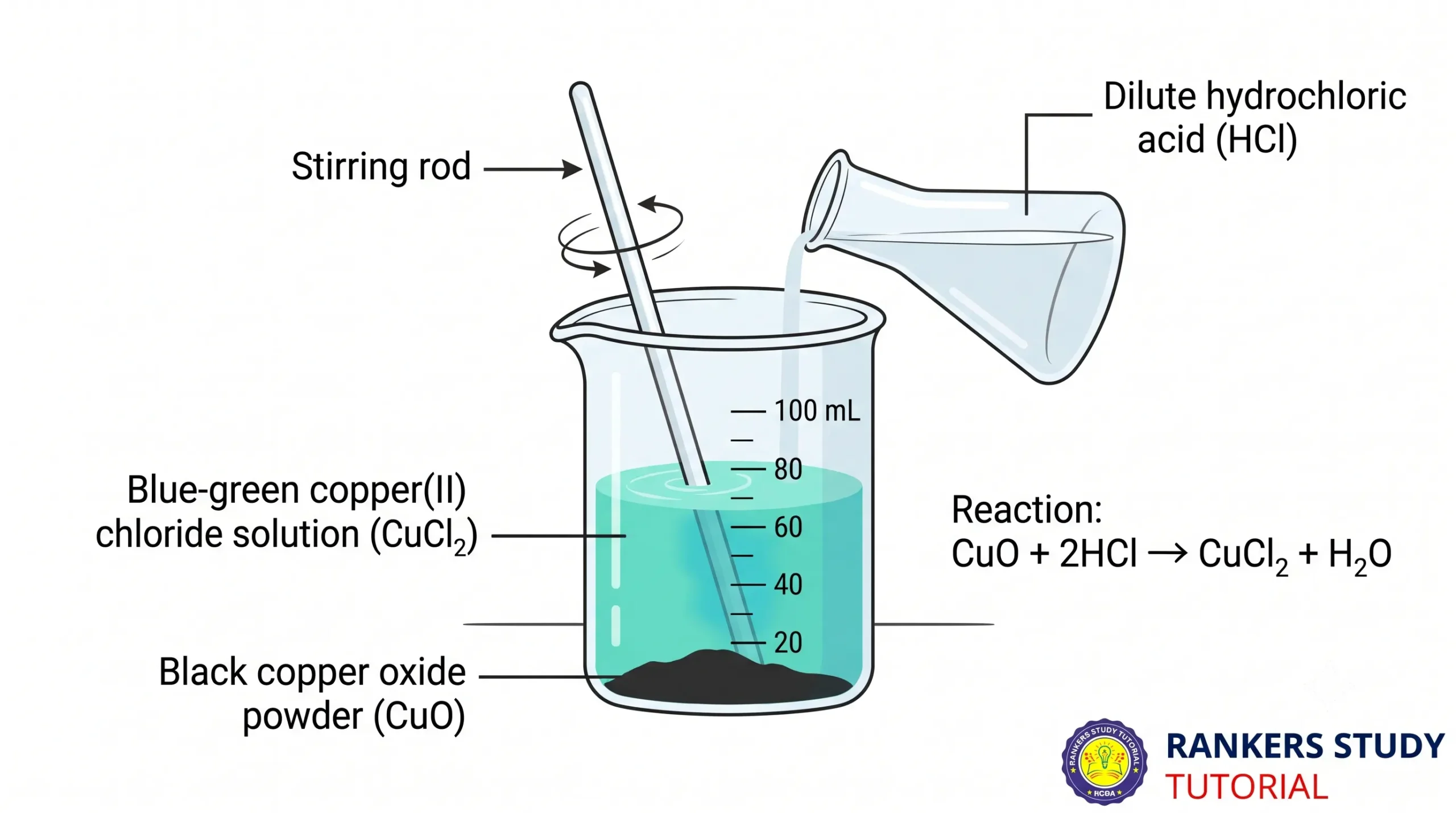
Observations & Chemical Mechanism
- Observation: The black copper oxide powder dissolves completely, and the solution acquires a clear blue-green color.
- Chemical Identity: The blue-green color is due to the formation of dissolved copper(II) chloride.
- Chemical Equation:
CuO(s) + 2HCl(aq) → CuCl₂(aq) + H₂O(l) - Inference: Since metallic oxides react with acids to yield salt and water, metallic oxides are basic oxides.
Q1: What causes the clear solution to become blue-green in Activity 2.7?
Answer: The blue-green color is caused by the formation of copper(II) chloride salt [CuCl₂(aq)], which dissolves in water to release hydrated copper ions.
Q2: Why are metallic oxides referred to as basic oxides?
Answer: Metallic oxides react with acids to produce salt and water, mirroring the behavior of a base in a neutralization reaction. Hence, metallic oxides are categorized as basic oxides.
Q3 (Application Based): Tarnish on old copper vessels consists of basic copper carbonate. Why does rubbing with lemon juice or tamarind pulp restore their shine?
Answer: The green patina on copper contains basic copper oxide/carbonate. Lemon and tamarind pulp contain organic acids (citric acid and tartaric acid). These acids react with the basic oxide coating, forming water-soluble salts that wash away and expose the clean, shiny copper surface.
Q4 (Application Based): Non-metallic oxides such as carbon dioxide react with bases to form salt and water. What can be concluded regarding the nature of non-metallic oxides?
Answer: Since non-metallic oxides like CO₂ react with a base [such as Ca(OH)₂] to form salt (CaCO₃) and water, non-metallic oxides are acidic in nature.
Activity 2.8: Electrical Conductivity of Solutions
Investigating Ionisation: Acids vs. Glucose and Alcohol
Experimental Procedure
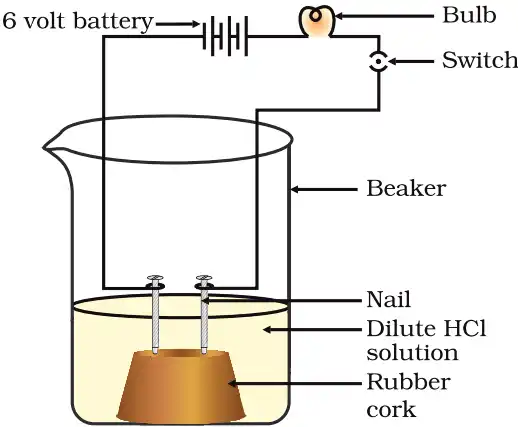
- Fix two iron nails onto a rubber cork and place it inside a 100 mL glass beaker.
- Connect the nails to the terminals of a 6 V battery through a switch and an electric bulb.
- Pour dilute HCl into the beaker and turn on the switch.
- Repeat the experiment independently using dilute H₂SO₄, glucose solution (C₆H₁₂O₆), and ethanol (C₂H₅OH).
Observations & Chemical Mechanism
- Observation: The bulb glows brightly with dilute HCl and dilute H₂SO₄, but remains unlit with glucose and alcohol solutions.
- Chemical Identity: Current in solution is carried by mobile ions. Acids dissociate into H⁺(aq) cations and corresponding anions, whereas glucose and alcohol do not ionize.
- Conclusion: Although glucose and alcohol contain hydrogen atoms, they do not produce free H⁺(aq) ions and are therefore not categorized as acids.
Q1: Why does the bulb glow in an aqueous solution of hydrochloric acid but not in a glucose solution?
Answer: The flow of electric current through a solution requires mobile charge carriers (ions). Hydrochloric acid ionizes completely in water into H⁺(aq) and Cl⁻(aq) ions, which carry current and light the bulb. Glucose is a covalent compound that does not dissociate into ions in water, so it does not conduct electricity.
Q2: Why does distilled water not conduct electricity, whereas rainwater does?
Answer: Pure distilled water does not contain dissolved mineral salts or free ions, making it non-conductive. Rainwater absorbs atmospheric gases like CO₂, SO₂, and NO₂, forming trace amounts of carbonic, sulphurous, and nitric acids that dissociate into free ions to conduct electricity.
Q3 (Application Based): When an alkali such as aqueous sodium hydroxide is tested in this apparatus, does the bulb glow? Explain.
Answer: Yes, the bulb glows brightly. Sodium hydroxide is a strong base that dissociates in water into mobile sodium cations (Na⁺) and hydroxide anions (OH⁻), enabling electrical conduction.
Q4 (Application Based): Hydrochloric acid and acetic acid of the same concentration (1 M) are tested in this circuit. In which case will the bulb glow brighter, and why?
Answer: The bulb glows much brighter with 1 M hydrochloric acid. HCl is a strong acid that ionizes completely, yielding a high concentration of H⁺ ions. Acetic acid is a weak acid that ionizes only partially, producing fewer ions and resulting in dimmer illumination.
Activity 2.9: Role of Water in Acid Ionisation
Testing Dry vs. Moist Litmus Paper with Hydrogen Chloride Gas
Experimental Procedure
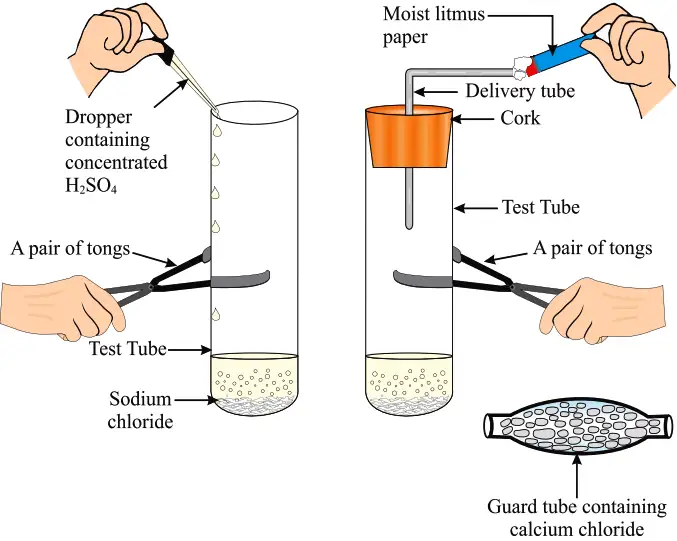
- Take about 1 g of dry solid NaCl in a clean, dry boiling tube.
- Add concentrated sulphuric acid dropwise and fit a dry delivery tube.
- Hold a dry strip of blue litmus paper at the gas outlet, followed by a moist blue litmus strip.
- Pass the gas through a guard tube containing anhydrous calcium chloride (CaCl₂) if the climate is humid.
Observations & Chemical Mechanism
- Observation: Dry blue litmus paper shows no change in color; moist blue litmus paper turns red instantly.
- Chemical Identity: Hydrogen chloride (HCl) exists as a covalent gas that cannot generate free H⁺ ions in the absence of moisture.
- Chemical Equation:
HCl + H₂O → H₃O⁺ + Cl⁻ - Conclusion: Acids exhibit acidic behavior only in the presence of water, where hydrogen ions exist as hydronium ions (H₃O⁺).
Q1: Why does dry HCl gas fail to alter the color of dry blue litmus paper?
Answer: Acidic properties are caused by free hydrogen ions [H⁺(aq) or H₃O⁺]. Separation of H⁺ ions from HCl molecules cannot occur in the absence of water. Without moisture, dry HCl gas remains molecular and non-acidic.
Q2: What is the purpose of using a guard tube containing calcium chloride in this experiment?
Answer: In humid conditions, air moisture can enter the delivery tube and dissolve the HCl gas. Anhydrous calcium chloride (CaCl₂) acts as a desiccant, absorbing moisture so that dry HCl gas exits the tube.
Q3 (Application Based): Why can a lone hydrogen ion (H⁺) not exist independently in an aqueous medium?
Answer: A bare H⁺ ion is a single proton with a high charge density. It coordinates with a lone pair of electrons on a water molecule to form a stable hydronium ion:
H⁺ + H₂O → H₃O⁺.Q4 (Application Based): Liquefied, moisture-free hydrogen chloride gas is stored in a metal cylinder. Will it corrode the cylinder walls during long-term storage?
Answer: No. In the complete absence of water, HCl remains in a non-ionized covalent molecular form and cannot release the H⁺ ions required to oxidize and corrode the metal cylinder.
Activity 2.10: Dilution of Concentrated Acid / Base
Exothermic Heat of Dilution and Safe Laboratory Protocols
Experimental Procedure
- Take 10 mL of water in a borosilicate glass beaker.
- Add a few drops of concentrated sulphuric acid (H₂SO₄) slowly along the inner wall while swirling continuously.
- Touch the base of the beaker to monitor temperature changes.
- Repeat similarly using sodium hydroxide (NaOH) solid pellets added to water.
Observations & Chemical Mechanism
- Observation: The base of the beaker becomes noticeably hot for both concentrated acid and sodium hydroxide pellets.
- Chemical Identity: Hydration of acid molecules and alkali ions releases significant hydration energy.
- Dilution Effect: Adding water decreases the concentration of H₃O⁺ or OH⁻ ions per unit volume.
- Safety Rule: Always add acid slowly to water with constant stirring, never water to acid.
Q1: Why is it strictly recommended that concentrated acid must always be added to water and not water to acid?
Answer: Dilution is an intensely exothermic reaction. If water is poured into concentrated acid, the small amount of added water boils instantly from localized heat, causing hot, corrosive acid to splash out onto the user and potentially shattering the glass beaker. Adding acid slowly to a larger volume of water allows the water to absorb and dissipate the heat safely.
Q2: How does the concentration of hydronium ions (H₃O⁺) change when an acid solution is diluted?
Answer: Dilution increases the total volume of the solution without changing the amount of acid, which decreases the concentration of hydronium ions (H₃O⁺) per unit volume.
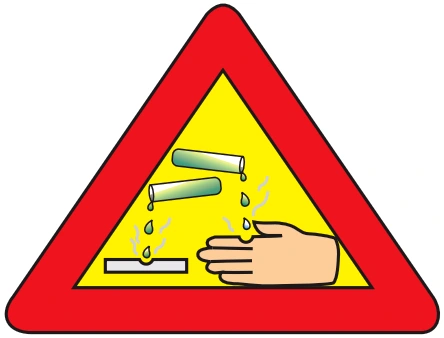
Q3 (Application Based): What hazardous hazard symbol is shown on commercial containers of concentrated sulphuric acid and sodium hydroxide pellets?
Answer: The label displays the “Corrosive” warning sign, showing acid droplets eating through a surface and burning a human hand. This indicates that these chemicals cause severe chemical burns on contact.
Q4 (Application Based): When solid sodium hydroxide pellets dissolve in water, does the temperature change match that seen with concentrated acid?
Answer: Yes, dissolving solid NaOH pellets in water is also an exothermic process, and the base of the container becomes hot to the touch.
Activity 2.11: Measuring pH of Everyday Solutions
Testing Solution Acidity and Alkalinity Using Universal Indicator Paper
Experimental Procedure
- Collect samples: saliva (before and after meals), lemon juice, aerated drinks, carrot juice, coffee, tomato juice, tap water, 1 M NaOH, and 1 M HCl.
- Place drops of each sample on strips of universal indicator pH paper.
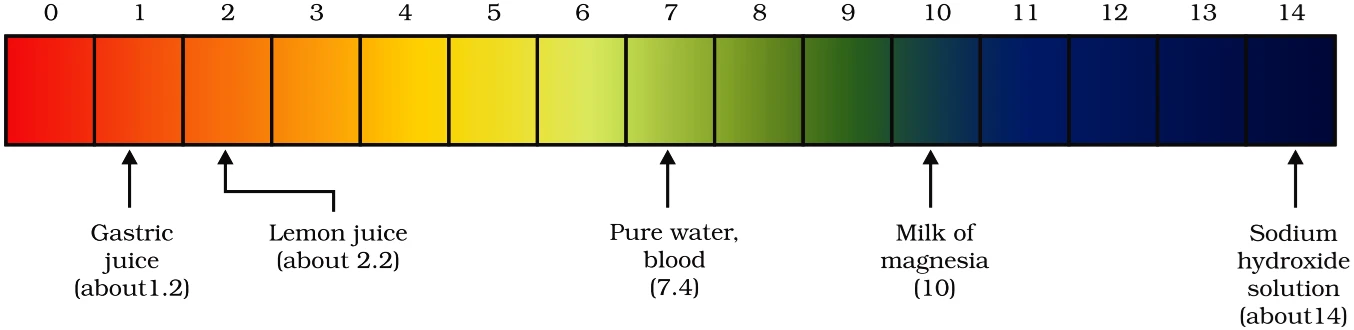
- Match the resulting paper color with the standard pH color chart to determine the approximate pH value.

Observations & Chemical Mechanism
- 1 M HCl: Dark red (pH ~ 0).
- Gastric Juice: Red (pH ~ 1.2).
- Lemon Juice: Orange-red (pH ~ 2.2).
- Saliva: Neutral to slightly alkaline before meals (pH ~ 7.4); acidic after meals due to bacterial fermentation (pH ~ 5.8).
- Blood / Pure Water: Greenish (pH ~ 7.4).
- Milk of Magnesia: Blue (pH ~ 10).
- 1 M NaOH: Deep purple / violet (pH ~ 14).
Q1: Solution A has a pH of 6, and Solution B has a pH of 8. Which solution has a higher hydrogen ion concentration, and which is acidic?
Answer: Lower pH indicates a higher concentration of hydrogen ions. Therefore, Solution A (pH = 6) has a higher H⁺ ion concentration and is acidic. Solution B (pH = 8) is basic.
Q2: How does the pH of saliva change after eating a meal, and how does this affect tooth enamel?
Answer: After meals, bacteria in the mouth ferment residual sugars to produce acids, lowering the mouth’s pH below 5.5. At a pH below 5.5, calcium hydroxyapatite (tooth enamel) begins to corrode, leading to tooth decay.
Q3 (Application Based): Why do commercial toothpastes typically have a pH in the range of 8.0 to 9.0?
Answer: Toothpastes are formulated to be basic to neutralize the excess acids produced by oral bacteria after eating, preventing the oral pH from dropping below the critical 5.5 threshold and protecting enamel.
Q4 (Application Based): What defines “acid rain,” and why does it endanger aquatic organisms in rivers?
Answer: When atmospheric pollutants cause rain water pH to drop below 5.6, it is termed acid rain. When this water drains into rivers, it lowers the river’s pH. Most aquatic organisms can survive only within a narrow pH range near neutral (7.0–7.8); the increased acidity disrupts their physiological processes and endangers survival.
Activity 2.12: Determining Soil pH for Plant Growth
Soil Sample Extraction and Universal Indicator Testing
Experimental Procedure
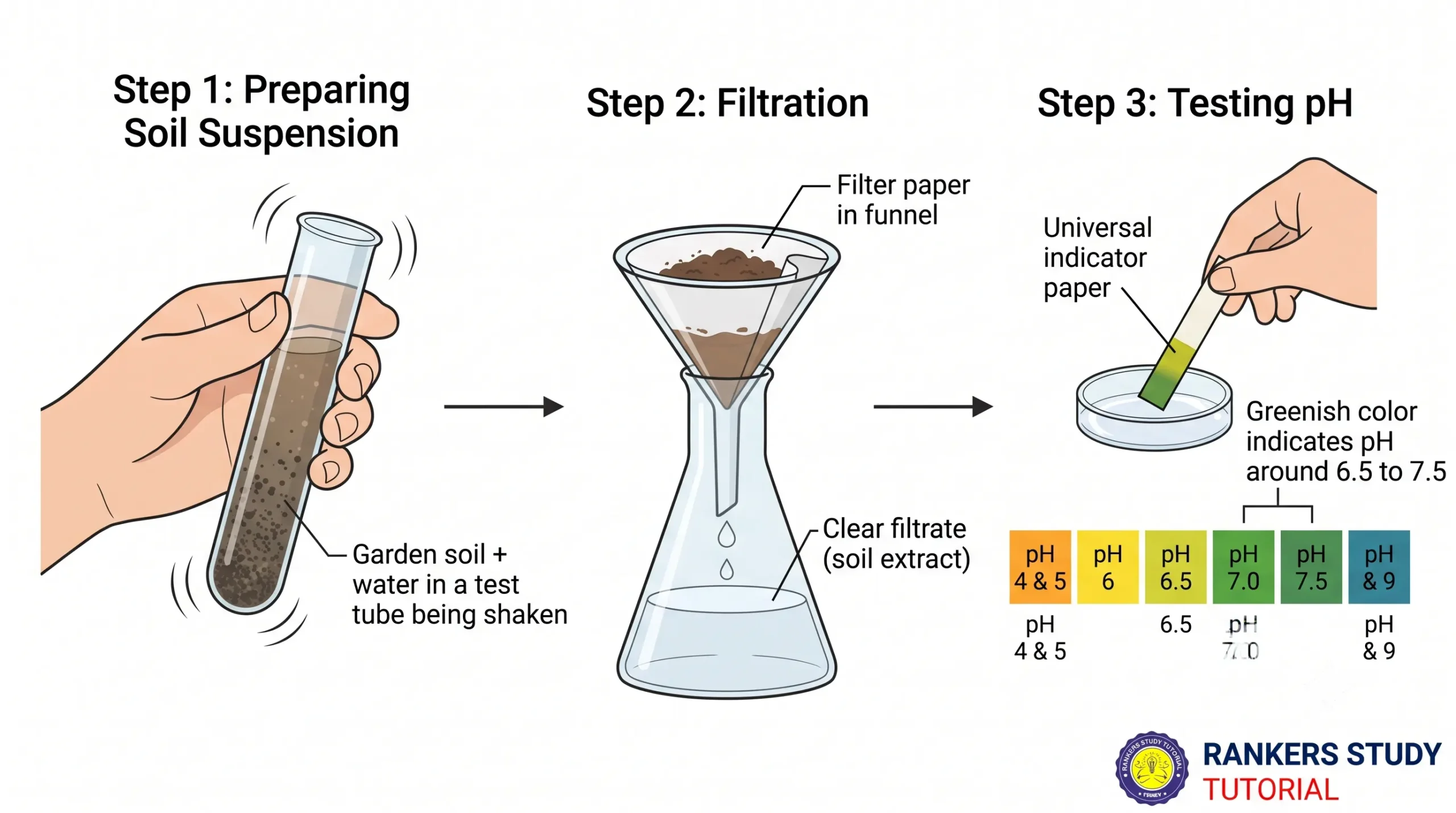
- Place about 2 g of garden soil into a clean test tube and add 5 mL of distilled water.
- Shake the test tube thoroughly to dissolve soluble soil components.
- Filter the suspension using filter paper and collect the clear liquid filtrate in another tube.
- Test the pH of the filtrate using universal indicator paper.
Observations & Chemical Mechanism
- Observation: Healthy garden soils generally turn universal indicator paper greenish-yellow to green, indicating an optimal pH range of 6.5 to 7.5.
- Excessive Acidity: Soils with pH below 6.0 inhibit nutrient uptake by crops.
- Remediation: Overly acidic soils are treated with agricultural lime, while alkaline soils are amended with organic gypsum or compost.
Q1: Under what conditions would a farmer treat field soil with quicklime, slaked lime, or chalk?
Answer: A farmer treats soil with quicklime (CaO), slaked lime [Ca(OH)₂], or chalk (CaCO₃) when the soil is too acidic (pH below 6.0). These compounds are basic and neutralize excess soil acidity, restoring the optimal pH range for plant growth.
Q2: Why must the soil-water mixture be filtered before applying universal indicator paper?
Answer: Garden soil contains dark, insoluble organic particles and clay suspensions that would physically coat the indicator strip, masking the color change and preventing an accurate pH reading. Filtering yields a clear aqueous extract of the soluble ions.
Q3 (Application Based): A farmer tests soil after years of chemical fertilizer use and finds the indicator turns red-orange (pH ~ 4.5). What caused this, and what remedy should be applied?
Answer: Heavy use of ammonium-based nitrogenous fertilizers leaves acidic residues in the soil over time. The farmer should apply slaked lime [Ca(OH)₂] or agricultural limestone (CaCO₃) to neutralize the excess acidity and raise the soil pH back to an optimal level.
Q4 (Application Based): A trekker in the woods brushes against a wild nettle leaf and experiences burning pain, then rubs the area with a nearby dock plant leaf for relief. Explain the chemistry.
Answer: Stinging hairs of nettle leaves inject methanoic acid (formic acid), causing sharp pain. Dock plant leaves contain mildly basic juices that neutralize the acid on the skin, providing quick relief.
Activity 2.13: Identification of Salt Families
Classifying Salts Based on Common Positive or Negative Radicals
Experimental Procedure
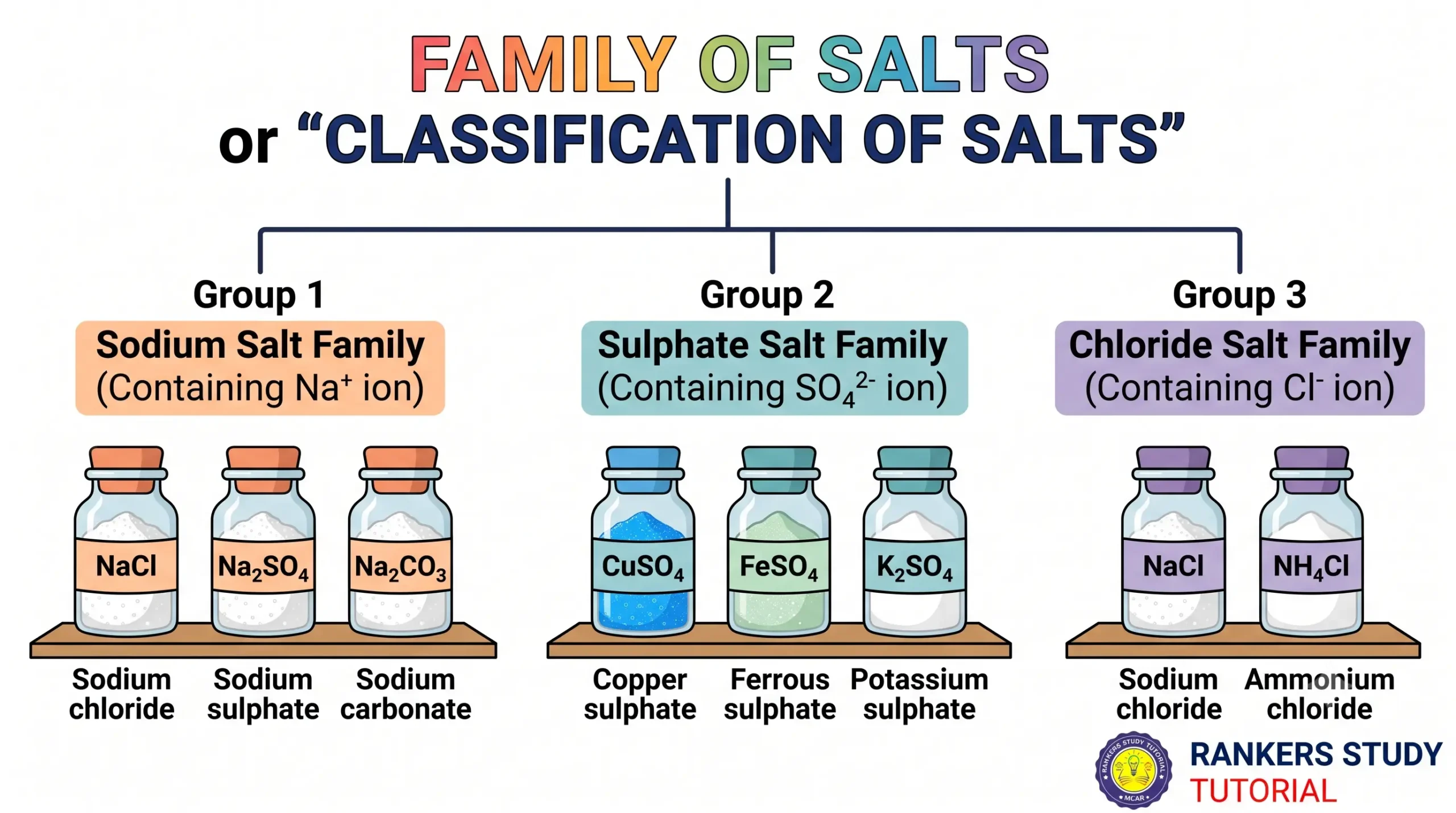
- Write the chemical formulas for: potassium sulphate, sodium sulphate, calcium sulphate, magnesium sulphate, copper sulphate, sodium chloride, sodium nitrate, sodium carbonate, and ammonium chloride.
- Identify the parent acid and parent base that combine to yield each salt.
- Group the salts into chemical families sharing identical positive cations or negative anions.
Observations & Chemical Mechanism
- Sulphate Family (common SO₄²⁻ anion): K₂SO₄, Na₂SO₄, CaSO₄, MgSO₄, CuSO₄.
- Sodium Family (common Na⁺ cation): Na₂SO₄, NaCl, NaNO₃, Na₂CO₃.
- Chloride Family (common Cl⁻ anion): NaCl, NH₄Cl.
- Definition: Salts possessing identical positive or negative radicals belong to the same salt family.
Q1: Which parent acid and base react to form potassium sulphate and ammonium chloride?
Answer:
• Potassium sulphate (K₂SO₄): Formed from potassium hydroxide (KOH, base) and sulphuric acid (H₂SO₄, acid).
• Ammonium chloride (NH₄Cl): Formed from ammonium hydroxide (NH₄OH, base) and hydrochloric acid (HCl, acid).
• Potassium sulphate (K₂SO₄): Formed from potassium hydroxide (KOH, base) and sulphuric acid (H₂SO₄, acid).
• Ammonium chloride (NH₄Cl): Formed from ammonium hydroxide (NH₄OH, base) and hydrochloric acid (HCl, acid).
Q2: Name the salt family to which both sodium chloride (NaCl) and sodium carbonate (Na₂CO₃) belong.
Answer: Because both compounds share the sodium cation (Na⁺), they belong to the family of sodium salts.
Q3 (Application Based): Write the chemical formula of copper sulphate and state its parent acid and base.
Answer: The formula is
CuSO₄. It is derived from copper(II) hydroxide [Cu(OH)₂, weak base] and sulphuric acid (H₂SO₄, strong acid).Q4 (Application Based): Why is table salt (NaCl) considered an essential raw material for producing other industrial chemicals?
Answer: Sodium chloride is the starting raw material in the chlor-alkali and Solvay processes to manufacture fundamental industrial compounds including sodium hydroxide (caustic soda), chlorine gas, hydrogen gas, baking soda (NaHCO₃), and washing soda (Na₂CO₃·10H₂O).
Activity 2.14: Determining the pH and Nature of Salts
Investigating Salt Hydrolysis: Acidic, Basic, and Neutral Salts
Experimental Procedure
- Dissolve salt samples in distilled water: NaCl, KNO₃, AlCl₃, ZnSO₄, CuSO₄, CH₃COONa, Na₂CO₃, and NaHCO₃.
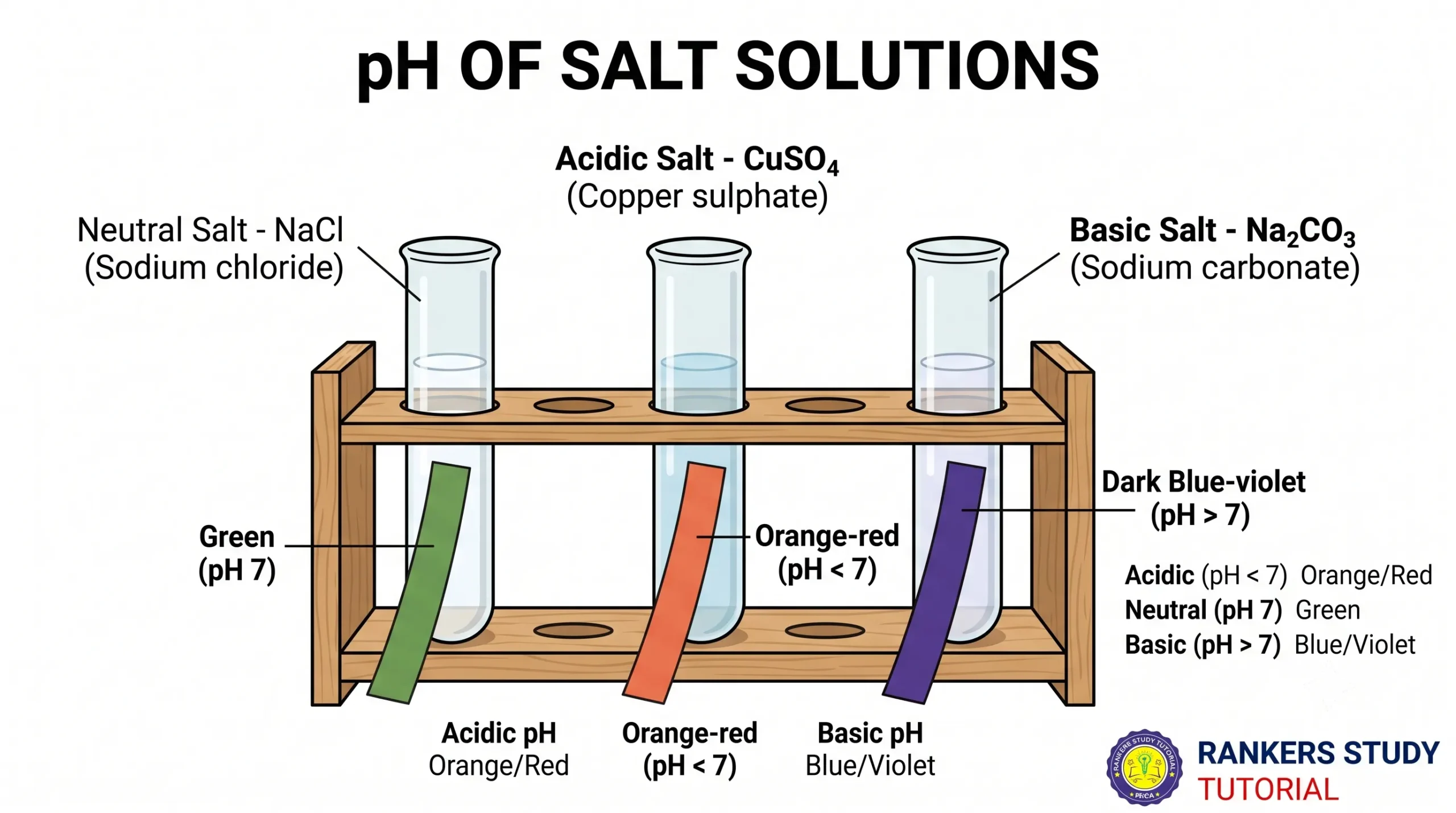
- Check the action of each salt solution on red and blue litmus paper.
- Measure the approximate pH of each solution using universal indicator paper.
Observations & Chemical Mechanism
- Strong Acid + Strong Base: Neutral salt (pH = 7). Examples: NaCl, KNO₃.
- Strong Acid + Weak Base: Acidic salt (pH < 7). Examples: CuSO₄, AlCl₃, ZnSO₄, NH₄Cl.
- Weak Acid + Strong Base: Basic salt (pH > 7). Examples: CH₃COONa, Na₂CO₃, NaHCO₃.
Q1: Why does an aqueous solution of sodium carbonate (Na₂CO₃) turn red litmus paper blue?
Answer: Sodium carbonate is a salt formed from a strong base (NaOH) and a weak acid (H₂CO₃). In water, it hydrolyzes to produce excess hydroxide ions (OH⁻), rendering the solution alkaline with a pH > 7, which turns red litmus blue.
Q2: Why is an aqueous solution of copper sulphate acidic to litmus?
Answer: Copper sulphate (CuSO₄) is formed from a weak base [Cu(OH)₂] and a strong acid (H₂SO₄). In water, the salt hydrolyzes to generate free H⁺ ions, giving the solution a pH less than 7 and turning blue litmus paper red.
Q3 (Application Based): Baking soda (NaHCO₃) is classified as a mild, non-corrosive basic salt. Explain why its pH exceeds 7.
Answer: NaHCO₃ is the salt of a strong base (NaOH) and a weak acid (carbonic acid, H₂CO₃). The hydrogencarbonate ion undergoes hydrolysis, generating a low concentration of OH⁻ ions that produces a mildly basic solution (pH ~ 8.3) safe for cooking and use as an antacid.
Q4 (Application Based): Fresh milk has a pH of 6.0. Why does a milkman add a pinch of baking soda to fresh milk during summer?
Answer: In warm weather, lactobacillus bacteria multiply quickly, fermenting lactose sugar into lactic acid and souring the milk. Adding mildly basic baking soda shifts the milk’s pH slightly higher (alkaline), neutralizing lactic acid as it forms and preventing the milk from curdling quickly.
Activity 2.15: Water of Crystallisation
Heating Copper Sulphate Crystals and Synthesis of Plaster of Paris
Experimental Procedure
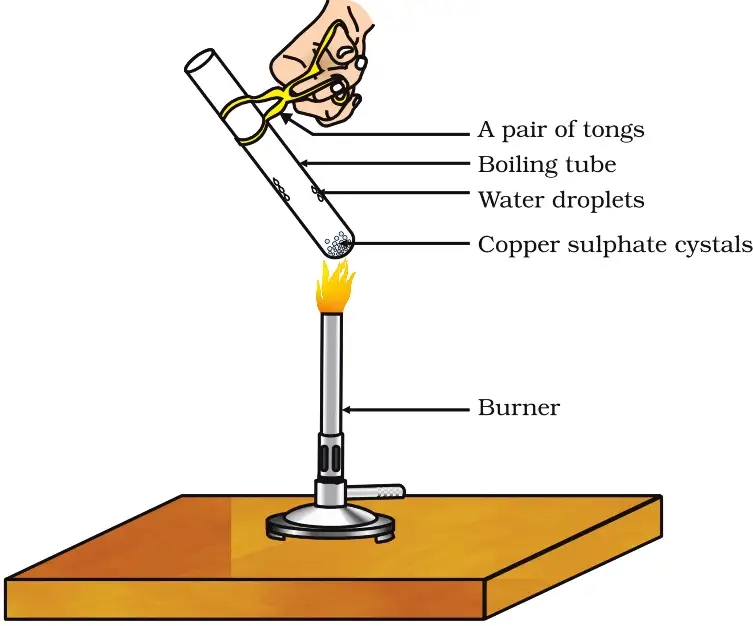
- Place a few crystals of blue copper sulphate in a clean, dry boiling tube.
- Heat the tube over a burner flame and observe the color changes and inner tube walls.
- Allow the tube to cool, then add 2–3 drops of water onto the heated sample.
Observations & Chemical Mechanism
- Observation: Blue crystals turn into an amorphous white powder; liquid droplets condense near the cooler mouth of the tube. Adding water restores the vibrant blue color.
- Chemical Identity: Blue hydrated copper sulphate contains 5 molecules of water of crystallization per formula unit. Heating drives off this water, leaving white anhydrous CuSO₄.
- Chemical Equations:
Dehydration:CuSO₄·5H₂O(s) (blue) ⎯⎯Δ→ CuSO₄(s) (white) + 5H₂O(g)
Rehydration:CuSO₄(s) (white) + 5H₂O(l) → CuSO₄·5H₂O(s) (blue) - Related Compound: Gypsum (CaSO₄·2H₂O) loses 1.5 water molecules at 373 K to form Plaster of Paris (CaSO₄·½H₂O).
Q1: Define the term “water of crystallisation” with two examples from the textbook.
Answer: Water of crystallisation is the fixed number of water molecules chemically bonded in one formula unit of a salt in its crystalline form. Examples include hydrated copper sulphate (
CuSO₄·5H₂O) containing 5 water molecules, and washing soda (Na₂CO₃·10H₂O) containing 10 water molecules.Q2: Why is Plaster of Paris written as CaSO₄·½H₂O? Can half a water molecule exist independently?
Answer: Half a water molecule cannot exist on its own. The formula
CaSO₄·½H₂O represents a stoichiometric ratio where two formula units of calcium sulphate share one water molecule: (CaSO₄)₂·H₂O.Q3 (Application Based): Why must Plaster of Paris (POP) always be stored in moisture-proof airtight containers?
Answer: Plaster of Paris is a fine white hemihydrate powder. If exposed to ambient moisture, it absorbs water and hydrates into gypsum (CaSO₄·2H₂O), setting into a hard, non-malleable solid mass and losing its setting utility:
CaSO₄·½H₂O + 1½H₂O → CaSO₄·2H₂O.Q4 (Application Based): When washing soda crystals (Na₂CO₃·10H₂O) are left exposed to dry air, they lose their glassy luster and turn into a white powder. Name this phenomenon.
Answer: This spontaneous loss of water of crystallization to the atmosphere is called efflorescence. Washing soda loses 9 of its 10 water molecules to form a white monohydrate powder:
Na₂CO₃·10H₂O → Na₂CO₃·H₂O + 9H₂O↑.