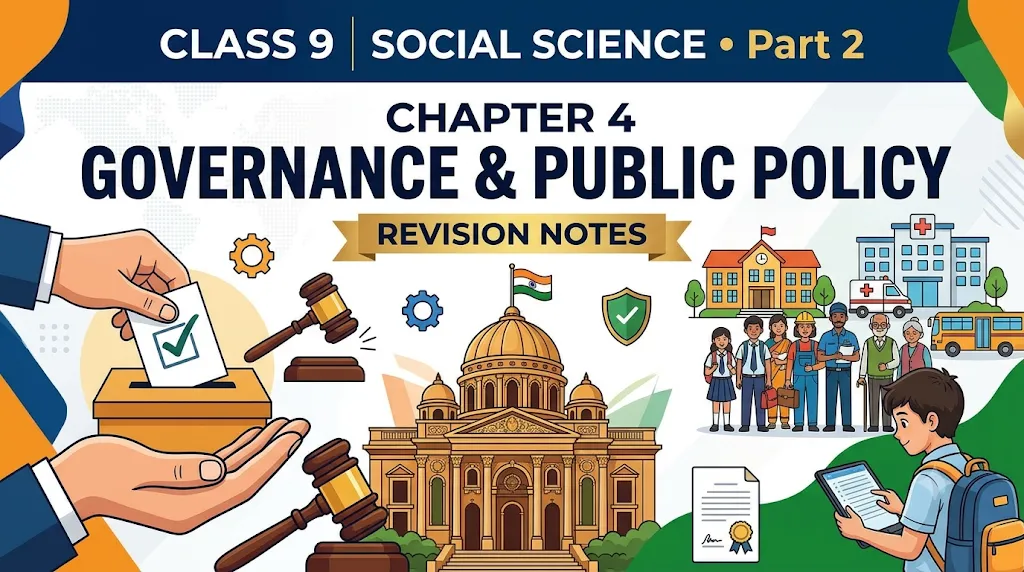
Class 9 Social Science Part 2 Chapter 4 Revision Notes: Governance and Public Policy
1. Understanding Government and Governance
एक well-functioning democracy में केवल elections में participate करना enough नहीं है। एक robust democracy को transparent institutions, responsible representatives, और public life में citizens के continuous participation की आवश्यकता होती है। इसे ही Governance कहा जाता है।
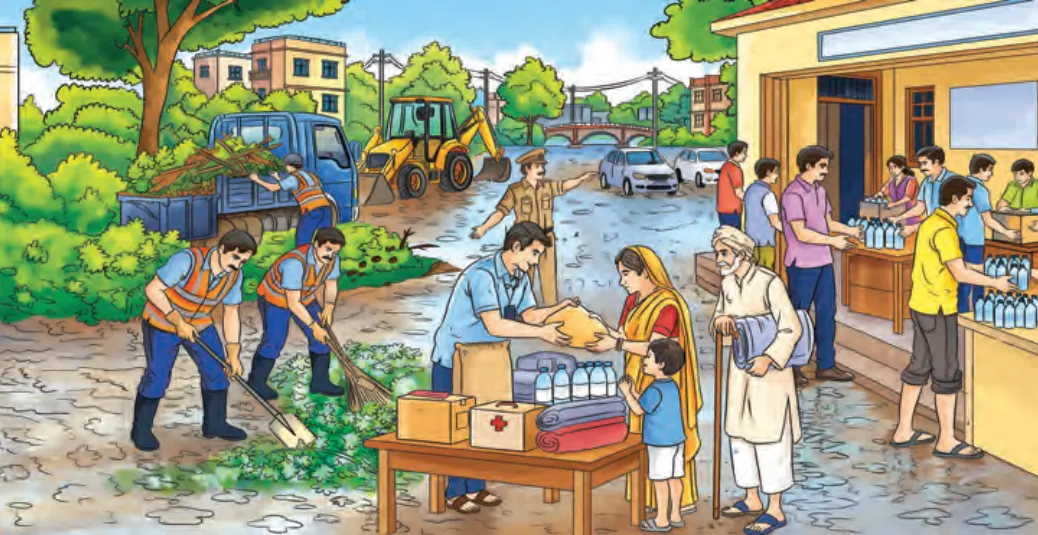
🔍 Let’s Explore
Imagine your town experiences unusually heavy rainfall. Roads flood, electricity is disrupted, and health concerns rise. The municipal corporation clears drains, police manage traffic, health workers prevent diseases, and citizens volunteer.
Why cannot a single department solve the problem on its own? What makes the collective response effective?
Difference Between Government and Governance
हालांकि ये closely related हैं, “Government” और “Governance” synonymous (समानार्थी) नहीं हैं। यह CBSE exams के लिए एक बहुत important concept है।
| Government (सरकार) | Governance (शासन) |
|---|---|
| Refers to the institutions that exercise political authority. | Refers to the process of decision-making and implementation. |
| Includes the Legislature, the Executive, and the Judiciary. | Includes government, citizens, media, civil society, and private organisations. |
| Focuses on who governs. | Focuses on how governing is carried out. |
🔍 Let’s Explore
Can you identify an example from your day-to-day life to understand the difference between government and governance?
🎯 Competency-Based Questions (CBSE Level)
Q1. [Conceptual] How does “Governance” fundamentally differ from “Government”?
Ans: Government refers to the formal institutions (Legislature, Executive, Judiciary) that hold political power, whereas Governance is the broader, active process of how decisions are made, implemented, and monitored, involving not just the state but also citizens, media, and civil society.
Q2. [Assertion-Reason] Assertion (A): A robust democracy requires more than just citizen participation in elections.
Reason (R): Continuous participation of people in public life, transparent institutions, and active governance are necessary to solve day-to-day public problems effectively.
Ans: Both A and R are correct, and R is the correct explanation of A.
Q3. [Case-Based] During a severe flood, the District Collector orders the evacuation of a village. The police secure the area, a local NGO provides food packets, and youth volunteers rescue stranded animals. Which aspect of this scenario represents ‘Governance’?
Ans: The coordinated effort where state authorities (Collector, Police) work seamlessly alongside non-state actors (NGOs, youth volunteers) to effectively implement the evacuation and relief process represents ‘Governance’.
Q4. [Analytical] Why is the media considered a crucial component of Governance but not a part of the Government?
Ans: The media does not hold constitutional political authority or make laws (hence not Government), but it highlights public issues, provides feedback, and holds the administration accountable, making it an essential participant in the process of Governance.
Q5. [Fact-Based] Which aspect of public administration focuses on “who governs”?
Ans: The Government.
2. Evolution and Principles of Good Governance
2.1 Evolution of Governance in India
British colonization से पहले, India को local और organic systems (जैसे Vedic period की Sabhā और Samiti) द्वारा govern किया जाता था। 1947 में Independence के बाद, Indian leaders ने Constitution को modern democratic needs और India की traditional values का blend बनाकर frame किया।
- Traditional Values: British colonial motto की जगह ‘Satyamev Jayate’ (Truth alone triumphs – Mundaka Upanishad से) को national motto बनाया गया। Supreme Court ने ‘Yato Dharmastato Jayah’ (Where there is Dharma/righteous duty, there is victory – Mahabharata से) को अपना motto बनाया।
- Ram Rajya & Rajadharma: Mahatma Gandhi ने good governance के ideal model को Ram Rājya के रूप में visualise किया—जो probity, transparency, compassion, और public welfare पर आधारित है। Indian tradition में, Rājadharma का अर्थ था कि एक ideal king की foremost duty लोगों की protect करना और righteous duty को uphold करना है।
Kautilya’s Arthashastra states: “Prajāsukhe sukham rājñaḥ…” (In the happiness of the people lies the happiness of the ruler).

💡 Don’t Miss Out: The Sengol
The Sengol एक cultural marker है जो righteous governance को दर्शाता है। इसकी शुरुआत Chola dynasty के दौरान हुई थी। 1947 में transfer of power को mark करने के लिए India के first Prime Minister, Jawaharlal Nehru ने इसे receive किया था, और 2023 में इसे India की newly inaugurated Parliament building में place किया गया।
2.2 Pillars of Good Governance (सुशासन के स्तंभ)
Good governance government और citizens के बीच एक partnership है। यह ensure करता है कि policies transparent, accountable, effective, और people’s needs के प्रति responsive हों। इसके 7 key features हैं:
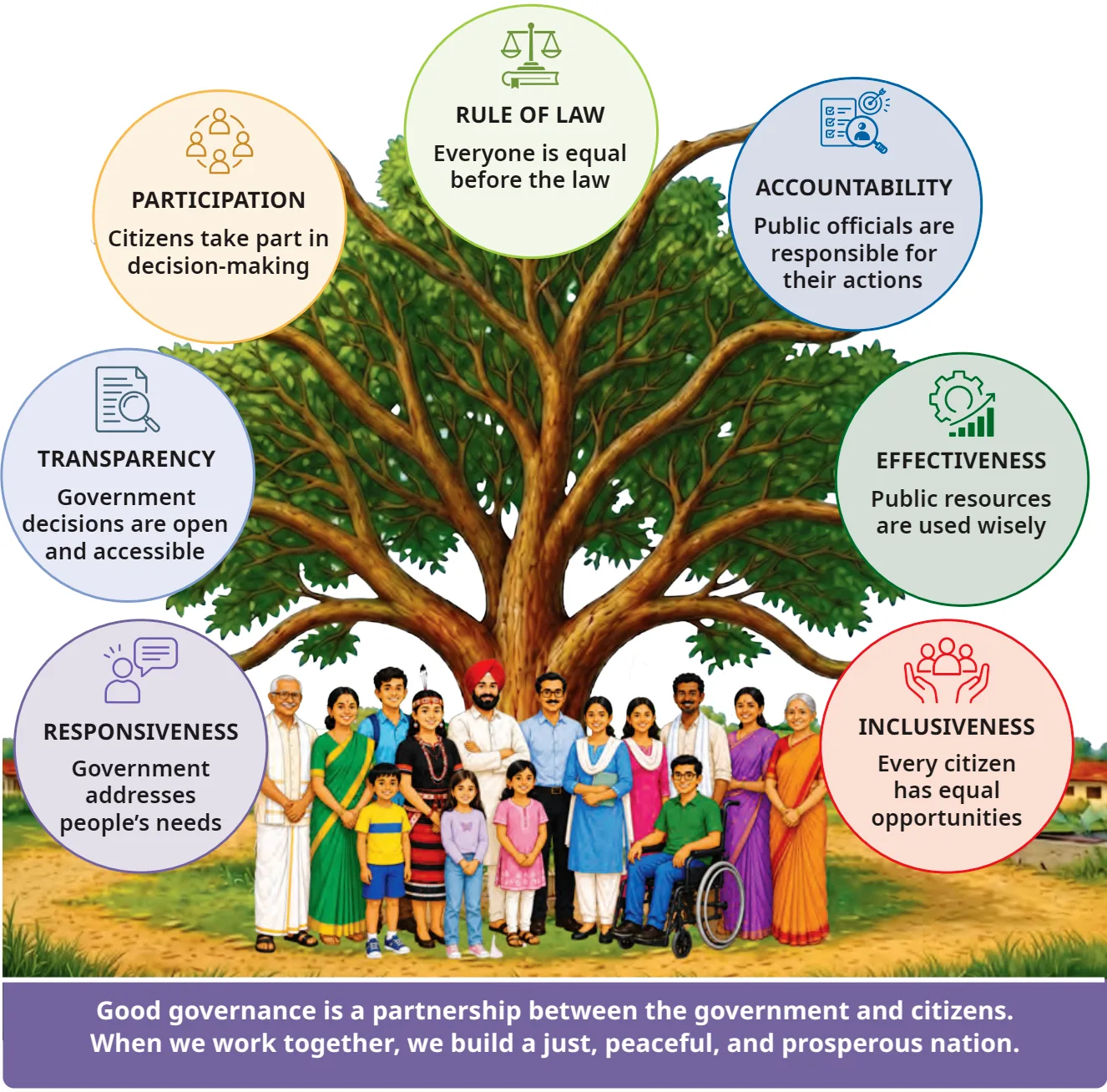
- Participation: Citizens decision-making में actively take part करते हैं।
- Rule of Law: Everyone law के सामने equal है, और laws fairly enforce किए जाते हैं।
- Transparency: Government decisions और information public के लिए open और accessible होते हैं।
- Responsiveness: Government promptly लोगों की needs और grievances को address करती है।
- Accountability: Public officials अपने actions और decisions के लिए responsible होते हैं।
- Effectiveness: Public resources को wisely use किया जाता है ताकि maximum results मिलें।
- Inclusiveness: Every citizen (चाहे उसका background कुछ भी हो) को equal opportunities मिलती हैं और कोई भी पीछे नहीं छूटता।
2.3 Challenges to Good Governance
जैसे-जैसे society evolve होती है, Governance को continuous challenges face करने पड़ते हैं:
- Weak Coordination: Different government departments के बीच poor communication से programs fail हो सकते हैं।
- Unequal Access: Marginalised groups को public services access करने में social, economic, या geographical barriers face करने पड़ते हैं।
- Malpractices: Corruption और public offices का misuse resources को जरूरतमंदों तक पहुँचने से रोकता है।
- Misinformation: Fake news public order और institutions में trust को seriously disrupt कर सकती है।
💡 Don’t Miss Out
Did you know that 25th December is celebrated as National Good Governance Day in India? It is celebrated to honor the birth anniversary of former Prime Minister Atal Bihari Vajpayee.
🎯 Competency-Based Questions (CBSE Level)
Q1. [Conceptual] What ancient Indian concept did Mahatma Gandhi visualize as the ultimate model of good governance, emphasizing compassion and welfare?
Ans: Ram Rajya.
Q2. [Analytical] The Supreme Court of India adopted the motto ‘Yato Dharmastato Jayah’. How does this reflect the evolution of governance in post-independent India?
Ans: It reflects India’s conscious decision to shed colonial legacies and draw upon its own ancient ethical values and traditions, emphasizing that true governance is rooted in ‘Dharma’ (righteous duty and justice) rather than mere imperial power.
Q3. [Case-Based] A city municipality publishes its entire annual budget online, detailing exactly how much money was spent on road repairs and schools. Which specific pillar of Good Governance does this action demonstrate?
Ans: Transparency.
Q4. [Assertion-Reason] Assertion (A): Inclusiveness is a mandatory feature of good governance in a democracy.
Reason (R): Good governance must ensure that marginalized groups facing social or economic barriers are not left behind in accessing public services.
Ans: Both A and R are correct, and R is the correct explanation of A.
Q5. [Fact-Based] Which famous ancient text states, “In the happiness of the people lies the happiness of the ruler”?
Ans: Kautilya’s Arthashastra.
3. E-Governance: Technology for Better Governance
E-governance का अर्थ है government द्वारा public services provide करने, feedback receive करने, और administrative processes को improve करने के लिए Information and Communication Technology (ICT) का use करना। यह paperwork को reduce करता है और citizens को government offices visit किए बिना services access करने की सुविधा देता है।
🔍 Let’s Explore: E-Governance Initiatives
Here is a chart of a few crucial e-governance initiatives and their objectives:
- UMANG: A single mobile app to access a wide range of pan-India government services.
- Aadhaar: Provides a unique, biometric-based digital identity for every Indian resident to ensure targeted delivery of subsidies.
- GeM (Government e-Marketplace): An online platform for transparent public procurement of goods and services by government departments.
- DigiLocker: A secure cloud-based platform for citizens to store and share digital versions of official documents (marksheets, driving licenses).
- CPGRAMS: An online system for citizens to lodge grievances directly to public authorities.
- APAAR: A unique, lifelong educational ID for students to track their academic progress and achievements digitally.
🤔 Think About It
E-governance can make things highly efficient, but what is its biggest limitation in a diverse country like India?
🎯 Competency-Based Questions (CBSE Level)
Q1. [Scenario-Based] A citizen finds that a newly built public road has developed massive potholes within a month. Instead of visiting a government office, they upload a photo and register a complaint on a central online portal. Which specific e-governance platform are they likely using?
Ans: CPGRAMS (Centralized Public Grievance Redress and Monitoring System).
Q2. [Analytical] How does E-Governance directly promote the “Transparency” and “Accountability” pillars of good governance?
Ans: By digitizing processes, E-Governance eliminates middlemen, reduces paperwork, and creates a clear, trackable digital footprint for every transaction and application. This makes it impossible to hide delays or misuse funds, directly boosting transparency and holding officials accountable.
Q3. [Assertion-Reason] Assertion (A): Misinformation and fake news are considered serious modern challenges to good governance.
Reason (R): They can manipulate public opinion, create panic during crises, and destroy the foundational trust between citizens and state institutions.
Ans: Both A and R are correct, and R is the correct explanation of A.
Q4. [Conceptual] What is the primary purpose of the ‘GeM’ platform launched by the government?
Ans: The Government e-Marketplace (GeM) aims to create an open, transparent, and efficient online platform for the public procurement of goods and services by various government departments.
Q5. [Fact-Based] Which e-governance initiative acts as a secure cloud-based platform for citizens to store and share digital versions of official documents?
Ans: DigiLocker.
4. Public Policy (सार्वजनिक नीति)
4.1 What is Public Policy?
Public policy एक planned course of action है जिसे government द्वारा public problems को solve करने, people’s needs को meet करने, और society के welfare को promote करने के लिए adopt किया जाता है। यह तय करता है कि क्या किया जाना चाहिए, क्यों, कौन करेगा, और success को कैसे measure किया जाएगा।
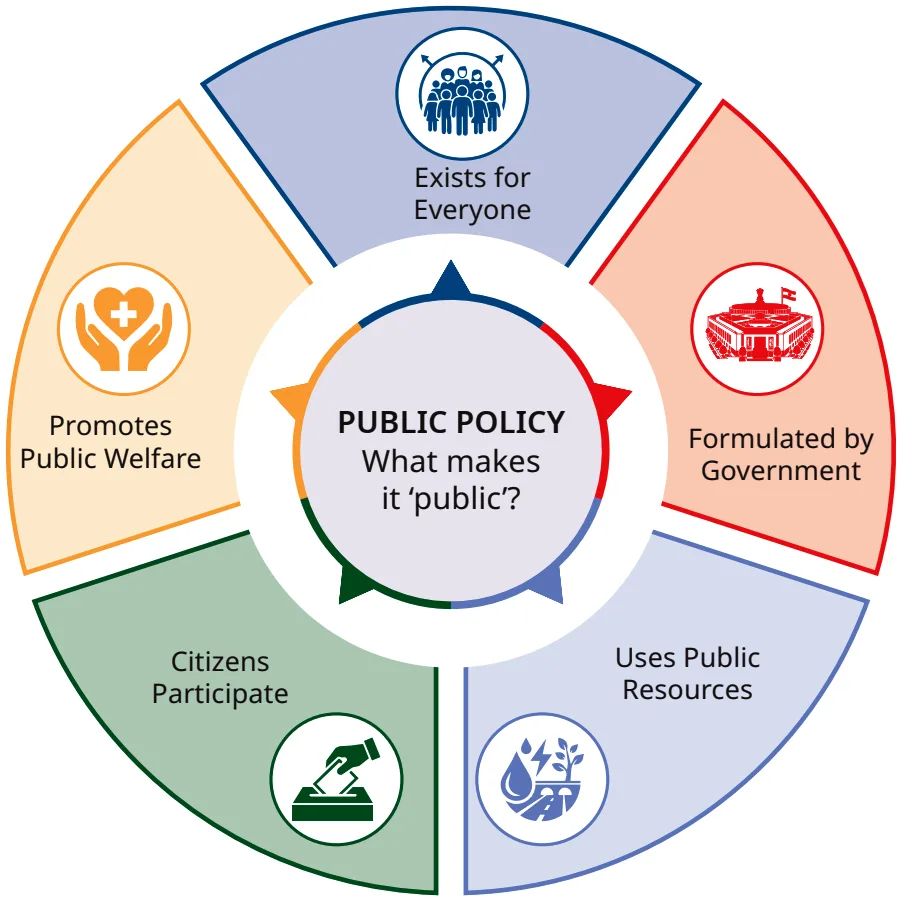
📚 What makes a policy ‘Public’?
हर policy “public policy” नहीं होती (जैसे किसी company की work-from-home policy)। एक policy ‘Public Policy’ तब बनती है जब:
- Formulated by Government: इसे government द्वारा बनाया जाता है।
- Exists for Everyone: यह पूरे society पर लागू होती है, न कि किसी private group पर।
- Promotes Public Welfare: इसका ultimate goal public benefit है (जैसे education, healthcare)।
- Uses Public Resources: इसे public money (taxes) से finance किया जाता है।
- Citizens Participate: Citizens issues identify करते हैं और feedback देते हैं।
🔍 Let’s Explore: Policy vs. Public Policy
Identify whether the following are a ‘Policy’ or a ‘Public Policy’:
1. Government introduces a sports policy: Public Policy (Formulated by govt, for all citizens, uses public funds).
2. Government launches a safe drinking water campaign: Public Policy (Promotes broad public welfare and health).
3. A company allows work from home: Policy (Applies only to a private group/employees, not the general public).
4. A municipality introduces waste segregation: Public Policy (Mandated by local govt for the entire city’s sanitation).
5. A housing society fixes visiting hours: Policy (Private rule limited only to the residents of that society).
6. Government introduces free vaccination: Public Policy (Uses public resources for universal public health).
4.2 Key Stakeholders in Policy-Making
Public problems को solve करने के लिए विभिन्न stakeholders के बीच coordination की आवश्यकता होती है (Table 4.1):
| Contributors | What do they do? |
|---|---|
| Citizens | Problems identify करते हैं, vote करते हैं, participate करते हैं, और feedback देते हैं। |
| Elected Representatives (MPs, MLAs) | Public issues raise करते हैं, law-making में participate करते हैं, और budgets approve करते हैं। |
| Government Officials (Ministries/Depts) | Policies prepare और implement करते हैं, public services deliver करते हैं, और progress monitor करते हैं। |
| Civil Society / NGOs / Media | Problems study करते हैं, awareness create करते हैं, programs monitor करते हैं, और feedback देते हैं। |
| Private Sector | Technical know-how, innovation, और resources provide करते हैं (often working with govt)। |
| International Organisations (e.g., WHO) | International experience लाते हैं और technical/financial support facilitate करते हैं। |
🎯 Competency-Based Questions (CBSE Level)
Q1. [Conceptual] What is the distinguishing factor that turns an ordinary organizational ‘policy’ into a ‘Public Policy’?
Ans: An ordinary policy applies only to a specific private group (like a company’s employees), whereas a ‘Public Policy’ is formulated by the government, utilizes public taxpayer resources, and applies to the society at large to promote general welfare.
Q2. [Case-Based] A local school decides that all students must wear eco-friendly uniforms. Meanwhile, the State Government passes a law banning single-use plastics across the entire state. Classify both actions.
Ans: The school’s decision is a ‘Policy’ (restricted to its students). The State Government’s law is a ‘Public Policy’ (applies to all citizens and promotes public environmental welfare).
Q3. [Analytical] Why is the involvement of ‘Civil Society / NGOs’ critical in the public policy process, even though they do not have the power to pass laws?
Ans: NGOs and civil societies act as a bridge between the government and marginalized citizens. They conduct grassroots research, create public awareness, identify loopholes in policy implementation, and provide vital feedback that helps the government refine its policies.
Q4. [Assertion-Reason] Assertion (A): The Private Sector has no role to play in Public Policy since policies are formulated by the Government.
Reason (R): The Private Sector often partners with the government to provide technical expertise, innovation, and funding through Public-Private Partnerships (PPP).
Ans: A is incorrect, R is correct. The private sector is a key stakeholder and actively participates in implementing public policies via PPP models.
Q5. [Fact-Based] Which stakeholder group is primarily responsible for approving the budgets required to finance public policies?
Ans: Elected representatives (MPs, MLAs, and local representatives) in the legislature.
5. Stages of the Public Policy Process
Public policy कोई single decision नहीं है, बल्कि एक continuous, systematic cycle है जो feedback के आधार पर evolve होती है।
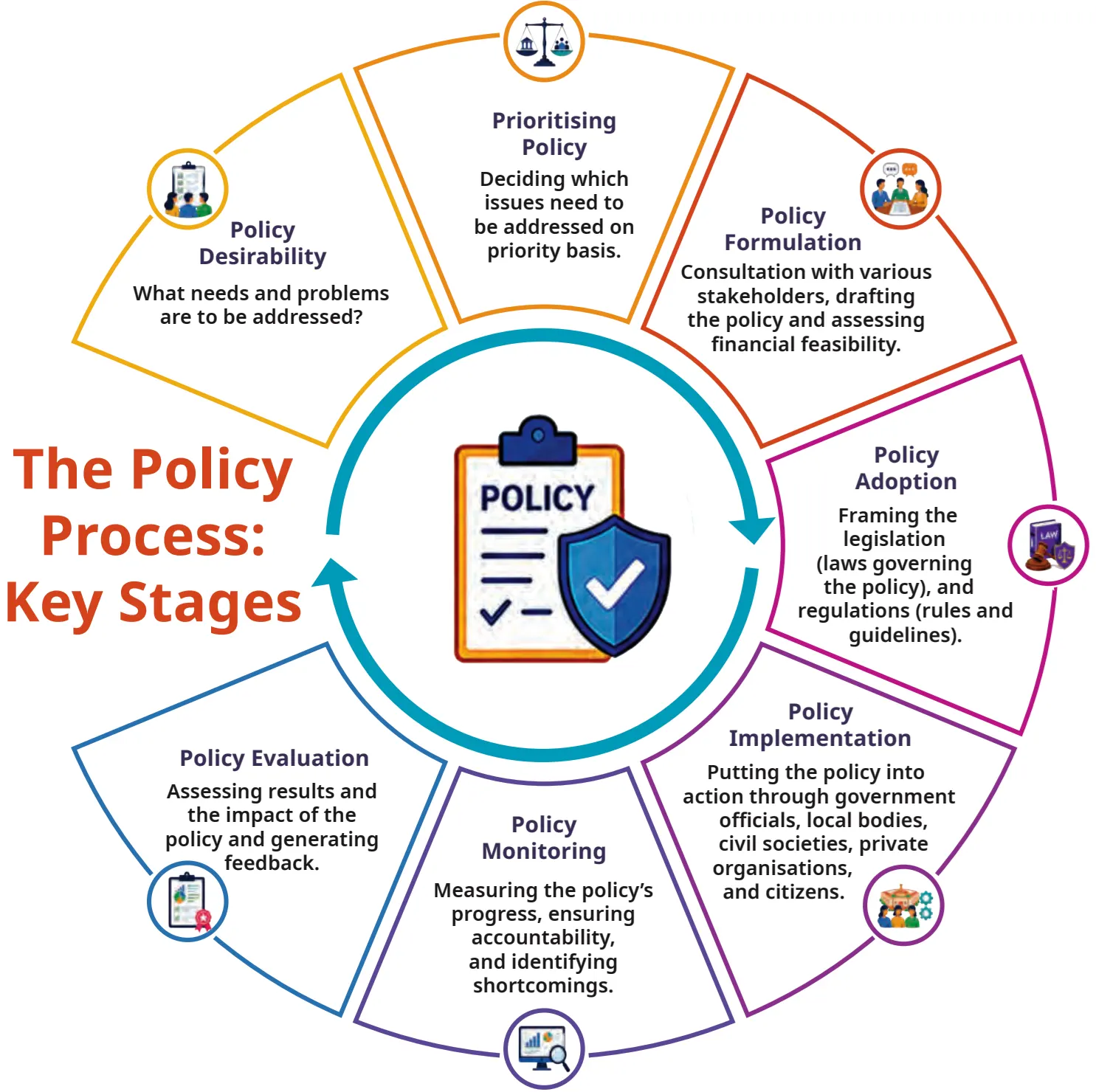
- Policy Desirability: Identifying what needs and public problems must be addressed.
- Prioritising Policy: Deciding which issues are urgent and need attention first.
- Policy Formulation: Consulting stakeholders, drafting the policy, and assessing financial feasibility.
- Policy Adoption: Framing the actual legislation (laws) and passing guidelines/rules.
- Policy Implementation: Putting the policy into action on the ground through officials and local bodies.
- Policy Monitoring: Measuring progress, ensuring accountability, and identifying daily shortcomings.
- Policy Evaluation: Assessing the final results and impact, generating feedback for future improvements.
💡 Case Study: National Education Policy (NEP) 2020
NEP 2020 massive public consultation का एक prime example है। 2017 में Dr. K. Kasturirangan की अध्यक्षता में एक expert committee ने इसे draft किया। Policy Formulation stage के दौरान, 2.5 lakh Gram Panchayats से consult किया गया और citizens से लगभग 2 lakh suggestions receive किए गए, जिसके बाद July 2020 में Union Cabinet ने इसे approve किया।
🤔 Think About It
If any step in policy-making and implementation is skipped, what would be the implications? Discuss with a suitable example.
🎯 Competency-Based Questions (CBSE Level)
Q1. [Sequence-Based] Arrange the following policy stages in the correct chronological order: (A) Policy Implementation, (B) Policy Desirability, (C) Policy Evaluation, (D) Policy Adoption.
Ans: (B) Policy Desirability -> (D) Policy Adoption -> (A) Policy Implementation -> (C) Policy Evaluation.
Q2. [Case-Based] The government launches a massive tree-plantation drive. After 6 months, an independent agency checks how many saplings survived and reports that 80% died due to lack of watering. Which specific stage of the policy cycle is the independent agency performing?
Ans: Policy Evaluation (assessing results and generating feedback).
Q3. [Analytical] Why was the drafting of the National Education Policy (NEP) 2020 considered a highly democratic and exhaustive process?
Ans: Because it did not rely solely on bureaucrats. It included a massive scale of public consultation at the Policy Formulation stage, involving 2.5 lakh Gram Panchayats and evaluating over 2 lakh suggestions from citizens, teachers, and experts before finalizing the policy.
Q4. [Assertion-Reason] Assertion (A): Public policy is a continuous cycle, not a one-time decision.
Reason (R): Once a policy is evaluated, the feedback loop requires the government to adjust, improve, or formulate new policies to address the changing needs of society.
Ans: Both A and R are correct, and R is the correct explanation of A.
Q5. [Conceptual] At which stage of the policy cycle is the financial feasibility (budgeting) of a proposed solution carefully assessed?
Ans: Policy Formulation stage.
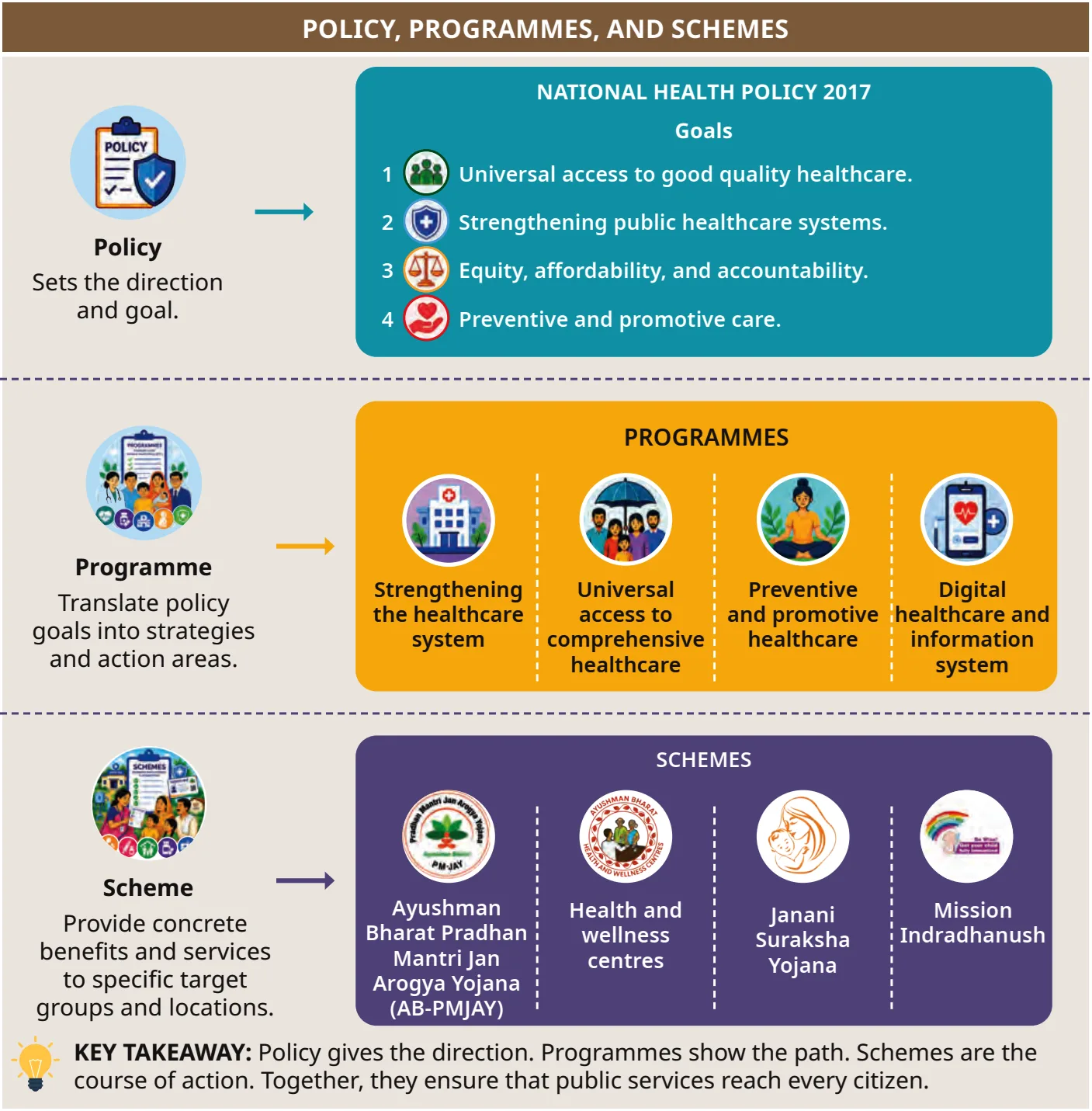
6. Policy, Programmes, and Schemes (Hierarchy & Coordination)
6.1 The Hierarchy of Action
किसी broad vision को implement करने के लिए, government इसे step-by-step break down करती है:
- Policy: Broad direction और ultimate goal set करती है (e.g., National Health Policy 2017 goal: Universal access to healthcare).
- Programme: Policy goals को specific strategies और action areas में translate करता है (e.g., Strategy to strengthen healthcare systems).
- Scheme: Target groups को concrete, on-the-ground benefits और services provide करती है (e.g., Ayushman Bharat PMJAY scheme जो health insurance देती है).
Takeaway: Policy direction देती है, Programmes path दिखाते हैं, और Schemes actual action हैं।
6.2 Policy Coordination: Key to Good Governance
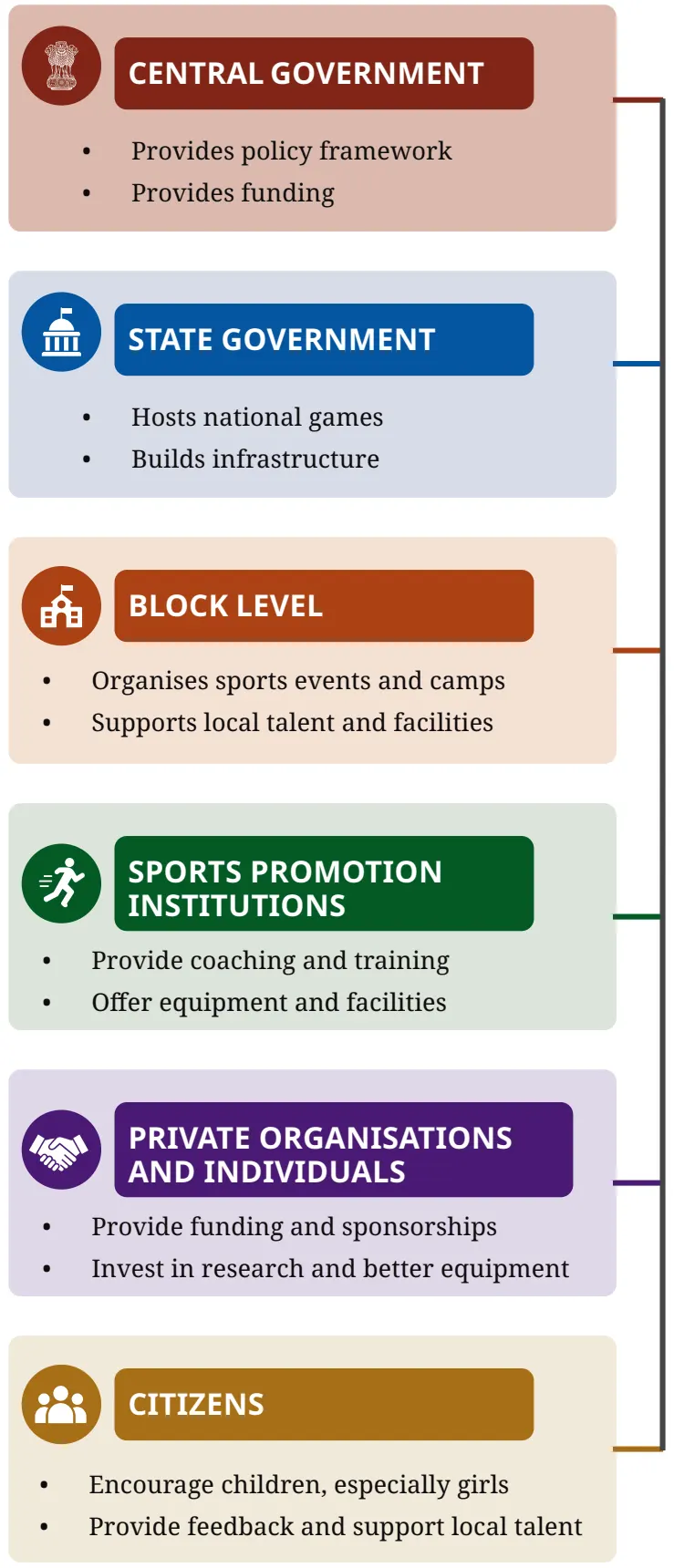
Public policy के लिए multi-level planning की आवश्यकता होती है। Khelo Bharat Niti 2025 (India के sports landscape को transform करने का लक्ष्य) का example लें। इसकी success सभी levels पर coordination पर निर्भर करती है:
- Central Government: Broad policy framework और funding provide करती है।
- State Governments: National games host करते हैं और infrastructure build करते हैं (Model Sports State).
- Block Level: Local talent scouting के लिए events और camps organise करते हैं।
- Sports Institutions: Coaching, training, और equipment provide करते हैं।
- Private Sector: Sponsorships देते हैं और better nutrition/equipment के लिए scientific research में invest करते हैं।
- Citizens/Families: Children (especially girls) को encourage करते हैं और local talent को support करते हैं।
🎯 Competency-Based Questions (CBSE Level)
Q1. [Classification] The government announces a vision for “100% Literacy in India.” To achieve this, it creates a strategy focusing on rural adult education. Finally, it launches the “Nav Bharat Saksharta Abhiyan” to distribute free study materials to adults. Classify these three steps into Policy, Programme, and Scheme.
Ans: “100% Literacy in India” is the Policy (Goal). Focusing on rural adult education is the Programme (Strategy). The “Nav Bharat Saksharta Abhiyan” providing free materials is the Scheme (Concrete Action).
Q2. [Analytical] Why is multi-level coordination essential for the success of a massive initiative like the ‘Khelo Bharat Niti’?
Ans: Because the Central government can only provide funding and vision. Actual execution requires states to build stadiums, local blocks to scout grassroots talent, private sectors to sponsor athletes, and families to allow children to play. Without coordination, the funding will never translate into ground-level sporting success.
Q3. [Assertion-Reason] Assertion (A): A ‘Scheme’ is much broader in scope than a ‘Policy’.
Reason (R): Schemes provide targeted, concrete benefits to specific demographic groups in specific locations.
Ans: A is incorrect, but R is correct. A Policy is the broadest framework; a Scheme is highly specific and targeted.
Q4. [Application] In the context of the National Health Policy 2017, where does ‘Mission Indradhanush’ (a massive immunization drive for children) fit in the hierarchy of public administration?
Ans: It is a ‘Scheme’, because it provides concrete, targeted benefits (vaccinations) to a specific group (children/pregnant women) to fulfill the broader policy goal of preventive healthcare.
Q5. [Conceptual] Under the Khelo Bharat Niti 2025 framework, what is the specific expected contribution of the Private Sector?
Ans: The private sector is expected to provide funding/sponsorships through PPP models and invest in scientific research to develop better sports nutrition, medical facilities, and equipment.
The Big Questions (Chapter Objectives Solved)
1. What is governance, and how have its meaning and practice evolved over time?
2. What is public policy? How does it affect our day-to-day lives, and what makes it ‘public’?
3. What are the various stages of policy-making and policy implementation?
4. Who are the major contributors to policy-making and implementation?
5. What role do citizens play in shaping public policy and strengthening good governance?
List
Class 9 Social Science Part 2 Chapter 4 Governance and Public Policy Revision Notes
Class 9 Social Science Part 2 Chapter 3 Resistance and Resilience Revision Notes

Class 9 Social Science Part 2 Chapter 2 Life on Earth Revision Notes
Class 9 Social Science Part 2 Chapter 1 Oceans and Life Revision Notes
Class 9 Social Science (History) — Chapter 4: Early Humans and Beginning of Civilisation