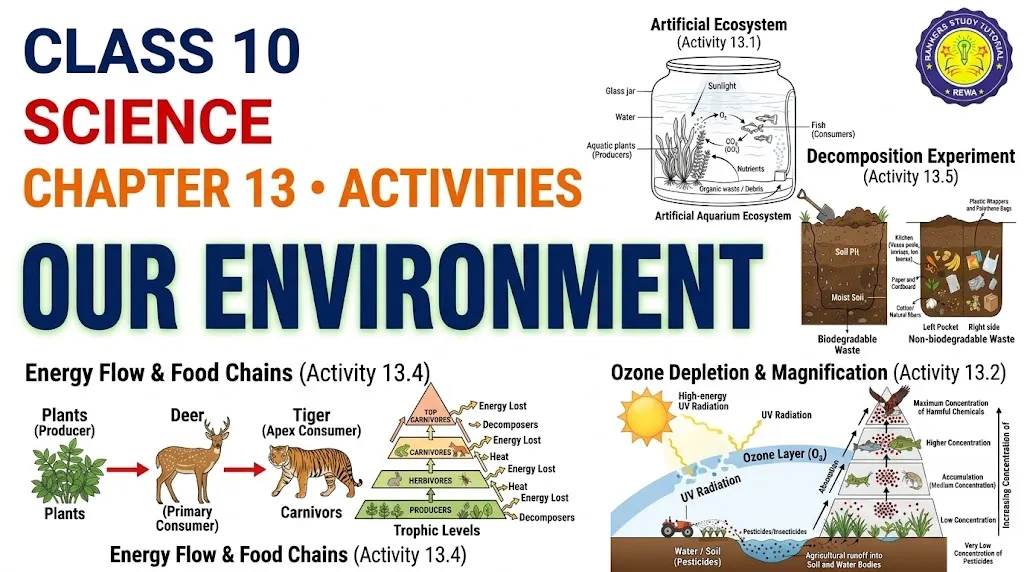
Practice Class 10 Science Class 10 Science Chapter 13 Our Environment Activities with answers and explanations. Test your NCERT concepts and prepare for your science exams with this practice set.
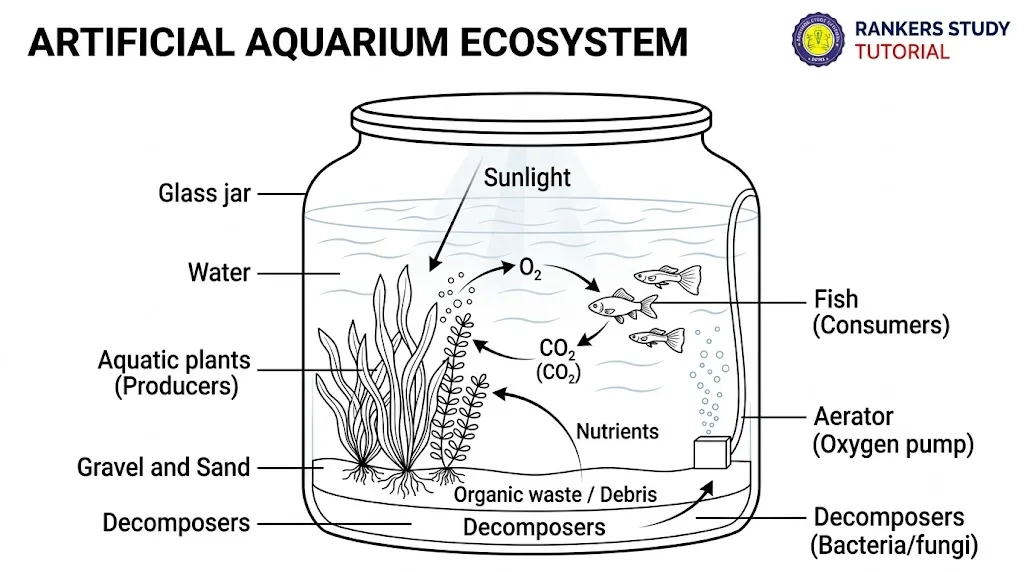
Activity 13.1: Designing an Aquarium Ecosystem
Creating a Self-Sustaining Artificial Aquatic Ecosystem
Experimental Procedure
- Design an aquarium by providing free space for swimming, water, oxygen, and food.
- Supply oxygen using an oxygen pump (aerator) and market-available fish food.
- Add a few aquatic plants and animals to transform it into a self-sustaining human-made system.
- Observe the requirements for maintenance and cleaning compared to natural water bodies.
Observations & Ecological Mechanism
- Artificial Ecosystem: An aquarium serves as a model human-made ecosystem combining biotic and abiotic components.
- Maintenance Requirement: Small artificial systems require periodic cleaning because they lack the vast self-regulating and recycling capacity of natural ponds or lakes.
Q1: What is an ecosystem, and how is an aquarium categorized?
Answer: An ecosystem consists of all interacting organisms in an area together with non-living constituents. An aquarium is a human-made (artificial) ecosystem.
Q2: Why must an aquarium be cleaned periodically unlike natural ponds or lakes?
Answer: Natural ponds possess expansive self-sustaining biological balance and large populations of natural decomposers, whereas small artificial aquariums accumulate waste faster than they can independently recycle it.
Q3 (Application Based): What essential role do aquatic plants play when added to an aquarium?
Answer: They act as producers that fix solar energy and release oxygen via photosynthesis, assisting in maintaining a balanced system.
Q4 (Additional Practice): What are the three primary functional groups of organisms in an environment?
Answer: Producers, consumers, and decomposers.
Q5 (Advanced Mastery): What specific abiotic and biotic components are required to set up a functional artificial aquarium?
Answer: Biotic components include fish, aquatic plants, and microorganisms, while abiotic components comprise water, oxygen, and free swimming space.
Activity 13.2: Food Dependencies and Aquatic Chains
Analyzing Interdependence and Predator-Prey Links in Aquatic Life
Experimental Procedure
- Examine precautions taken during aquarium creation to avoid putting in predatory aquatic animals that would consume others.
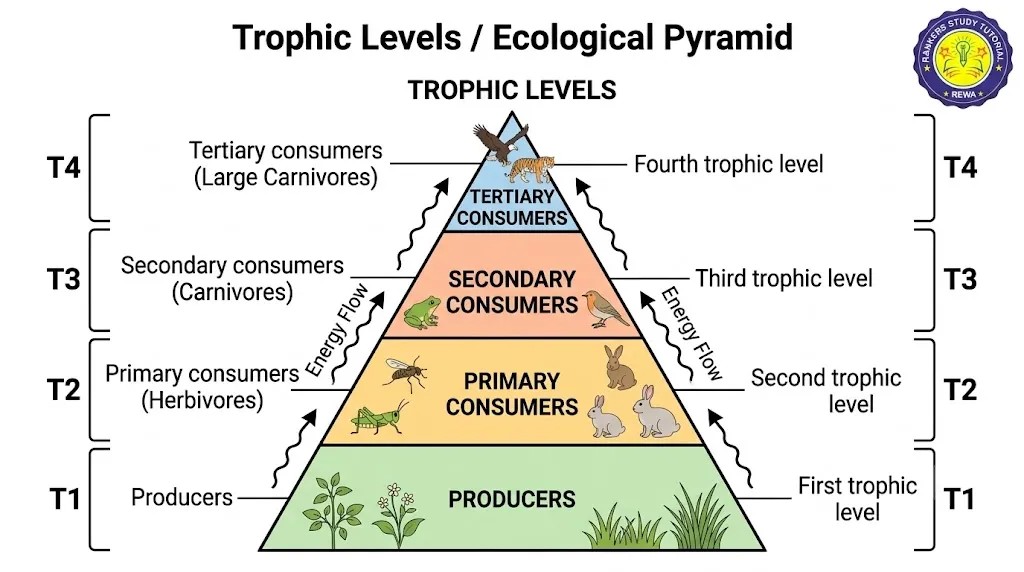
- Discuss group-wise how producers, consumers, and decomposers depend on each other.
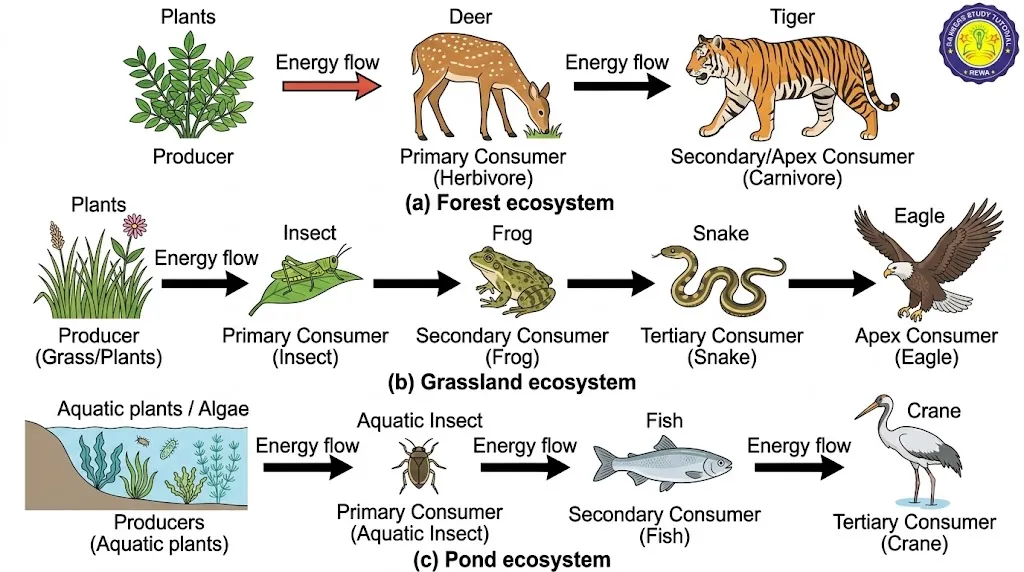
- Organize aquatic organisms in order of who eats whom to construct a chain of at least three steps.
Observations & Ecological Mechanism
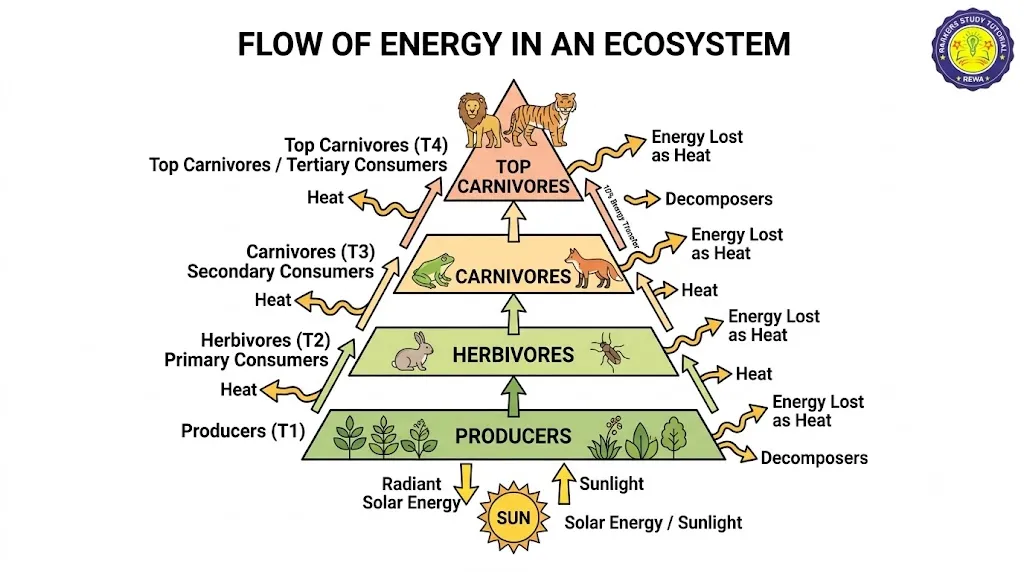
- Interdependence: Organisms depend on producers directly or indirectly, while decomposers break down dead remains into simple inorganic substances for soil/water replenishment.
- Predator Dynamics: Introducing incompatible predators disrupts the artificial balance, causing rapid depletion of consumer species.
Q1: What would happen if a predatory aquatic animal that eats others is placed in a small aquarium?
Answer: It would disrupt the balance by rapidly consuming other aquatic species, destroying the self-sustaining nature of the habitat.
Q2 (Application Based): What is the specific function of microorganisms like bacteria and fungi in an ecosystem?
Answer: They act as decomposers, breaking down complex organic waste substances into simple inorganic compounds utilized by plants.
Q3 (Additional Practice): Why is it important to ensure that predatory aquatic animals are not introduced into a simple aquarium setup?
Answer: To prevent the immediate destruction of consumer populations and maintain the delicate balance of the self-sustaining system.
Activity 13.3: Pesticides and Biological Magnification Debate
Investigating Chemical Residues and Dietary Accumulation
Experimental Procedure
- Review newspaper reports regarding pesticide levels in ready-made food items and bans implemented by various states.
- Debate in groups the sources of pesticides in food and whether they spread through other agricultural products.
- Discuss practical methods to reduce dietary intake of pesticide residues.
Observations & Ecological Mechanism
- Pesticide Entry: Chemicals used to protect crops wash into soil and water bodies, becoming absorbed by plants and aquatic life.
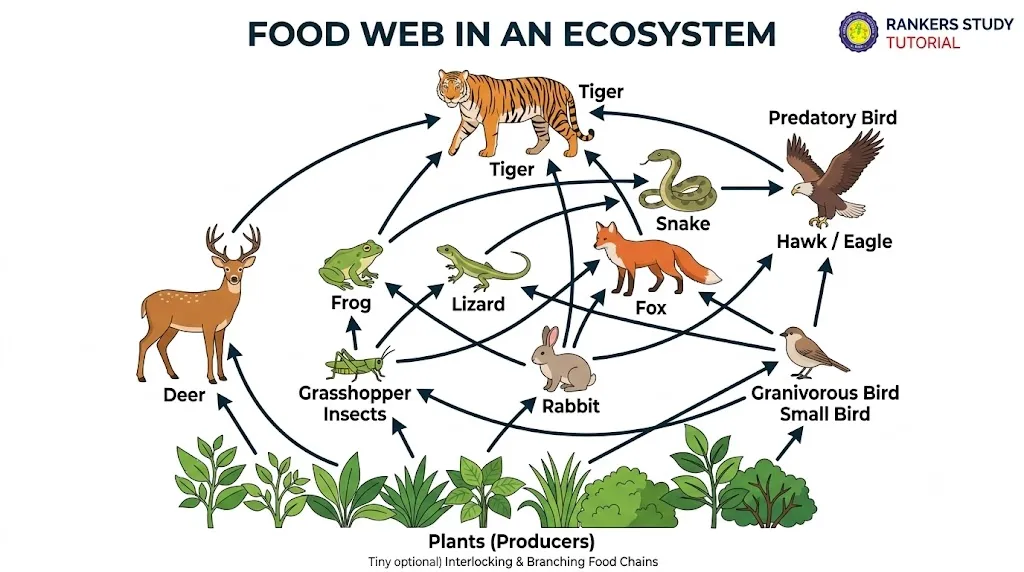
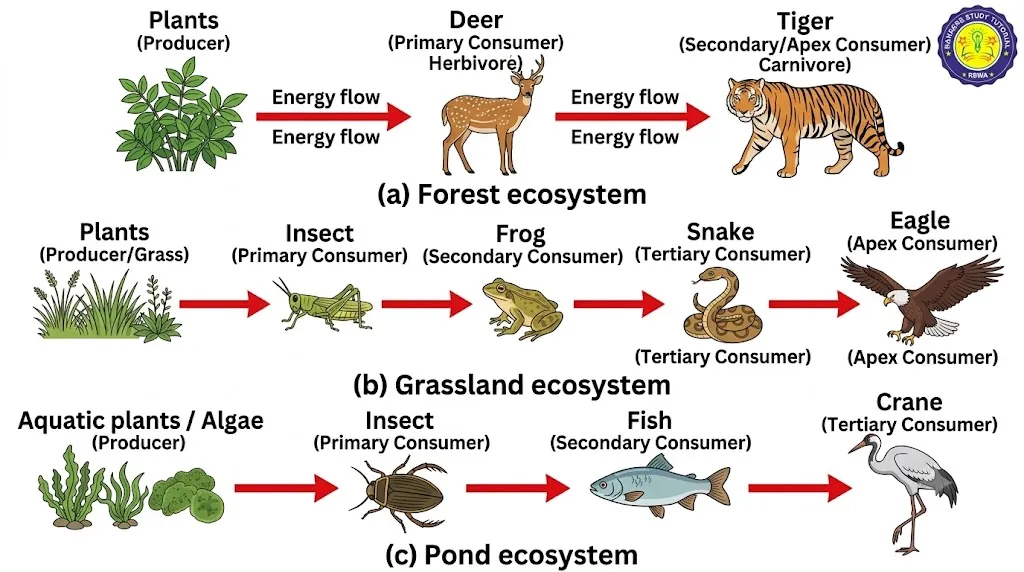
- Biological Magnification: Because these chemicals are non-degradable, their concentration multiplies progressively at each higher trophic level, peaking in humans.
Q1: What is biological magnification, and why do human bodies contain the highest concentration of these chemicals?
Answer: Biological magnification is the progressive accumulation of non-degradable chemical residues at each successive trophic level. Since humans occupy the top level of food chains, maximum concentrations concentrate in human bodies.
Q2 (Application Based): Can pesticide residues inside food grains, vegetables, and fruits always be removed by simple washing?
Answer: No, because systemic pesticides are absorbed internally by plants through soil water and cannot always be eliminated by washing.
Q3 (Additional Practice): How do agricultural pesticides find their way into natural water bodies and plant systems?
Answer: They are washed down into soil and water bodies, from where they are absorbed by plants or taken up by aquatic organisms.
Activity 13.4: Ozone-Depleting Chemicals Research
Analyzing Global Ozone Layer Regulations and CFC Impact
Experimental Procedure
- Research via library or internet sources which synthetic chemicals are responsible for ozone depletion.
- Investigate whether international agreements like the Montreal Protocol / UNEP regulations have succeeded in reducing ozone damage.
- Examine recent trends regarding the size of the ozone hole.
Observations & Ecological Mechanism
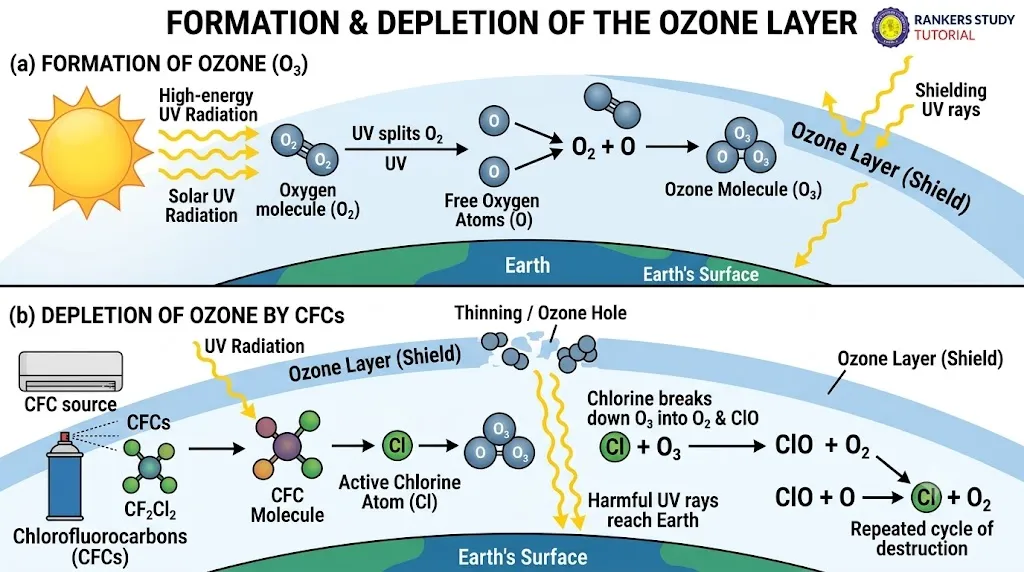
- CFC Action: Chlorofluorocarbons used in refrigerants and fire extinguishers cause a sharp drop in atmospheric ozone levels.
- Global Agreements: International protocols such as the 1987 UNEP agreement successfully mandated freezing and phasing out CFC production.
Q1: Which synthetic chemicals are primarily responsible for the depletion of the ozone layer?
Answer: Chlorofluorocarbons (CFCs), used as refrigerants and in fire extinguishers.
Q2 (Application Based): What major international milestone was achieved in 1987 by the United Nations Environment Programme (UNEP)?
Answer: An agreement to freeze CFC production at 1986 levels, leading to mandatory worldwide manufacturing of CFC-free refrigerators.
Q3 (Additional Practice): What specific role does ultraviolet (UV) radiation play in the formation of ozone molecules in the atmosphere?
Answer: Higher-energy UV radiations split molecular oxygen (\(O_2\)) into free oxygen atoms, which then combine with molecular oxygen to form ozone (\(O_3\)).
Activity 13.5 & 13.6: Biodegradability and Waste Burial
Observing Decomposition and Persistence of Household Wastes
Experimental Procedure
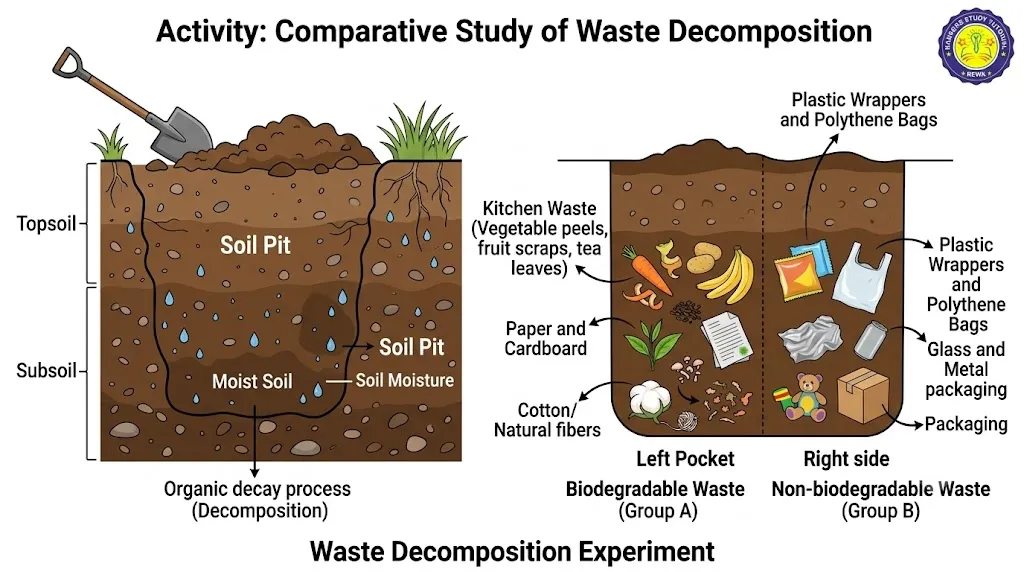
- Collect daily household waste samples (kitchen scraps, vegetable peels, milk packets, paper, medicine strips, old clothes, broken footwear).
- Bury the items in a soil pit or container covered with at least \(15\text{ cm}\) of soil, keep moist, and observe at 15-day intervals.
- Classify materials based on whether they remain unchanged or change form and structure over time.
Observations & Ecological Mechanism
- Biodegradable Waste: Organic kitchen scraps and paper break down rapidly through biological processes mediated by bacteria and fungi.
- Non-Biodegradable Waste: Synthetic polymers like plastics resist bacterial/saprophytic decomposition due to enzyme specificity, persisting in the environment indefinitely under ambient conditions.
Q1: Why do many human-made materials like plastics fail to break down under bacterial action?
Answer: Biological enzymes are specific in their action for breaking down particular organic substances, making them ineffective against synthetic materials like plastics.
Q2 (Application Based): Differentiate between biodegradable and non-biodegradable substances.
Answer: Biodegradable substances are broken down by biological processes (saprophytes/bacteria), whereas non-biodegradable substances are not broken down in this manner and persist for long durations.
Q3 (Additional Practice): Explain why biological enzymes cannot break down synthetic plastics in the same manner as natural organic waste?
Answer: Because enzymes are chemically specific and lack the capability to target synthetic polymer structures, leaving plastics to persist through physical processes like heat and pressure.
Activity 13.7, 13.8 & 13.9: Waste Management, Sewage & E-Waste
Evaluating Municipal Waste, Sewage Treatment, and Electronic Disposals
Experimental Procedure
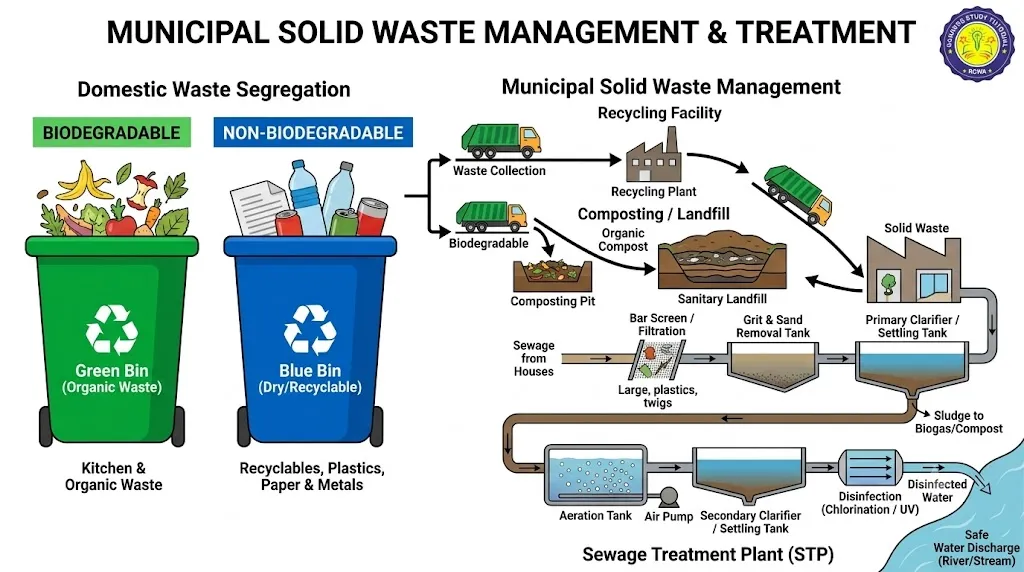
- Examine local municipal mechanisms for collecting and treating biodegradable versus non-biodegradable wastes.
- Calculate daily household and classroom waste generation volumes and estimate biodegradable proportions.
- Investigate local sewage and industrial waste treatment plants to check if water bodies and soils are protected from pollution.
- Research hazardous materials in electronic waste (e-waste) and plastic recycling environmental impacts.
Observations & Ecological Mechanism
- Lifestyle Impact: Modern packaging shifts household waste toward non-biodegradable plastics and disposable formats.
- Hazardous E-Waste: Electronic items contain toxic heavy metals requiring specialized disposal to avoid ecological contamination.
Q1: What lifestyle and packaging changes have aggravated modern environmental waste problems?
Answer: Increased use of disposable items and shifts in packaging materials have resulted in much of our daily waste becoming non-biodegradable.
Q2 (Application Based): Why are disposable paper-cups often preferred over disposable plastic cups or clay kulhads?
Answer: Plastic cups create persistent non-biodegradable waste, whereas mass-scale production of clay kulhads leads to the permanent loss of fertile top-soil; paper cups offer a more renewable/biodegradable alternative.
Q3 (Additional Practice): What environmental concerns are associated with the large-scale production of clay kulhads versus disposable plastic or paper cups?
Answer: Making clay kulhads on a large scale results in the depletion and loss of fertile top-soil.
List
CBSE Competency-Based Questions Class 10 & 12 PDF Download (Free Official Sets)
Download Free Official CBSE Competency-Based Question Banks (Class 10 & 12) One-Stop Resource: Download Free Official CBSE Competency-Based Question Banks …
NCERT Exemplar Class 10 Maths Chapter 11 Areas Related to Circles Solutions (CBSE 2026-27)
NCERT Exemplar Class 10 Maths Chapter 11 Areas Related to Circles Solutions (CBSE 2026-27) NCERT Exemplar Class 10 Maths Chapter …
NCERT Exemplar Class 10 Maths Chapter 12 Surface Areas and Volumes Solutions (CBSE 2026-27)
NCERT Exemplar Class 10 Maths Chapter 12 Surface Areas and Volumes Solutions (CBSE 2026-27) NCERT Exemplar Class 10 Maths Chapter …
NCERT Exemplar Class 10 Maths Chapter 13 Statistics and Probability Solutions (CBSE 2026-27)
NCERT Exemplar Class 10 Maths Chapter 13 Statistics and Probability Solutions (CBSE 2026-27) NCERT Exemplar Class 10 Maths Chapter 13 …
Class 10 Maths Chapter 9 Circles NCERT Exemplar Solutions (All Exercises Solved)
NCERT Exemplar Class 10 Maths Chapter 9 Circles Solutions (CBSE 2026-27) NCERT Exemplar Class 10 Maths Chapter 9 Circles Solutions …
Class 10 Maths Chapter 8 Trigonometry NCERT Exemplar Solutions (Updated Syllabus)
NCERT Exemplar Class 10 Maths Chapter 8 Introduction to Trigonometry Solutions (CBSE 2026-27) NCERT Exemplar Class 10 Maths Chapter 8 …