Class 9 Social Science Part 1 Chapter 7 Revision Notes: Elections (चुनाव)
Elections (चुनाव) किसी भी democratic system में अपने democratic rights का उपयोग करने का सबसे महत्वपूर्ण माध्यम हैं। Regular और periodic elections लोकतंत्र (democracy) के मूल में हैं। जैसे कोई Class Representative (CR) बिना नए चुनाव के अगली कक्षा में पद पर नहीं बना रह सकता, वैसे ही कोई भी government अपने prescribed term (5 साल) के बाद जनता का नया mandate (जनादेश) लिए बिना सत्ता में नहीं रह सकती। इसके अलावा, अगर चुनाव में केवल एक ही political party लड़े, तो voters के पास कोई असली choice नहीं बचती।
1. Why do Elections Matter? (चुनाव क्यों महत्वपूर्ण हैं?)
Elected representatives जनता के प्रति जवाबदेह (accountable to the people) होते हैं। Periodic elections हमें अपने representatives को चुनने और उनके काम का हिसाब लेने का अधिकार देते हैं, और हमारा Vote इस अधिकार को प्रयोग करने का मुख्य साधन है।
📚 Important Definitions
Direct Elections (प्रत्यक्ष चुनाव): Elections in which citizens vote directly to choose their representatives or leaders. Examples: Members of the Lok Sabha (central level), Vidhan Sabha (state level), और local bodies (जैसे Panchayats, municipal corporations) हर पाँच साल में प्रत्यक्ष चुनाव से चुने जाते हैं।
Indirect Elections (अप्रत्यक्ष चुनाव): Elections in which citizens vote for representatives who then choose/elect the leaders. Examples: भारत के President, Vice President, और Rajya Sabha के सदस्य अप्रत्यक्ष चुनाव द्वारा चुने जाते हैं।
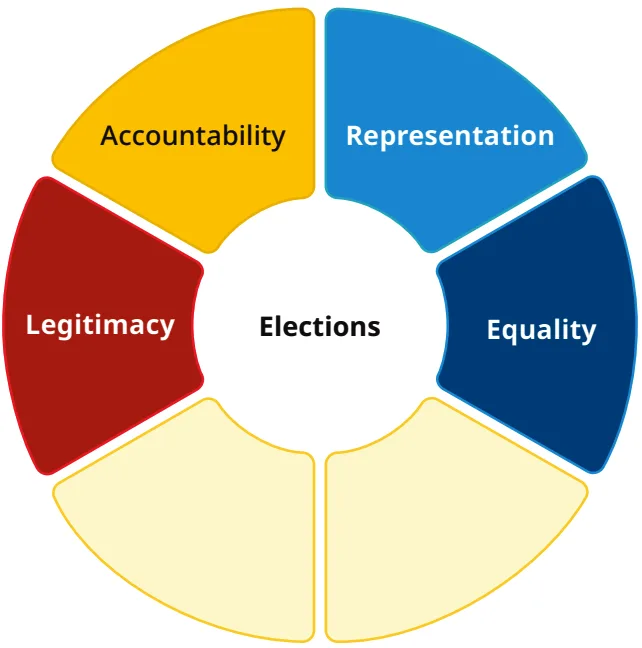
Elections लोकतंत्र में Accountability (जवाबदेही), Representation (प्रतिनिधित्व), Equality (समानता), और Legitimacy (वैधता) सुनिश्चित करते हैं। इसके अलावा, ये Citizen Participation (नागरिक भागीदारी) और Peaceful Transfer of Power (सत्ता का शांतिपूर्ण हस्तांतरण) को भी संभव बनाते हैं।
💡 Don’t Miss Out: What is Psephology?
क्या आपने ‘Psephology’ शब्द सुना है? यह चुनावों के वैज्ञानिक अध्ययन (scientific study of elections) को दर्शाता है। यह Greek शब्द psēphos (जिसका अर्थ ‘pebble’ या कंकड़ होता है) और logy (systematic study) से बना है। प्राचीन ग्रीस (ancient Greece) में वोट देने के लिए कंकड़ों का इस्तेमाल किया जाता था।
Inside India’s Election Machinery (भारत की चुनाव मशीनरी)
भारत जैसे विशाल और विविधतापूर्ण देश में, जहाँ लाखों-करोड़ों लोग हजारों constituencies में वोट डालते हैं, वहाँ free, fair, और transparent चुनाव कराने के लिए एक मजबूत सिस्टम चाहिए। इसमें कई stakeholders अपनी भूमिका निभाते हैं: Election Commission of India (ECI), विभिन्न Political Parties, Civil Society, Media, और सबसे महत्वपूर्ण Voters। हमारा Constitution और parliamentary laws इन सभी की शक्तियों और कार्यों को तय करते हैं।
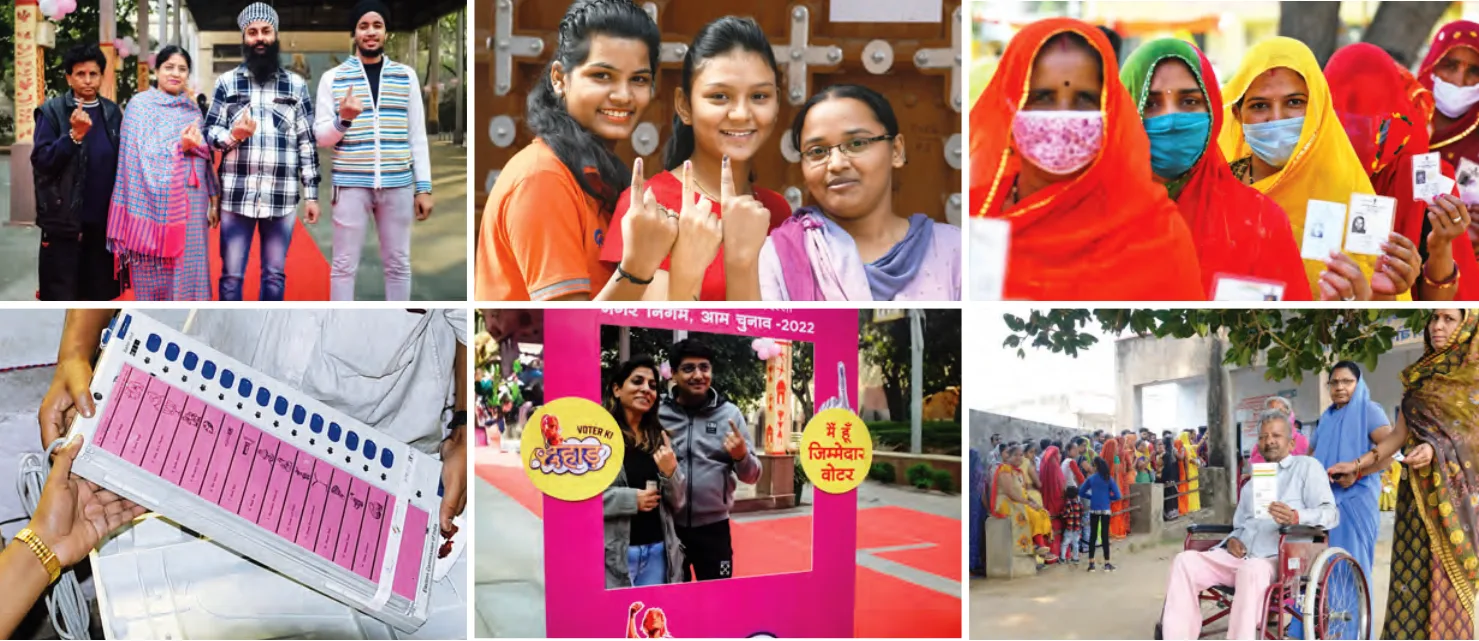
🎯 Competency-Based Questions (Section 1)
Q1. [Scenario-Based] A citizen goes to a polling booth and casts a vote for a candidate contesting for the local Municipal Corporation. Is this an example of a direct or indirect election?
Ans: Direct Election, because the citizen is directly voting to choose their representative for the local body.
Q2. [Assertion-Reason] Assertion (A): The President of India and members of the Rajya Sabha are chosen through direct elections.
Reason (R): In an indirect election, citizens vote for representatives who then elect the leaders.
Ans: A is False, R is True. The President and Rajya Sabha members are elected through indirect elections, not direct elections.
Q3. [Analytical] If only one political party is allowed to contest elections in a country, why does it fail the test of a true democracy?
Ans: Because voters cannot exercise a meaningful choice. Without real competition and alternatives, citizens cannot hold leaders accountable or replace a non-performing government.
Q4. [Conceptual] What does the term “Psephology” refer to, and what is its historical origin?
Ans: Psephology is the scientific study of elections. It comes from the Greek word ‘psēphos’ (pebble), as pebbles were used for voting in ancient Greece.
Q5. [Fact-Based] Name four key stakeholders involved in India’s election machinery besides the Election Commission of India (ECI).
Ans: Political parties, civil society, media, and the voters.
2. The Electoral System (चुनाव प्रणाली)
चुनाव सफलतापूर्वक कराने का पहला कदम यह तय करना है कि डाले गए वोटों (votes cast) को legislature की सीटों (seats) में कैसे बदला जाए। हमारे संविधान निर्माताओं (framers of the Constitution) ने Lok Sabha और Vidhan Sabha के लिए First-Past-The-Post (FPTP) प्रणाली को चुना, जबकि Rajya Sabha, President, और Vice President के लिए Proportional Representation (PR) प्रणाली को अपनाया।
Comparison of Electoral Systems (चुनाव प्रणालियों की तुलना)
| Feature | First-Past-The-Post (FPTP) | Majority System | Proportional Representation (PR) |
|---|---|---|---|
| How Voting Works? | हर voter अपने constituency में एक candidate को वोट देता है। सबसे अधिक वोट पाने वाला जीतता है, चाहे उसे 50% से कम वोट ही क्यों न मिलें। | जीतने के लिए candidate को 50% से अधिक वोट चाहिए। यदि किसी को 50% नहीं मिलते, तो top two candidates के बीच second round होता है। | Voters किसी व्यक्ति को नहीं बल्कि एक party को वोट देते हैं। Parliament में सीटें हर पार्टी को मिले कुल वोटों के अनुपात (proportion) में बाँटी जाती हैं। |
| Sample Results | Party A: 40% Party B: 35% Party C: 25% |
Round 1: X (45%), Y (40%), Z (15%). Round 2: Y wins with 55%. |
Party M: 40%, N: 35%, O: 15%, P: 10% (out of 100 seats). |
| Who forms the Government? | Party A सरकार बनाती है (भले ही वोट 50% से कम हैं)। | Round 2 में 55% पाने वाली Party Y सरकार बनाती है। | सीटें बँटती हैं: M: 40, N: 35, O: 15, P: 10। Power को proportionately शेयर किया जाता है। |
Bicameral Structure in States (राज्यों में द्विसदनीय विधायिका)
भारत के छह राज्यों—Andhra Pradesh, Bihar, Karnataka, Maharashtra, Telangana, और Uttar Pradesh—में bicameral legislature (द्विसदनीय व्यवस्था) है, यानी वहाँ दो सदन होते हैं:
- Vidhan Sabha (Legislative Assembly – Lower House): यह directly elected सदन है जो राज्य के लिए कानून बनाता है। इसके चुनाव FPTP प्रणाली से होते हैं।
- Vidhan Parishad (Legislative Council – Upper House): इसके सदस्य Vidhan Sabha के सदस्यों, local bodies, graduates, और teachers द्वारा चुने जाते हैं। इसके अलावा, राज्य का Governor कला (art), विज्ञान (science), समाज सेवा (social service), साहित्य (literature), और सहकारिता (co-operatives) के क्षेत्र से कुछ सदस्यों को nominate करता है। इसके चुनाव Proportional Representation by means of a Single Transferable Vote (STV) से होते हैं।
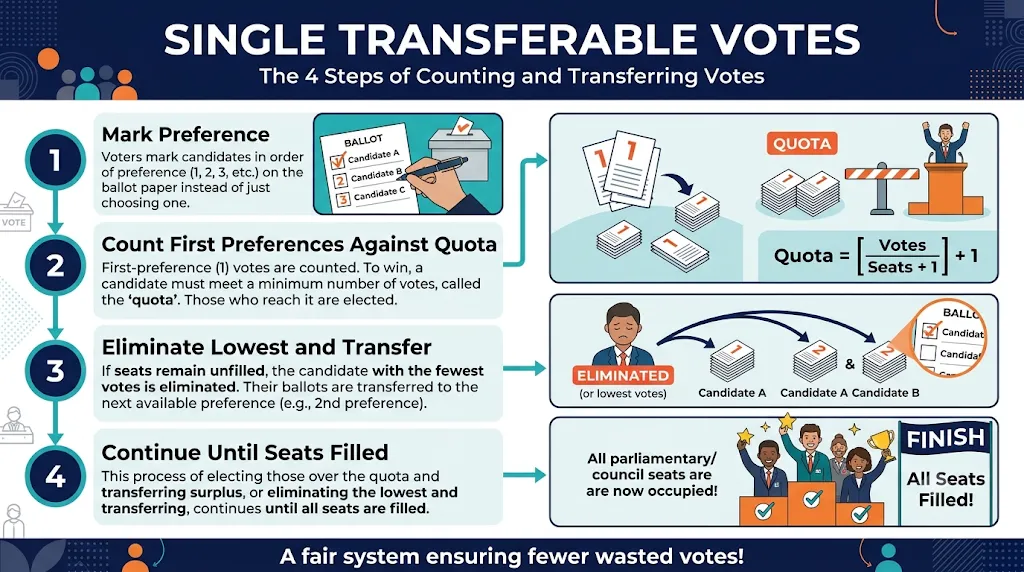
कैसे काम करता है STV? 1. Voters अपनी पसंद (preference) के अनुसार उम्मीदवारों को रैंक देते हैं। 2. पहले first preference के वोट गिने जाते हैं; जो Quota पूरा कर लेता है वह जीत जाता है। 3. सबसे कम वोट पाने वाला उम्मीदवार बाहर (eliminated) हो जाता है और उसके वोट उन ballot papers पर दी गई second preference के अनुसार बाकी उम्मीदवारों को transfer कर दिए जाते हैं। 4. यह प्रक्रिया तब तक चलती है जब तक सभी सीटें न भर जाएँ।
🎯 Competency-Based Questions (Section 2)
Q1. [Scenario-Based] In an imaginary country using the Majority System, Party X gets 45%, Party Y gets 40%, and Party Z gets 15% in Round 1. Who wins in Round 1?
Ans: Nobody wins in Round 1 because no party secured more than 50% of the votes. A second round will be held between the top two candidates (Party X and Party Y).
Q2. [Assertion-Reason] Assertion (A): Members of the Vidhan Parishad are directly elected by all adult citizens of the state.
Reason (R): Elections to the Vidhan Parishad are held under the system of proportional representation by means of a single transferable vote.
Ans: A is False, R is True. Vidhan Parishad members are elected indirectly by MLAs, local bodies, graduates, and teachers, and some are nominated by the Governor.
Q3. [Analytical] Why does a party with 40% of the votes win a seat under FPTP, whereas it would only get 40% of the seats under Proportional Representation?
Ans: Because FPTP is a ‘winner-takes-all’ plurality system where the highest vote-getter wins the seat regardless of crossing 50%, whereas PR allocates seats strictly in proportion to the vote share received by each party.
Q4. [Conceptual] In the Single Transferable Vote (STV) system, what happens to the votes of the candidate who gets the lowest number of first-preference votes?
Ans: That candidate is eliminated, and their votes are transferred to the remaining candidates marked as the second preference on those ballot papers.
Q5. [Fact-Based] List all six Indian states that have a bicameral legislature.
Ans: Andhra Pradesh, Bihar, Karnataka, Maharashtra, Telangana, and Uttar Pradesh.
3. The Laws and Delimitation Commission (कानून और परिसीमन आयोग)
भारत में चुनावों की integrity, transparency, और accountability बनाए रखने के लिए संसद ने कुछ प्रमुख कानून बनाए हैं:
- Representation of the People Act, 1950 (RPA, 1950): यह कानून मुख्य रूप से सीटों के आवंटन (allocation of seats), constituencies के delimitation, और electoral rolls (मतदाता सूची) को तैयार व संशोधित करने से जुड़ा है। यह सुनिश्चित करता है कि 18 वर्ष और उससे अधिक आयु के हर नागरिक को बिना किसी भेदभाव के वोट देने का अधिकार मिले।
- Representation of the People Act, 1951 (RPA, 1951): यह चुनाव के वास्तविक संचालन (actual conduct of elections) और चुनाव के बाद के विवादों (post-election disputes) से जुड़ा है। इसमें candidates के nomination, election campaigns, voting procedures, और electoral offences & corrupt practices के नियम शामिल हैं।
- The Presidential and Vice-Presidential Elections Act, 1952: यह राष्ट्रपति और उपराष्ट्रपति के चुनावों को नियंत्रित करता है।
📚 Corrupt Practices under RPA, 1951 (भ्रष्ट आचरण)
• Bribery / Inducements: किसी व्यक्ति को चुनाव लड़ने, नाम वापस लेने, वोट देने या वोट न देने के लिए कोई gift, offer, या promise देना।
• Communal Appeals: धर्म (religion), जाति (caste), नस्ल (race), समुदाय (community), या भाषा (language) के आधार पर वोट मांगना या वोट न देने की अपील करना।
• Misuse of Govt Personnel: किसी भी सरकारी कर्मचारी—जैसे gazetted officers, judges, magistrates, armed forces, police, या excise officers—से चुनाव प्रचार में मदद लेना।
Delimitation Commission (परिसीमन आयोग)
क्या आप जानते हैं कि आपके parliamentary और assembly constituencies की सीमाएँ (boundaries) हमेशा के लिए तय नहीं होतीं? जनसंख्या घनत्व (population density) में बदलाव के साथ इन्हें बदला जाता है। Delimitation वह प्रक्रिया है जिसके द्वारा Lok Sabha और Vidhan Sabha के लिए सीटों की संख्या और क्षेत्रीय सीमाएँ तय की जाती हैं, ताकि हर constituency में सीटों और जनसंख्या का अनुपात (ratio of seats to population) लगभग समान रहे।
💡 Don’t Miss Out: Article 82 & Delimitation
भारतीय संविधान का Article 82 एक Delimitation Commission की स्थापना का आदेश देता है। भारत में अब तक चार Delimitation Commissions बन चुके हैं: 1952, 1963, 1973, और 2002। (1973 से 2002 के बीच लंबा अंतराल इसलिए था क्योंकि जनसंख्या नियंत्रण को बढ़ावा देने के लिए 1976 में सीटों की संख्या को फ्रीज कर दिया गया था, ताकि जिन राज्यों ने जनसंख्या नियंत्रित की है उन्हें सीटों का नुकसान न हो।)
🎯 Competency-Based Questions (Section 3)
Q1. [Scenario-Based] During an election rally, a candidate asks voters to vote for him strictly on the basis of their shared caste and religion. Which specific Act declares this a corrupt practice?
Ans: The Representation of the People Act, 1951 (RPA, 1951).
Q2. [Assertion-Reason] Assertion (A): Without delimitation, the democratic objective of equal representation can be defeated.
Reason (R): Due to uneven population growth, one MP might end up representing 5 lakh people while another represents 25 lakh people.
Ans: Both A and R are true, and R is the correct explanation of A.
Q3. [Analytical] Differentiate between the primary focus areas of the Representation of the People Act, 1950 and the Representation of the People Act, 1951.
Ans: RPA 1950 focuses on seat allocation, delimitation of constituencies, and preparation/revision of electoral rolls, whereas RPA 1951 focuses on the actual conduct of elections, nominations, campaigns, corrupt practices, and dispute resolution.
Q4. [Conceptual] Why are candidates strictly prohibited from taking assistance from police personnel or judges during elections?
Ans: To ensure impartiality and prevent the misuse of state machinery, so that all candidates have a level playing field and elections remain free and fair.
Q5. [Fact-Based] Which Article of the Indian Constitution mandates the establishment of a Delimitation Commission, and in which years were the four commissions formed?
Ans: Article 82. The four commissions were formed in 1952, 1963, 1973, and 2002.
4. Election Commission of India (भारत निर्वाचन आयोग – ECI)
Election Commission of India (ECI) एक autonomous permanent constitutional body है, जिसकी स्थापना 25 January 1950 को हुई थी। संविधान के Articles 324 to 329 इसकी शक्तियों और कर्तव्यों को परिभाषित करते हैं। यह Lok Sabha, Rajya Sabha, Vidhan Sabha, Vidhan Parishad, President, और Vice President के चुनाव कराता है।
राज्य स्तर पर चुनाव कार्य की देखरेख Chief Electoral Officer (CEO) करते हैं। जिले और स्थानीय स्तर पर District Magistrates (DM), SDMs, और Tahsildars को District Election Officers, Returning Officers, और Electoral Registration Officers के रूप में चुनाव ड्यूटी दी जाती है।
Key Functions of the ECI (ECI के प्रमुख कार्य)
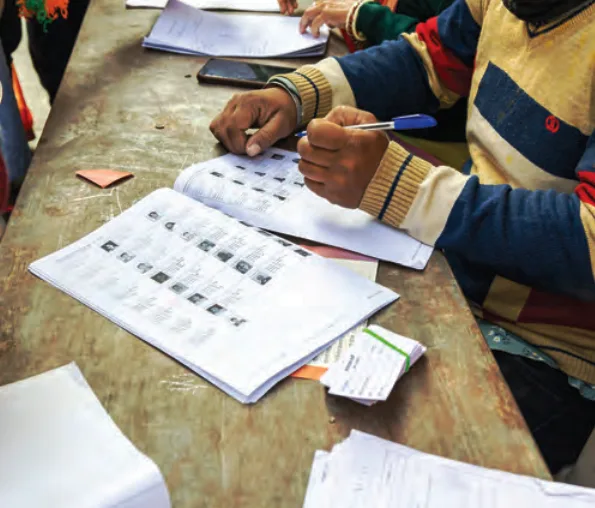
- Creates & Updates Electoral Roll (मतदाता सूची): ECI घर-घर enumerators भेजकर पात्र मतदाताओं (eligible electors) का डेटा इकट्ठा करता है। यह Special Intensive Revision (SIR) चलाता है ताकि 18 साल के नए युवा मतदाताओं का नाम जोड़ा जा सके और मृत्यु (death), स्थान परिवर्तन (change of residence), duplicate enrolment, या untraceable होने पर नाम हटाया जा सके।
- Decides Election Schedule (चुनाव की तारीखें): चुनाव की तारीख तय करते समय ECI मौसम (weather), कृषि चक्र (agricultural cycle), स्कूल-कॉलेज की परीक्षाओं (exams), और त्योहारों (festivals) का पूरा ध्यान रखता है।
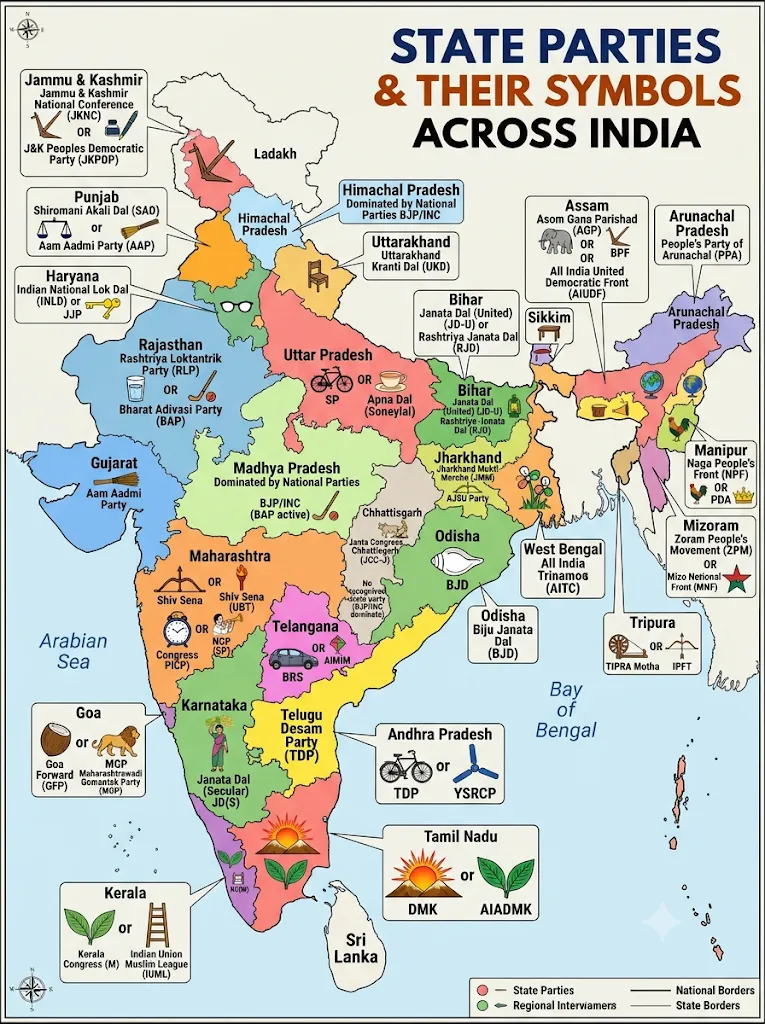
- Registers Parties & Allocates Symbols: केवल ECI में पंजीकृत (registered) पार्टियाँ ही चुनाव लड़ सकती हैं (हालांकि independent candidates भी लड़ सकते हैं)। ECI पार्टियों को National, State, या Registered-Unrecognised के रूप में वर्गीकृत करता है, उन्हें चुनाव चिह्न (symbols) देता है, और विवादों में quasi-judicial body के रूप में काम करता है।
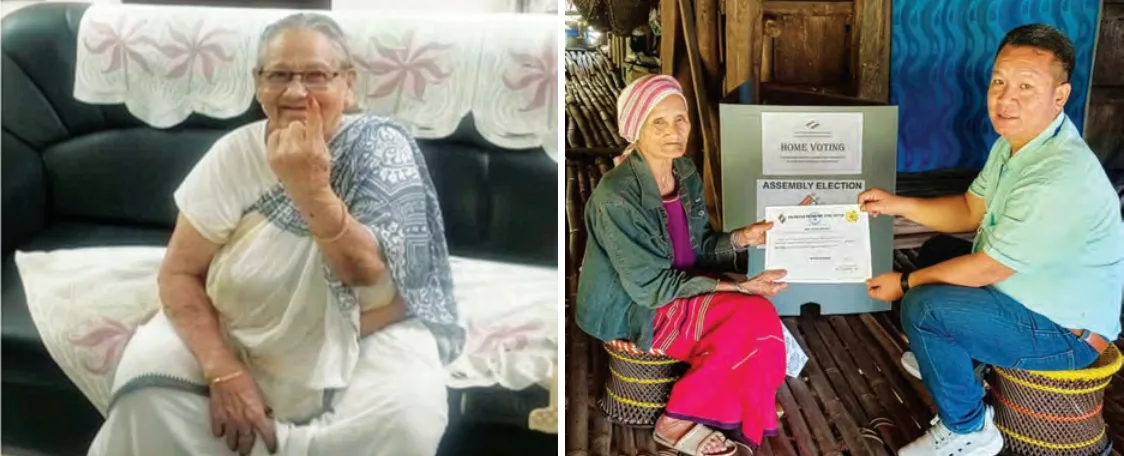
- Ensures Free, Fair & Inclusive Elections: 2024 के General Elections में भारत में 96.8 crore से अधिक eligible voters थे। ECI ने PwDs (Persons with Disabilities), Senior Citizens, transgender persons, और PVTGs (Particularly Vulnerable Tribal Groups) के लिए मतदान को सुलभ बनाया है। 2024 में पहली बार पूरे भारत में 85 वर्ष से अधिक आयु के senior citizens और 40% benchmark disability वाले PwDs के लिए Voting from Home की सुविधा दी गई।
🤔 Think About It: Voter Registration at 18
You will turn 18 in a few years. Find out the steps of the procedure for voter registration and the list of required documents.
🔍 Let’s Explore: What is ETPBS?
Find out who are classified as ‘Service Voters’ and who can vote using ETPBS (Electronically Transmitted Postal Ballot System)?
💡 Don’t Miss Out: National Voters’ Day & IEVP
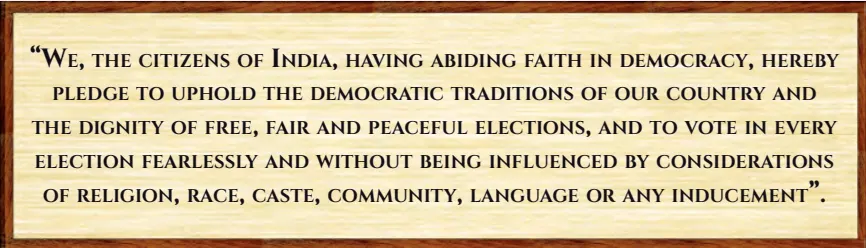
• National Voters’ Day: हर साल 25 January को मनाया जाता है, जहाँ नागरिक बिना किसी धर्म, जाति, भाषा या लालच के प्रभाव में आए निडर होकर मतदान करने की शपथ (Voters’ Pledge) लेते हैं।
• International Election Visitors’ Programme (IEVP): यह ECI का flagship programme है, जिसके तहत ECI ने 28 देशों के Election Management Bodies (EMBs) और 3 अंतर्राष्ट्रीय संगठनों—IFES, International IDEA, और United Nations (UN)—के साथ MoUs साइन किए हैं।
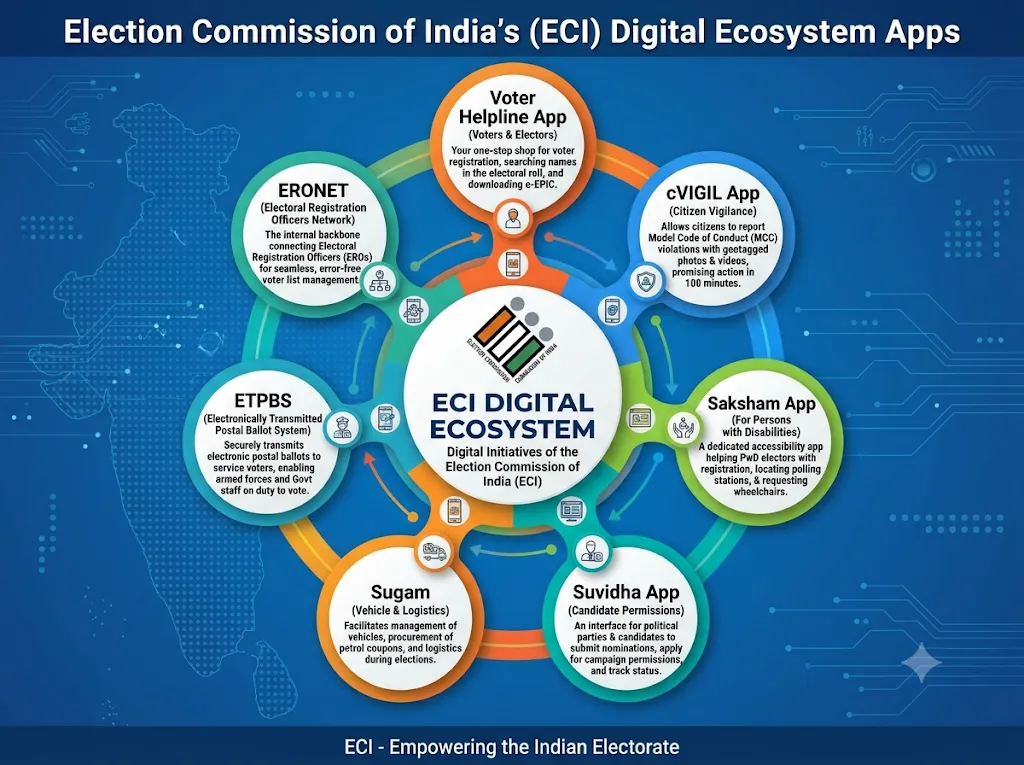
ECI की प्रमुख डिजिटल सेवाएँ: Suvidha (candidates को nomination और rally की अनुमति के लिए), ERONET (E-Rolls के प्रबंधन के लिए), Sugam (चुनाव में लगे वाहनों के प्रबंधन के लिए), Voter Helpline App (वोटर्स के रजिस्ट्रेशन और जानकारी के लिए), Saksham App (PwDs की सुविधा के लिए), और cVIGIL App (Model Code of Conduct के उल्लंघन की तुरंत शिकायत करने के लिए, जिस पर flying squads तुरंत कार्रवाई करते हैं)।
🎯 Competency-Based Questions (Section 4)
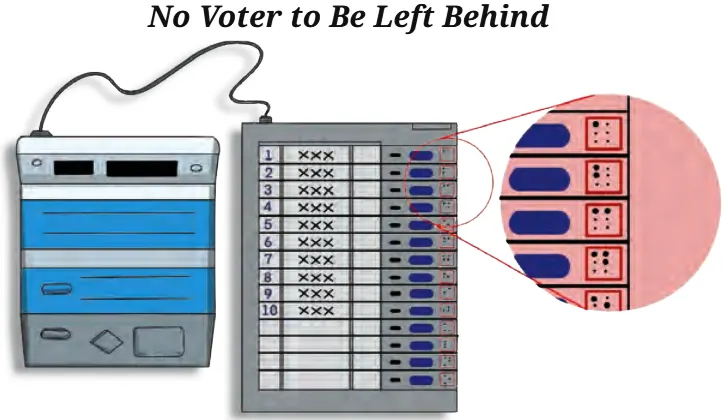
Q1. [Scenario-Based] A visually impaired voter wants to cast their vote independently, while another citizen wants to report a candidate distributing illegal liquor during campaigning. Which two ECI initiatives/tools will help them respectively?
Ans: EVM with Braille (and Saksham App) for the visually impaired voter, and the cVIGIL App for reporting the Model Code of Conduct violation.
Q2. [Assertion-Reason] Assertion (A): The ECI conducts a Special Intensive Revision (SIR) of the electoral rolls.
Reason (R): SIR ensures that newly eligible 18-year-old voters are added and names of deceased, shifted, or duplicate voters are deleted.
Ans: Both A and R are true, and R is the correct explanation of A.
Q3. [Analytical] Why does the ECI act as a ‘quasi-judicial body’ when dealing with political parties?
Ans: Because it settles disputes regarding the official recognition of political parties and the allotment of election symbols in a fair, judge-like manner.
Q4. [Conceptual] Which two specific groups were extended the ‘Voting from Home’ facility across India for the first time during the 2024 General Elections?
Ans: Senior citizens above 85 years of age and Persons with Disabilities (PwDs) with a benchmark disability of 40%.
Q5. [Fact-Based] Match the ECI apps with their purpose: (a) Suvidha, (b) Sugam, (c) ERONET.
Ans: (a) Suvidha — Candidate nominations and rally permissions; (b) Sugam — Managing vehicles requisitioned for election duty; (c) ERONET — Database management and maintenance of E-Rolls.
5. Political Parties, Alliances & Challenges (राजनीतिक दल, गठबंधन और चुनौतियां)
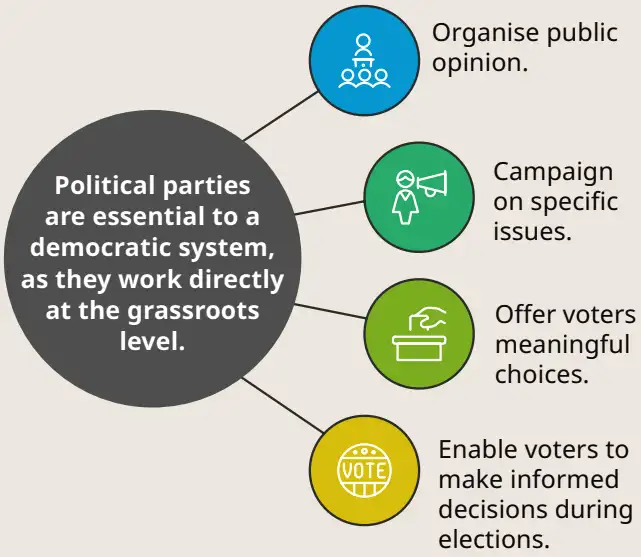
भारत में Multi-Party System (बहुदलीय व्यवस्था) है, जो हमारे देश की भाषा, संस्कृति, धर्म और क्षेत्रीय विविधता को दर्शाती है। Political parties सीधे grassroots level (जमीनी स्तर) पर काम करती हैं। वे जनता की राय (public opinion) को संगठित करती हैं, विभिन्न मुद्दों पर प्रचार करती हैं, अपना manifesto (घोषणापत्र) जारी करती हैं, और मतदाताओं को सार्थक विकल्प (meaningful choices) देती हैं।
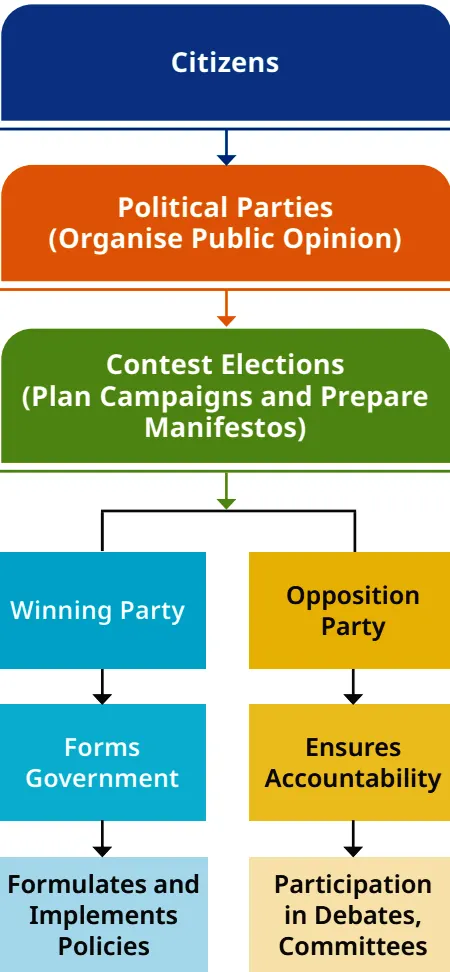
चुनाव जीतने वाली पार्टी (Winning Party) सरकार बनाती है और नीतियाँ (policies) लागू करती है, जबकि हारने वाली पार्टी (Opposition Party) संसद की बहसों और समितियों में भाग लेकर सरकार की जवाबदेही (accountability) तय करती है।
Defection & Anti-Defection Law (दल-बदल विरोधी कानून)
Defection (दल-बदल): किसी पार्टी के टिकट पर चुनाव जीतने के बाद उस पार्टी को छोड़कर दूसरी पार्टी में शामिल हो जाना या पार्टी के फैसलों के खिलाफ जाना Defection कहलाता है। इसे रोकने और सरकार को स्थिरता (stability) देने के लिए 1985 में 52nd Constitutional Amendment Act के तहत Anti-Defection Law लाया गया। इसके अनुसार, यदि कोई MP या MLA स्वेच्छा से पार्टी की सदस्यता छोड़ता है या पार्टी के निर्देश (whip) के खिलाफ वोट करता है, तो सदन का Speaker या Chairman उसे अयोग्य (disqualify) घोषित कर सकता है।
Criteria for National and State Party Recognition (पार्टी मान्यता के मानदंड)
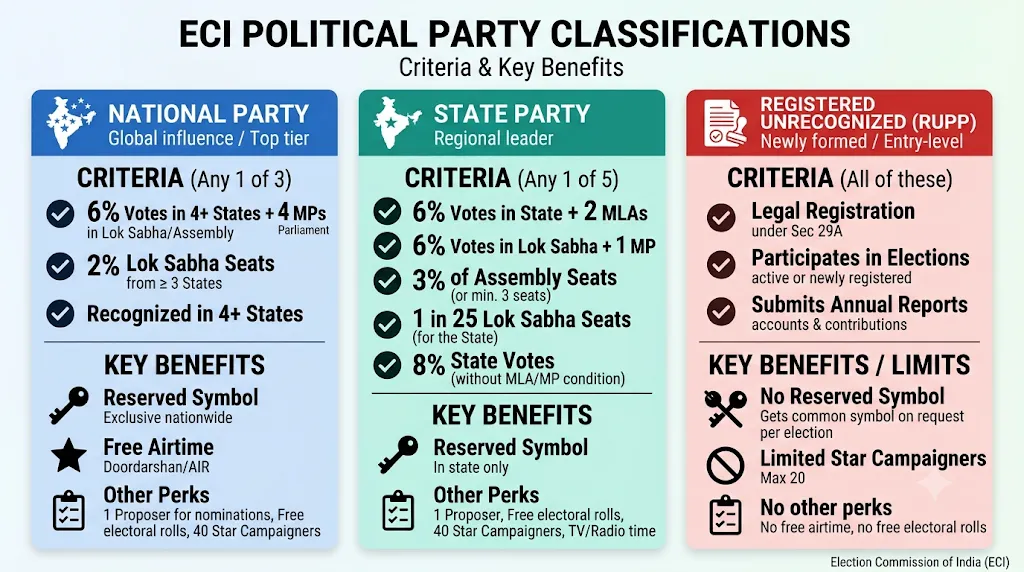
National Party (कोई एक शर्त): (1) 4 या अधिक राज्यों में Lok Sabha या Assembly चुनाव में कम से कम 6% valid votes + Lok Sabha में 4 सीटें; OR (2) Lok Sabha की कम से कम 2% सीटें (कम से कम 3 राज्यों से); OR (3) कम से कम 4 राज्यों में State Party के रूप में मान्यता।
State Party (कोई एक शर्त): (1) राज्य के Assembly चुनाव में 6% valid votes + 2 सीटें; OR (2) राज्य से Lok Sabha में 6% votes + 1 सीट; OR (3) Assembly की 3% सीटें या 3 सीटें (जो अधिक हो); OR (4) राज्य की हर 25 Lok Sabha सीटों में से 1 सीट; OR (5) Lok Sabha या Assembly चुनाव में राज्य में कम से कम 8% valid votes।
RUPP (Registered Unrecognised Political Parties): वे पार्टियाँ जिन्होंने पर्याप्त वोट हासिल नहीं किए हैं या पंजीकरण के बाद कभी चुनाव नहीं लड़ा।
Era of Alliances / Coalition Politics (गठबंधन की राजनीति)
1967 के बाद भारत में एक-दलीय प्रभुत्व (single-party dominance) का दौर खत्म हुआ और गठबंधन (alliances) का दौर शुरू हुआ। 1977 में National Emergency (1975–77) के बाद कई पार्टियों ने मिलकर Janata Party बनाई और राष्ट्रीय स्तर पर पहली coalition government (Janata Government) बनाई। 1990 के दशक के अंत से, BJP के नेतृत्व वाला NDA (National Democratic Alliance) और INC के नेतृत्व वाला UPA (United Progressive Alliance)—जिसे 2023 में पुनर्गठित कर INDIA (Indian National Developmental Inclusive Alliance) बनाया गया—भारत के प्रमुख राजनीतिक गठबंधन रहे हैं।
Challenges to Free and Fair Elections (स्वतंत्र और निष्पक्ष चुनाव की चुनौतियां)
96.8 करोड़ से अधिक मतदाताओं के लिए चुनाव कराना एक बहुत बड़ी चुनौती है। इसमें Misinformation (गलत सूचना), Fake News (फर्जी खबरें), Intimidation (डराना-धमकाना), और धनबल (money power) जैसी बड़ी समस्याएँ आती हैं। ECI इनसे निपटने के लिए RPA 1950 & 1951, Model Code of Conduct (आचार संहिता), EVMs, VVPAT (Voter Verifiable Paper Audit Trail), और मतदाता जागरूकता अभियानों का सहारा लेता है।
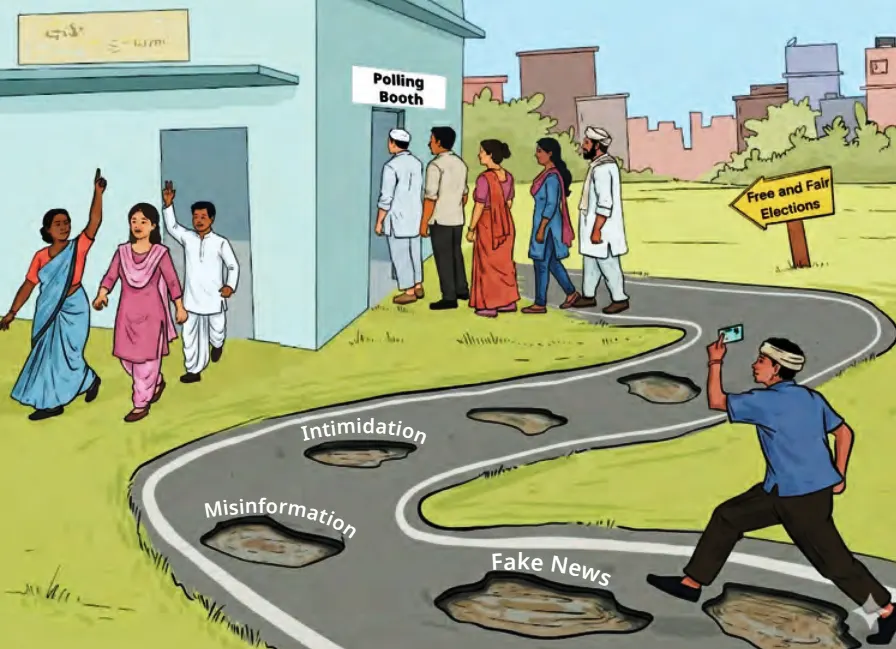
🔍 Let’s Analyse: Road to Free and Fair Elections (Fig. 7.13)
Fill in the empty potholes with some more challenges to free and fair elections. How can we overcome them?
🎯 Competency-Based Questions (Section 5)
Q1. [Scenario-Based] An elected MP votes against their political party’s official instruction (whip) inside the Parliament without prior permission. Who has the authority to disqualify this MP under the Anti-Defection Law?
Ans: The Speaker (or Chairman) of the respective House, under the Anti-Defection Law (52nd Constitutional Amendment Act, 1985).
Q2. [Assertion-Reason] Assertion (A): The Janata Party formed the first coalition government at the national level in 1977.
Reason (R): Various political parties united against the backdrop of the National Emergency (1975–1977).
Ans: Both A and R are true, and R is the correct explanation of A.
Q3. [Analytical] If a political party secures 8% of the valid votes polled in a State Assembly election but wins 0 seats, can it still be recognised as a State Party by the ECI?
Ans: Yes! According to ECI criteria, securing not less than 8% of the total valid votes polled in the State at a General Election to the Lok Sabha or Legislative Assembly is sufficient to earn State Party recognition.
Q4. [Conceptual] What are RUPPs (Registered Unrecognised Political Parties)?
Ans: These are political parties registered with the ECI that have either not secured the required percentage of votes/seats to become a recognised State or National party, or have never contested elections since their registration.
Q5. [Fact-Based] What is the full form of VVPAT, and how does it help ensure fair elections?
Ans: Voter Verifiable Paper Audit Trail. It allows voters to visually verify a paper slip confirming their vote was recorded accurately on the EVM, building trust and transparency.
The Big Questions (Chapter Objectives Solved)
1. Why are elections essential to a democratic system?
2. How do electoral systems and rules shape political representation and fairness?
3. What role do institutions and laws play in ensuring free and fair elections?
4. What challenges do elections face in practice, and how can these affect democracy?
List
Class 9 Social Science Part 1 Chapter 7 Elections Revision Notes
Class 9 Social Science Part 1 Chapter 8 Building Blocks in Economics – The Problem of Choice Revision Notes

Class 9 Social Science Part 1 Chapter 9 The Price Puzzle: What Drives the Market Revision Notes

Class 9 Social Science Part 2 Chapter 6 From Ideas to Startups Revision Notes
Class 9 Social Science Part 2 Chapter 5 Managing Your Personal Finances Revision Notes