Class 9 Social Science Part 2 Chapter 6 Revision Notes: From Ideas to Startups
1. Understanding Entrepreneurship (उद्यमिता को समझना)
हर महान business एक idea, एक need, या society की जरूरतों को पूरा करने की desire से शुरू होता है। Entrepreneurship (उद्यमिता) वह प्रक्रिया है जिसके माध्यम से individuals या उनका समूह एक potential idea को business venture में बदलता है।
📚 Important Definitions
Profit (लाभ): Money that is earned in trade or business after paying the costs of producing and selling goods and services.
Entrepreneur (उद्यमी): Curious individuals who see opportunities where others see challenges. वे passion और society के लिए value create करने की commitment से प्रेरित होते हैं (जैसे drones बनाना या eco-friendly jute bags बनाना)।

Tasks Performed by an Entrepreneur
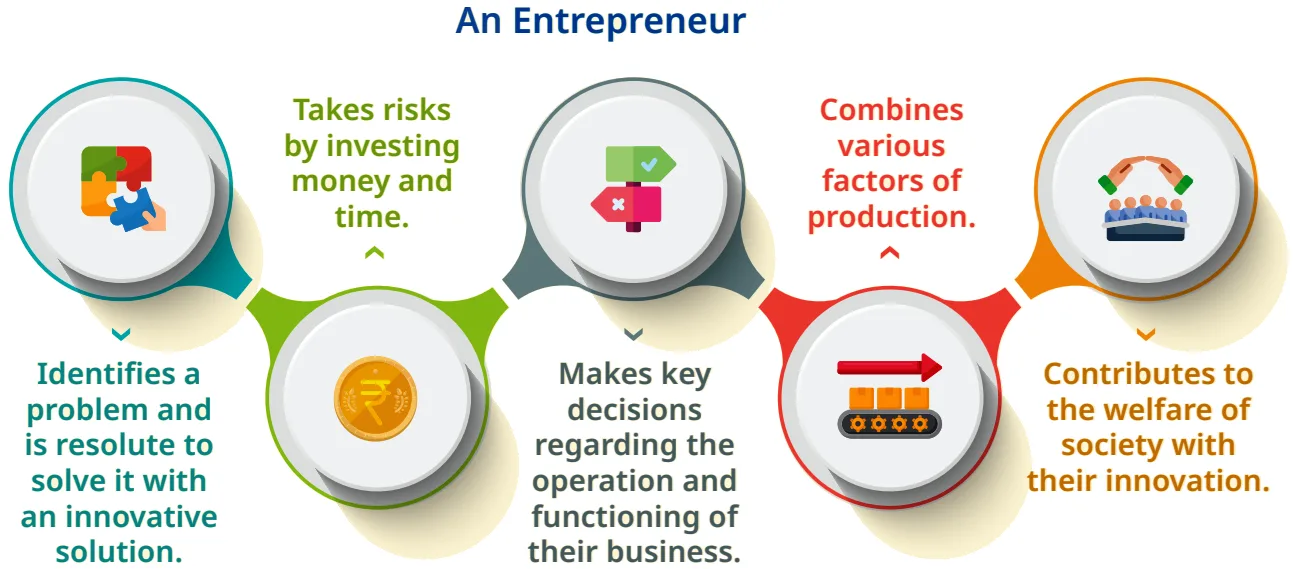
एक successful entrepreneur कई महत्वपूर्ण कार्य करता है:
- Identifies a problem: समस्या की पहचान करता है और innovative solution निकालने के लिए दृढ़ (resolute) रहता है।
- Takes risks: अपना money और time invest करके जोखिम (risk) उठाता है।
- Makes key decisions: Business के operation और functioning के बारे में महत्वपूर्ण निर्णय लेता है।
- Combines factors of production: उत्पादन के विभिन्न कारकों (various factors of production) को जोड़ता है।
- Contributes to society: अपने innovation से society के welfare में योगदान देता है।
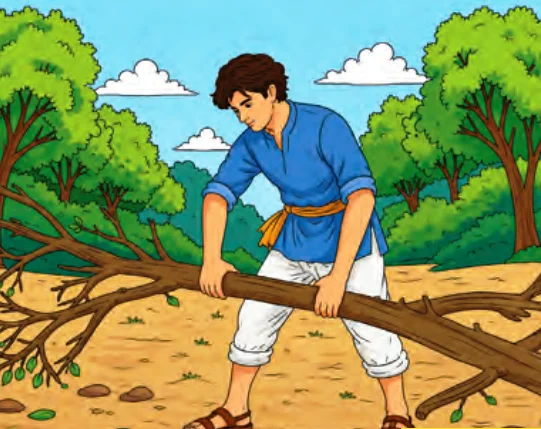
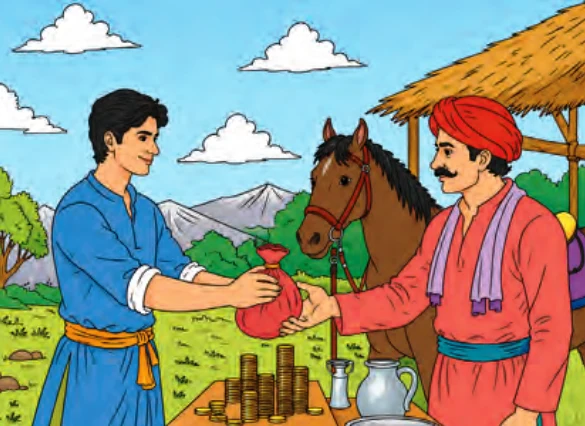
🤔 Think About It: From a Dead Mouse to Riches (Jataka Tales)
एक गरीब युवक ने मरे हुए चूहे को 2 सिक्कों में बेचा, उससे फल खरीदे, उन्हें फूल चुनने वाले को बेचा, फिर लकड़ियां बेचीं, घास का व्यापार किया, और अंततः एक बहुत धनी व्यापारी बन गया।
What can you take away from the tale? What kind of traits do entrepreneurs need to have?
🎯 Competency-Based Questions (CBSE Level)
Q1. [Conceptual] What is the defining characteristic of an entrepreneur according to the chapter?
Ans: An entrepreneur is a curious individual who sees opportunities where others see challenges and works hard to turn an innovative idea into action to create value for society.
Q2. [Fact-Based] Identify three primary tasks performed by an entrepreneur.
Ans: 1. Identifying a problem and creating an innovative solution. 2. Taking risks by investing money and time. 3. Combining various factors of production.
Q3. [Assertion-Reason] Assertion (A): Profit is considered the money earned after paying the costs of producing and selling goods.
Reason (R): Without combining the factors of production effectively, an entrepreneur cannot generate profit.
Ans: Both A and R are correct, and R is the correct explanation of A.
Q4. [Case-Based] In the Jataka Tale “From a Dead Mouse to Riches,” the young man builds an empire starting with just a dead mouse. Which specific entrepreneurial trait does this best demonstrate?
Ans: It demonstrates “Resourcefulness” and the ability to spot opportunities (turning seemingly useless things into tradeable value).
Q5. [Analytical] How does an entrepreneur directly contribute to the welfare of society?
Ans: By identifying local problems and creating innovative solutions (like eco-friendly bags), generating employment, paying taxes, and driving economic growth.
2. Inspiring Entrepreneurial Journeys (प्रेरक उद्यमशीलता यात्राएं)
2.1 Shri Mahila Griha Udyog Lijjat Papad (सहकारी समिति)
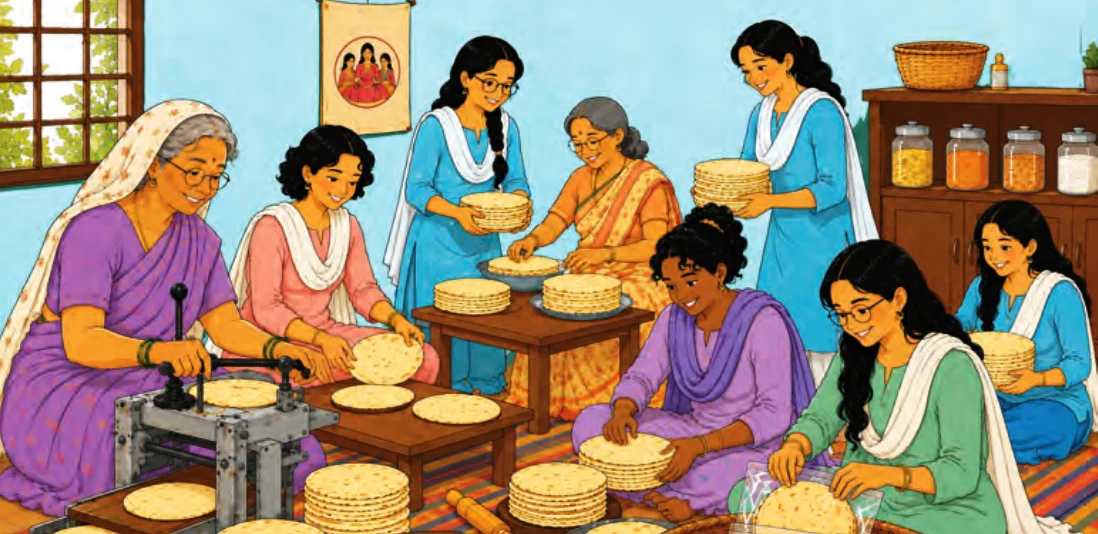
1959 में, Mumbai के एक chawl की 7 ordinary homemakers (गृहिणियों) ने सिर्फ ₹80 और borrowed equipment के साथ पापड़ बनाने का काम शुरू किया। उनका लक्ष्य extra income कमाना था।
- Cooperative Model: उन्होंने एक cooperative society (सहकारी समिति) शुरू की जहाँ हर member equal owner था, और profits seniority के बजाय equally share किए जाते थे। उनका एकमात्र नियम था कि ‘quality consistent होनी चाहिए’।
- Growth: 1962 में इसे “Shri Mahila Griha Udyog Lijjat Papad” (Lijjat means tasty in Gujarati) के रूप में register किया गया। 2023 तक, इसमें 45,000 से अधिक महिला सदस्य, 83 शाखाएं, और ₹1,600 करोड़ का annual turnover था।
- Social Impact: Lijjat ने महिलाओं को financially independent बनाया, बच्चों को scholarships दीं, और पूरी तरह self-reliant (आत्मनिर्भर) रहते हुए community को empower किया।
📚 Important Definition
Chawl: A traditional, multi-storey residential tenement building, typically consisting of dense, single-room units.
🤔 Think About It
What problem was Lijjat solving beyond just selling papads? What challenges do you think the founders could have faced at the start?
2.2 Mohan Singh Oberoi: Hospitality Industry Pioneer
Punjab में 1898 में जन्मे Mohan Singh Oberoi ने Shimla में ₹50/month पर hotel desk clerk के रूप में शुरुआत की।
- Initiative: उन्होंने केवल अपनी duty तक सीमित रहने के बजाय hotel operations का हर aspect (guest service से billing तक) सीखा।
- Risk-Taking: 1934 में, उन्होंने अपनी पत्नी की jewellery mortgage (गिरवी) रखकर एक छोटा होटल खरीदा।
- Success: उन्होंने struggling hotels को successful businesses में बदला, luxury hotels स्थापित किए, और Oberoi Group को दुनिया के सबसे respected hotel brands में से एक बनाया। 2001 में उन्हें Padma Bhushan से सम्मानित किया गया।
📚 Important Definition
Mortgage (गिरवी रखना): A mortgage is a special type of loan used to buy a house or land with some collateral.
💡 Case Study: The Dandekar Brothers (Camelin)
1931 में, Digambar और Govind Dandekar ने recycled glass bottles का उपयोग करके liquid ink बेचने का व्यवसाय शुरू किया। वित्तीय समस्याओं (financial problems) का सामना करने के बावजूद, उन्होंने हार नहीं मानी। उन्होंने महसूस किया कि भारतीय कलाकारों के पास अच्छी art supplies नहीं हैं। इसे एक अवसर (opportunity) के रूप में देखकर, उन्होंने colour chemistry का अध्ययन करने के लिए Glasgow (UK) की यात्रा की। वापस आकर, उन्होंने भारतीय जरूरतों के अनुकूल रंग विकसित करने के लिए एक laboratory स्थापित की। धीरे-धीरे उनकी कंपनी ने pencils, crayons, और geometry boxes बनाना शुरू किया और एक प्रसिद्ध ब्रांड बन गई। यह उनकी innovation, risk-taking, और quality के प्रति प्रतिबद्धता को दर्शाता है।
🎯 Competency-Based Questions (CBSE Level)
Q1. [Case-Based] The 7 homemakers who started Lijjat Papad had no business degrees or investors. What organizational structure did they adopt to ensure everyone was treated fairly?
Ans: They adopted a “Cooperative Society” structure where every member was an equal owner and profits were shared equally regardless of seniority.
Q2. [Analytical] Mohan Singh Oberoi started as a clerk earning ₹50 a month. What specific action did he take that set him apart and eventually led to him owning a massive hotel empire?
Ans: Instead of limiting himself to his assigned desk duties, he took the initiative to learn every single aspect of hotel operations, from guest service to billing and administration, building deep functional knowledge.
Q3. [Assertion-Reason] Assertion (A): Mohan Singh Oberoi demonstrated extreme risk-taking ability in his entrepreneurial journey.
Reason (R): In 1934, he mortgaged his wife’s jewellery and invested all his savings to buy a small, struggling hotel.
Ans: Both A and R are correct, and R is the correct explanation of A.
Q4. [Conceptual] Beyond generating massive profits, how did the Lijjat Papad cooperative impact society?
Ans: It provided financial independence to over 45,000 women, offered scholarships to members’ children to pursue education, and empowered local communities to become self-reliant.
Q5. [Fact-Based] What does the word “Lijjat” mean in Gujarati?
Ans: Tasty.
3. Business Plan: A Road Map for the Business
एक idea को successful venture में बदलने के लिए योजना बनानी पड़ती है। Business Plan एक written document या blueprint है जो business के goals और उन्हें achieve करने के steps को explain करता है। यह entrepreneur को organized रहने, priorities set करने, और decision making में मदद करता है।
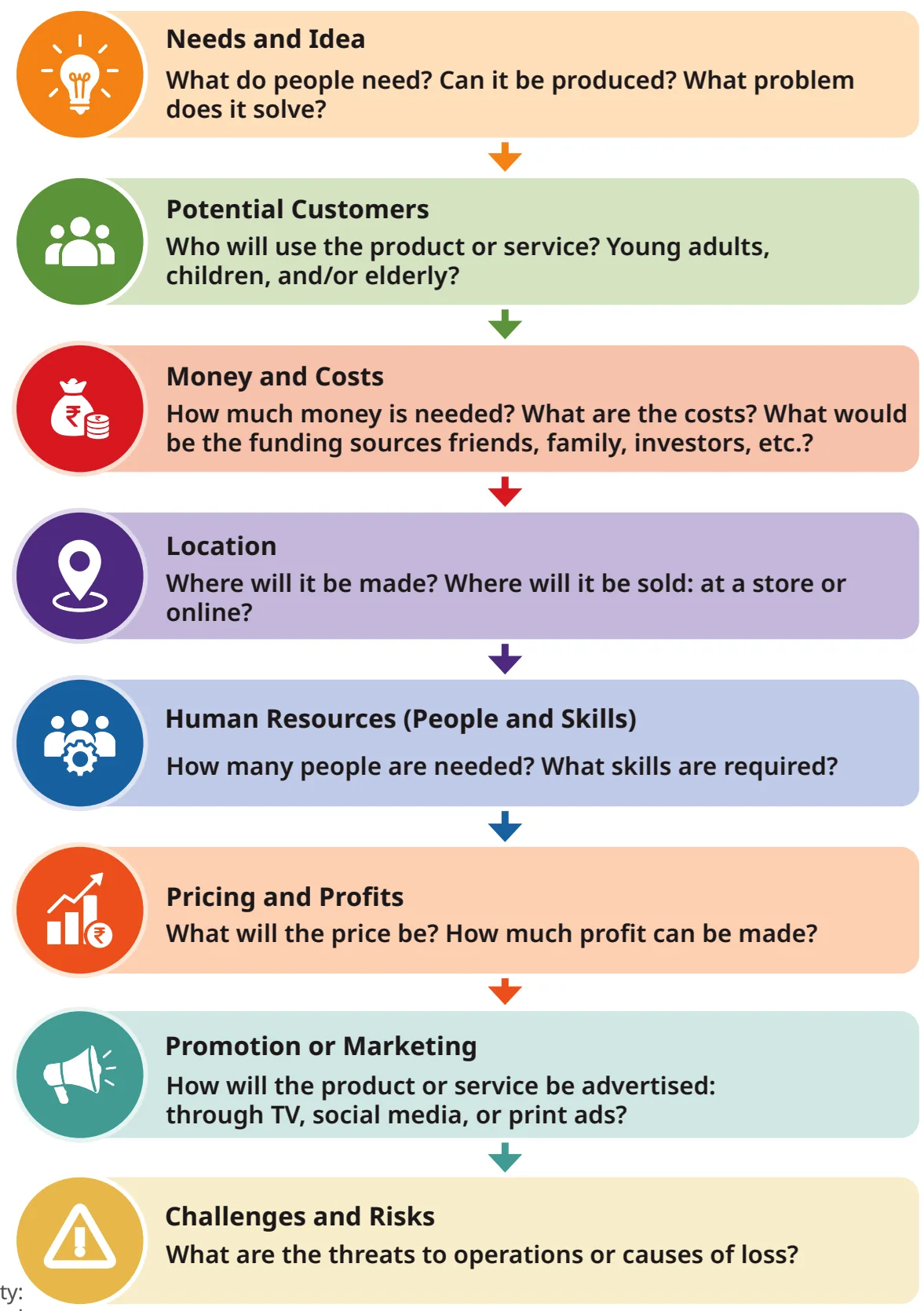
Key Considerations in Making a Business Plan (Fig 6.6, 6.7, 6.8)
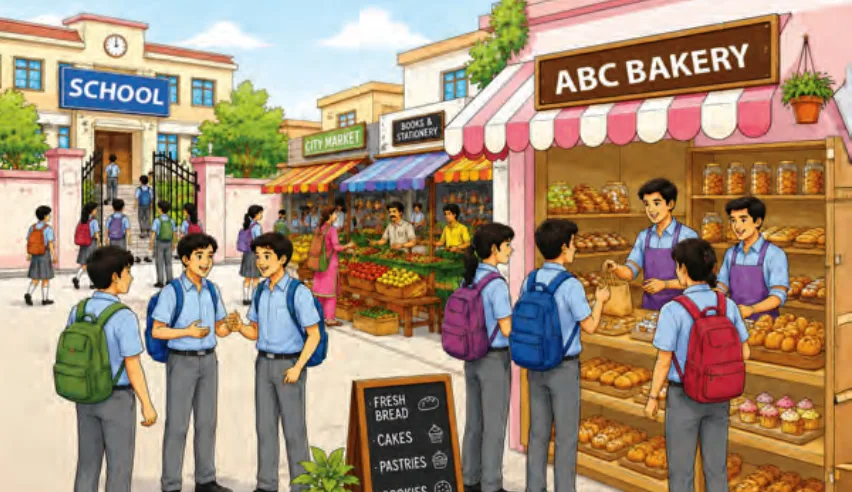
- Needs and Idea: People को क्या चाहिए? यह किस problem को solve करता है? (e.g., Bakery offering fresh, affordable, or healthier whole wheat options).
- Potential Customers: Product कौन यूज़ करेगा? Target consumers कौन हैं? (e.g., Children for cupcakes, adults for savoury snacks).
- Money and Costs: Initial investment (oven, rent, staff) कितना होगा? Funds कहाँ से आएंगे (savings, bank loans, investors)?
- Location: Business कहाँ स्थित होगा? (e.g., Near busy schools/markets, or online delivery apps).
- Human Resources: कितने लोगों की जरूरत है और कौन सी skills चाहिए? (e.g., Bakers, helpers, billing staff).
- Pricing and Profits: Prices कैसे तय करें जो cost cover करें, profit दें, और customers के लिए affordable भी हों।
- Promotion or Marketing: Business को कैसे advertise करेंगे? (e.g., Social media, eco-friendly packaging, special discounts).
- Challenges and Risks: Operations को क्या खतरे (threats) हैं? (e.g., High competition, managing perishable inventory, fluctuating customer demand).

📚 Important Definitions
Inventory (स्टॉक): The goods, materials, and assets a business holds for the purpose of manufacturing, production, or resale.
Accounting (लेखांकन): Recording and tracking all the money related to the business so the owner knows how it is performing.
🎯 Competency-Based Questions (CBSE Level)
Q1. [Sequence-Based] In creating a business plan, why must an entrepreneur identify “Needs and Ideas” before determining “Pricing and Profits”?
Ans: Because you cannot price a product or estimate profits until you first know what problem you are solving, what product you are making, and whether there is an actual market need for it.
Q2. [Analytical] Why is defining “Potential Customers” a crucial step in a business plan for a new bakery?
Ans: Knowing the target customers helps the bakery decide what specific products to offer (e.g., cupcakes for school kids vs. healthy whole-wheat bread for health-conscious adults) and how to market them effectively.
Q3. [Assertion-Reason] Assertion (A): Identifying ‘Challenges and Risks’ is an inevitable and essential part of every business plan.
Reason (R): Every business faces threats like high competition, volatile cash flows, and changing customer preferences, which must be planned for in advance to prevent losses.
Ans: Both A and R are correct, and R is the correct explanation of A.
Q4. [Conceptual] What is the primary function of a “Business Plan”?
Ans: It is a written blueprint that explains the goals of the business and the steps to achieve them, acting as a roadmap for decision-making and keeping the entrepreneur organized.
Q5. [Fact-Based] What financial term describes the goods, materials, and assets a business holds specifically for manufacturing or resale?
Ans: Inventory.
4. Functional Areas of a Business (व्यवसाय के कार्यात्मक क्षेत्र)
एक successful business चार मुख्य pillars (functional areas) पर चलता है, जो resources का सही उपयोग और बेहतर coordination ensure करते हैं।
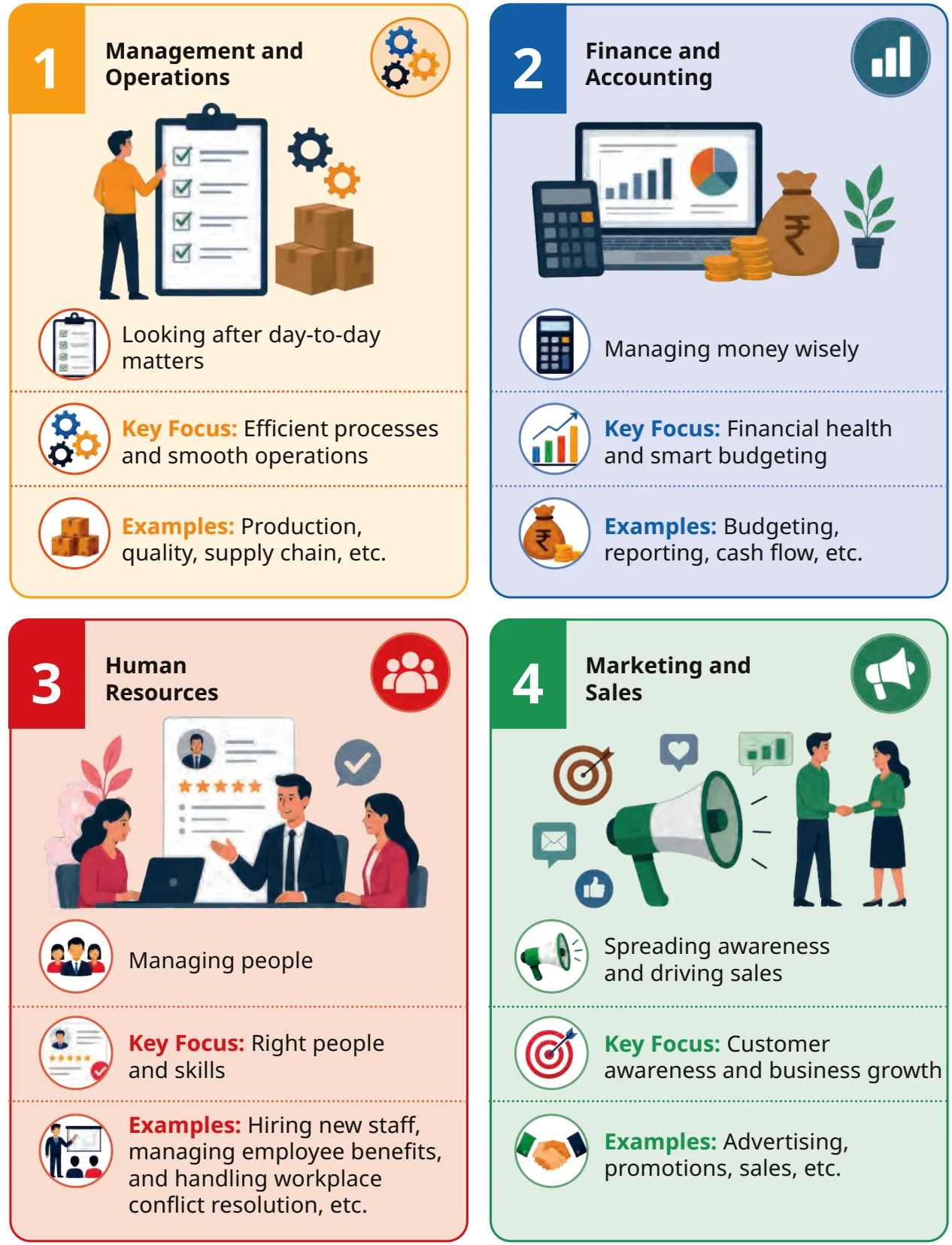
1. Management and Operations
Management में business goals achieve करने के लिए resources का planning और organising शामिल है। Operations goods/services को efficiently और on time produce करने पर focus करता है (e.g., सही equipment चुनना, quality monitor करना, और wastage रोकना)।

2. Finance and Accounting
Finance में business को चलाने और बढ़ाने के लिए funds का planning और use शामिल है। इसमें Fixed Costs और Variable Costs को manage करना शामिल है।
- Fixed Cost (निश्चित लागत): वे खर्च जो production volume या sales के साथ नहीं बदलते (जैसे rent, insurance, salaries)।
- Variable Cost (परिवर्तनीय लागत): वे खर्च जो production के साथ बढ़ते या घटते हैं (जैसे raw materials, packaging)।
- Investment: The allocation of money into an asset with the expectation of generating future profit.
Accounting का अर्थ है financial transactions को record और organise करना। सबसे महत्वपूर्ण record Profit and Loss Account (Income Statement) होता है, जो दिखाता है कि business ने profit कमाया या loss।
Formula: Profit = Total Revenue – Total Expenses.
| PROFIT AND LOSS ACCOUNT *ABC Bakery (Teen enterprise) | For the month ended March 2026 |
|
|---|---|
| Income | |
| Revenue from operations (sales) | |
| Bread and buns | ₹1,20,000 |
| Pastries and cookies | ₹75,000 |
| Total Income | ₹2,95,000 |
| Expenses | |
| Cost of goods sold (Raw materials, Packaging) | ₹1,12,000 |
| Rent & Salaries | ₹70,000 |
| Utilities, Marketing, Misc, Interest | ₹40,000 |
| Total Expenses | ₹2,22,000 |
| Profit Calculation | |
| Profit before tax (Total Income – Total Expenses) | ₹73,000 |
| Tax to be paid | – ₹13,000 |
| Profit after tax (PAT) | ₹60,000 |
3. Human Resources (HR)
लोग किसी भी business का दिल होते हैं। HR department सही skills वाले लोगों (bakers, cashiers) को hire करने, train करने (in hygiene standards), और एक motivating workplace बनाने का काम करता है।
4. Marketing and Sales
यह team customers को attract करने और उन्हें product खरीदने के लिए convince करने का काम करती है। Strategies में catchy name चुनना, social media promotion, seasonal items (mango cake) बनाना, discounts देना, और eco-friendly packaging का इस्तेमाल करना शामिल है।
🎯 Competency-Based Questions (CBSE Level)
Q1. [Classification] A bakery pays ₹40,000 a month for shop rent and buys ₹1,00,000 worth of flour and sugar. Classify these two expenses into Fixed and Variable costs.
Ans: Shop rent is a Fixed Cost (it remains constant regardless of how many cakes are baked). Flour and sugar are Variable Costs (they increase as more cakes are produced).
Q2. [Analytical] How does the “Profit and Loss Account” help an entrepreneur make informed decisions?
Ans: It tracks total revenue coming in and total expenses going out over a specific period. By showing the exact profit or loss, it tells the entrepreneur whether they need to cut expenses, change pricing, or if they have enough surplus to invest in growth.
Q3. [Assertion-Reason] Assertion (A): The Human Resources department is essential even for a small bakery.
Reason (R): People are the heart of the business, and HR ensures that staff with the right skills are hired, trained in hygiene standards, and kept motivated.
Ans: Both A and R are correct, and R is the correct explanation of A.
Q4. [Case-Based] Based on the Mohan Singh Oberoi case study, which functional area was he focusing on when he “hired and trained skilled staff to provide excellent hospitality services”?
Ans: Human Resources.
Q5. [Fact-Based] What is the mathematical formula used in accounting to calculate a business’s Profit?
Ans: Profit = Total Revenue – Total Expenses.
5. Traditional Communities & Modern Startups
5.1 India’s Traditional Entrepreneurial Community: Chettiars
भारत में उद्यमिता (entrepreneurship) की गहरी जड़ें traditional communities में हैं, जहाँ skills और knowledge पीढ़ियों से transfer हो रहे हैं।
- The Chettiar (Nattukottai Chettiar) community: Tamil Nadu का यह समुदाय traders, bankers, और moneylenders के रूप में प्रसिद्ध था। उन्होंने India के अलावा Sri Lanka, Myanmar, और Malaysia में भी व्यापार किया।
- Key Traits: वे अपनी strong business ethics, trust-based lending, और बेहतरीन accounting & record-keeping skills के लिए जाने जाते थे। वे profits को trade, temples, education, और community welfare में reinvest करते थे।

5.2 Startups and Their Contribution to the Nation
भारत का vibrant startup ecosystem innovation और perseverance (दृढ़ता) पर बना है। Failures भी इस journey का हिस्सा हैं, जो valuable lessons देते हैं।
Swami Vivekananda said: “Arise, awake and stop not till the goal is reached.”
📚 Important Definitions
Startup (स्टार्टअप): A young, early-stage company founded by entrepreneurs offering an innovative product or service.
Atmanirbhar Bharat: A national policy framework launched in 2020 to make the country self-sustaining, boost domestic manufacturing, and reduce import dependency.
Viksit Bharat 2047: The Govt of India’s vision to transform India into a fully developed nation by 2047 (100 years of independence).
- Global Standing: India दुनिया का third-largest startup ecosystem है, जिसमें 120 से अधिक Unicorns (startups valued over $1 billion) हैं (as of 2025)।
- Sectors & Hubs: प्रमुख sectors में e-commerce, fin-tech, health-tech, और agri-tech शामिल हैं। Bengaluru, Hyderabad, Mumbai, और Delhi NCR प्रमुख startup hubs हैं।
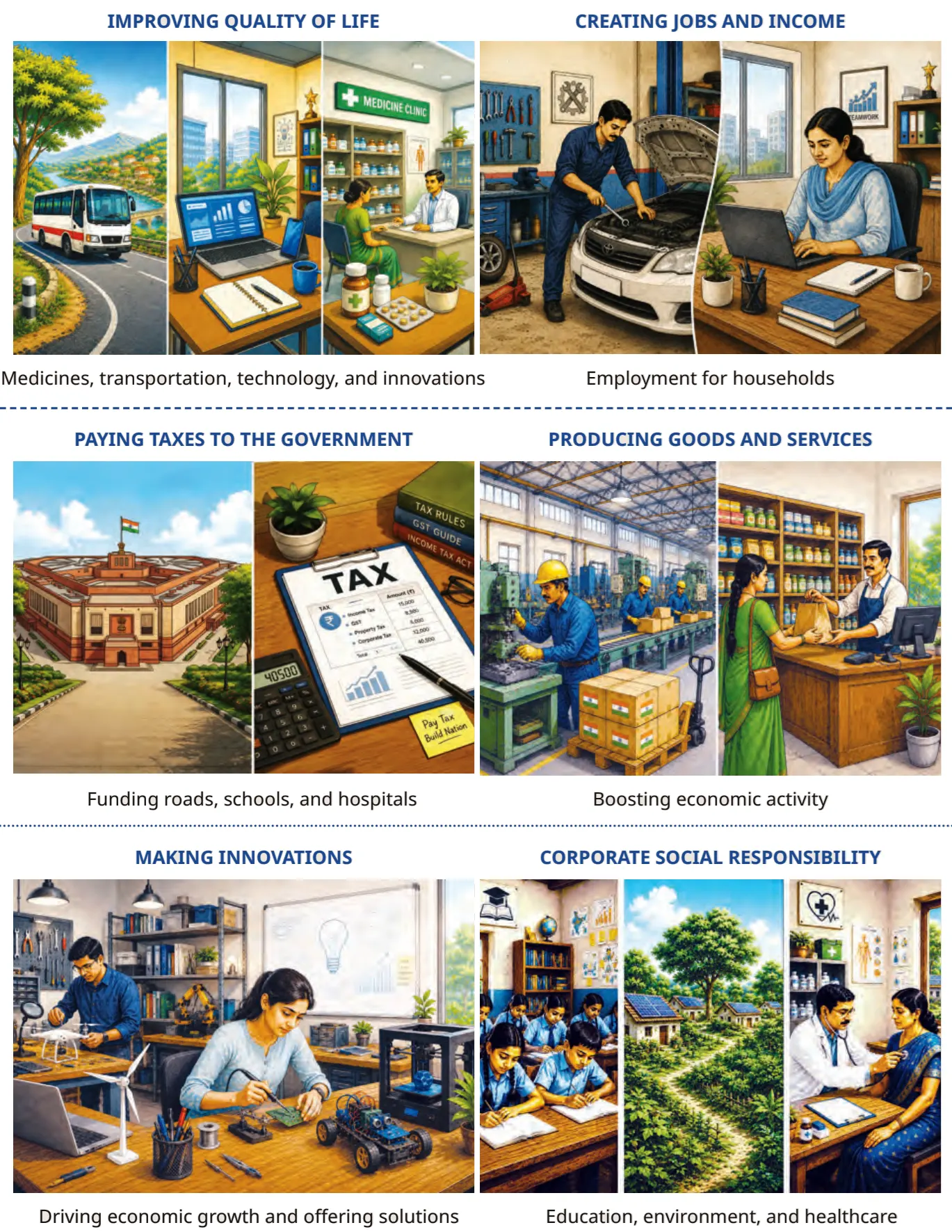
- Contribution (Fig 6.13): Startups employment create करते हैं, goods/services produce करते हैं, taxes pay करते हैं, economy को boost करते हैं, innovation लाते हैं, और Corporate Social Responsibility (CSR) के तहत education और healthcare में मदद करते हैं।
🎯 Competency-Based Questions (CBSE Level)
Q1. [Case-Based] The Dandekar brothers started a small ink business using recycled bottles. Facing poor quality issues, they traveled to Glasgow to study colour chemistry, returned to India, set up a lab, and eventually built a massive brand for pencils and crayons. What critical entrepreneurial traits did they display?
Ans: They displayed extreme perseverance (not giving up during financial struggles), high risk-taking (traveling abroad to learn), and a relentless focus on Innovation/Operations to improve product quality tailored to Indian needs.
Q2. [Analytical] How did traditional communities like the Chettiars function as the backbone of India’s local economy long before modern startups existed?
Ans: They practiced deep self-employment and trade built on strong ethics and trust-based lending. By utilizing excellent accounting skills and operating without formal banks, they generated massive wealth which they reinvested into the community, education, and temples.
Q3. [Assertion-Reason] Assertion (A): Failures are considered a valuable part of the entrepreneurial and startup journey.
Reason (R): Every unsuccessful attempt provides critical data and lessons that help entrepreneurs develop stronger ideas and build better businesses in the future.
Ans: Both A and R are correct, and R is the correct explanation of A.
Q4. [Conceptual] What is a “Unicorn” in the context of the modern Indian startup ecosystem?
Ans: A Unicorn is a highly successful startup company that is valued at over 1 billion dollars.
Q5. [Fact-Based] What is the government’s national policy framework launched in 2020 designed to boost domestic manufacturing and reduce import dependency?
Ans: Atmanirbhar Bharat.
The Big Questions (Chapter Objectives Solved)
1. How does entrepreneurship impact society and the economy?
2. What are some functional areas of a business?
3. How to develop a business plan?
List
Class 9 Social Science Part 2 Chapter 6 From Ideas to Startups Revision Notes

Class 9 Social Science Part 2 Chapter 5 Managing Your Personal Finances Revision Notes

Class 9 Social Science Part 2 Chapter 4 Governance and Public Policy Revision Notes
Class 9 Social Science Part 2 Chapter 3 Resistance and Resilience Revision Notes

Class 9 Social Science Part 2 Chapter 2 Life on Earth Revision Notes