Class 9 Social Science Part 1 Chapter 1 Revision Notes: Understanding Social Science
सरल शब्दों में, Social Science (सामाजिक विज्ञान) human society का एक systematic study है। जहाँ Physics, Chemistry, और Biology जैसे विषय natural world का अध्ययन करते हैं, वहीं Social Science society, institutions, cultures, और human interactions पर ध्यान केंद्रित करता है। यह केवल यह नहीं बताता कि क्या हुआ या चीजें कहाँ स्थित हैं, बल्कि यह भी समझाता है कि घटनाएँ क्यों होती हैं, सरकारें और अर्थव्यवस्थाएँ कैसे काम करती हैं, और हमारा past व present मिलकर भविष्य को कैसे आकार देते हैं।
1. Social Science in Everyday Life & Knowledge Traditions (दैनिक जीवन और परंपराएँ)
हमारे दैनिक जीवन की सबसे साधारण गतिविधियाँ भी governance, economic production, social cooperation, और natural environment से जुड़ी होती हैं—जैसे अलग-अलग क्षेत्रों से आई सामग्री से बना घर, किसानों व व्यापारियों के जरिए प्लेट तक पहुँचा भोजन, public authorities द्वारा बनाई सड़कें, educational policies से चलते स्कूल, और दूर स्थित power stations से आती बिजली।
Society संयोग (chance) से नहीं चलती; यह history, geography, institutions, resources, और human choices से आकार लेती है। Social Science हमें observation, evidence, और logical reasoning के माध्यम से बड़े सवालों (जैसे शहर क्यों भीड़भाड़ वाले हैं, कुछ क्षेत्र बाढ़ के प्रति अधिक संवेदनशील क्यों हैं, climate change हमें कैसे प्रभावित करता है) के उत्तर खोजने में मदद करता है।
🔍 Let’s Analyse: Observing Change in Your Locality
Identify a change in your locality over the past five years (transport, housing, education, technology, or environment). Discuss what it was earlier, what changed, what caused it, and how it affected people’s lives.
• Earlier Situation: Five years ago, almost all local shopkeepers and auto-rickshaws accepted only cash, and commuters waited long periods for buses.
• What Changed: Today, QR-code UPI payments are universal even at small vegetable stalls, and electric e-rickshaws provide quick last-mile connectivity.
• Cause: Affordable smartphones, expanding internet infrastructure, and government digital/green-transport policies.
• Impact: Faster, transparent transactions for small vendors, cleaner local air, and easier daily travel for students and workers.
Understanding Society through Time and Traditions
हजारों वर्षों में मानव समाज ने nature पर सीधी निर्भरता से निकलकर farming, animal domestication, villages, towns, और cities का निर्माण किया। भारत की ज्ञान परंपरा (India’s knowledge traditions) में हमेशा से discussion, questioning, और logical reasoning को महत्व दिया गया है:
- Pañchamahābhūtas: प्रकृति को एक interconnected system के रूप में देखता है, जो बताता है कि environment हमारे settlement patterns, occupations, architecture, food habits, और health को कैसे प्रभावित करता है।
- Vasudhaiva Kuṭumbakam (‘the world is one family’): यह विभिन्न क्षेत्रों और संस्कृतियों के बीच मानव समाजों की परस्पर निर्भरता (interdependence) को व्यक्त करता है।
- Kautilya’s Arthaśhāstra (~2,300 years ago): यह प्रशासन, economic management, taxation, और प्रजा के प्रति शासकों के कर्तव्यों (public welfare & ethical responsibility) का व्यवस्थित अध्ययन करता है।
📚 Important Definition
Pañchamahābhūtas (पंचमहाभूत): From Indian philosophical traditions, explaining the world as composed of five fundamental elements—earth (Prithvī), water (Āpah), fire (Agni), air (Vāyu), and space (ākāśha). It represents an early attempt to understand nature and living beings as an interconnected system.
आधुनिक Social Scientists लोगों के जीवन का अवलोकन (observation), interviews, surveys, और दस्तावेजों की जाँच करके evidence-based व्याख्याएँ देते हैं ताकि हम continuity और change दोनों को समझ सकें।
🎯 Competency-Based Questions (Section 1)
Q1. [Scenario-Based] A severe drought strikes a rural district, leading to crop failure, falling farmer incomes, emergency government relief camps, and migration to nearby cities. Why can no single subject explain this crisis completely?
Ans: Because human society is complex and interconnected—understanding a drought requires combining Geography (environment), Economics (incomes), Political Science (relief policies), Sociology (migration), and Culture (coping traditions).
Q2. [Assertion-Reason] Assertion (A): Systematic thinking about governance and economics in India began only in modern universities.
Reason (R): Kautilya’s Arthaśhāstra, composed about 2,300 years ago, systematically examined administration, taxation, economic management, and rulers’ duties.
Ans: A is False, R is True. Systematic reflection on society, politics, and economics has deep roots in ancient Indian traditions.
Q3. [Analytical] How does the ancient Indian ideal of ‘Vasudhaiva Kuṭumbakam’ connect to modern Social Science?
Ans: Meaning ‘the world is one family’, it highlights the interdependence of human societies across regions and cultures, which lies at the core of how modern Social Science studies global interactions.
Q4. [Conceptual] Name the five great elements that make up the ‘Pañchamahābhūtas’.
Ans: Earth (Prithvī), water (Āpah), fire (Agni), air (Vāyu), and space (ākāśha).
Q5. [Fact-Based] How do modern social scientists gather evidence to explain how societies function and change?
Ans: By observing people’s lives, conducting interviews and surveys, examining documents, and comparing different times and places.
2. Core Disciplines: Geography & History (भूगोल और इतिहास)
Grades 9–10 में Social Science मुख्य रूप से चार core disciplines—Geography, History, Political Science, और Economics—से बना है। इसके व्यापक परिवार में Sociology, Philosophy, Anthropology, और Psychology भी शामिल हैं।
A. Geography (भूगोल)
Geography पृथ्वी की physical features, स्थानों व लोगों के वितरण, और मानव व प्रकृति के संबंधों का अध्ययन करता है। यह spatial perspectives (स्थान और उसका महत्व) को temporal perspectives (समय के साथ बदलाव) से जोड़ता है। Natural और social sciences दोनों का उपयोग करते हुए यह समझाता है कि कैसे भारतीय प्रायद्वीप की लंबी तटरेखा (coastline) ने Africa, Europe, और Southeast Asia के साथ ऐतिहासिक संपर्क को बढ़ावा दिया।
Tools of Geography: Maps, globes, atlases, Geographical Information System (GIS), और infographics। अगले दो वर्षों में आप landforms, atmosphere/climate, oceans, biomes, biosphere reserves, और geospatial technologies का अध्ययन करेंगे।
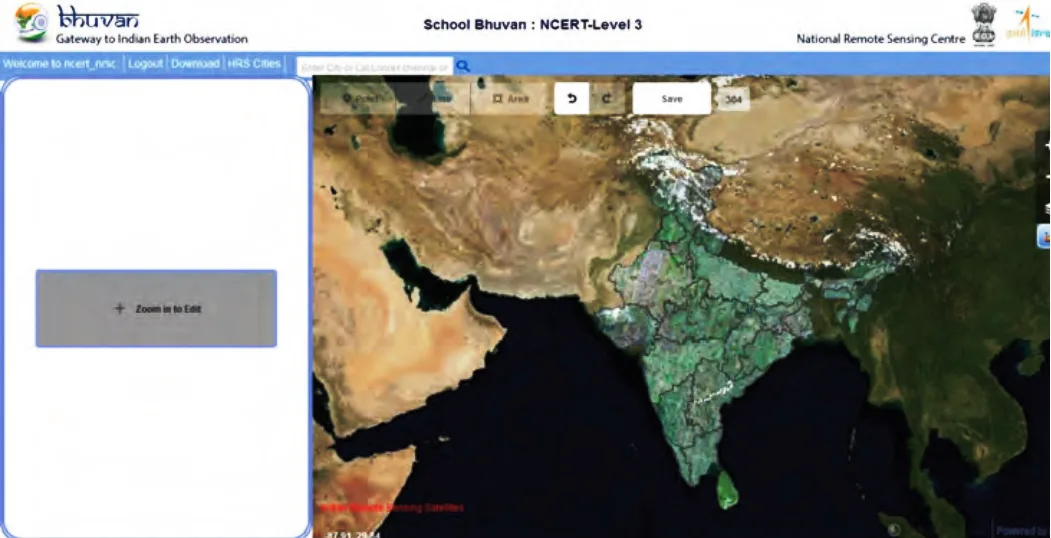
🔍 Let’s Explore: Mapping Your Village/City with School Bhuvan
With the help of NCERT’s School Bhuvan portal (https://bhuvan-app1.nrsc.gov.in/mhrd_ncert/), how can students use geospatial tools to map their own locality?
B. History (इतिहास)
History मानव अतीत (human past) का अध्ययन है। भारत में सांस्कृतिक स्मृति (cultural memory) और मूल्यों को पीढ़ी-दर-पीढ़ी पहुँचाने की सबसे प्राचीन परंपरा Itihāsa-purāṇa tradition है। इसके विपरीत, आधुनिक इतिहास लेखन (modern historiography) empirical evidence, human genetics, carbon-14 dating, और archaeology जैसे वैज्ञानिक तरीकों पर निर्भर करता है।
📚 Important Historical Definitions
Empirical Evidence: Information collected by actual observation or experimentation.
Genealogical Records: Documents tracing family lineage and ancestry across generations (recording births, marriages, and deaths).
Epigraphic Source: Texts, decrees, or records inscribed on durable materials like stone, metal plates, or rock surfaces, giving direct evidence of past rulers and administration.
Numismatic Source: Historical sources comprising coins, currency, or medals; helps study economy, chronology, rulers, trade, political boundaries, and culture.
इतिहासकार चार प्रमुख प्रकार के स्रोतों (sources) का उपयोग करते हैं: Literary Sources (manuscripts, travelogues, memoirs, correspondence, genealogical records, folklore, revenue documents), Archaeological Sources (monuments, excavated sites, artefacts, sculptures), Epigraphic Sources (inscriptions), और Numismatic Sources (coins)। अगले दो वर्षों में आप early humans से लेकर आधुनिक भारत, Greco-Roman world, Reformation, Renaissance, Enlightenment, Industrial Revolution, और anti-colonial struggles पढ़ेंगे।








🎯 Competency-Based Questions (Section 2)
Q1. [Scenario-Based] A historian examines a 4th-century gold coin issued by King Samudragupta to study the empire’s trade prosperity and political boundaries. Which category of historical source is being used?
Ans: Numismatic Source (the study of coins, currency, and medals).
Q2. [Assertion-Reason] Assertion (A): Geography integrates both natural sciences and social sciences.
Reason (R): It studies both the physical features of the Earth’s surface and how human communities interact with their surroundings over space and time.
Ans: Both A and R are true, and R is the correct explanation of A.
Q3. [Analytical] How does modern historiography differ from traditional approaches like the Itihāsa-purāṇa tradition?
Ans: While the Itihāsa-purāṇa tradition preserves cultural memory and enduring moral ideals through stories, modern historiography increasingly relies on empirical evidence and scientific tools like carbon-14 dating, human genetics, and archaeology to establish accurate timelines.
Q4. [Conceptual] Distinguish between an ‘Epigraphic Source’ and a ‘Literary Source’ using one example of each from the chapter.
Ans: An epigraphic source is text inscribed on durable stone or metal (e.g., Krishnadeva Raya’s Kannada inscription at Hampi), whereas a literary source is a written/manuscript text (e.g., the Sāmaveda or Tirukkural palm-leaf manuscript).
Q5. [Fact-Based] What is the full form of GIS, a modern tool used by geographers?
Ans: Geographical Information System.
3. Core Disciplines: Political Science & Economics (राजनीति विज्ञान और अर्थशास्त्र)
A. Political Science (राजनीति विज्ञान)
Political Science governance का अध्ययन है—यह बताता है कि power कैसे बँटती है, decisions कैसे लिए जाते हैं, और constitutions व State institutions कैसे काम करते हैं। इसमें social movements, nation building, और foreign policy भी शामिल हैं। भारत के गाँवों में Panchayati Raj system grassroots democracy का जीवंत उदाहरण है।
Indian Political Thought: भारत में राजनीति को अलग विषय नहीं, बल्कि dharma (moral duty), artha (economic well-being), और rājadharma (duties of the ruler) से जोड़कर देखा गया। Vedas, Upanishads, Purāṇas, Mahābhārata, Śhukranīti, और Arthaśhāstra में सत्ता को केवल privilege नहीं, बल्कि एक responsibility (जिम्मेदारी) माना गया है। अगले दो वर्षों में आप democracy, elections, authority, civil society, public policy, और national security पढ़ेंगे।
B. Economics (अर्थशास्त्र)
Economics यह समझने में मदद करता है कि व्यक्ति और समाज अपनी जरूरतें पूरी करने के लिए limited resources का उपयोग कैसे करते हैं। यह production, exchange, और distribution तथा consumers, producers, और governments के निर्णयों का अध्ययन करता है—इसलिए यह केवल numbers और markets नहीं, बल्कि well-being, equity, और justice से भी जुड़ा है।
India’s Economic Journey: सदियों तक भारत दुनिया की अग्रणी अर्थव्यवस्थाओं (leading economies) में से एक था। Colonial rule ने इसे बाधित किया, जिससे गरीबी, अकाल (famines), और पारंपरिक उद्योगों का पतन हुआ। आजादी के बाद भारत ने infrastructure, education, technology, और life expectancy में बड़ी प्रगति की है। आज हमारा लक्ष्य sustainable growth है जो भविष्य की पीढ़ियों को नुकसान पहुँचाए बिना सभी वर्गों तक विकास पहुँचाए। अगले दो वर्षों में आप markets, prices, entrepreneurship, GDP, international trade, और Union Budget पढ़ेंगे।
🎯 Competency-Based Questions (Section 3)
Q1. [Scenario-Based] A village Gram Sabha meets to plan local road repairs and clean drinking water pipelines with direct citizen participation. Which Indian institution of grassroots democracy does this reflect?
Ans: The Panchayati Raj system.
Q2. [Assertion-Reason] Assertion (A): In early Indian political thought, political power was viewed primarily as a moral responsibility rather than a personal privilege.
Reason (R): Ancient texts like the Mahābhārata, Śhukranīti, and Arthaśhāstra closely linked governance to dharma, artha, and rājadharma (duties of the ruler).
Ans: Both A and R are true, and R is the correct explanation of A.
Q3. [Analytical] How did British colonial rule impact India’s historical economic position?
Ans: Before colonial rule, India was a leading global economy and hub of trade and maritime activity; colonial rule disrupted this progress, causing widespread poverty, recurrent famines, and the decline of traditional industries.
Q4. [Conceptual] What does ‘sustainable growth’ mean in Economics?
Ans: Sustainable growth means using resources wisely and fairly to meet present economic needs without harming the ability of future generations to meet theirs.
Q5. [Fact-Based] Name three ancient Indian concepts closely linked to early Indian political thought.
Ans: Dharma (moral duty), Artha (economic well-being), and Rājadharma (duties of the ruler).
4. Why Study Social Science? & Its Future (सामाजिक विज्ञान का महत्व और भविष्य)
- Understanding Diversity & Unity: Social Science समझाता है कि एक ही देश में विभिन्न भाषाएँ, रीति-रिवाज और व्यवसाय क्यों मौजूद हैं, और कैसे भारतीय संस्कृति इस विविधता को एक underlying unity में बाँधती है।
- Responsible Democratic Citizenship: यह हमें laws, rights, और responsibilities की समझ देकर civic life में सक्रिय भूमिका निभाने के लिए तैयार करता है।
- Addressing Future Challenges: आने वाले समय में Social Science climate change, sustainable development, social harmony, equitable resource use, और नई तकनीक के जिम्मेदार उपयोग जैसी जटिल समस्याओं को सुलझाने में मदद करेगा।
- Your Two-Year Learning Journey (Grades 9–10): Social Science केवल dates, maps, या definitions रटने (memorising) का विषय नहीं है—यह लोगों, समाज, संस्कृति और सत्ता को समझने तथा एक जागरूक व जिम्मेदार नागरिक बनने की यात्रा है।
🎯 Competency-Based Questions (Section 4)
Q1. [Scenario-Based] A student argues that Social Science is only about memorising historical dates and capitals on a map. How would you correct this misconception based on the chapter?
Ans: Social Science is not about rote memorisation; it is a systematic study of people, places, society, culture, and power that builds critical thinking, evidence analysis, empathy, and responsible citizenship.
Q2. [Assertion-Reason] Assertion (A): Studying Social Science builds respect and cooperation among diverse communities.
Reason (R): It explains linguistic, cultural, and occupational differences as natural outcomes of geographical, historical, and economic factors while highlighting underlying unity.
Ans: Both A and R are true, and R is the correct explanation of A.
Q3. [Analytical] Name three major global or national challenges of the future that Social Science will help societies address.
Ans: Climate change, sustainable development, social harmony, equitable use of resources, and responsible use of new technologies (any three).
Q4. [Conceptual] How does Social Science connect the past, present, and future?
Ans: By helping us understand how past decisions and historical events shaped the present world, it equips us with the wisdom and reasoning to make better choices for the future.
Q5. [Fact-Based] Name the four core disciplines of Social Science studied in Grades 9 and 10, and two additional disciplines from the broader Social Science family.
Ans: Four core disciplines: Geography, History, Political Science, and Economics. Broader family (any two): Sociology, Philosophy, Anthropology, Psychology.
Key Chapter Objectives Solved (The Big Ideas)
1. What is Social Science, and how is it connected to our everyday life?
2. How do India’s ancient knowledge traditions reflect the spirit of Social Science?
3. How do the four core disciplines of Social Science work together to give a holistic view of society?
4. Why should we study Social Science, and what is its role in the future?
List
Class 9 Social Science Part 1 Chapter 9 The Price Puzzle: What Drives the Market NCERT Solutions
Class 9 Social Science Part 1 Chapter 1 Understanding Social Science Revision Notes
Class 9 Social Science Part 1 Chapter 2 Shaping of the Earths Surface Revision Notes
Class 9 Social Science Part 1 Chapter 3 Atmosphere and Climate Revision Notes
Class 9 Social Science Part 1 Chapter 4 Early Humans and Beginning of Civilisation Revision Notes