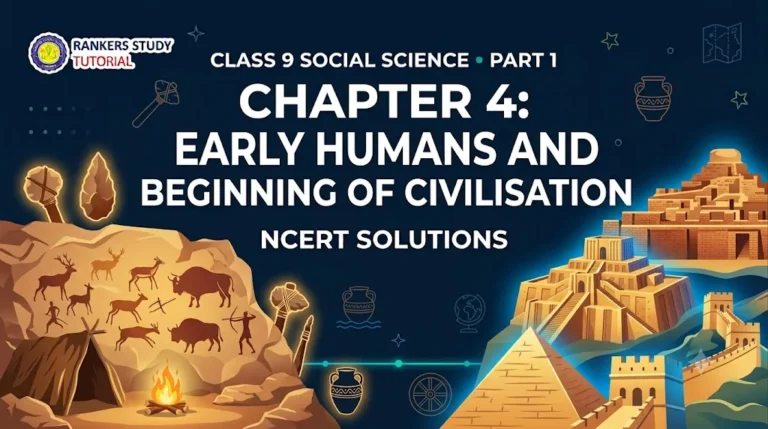
Class 9 Social Science Part 1 Chapter 4 Early humans and beginning of civilisation NCERT Solutions
Part 1: The Big Questions (Page 61)
Q1. How did humans live on Earth before the beginning of civilisation?
Q2. How did humans communicate before writing was invented?
Q3. How is archaeology helpful in understanding our past?
Q4. How did early civilisations interact with each other?
Part 2: In-Text Questions & Activities Solved
Let’s Explore (Page 62): Observe the Harappan seal (Fig. 4.1) carefully and discuss why the script has not yet been deciphered. Also, find out what efforts have been made to decipher it.
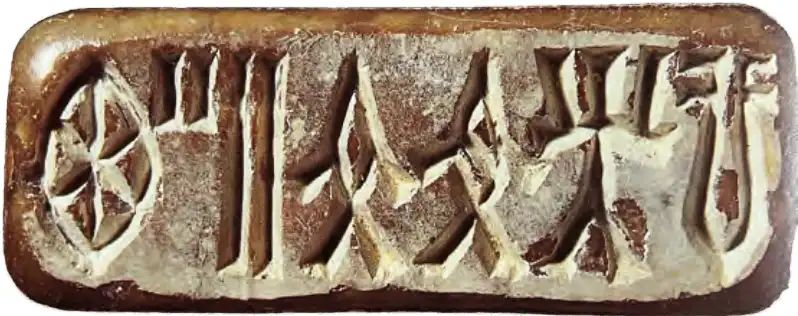
The Harappan script (Sindhu lipi) remains undeciphered for three main reasons:
- Most inscriptions are extremely short—averaging only 4 to 5 symbols—leaving too little text for linguistic analysis.
- No bilingual inscription (like Egypt’s Rosetta Stone) has ever been discovered.
- The underlying spoken language of the Harappans is still unknown.
Efforts made: Linguists, archaeologists, and computer scientists today use artificial intelligence (AI), statistical pattern analysis, and comparisons with Dravidian and Indo-Aryan language families to try to decode the script.
Think About It (Page 65): Why do you think early humans left Africa to migrate to other regions?
- Do you notice any changes in the shape or features of the skulls across different ancestors?
- Can you observe a gradual straightening of the face?
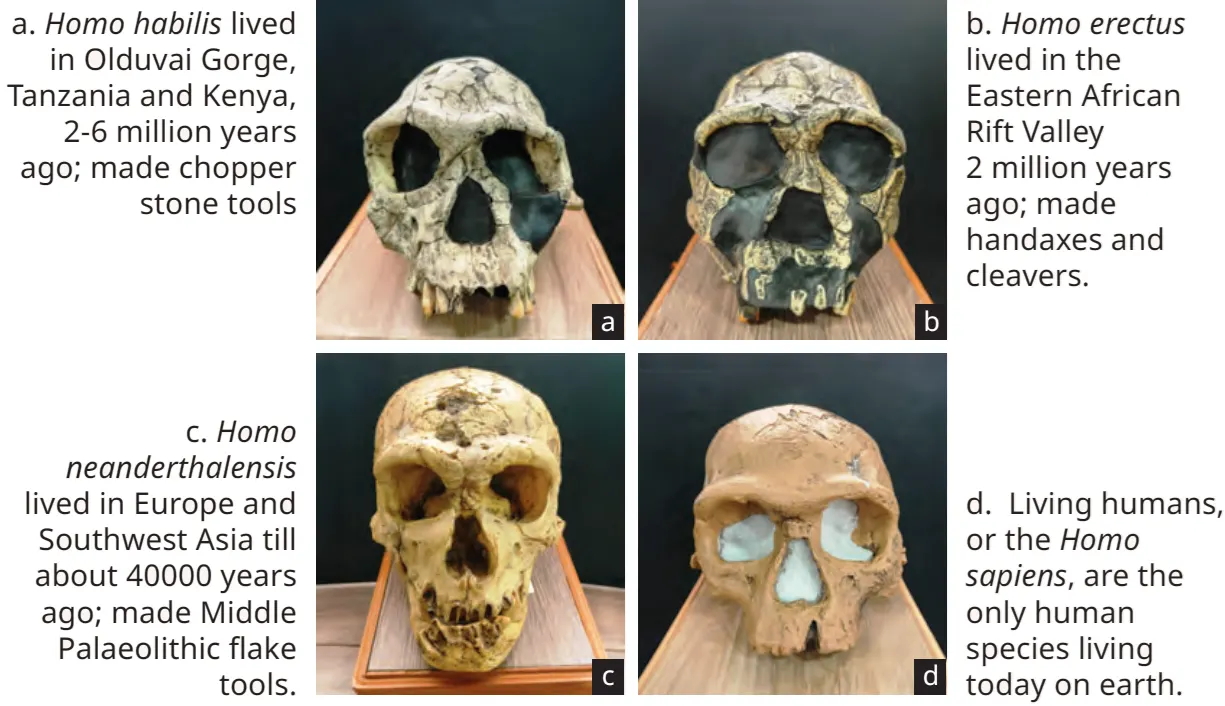
- Changes in Skull Features: Moving from Homo habilis and Homo erectus to Homo sapiens, the thick, heavy brow ridges above the eye sockets gradually shrink, and the upper skull (cranium) becomes taller, smoother, and rounder to house a larger, more complex brain.
- Straightening of the Face: Yes—the forward-jutting jaw steadily recedes across the four species, resulting in a much flatter, straighter facial profile in modern humans.
Think About It (Page 67): Why do you think the shift to farming during the Neolithic period is called a ‘revolution’ rather than a simple change?
Think About It (Page 71): Observe Fig. 4.14 and identify the animals domesticated, types of human habitats, and objects used. Are any of these still used in present times?
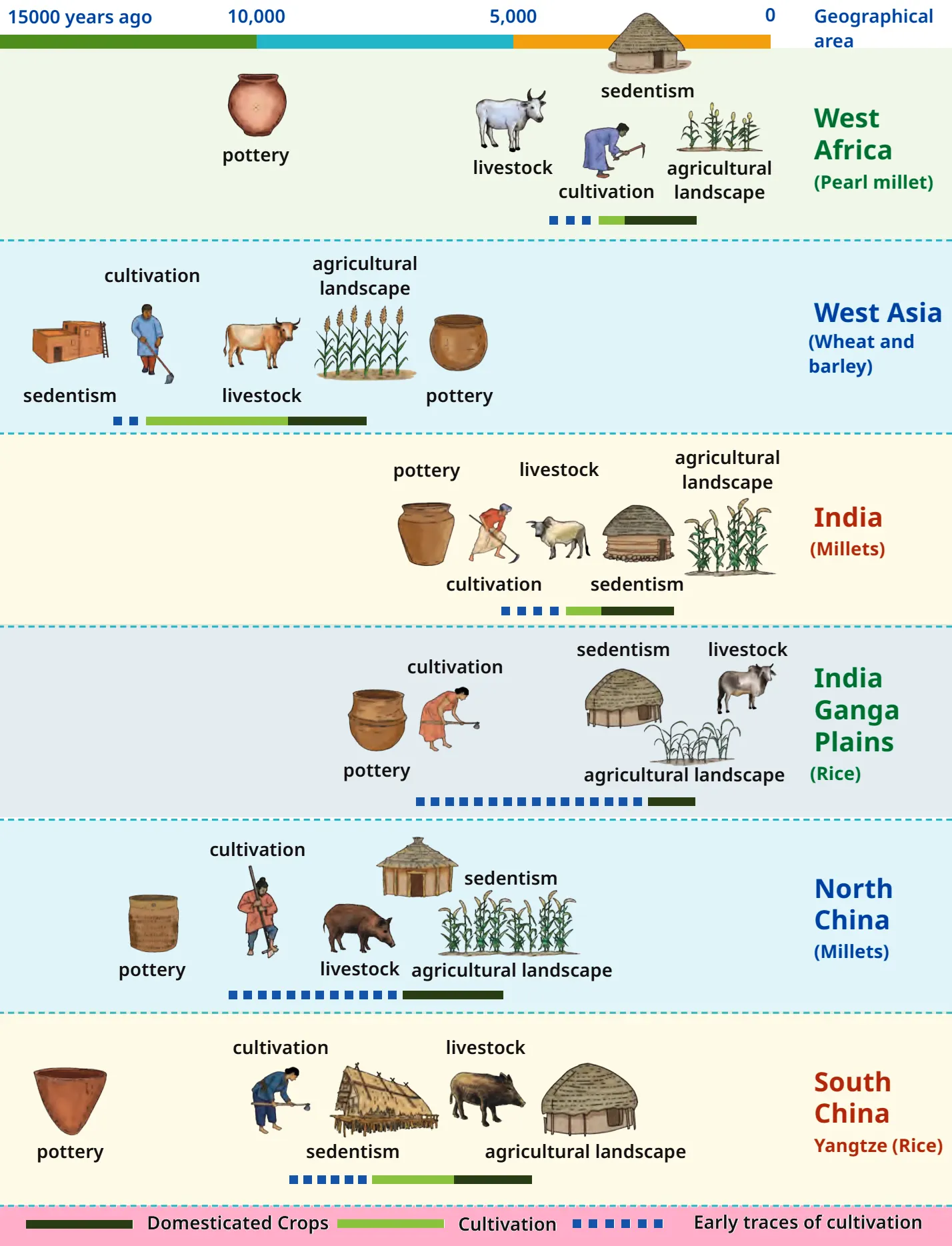
- Domesticated Animals: Cattle/oxen (livestock) across West Asia, India, and Africa, and pigs in North and South China.
- Human Habitats: Rectangular mud-brick houses (West Asia) and circular thatched huts (India, Africa, and China).
- Objects Used: Earthenware pottery jars and farming tools like hoes and sickles.
- Still Used Today? Yes—earthenware pots, cattle for ploughing and dairy, thatched rural huts, and staple crops like wheat, barley, rice, and millets are still widely used today.
Think About It (Page 76): Can you imagine how long-distance trade would have been affected had the Harappans not followed a standard system of weights (Fig. 4.20)?
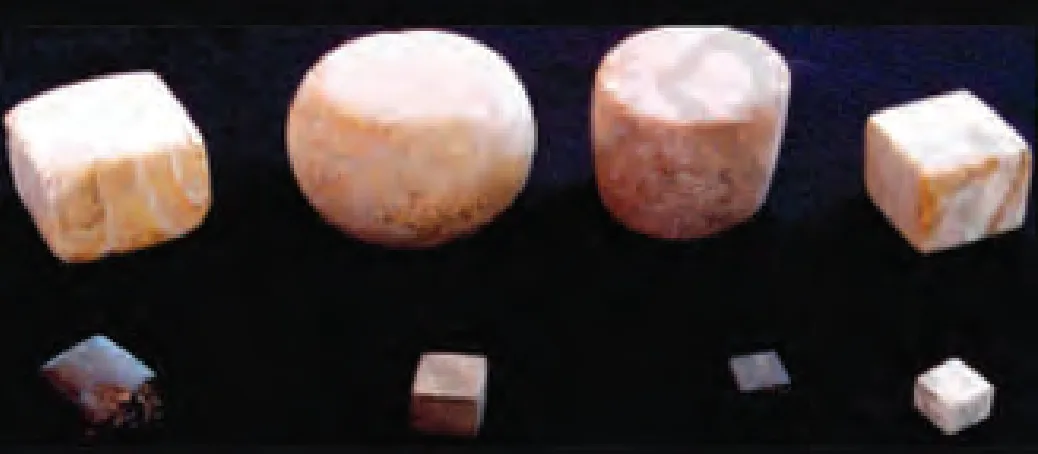
Think About It (Page 77): Why were rivers important in the growth of early civilisations?
- Which countries constitute West Asia in present times?
- Do you find similarities between temples in India and those of the Sumerian civilisation as centres of socio-cultural and economic activity?
- Does our understanding of a civilisation change when its script is deciphered compared to when it is not?
- Share other early stories like the Epic of Gilgamesh.
- Present-day West Asia: Iraq, Iran, Kuwait, Saudi Arabia, Oman, UAE, Bahrain, Qatar, Yemen, Jordan, Syria, Lebanon, Israel, Palestine, and Turkey (Anatolia).
- Indian & Sumerian Temples: Yes. Just like Sumerian ziggurats, large Indian temples (especially in South India) served not only as sacred places of worship, but also as vibrant socio-economic hubs—managing land, treasuries, granaries, patronising artisans, and anchoring the growth of surrounding towns.
- Deciphered vs. Undeciphered Scripts: When a script is deciphered (like cuneiform or Egyptian hieroglyphs), we learn exact names of kings, law codes, myths, trade partners, and beliefs. When undeciphered (like Harappan script), we must rely solely on physical artefacts and cannot know their exact language, rulers’ names, or political history.
- Other Early Stories: Alongside Mesopotamia’s Epic of Gilgamesh, ancient Egypt preserved early versions of Sindbad the Sailor and Cinderella on papyrus scrolls, while early India composed the Rigvedic hymns, Rāmāyaṇa, and Mahābhārata.
- Why is there a scale with a heart on one side and a feather on the other in the Papyrus of Ani (Fig. 4.29)?
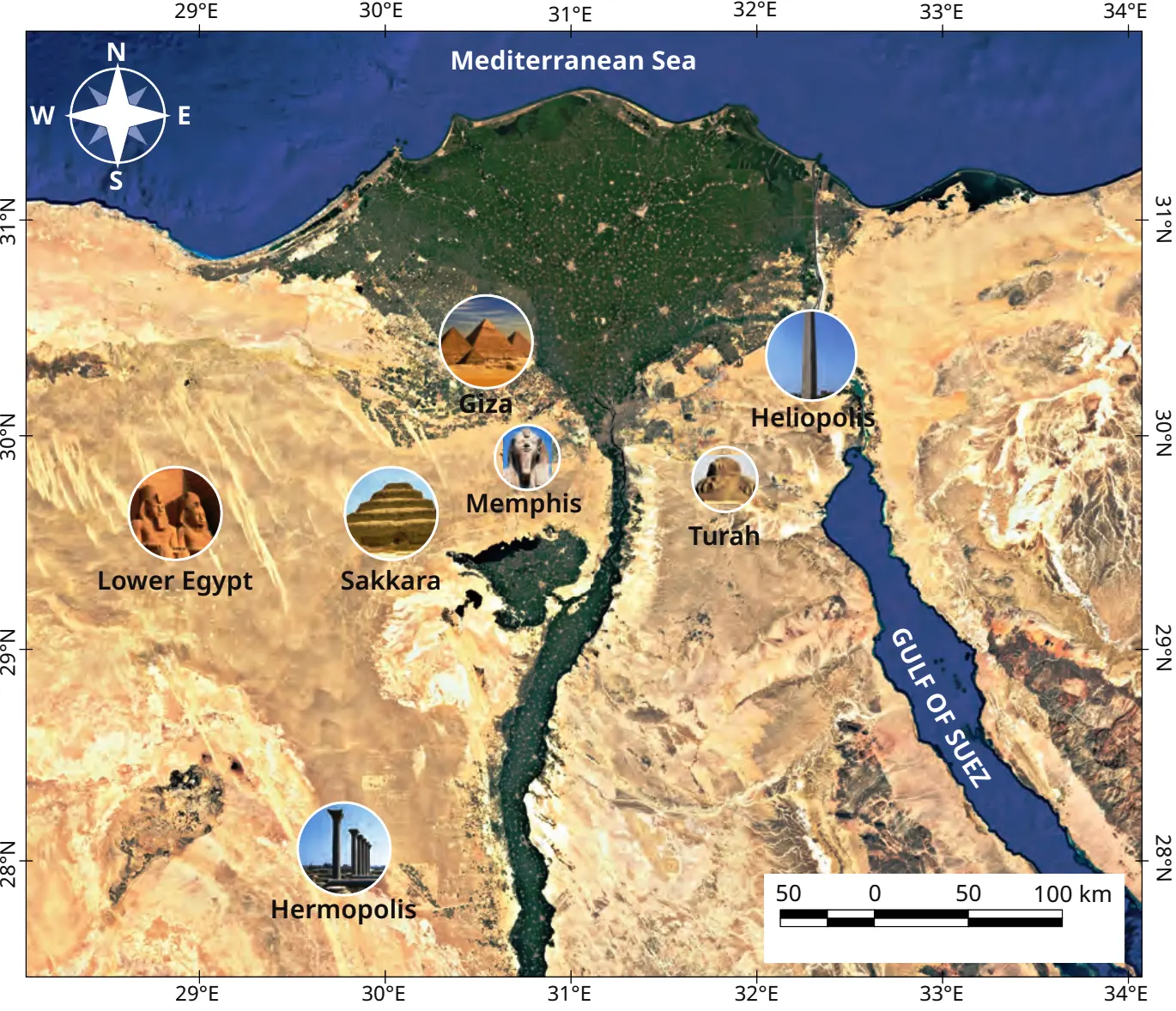
- Locate the River Nile (Fig. 4.30). Why is the northern part called Lower Egypt and the southern part Upper Egypt?
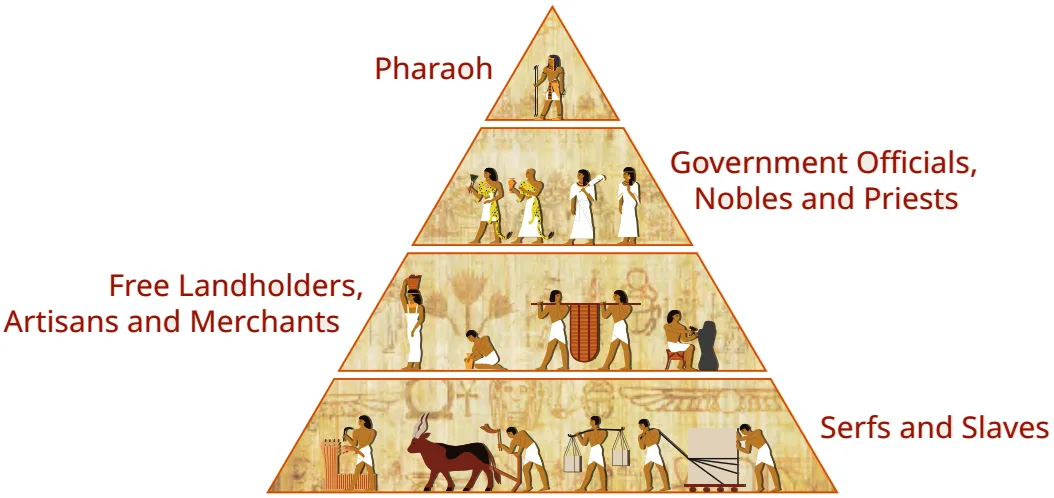
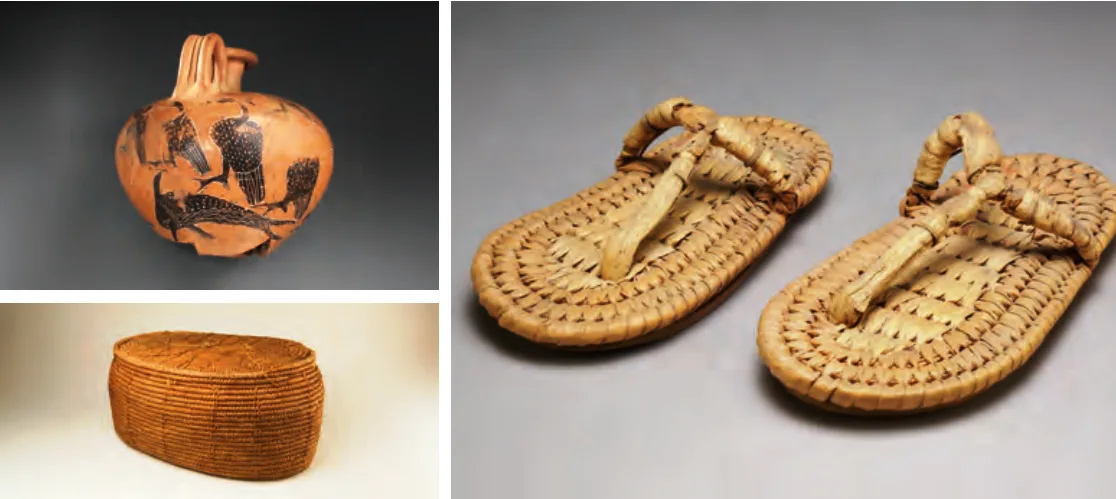
- Observe the Social Hierarchy Pyramid (Fig. 4.32) and daily items (Fig. 4.33). Describe the social classes, occupations, and fashion.
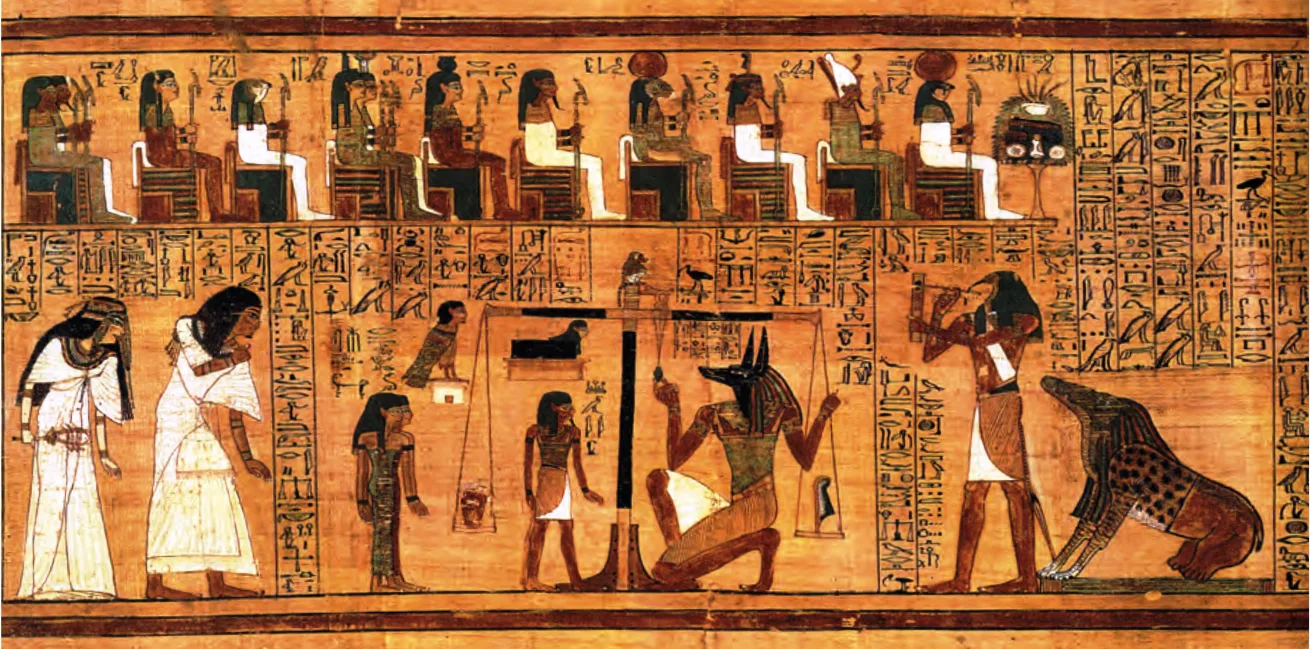
- Papyrus of Ani: Weighing the deceased person’s heart against a feather symbolises the Egyptian belief in moral judgement in the afterlife—a good, truthful person’s heart had to be lighter than the feather of truth to enter eternal life.
- Upper vs. Lower Egypt: Because the River Nile flows from south to north into the Mediterranean Sea, the southern upstream region is higher in elevation (Upper Egypt), while the flat northern delta downstream is lower (Lower Egypt).
- Social Classes & Fashion: Egyptian society had four tiers: Pharaoh (ruler) → Officials, Nobles & Priests (administration & rituals) → Free Landholders, Artisans & Merchants (farming, crafts, trade) → Serfs & Slaves (heavy farming & monument labour). The woven reed sandals and painted pottery in Fig. 4.33 show practical, breathable fashion suited for a hot climate—simple reed footwear was worn by commoners/middle classes, while finely decorated jars and cosmetics belonged to nobles and royalty.
- Note down two Chinese logographic characters and explain how their shapes connect to their meanings.
- What could have been other reasons for building the Great Wall of China?
- How was India connected with the Silk Route and China with reference to Buddhism?
- Chinese Logographic Characters: 山 (Shān — Mountain) has three vertical peaks resembling a mountain range; 日 (Rì — Sun) evolved from a circle with a central dot representing the glowing sun.
- Great Wall of China: Beyond blocking nomadic raids, the wall helped Chinese emperors regulate and tax cross-border Silk Route trade, control migration and smuggling, move troops rapidly along mountain ridges, and send smoke-signal warnings.
- India, Silk Route & Buddhism: India linked to the Silk Route through northwestern passes and coastal ports, trading spices, textiles, and gems for Chinese silk. Along these same routes, Buddhism travelled from India to China, inspiring Chinese monks like Faxian and Xuanzang to study at Indian centres like Nālandā.
Part 3: Textbook Exercises — Questions and Activities (Pages 93–94)
Q1. Do you think life became easier or more challenging after humans started farming? Give two reasons for your answer.
- How it became easier: Farmers enjoyed a more reliable, predictable food supply and could store surplus grain in granaries (as at Mehrgarh), reducing the daily risk of starvation faced by nomadic hunter-gatherers.
- How it became more challenging: Farming required intense, year-round physical labour (ploughing, sowing, weeding, harvesting) and made communities vulnerable to droughts, floods, crop pests, and diseases spreading more easily in crowded permanent villages.
Q2. The environment offers human societies both opportunities as well as challenges. Explain with reference to early farming communities and river-valley civilisations.
- Opportunities: Warming climates around 12,000 years ago expanded forests, grasslands, and wild grains. Later, fertile river plains—like the Indus-Sarasvatī, Tigris-Euphrates, Nile (kemet), and Huang He—gave early civilisations rich alluvial soil, irrigation water, fish, and natural transport routes.
- Challenges: Societies also had to cope with unpredictable river floods, seasonal droughts, and environmental degradation (which contributed to the decline of Babylonia). To survive, humans innovated—building Sumerian canals, Harappan gabarbands and Dholavira water-harvesting tanks, and Egyptian reservoirs and calendars.
Q3. Why do historians divide early human history into different ages such as Stone Age, Bronze Age, and Iron Age? What does this classification tell us about human progress?
Q4. Imagine you are a Neolithic farmer. Describe one day of your life. What challenges would you face that a hunter-gatherer would not?
New Challenges: Unlike a hunter-gatherer who could simply move to a new forest if food ran low, I am tied to my land. A single drought, locust swarm, or river flood could wipe out my entire year’s harvest, and I must constantly guard our stored grain from rodents and raiders.
Q5. Imagine that the Harappan script gets deciphered tomorrow. What new types of information do you think historians might learn?
- The exact spoken language of the Harappans and what they called themselves and their cities.
- Whether they were ruled by kings, priests, or merchant councils, along with the names of rulers and traders.
- Details of their religious beliefs, myths, laws, taxes, and official trade records with Mesopotamia (Meluhha).
Q6. Prepare a table with three columns—Palaeolithic, Mesolithic, and Neolithic—and fill in their distinctive features: tools, settlements, art, and subsistence.
| Feature | Palaeolithic (Old Stone Age) | Mesolithic (Middle Stone Age) | Neolithic (New Stone Age) |
|---|---|---|---|
| Tools | Large, rough stone tools (handaxes, cleavers, choppers, scrapers) and later blades & burins. | Tiny, sharp stone tools called microliths, often fixed in wooden/bone handles. | Polished stone tools designed for farming, harvesting, and grinding grain, plus pottery. |
| Settlements | Nomadic; lived in natural caves, rock shelters, and temporary open camps. | Semi-permanent/temporary settlements near rivers, lakes, and rock shelters. | Permanent agricultural villages with mud-brick houses and granaries (e.g., Mehrgarh). |
| Art | Early cave paintings, body pigments, stone/bone/shell beads, and engraved ostrich eggshells. | Flourishing rock-shelter art depicting hunting, dancing, and wildlife (e.g., Bhimbetka). | Decorated earthenware pottery, semi-precious stone ornaments (lapis lazuli, carnelian), and figurines. |
| Subsistence | Hunting wild animals and gathering fruits, nuts, and tubers. | Hunting small game, gathering wild grains, and heavy reliance on fishing. | Food production through agriculture (wheat, barley, rice, millets) and animal domestication. |
Q7. “Bronze Age civilisations developed independently but shared common features.” Examine this statement with reference to the civilisations given in the chapter.
- River-Valley Origins: All four grew along fertile river plains that supported surplus agriculture.
- Urban Planning & Metallurgy: All mastered copper/bronze metallurgy, built brick cities, and engineered water systems (Sumerian canals, Harappan tanks and Lothal dockyard, Egyptian Nile ditches).
- Writing & Administration: Each invented its own script—Harappan Sindhu lipi, Sumerian cuneiform, Egyptian hieroglyphs, and Chinese oracle-bone logographs—to record trade, laws, and governance.
- Specialised Crafts & Trade: All supported skilled artisans (bead-makers, jade carvers, potters, weavers) and organised social structures.
Q8. Although rivers provided many benefits, they also created challenges for early societies. Discuss both the advantages and disadvantages of settling near rivers.
- Advantages: Reliable freshwater for drinking and crops; annual silt deposits that naturally fertilised farmland; abundant fish and waterfowl; and easy boat transport for long-distance trade.
- Disadvantages: Violent, unpredictable floods could wipe out homes, granaries, and standing crops; rivers could shift course or dry up over time (as happened with the Sarasvatī); and stagnant floodwaters could spread waterborne diseases.
Q9. Find out more about the Code of Hammurabi. Why was it important? Do you think it was fair to all sections of society? Give reasons for your answer.
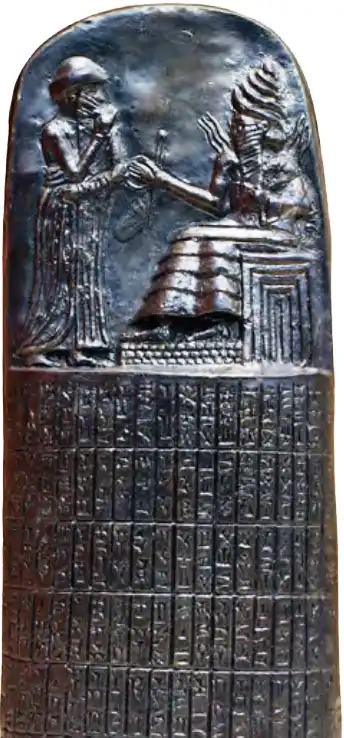
Was it fair to all? No. While it established the principle of written accountability, its punishments were not equal for everyone. Penalties varied sharply depending on social rank—harming a noble carried a far harsher punishment (like “an eye for an eye”) than harming a commoner or a slave, who were often compensated only with a small fine.
Q10. If you had to choose one major innovation from early civilisations that changed the world permanently, what would it be and why?
Q11. Compare the social hierarchy and daily life of people in the Egyptian civilisation with those in Mesopotamia or China. What similarities and differences do you notice?
- Similarities: Both Egypt and Mesopotamia/China had strictly stratified social pyramids—a powerful divine or semi-divine ruler (Pharaoh / Sumerian King / Zhou ruler as “appointee of heaven”) and nobles/priests at the top, followed by artisans and merchants in the middle, and a vast majority of farmers and labourers/slaves at the bottom. In all three, daily life revolved around river-fed agriculture, crafts, and religious festivals.
- Differences: In Egypt, women enjoyed comparatively greater legal rights (owning property, running businesses, and even ruling like Cleopatra), and society invested heavily in afterlife preparation (mummification and pyramids). In Mesopotamia, economic life was tightly controlled by city-state temples (ziggurats), while in China, public officials were uniquely selected through rigorous merit examinations (archery, horsemanship, writing, calculations, music).
Q12. Activity: Using maps, locate the major rivers and civilisations of Mesopotamia, Egypt, China, and the Sindhu-Sarasvatī Valley. Mark the trade links between them.
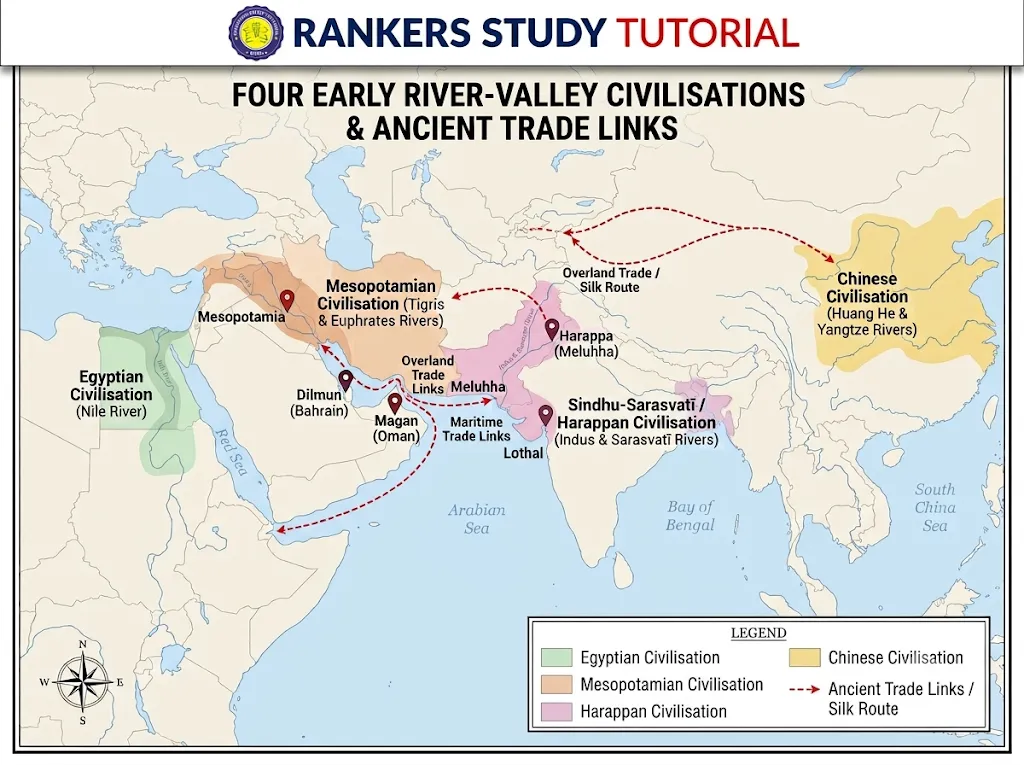
- Egypt: Locate along the Nile River in northeastern Africa.
- Mesopotamia: Locate between the Tigris and Euphrates rivers in West Asia (modern Iraq).
- Sindhu-Sarasvatī Valley: Locate along the Indus and Sarasvatī river basins in northwestern India and Pakistan.
- China: Locate along the Huang He (Yellow River) and Yangtze river valleys.
- Trade Links: Draw maritime arrows across the Arabian Sea and Persian Gulf linking Harappa/Lothal (Meluhha) → Oman (Magan) → Bahrain (Dilmun) → Ur/Babylon (Mesopotamia), and an overland arrow marking the Silk Route between China and India.
Q13. Activity: Choose one early civilisation (Mesopotamia, Egypt, or China) and prepare a mini-scrapbook or presentation showing their innovations in tools, writing, art, and architecture.
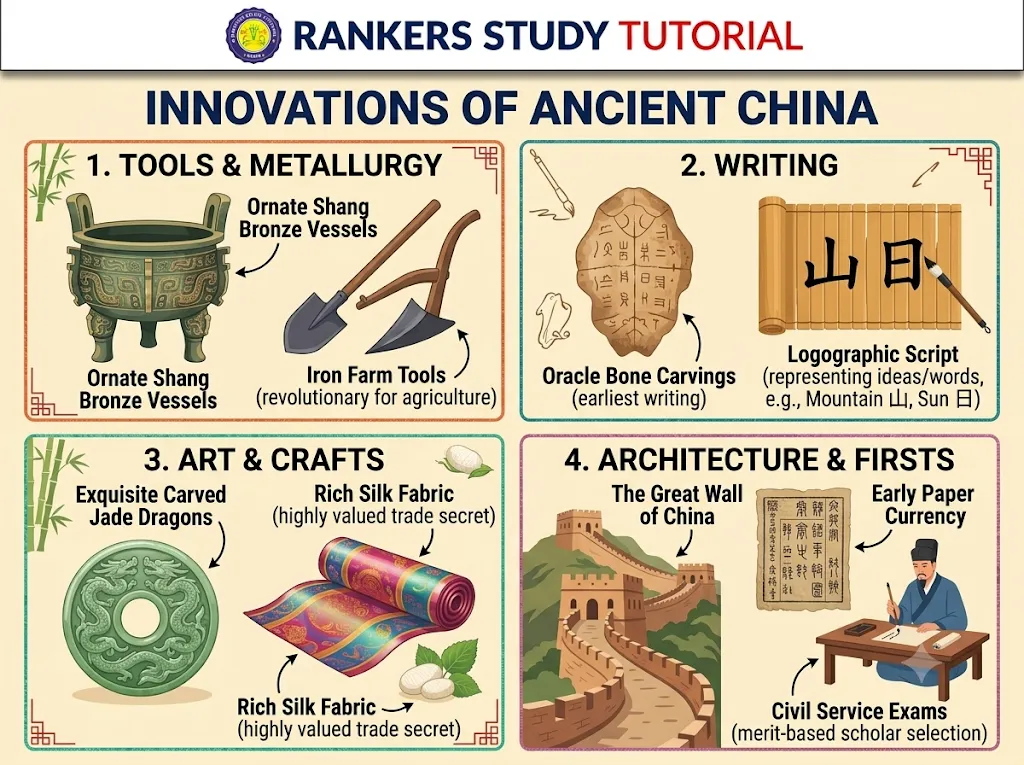
- Page 1 — Tools & Metallurgy: Bronze ritual wine vessels (Shang dynasty), iron tools (from 600 BCE), and silk weaving (from 4000 BCE).
- Page 2 — Writing & Records: Oracle bone carvings used for divination, and the logographic script where characters resemble real-world objects.
- Page 3 — Art & Craftsmanship: Intricate carved jade dragons and musical jade fish pendants, plus marble bird/animal ornaments.
- Page 4 — Architecture & World Firsts: The Great Wall of China (built over 2,000 years against nomadic raids), the world’s first paper currency, and the first civil service public examinations.
List
Class 9 Social Science Part 2 Chapter 2 Life on Earth NCERT Solutions
Class 9 Social Science Part 2 Chapter 1 Oceans and Life NCERT Solutions
Class 9 Social Science Part 1 Chapter 8 Building Blocks in Economics: The Problem of Choice NCERT Solutions

Class 9 Social Science Part 1 Chapter 7 Elections NCERT Solutions
Class 9 Social Science Part 1 Chapter 6 Democracy NCERT Solutions